Kirjojen hintavertailu. Mukana 11 717 486 kirjaa ja 12 kauppaa.

Kirjahaku

Etsi kirjoja tekijän nimen, kirjan nimen tai ISBN:n perusteella.

1000 tulosta hakusanalla Craig Sayers

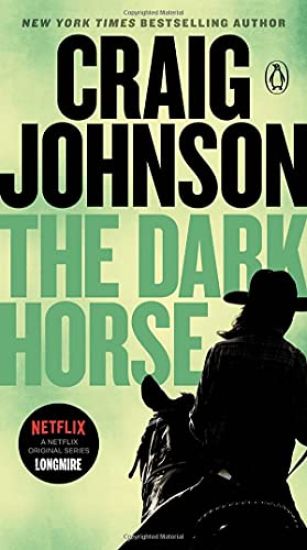
The Dark Horse: A Longmire Mystery

The Dark Horse: A Longmire Mystery

Craig Johnson

PENGUIN BOOKS
2021
pokkari
Walt doubts a confession of murder in this novel from the New York Timesbestselling author of The Cold Dish and Dry Bones, the fifth in the Longmire Series, the basis for LONGMIRE, the hit Netflix original seriesCraig Johnson's new novel, The Western Star, will be available from Viking in Fall 2017. Fans of Ace Atkins, Nevada Barr and Robert B. Parker will love The Dark Horse is the fifth installment in New York Times bestselling author Craig Johnson's Longmire Mystery Series, the basis for LONGMIRE, the hit Netflix original drama series. Wade Barsad, a man with a dubious past and a gift for making enemies, burned his wife Mary's horses in their barn; in retribution, she shot him in the head six times, or so the story goes. But Sheriff Walt Longmire doesn't believe Mary's confession and is determined to dig deeper. Unpinning his star to pose as an insurance investigator, Walt visits the Barsad ranch and discovers that everyone in town--including a beautiful Guetemalan bartender and a rancher with a taste for liquor--had a reason for wanting Wade dead.
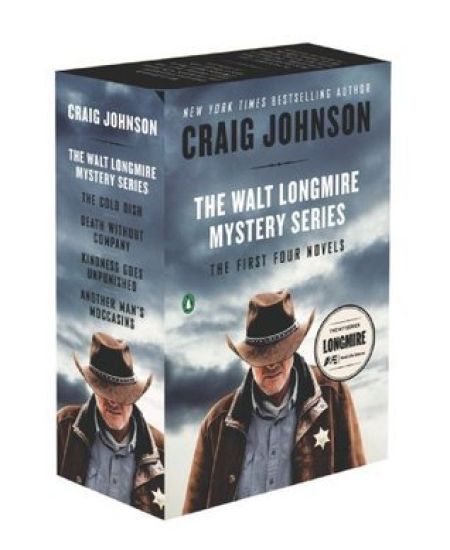
The Longmire Mystery Series Boxed Set Volumes 1-4: The First Four Novels
The perfect gift for Longmire fans: a boxed set of the first four mysteries in the New York Times bestselling Longmire Mystery series The hit drama Longmire is now streaming on Paramount+With the hit television series Longmire capturing millions of viewers and Craig Johnson's last seven books hitting the New York Times bestseller list, Walt Longmire is a name on everyone's lips and has earned his star. As Longmire devotees eagerly await the launch of the fifth season on Netflix, they can delve into the first four novels in the series and keep abreast of the latest goings-on in the world of their favorite straight-talking sheriff.
An Introduction to Accounting: Accountability in Organisations and Society
Written by Craig Deegan, Australia's premier sustainability and social accounting academic, An Introduction to Accounting: Accountability in Organisations and Society brings corporate accountability, sustainability, and social responsibility together. The text’s unique approach highlights the role that accounting plays in sustainability and being accountable for the environment, by providing students with an understanding of accounting’s pervasive and transformative role as both a social practice and a driving force behind organisations. It shows that environments, ideas and values change; the interconnectivity of society; that the planet must be respected as a resource; and that people are affected/influenced by the information they receive and the way it is presented. Learning accounting through the lens of sustainability and the environment prepares you to actively seek and use accounting information to make decisions in your career that take into consideration accountability for the environment.
Financial Accounting Theory

Financial Accounting Theory

Craig (University of Tasmania) Deegan

Cengage
2023
pokkari
Craig Deegan's Financial Accounting Theory provides a concise approach while comprehensively covering both traditional and contemporary theories that have emerged as the practice of accounting has evolved. Social and environmental accountability and reporting issues are discussed in depth, along with coverage of critical perspectives, public sector accounting and fair value. Instructors and students value Financial Accounting Theory for its reader-friendly style using straightforward explanations and numerous practical examples. This new edition continues to follow this approach with the addition of *NEW* content focusing on how different perspectives of organisational responsibilities and accountabilities impact the way accounting is performed, and the theories that different researchers choose to use/apply. Read Less
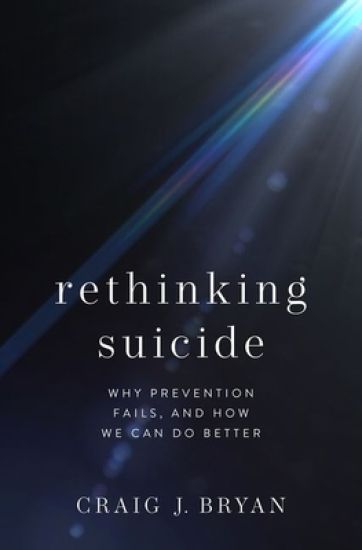
Rethinking Suicide

Rethinking Suicide

Craig J. Bryan

Oxford University Press Inc
2022
sidottu
An examination of how suicide prevention efforts largely fail due to the mistaken assumption that greater mental health awareness is the key to saving lives. Over the last two decades, the US suicide rate has steadily grown despite extensive awareness campaigns, wide implementation of suicide prevention programs and initiatives, and increased mental health advocacy. To the confusion and frustration of researchers, healthcare providers, and many others, these efforts have largely failed to reverse the trend. Why do suicide rates continue to climb despite our best efforts? Why aren't we better at this? What are we doing wrong? Rethinking Suicide is a critical examination of what we think we know about suicide, with particular focus on the assumed role of mental illness. Craig J. Bryan, a leading expert on suicide prevention, argues that most prevention efforts have failed because they disproportionately emphasize mental health-focused solutions such as access to treatment and crisis services. Instead of classifying suicide as a mental health issue, careful analysis of research findings suggest it should instead be seen as a highly complex problem with many risk factors - from personal decision-making styles, to the availability of lethal means, to financial uncertainty. As such suicide rates will not be curtailed by conventional solution-oriented thinking; rather, we need process-based thinking that may, in some cases, defy or contradict many of our long-held assumptions about suicide. Rethinking Suicide interweaves the author's firsthand experiences with explanations of scientific findings to reveal the limitations of widely-used practices and to introduce new perspectives that may trigger a paradigm shift in how we understand and prevent suicide.
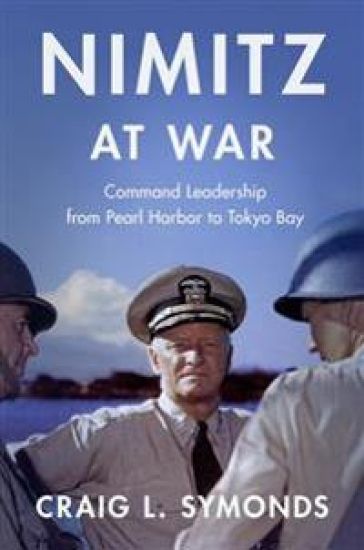
Nimitz at War

Nimitz at War

Craig L. Symonds

OXFORD UNIVERSITY PRESS INC
2022
sidottu
From America's preeminent naval historian, the first full-length portrait in over fifty years of the man who won the war in the Pacific in World War Two—"destined," says Andrew Roberts, "to be the defining life of Chester Nimitz for a long time to come." Only days after the Japanese attacked Pearl Harbor, President Franklin D. Roosevelt tapped Chester W. Nimitz to assume command of the Pacific Fleet. Nimitz was not the most senior candidate available, and some, including his new boss, U.S. Navy Admiral Ernest J. King, considered him a "desk admiral," more suited to running a bureaucracy than a theater of war. Yet FDR's selection proved nothing less than inspired. From the precarious early months of the war after December 7th 1941 to the surrender ceremony in Tokyo Bay nearly four years later, Nimitz transformed the devastated and dispirited Pacific fleet into the most powerful and commanding naval force in history. From the start, the pressures on Nimitz were crushing. Facing demands from Washington to mount an early offensive, he had first to revive the depressed morale of the thousands of sailors, soldiers, and Marines who served under him. He had to corral independent-minded subordinates—including Admiral Bill "Bull" Halsey and General Holland "Howlin' Mad" Smith—and keep them focused on shared objectives. He had to maintain a sometimes-fraught relationship with his Army counterpart Douglas MacArthur, and cope with his superiors, including the formidably prickly King and the inscrutable FDR. He had to navigate the expectations of a nation impatient for revenge and eventual victory. And of course, he also confronted a formidable and implacable enemy in the Imperial Japanese Navy, which, until the Battle of Midway, had the run of the Pacific. Craig Symonds' Nimitz at War reveals how the quiet man from the Hill Country of Texas eventually surmounted all of these challenges. Using Nimitz's headquarters—the eye of the hurricane—as his vantage point, Symonds covers all the major campaigns in the Pacific from Guadalcanal to Okinawa. He captures Nimitz's composure, discipline, homespun wisdom, and most of all his uncanny sense of when to assert authority and when to pull back. In retrospect it is difficult to imagine anyone else accomplishing what Nimitz did. As Symonds' absorbing, dynamic, and authoritative portrait reveals, it required qualities of leadership exhibited by few other commanders in history, qualities that are enduringly and even poignantly relevant to our own moment.
A Time for All Things

A Time for All Things

Craig A. Miller

Oxford University Press Inc
2020
sidottu
He has been called the greatest surgeon of the 20th century. The son of Lebanese immigrants, Michael DeBakey rose from humble beginnings in a backwater Louisiana town to dominate the landscape of modern medicine. His contributions to our understanding and treatment of cardiovascular disease, in particular, were innumerable and epoch-making. DeBakey led a life of high drama, from the streets of Jazz Age New Orleans and the operating theaters of pre-war Europe, to the battlefields of World War II and the floodwaters of Hurricane Katrina. An advisor to Presidents, a health care statesman, and a physician to royalty and commoner alike, he helped build Houston's Texas Medical Center into a jewel of the medical world. Yet DeBakey's own family paid a tremendous cost for his commitment to his fellow man. Buoyed by unique access to primary resources, A Time for All Things: The Life of Michael E. DeBakey is the first to tell the remarkable story of a driven genius who led a scientific and therapeutic revolution in all its dramatic depth.
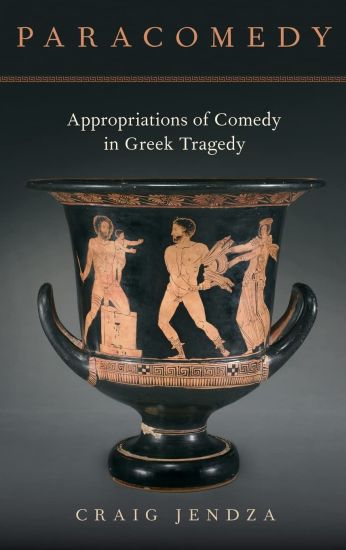
Paracomedy

Paracomedy

Craig Jendza

Oxford University Press Inc
2020
sidottu
Paracomedy: Appropriations of Comedy in Greek Drama is the first book that examines how ancient Greek tragedy engages with the genre of comedy. While scholars frequently study paratragedy (how Greek comedians satirize tragedy), this book investigates the previously overlooked practice of paracomedy: how Greek tragedians regularly appropriate elements from comedy such as costumes, scenes, language, characters, or plots. Drawing upon a wide variety of complete and fragmentary tragedies and comedies (Aeschylus, Sophocles, Euripides, Aristophanes, Rhinthon), this monograph demonstrates that paracomedy was a prominent feature of Greek tragedy. Blending a variety of interdisciplinary approaches including traditional philology, literary criticism, genre theory, and performance studies, this book offers innovative close readings and incisive interpretations of individual plays. Jendza presents paracomedy as a multivalent authorial strategy: some instances impart a sense of ugliness or discomfort; others provide a sense of light-heartedness or humor. While this work traces the development of paracomedy over several hundred years, it focuses on a handful of Euripidean tragedies at the end of the fifth century BCE. Jendza argues that Euripides was participating in a rivalry with the comedian Aristophanes and often used paracomedy to demonstrate the poetic supremacy of tragedy; indeed, some of Euripides' most complex uses of paracomedy attempt to re-appropriate Aristophanes' mockery of his theatrical techniques. Paracomedy: Appropriations of Comedy in Greek Tragedy theorizes a new, ground-breaking relationship between Greek tragedy and comedy that not only redefines our understanding of the genre of tragedy, but also reveals a dynamic theatrical world filled with mutual cross-generic influence.
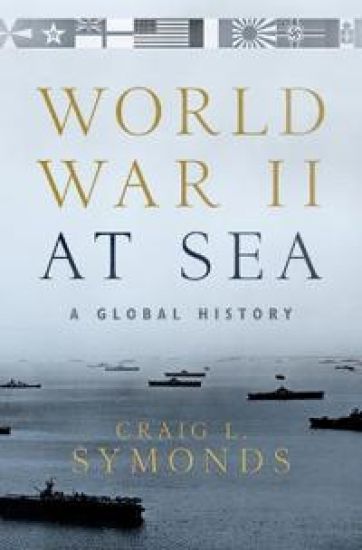
World War II at Sea

World War II at Sea

Craig L. Symonds

Oxford University Press Inc
2018
sidottu
Author of Lincoln and His Admirals (winner of the Lincoln Prize), The Battle of Midway (Best Book of the Year, Military History Quarterly), and Operation Neptune, (winner of the Samuel Eliot Morison Award for Naval Literature), Craig L. Symonds has established himself as one of the finest naval historians at work today. World War II at Sea represents his crowning achievement: a complete narrative of the naval war and all of its belligerents, on all of the world's oceans and seas, between 1939 and 1945. Opening with the 1930 London Conference, Symonds shows how any limitations on naval warfare would become irrelevant before the decade was up, as Europe erupted into conflict once more and its navies were brought to bear against each other. World War II at Sea offers a global perspective, focusing on the major engagements and personalities and revealing both their scale and their interconnection: the U-boat attack on Scapa Flow and the Battle of the Atlantic; the "miracle" evacuation from Dunkirk and the pitched battles for control of Norway fjords; Mussolini's Regia Marina-at the start of the war the fourth-largest navy in the world-and the dominance of the Kidö Butai and Japanese naval power in the Pacific; Pearl Harbor then Midway; the struggles of the Russian Navy and the scuttling of the French Fleet in Toulon in 1942; the landings in North Africa and then Normandy. Here as well are the notable naval leaders-FDR and Churchill, both self-proclaimed "Navy men," Karl Dönitz, François Darlan, Ernest King, Isoroku Yamamoto, Erich Raeder, Inigo Campioni, Louis Mountbatten, William Halsey, as well as the hundreds of thousands of seamen and officers of all nationalities whose live were imperiled and lost during the greatest naval conflicts in history, from small-scale assaults and amphibious operations to the largest armadas ever assembled. Many have argued that World War II was dominated by naval operations; few have shown and how and why this was the case. Symonds combines precision with story-telling verve, expertly illuminating not only the mechanics of large-scale warfare on (and below) the sea but offering wisdom into the nature of the war itself.
A World Ablaze

A World Ablaze

Craig Harline

Oxford University Press Inc
2017
sidottu
October 2017 marks five hundred years since Martin Luther nailed his 95 theses to the church door in Wittenberg and launched the Protestant Reformation. At least, that's what the legend says. But with a figure like Martin Luther, who looms so large in the historical imagination, it's hard to separate the legend from the life, or even sometimes to separate assorted legends from each other. Over the centuries, Luther the man has given way to Luther the icon, a polished bronze figure on a pedestal. In A World Ablaze, Craig Harline introduces us to the flesh-and-blood Martin Luther. Harline tells the riveting story of the first crucial years of the accidental crusade that would make Luther a legendary figure. He didn't start out that way; Luther was a sometimes-cranky friar and professor who worried endlessly about the fate of his eternal soul. He sought answers in the Bible and the Church fathers, and what he found distressed him even more -- the way many in the Church had come to understand salvation was profoundly wrong, thought Luther, putting millions of souls, not least his own, at risk of damnation. His ideas would pit him against numerous scholars, priests, bishops, princes, and the Pope, even as others adopted or adapted his cause, ultimately dividing the Church against itself. A World Ablaze is a tale not just of religious debate but of political intrigue, of shifting alliances and daring escapes, with Luther often narrowly avoiding capture, which might have led to execution. The conflict would eventually encompass the whole of Christendom and served as the crucible in which a new world was forged. The Luther we find in these pages is not a statue to be admired but a complex figure -- brilliant and volatile, fretful and self-righteous, curious and stubborn. Harline brings out the immediacy, uncertainty, and drama of his story, giving readers a sense of what it felt like in the moment, when the ending was still very much in doubt. The result is a masterful recreation of a momentous turning point in the history of the world.
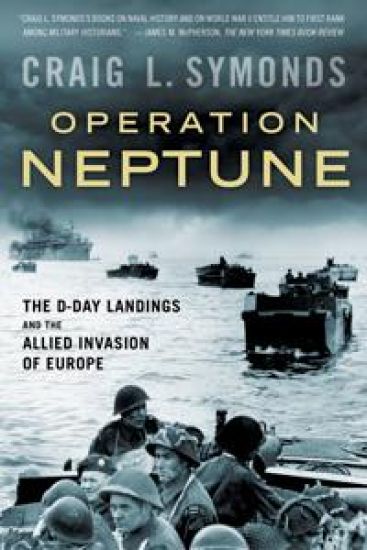
Operation Neptune

Operation Neptune

Craig L. Symonds

Oxford University Press Inc
2016
nidottu
Seventy years ago, more than six thousand Allied ships carried more than a million soldiers across the English Channel to a fifty-mile-wide strip of the Normandy coast in German-occupied France. It was the greatest sea-borne assault in human history. The code names given to the beaches where the ships landed the soldiers have become immortal: Gold, Juno, Sword, Utah, and especially Omaha, the scene of almost unimaginable human tragedy. The sea of crosses in the cemetery sitting today atop a bluff overlooking the beaches recalls to us its cost. Most accounts of this epic story begin with the landings on the morning of June 6, 1944. In fact, however, D-Day was the culmination of months and years of planning and intense debate. In the dark days after the evacuation of Dunkirk in the summer of 1940, British officials and, soon enough, their American counterparts, began to consider how, and, where, and especially when, they could re-enter the European Continent in force. The Americans, led by U.S. Army Chief of Staff General George C. Marshall, wanted to invade as soon as possible; the British, personified by their redoubtable prime minister, Winston Churchill, were convinced that a premature landing would be disastrous. The often-sharp negotiations between the English-speaking allies led them first to North Africa, then into Sicily, then Italy. Only in the spring of 1943, did the Combined Chiefs of Staff commit themselves to an invasion of northern France. The code name for this invasion was Overlord, but everything that came before, including the landings themselves and the supply system that made it possible for the invaders to stay there, was code-named Neptune. Craig L. Symonds now offers the complete story of this Olympian effort, involving transports, escorts, gunfire support ships, and landing craft of every possible size and function. The obstacles to success were many. In addition to divergent strategic views and cultural frictions, the Anglo-Americans had to overcome German U-boats, Russian impatience, fierce competition for insufficient shipping, training disasters, and a thousand other impediments, including logistical bottlenecks and disinformation schemes. Symonds includes vivid portraits of the key decision-makers, from Franklin Roosevelt and Churchill, to Marshall, Dwight Eisenhower, and Admiral Sir Bertram Ramsay, who commanded the naval element of the invasion. Indeed, the critical role of the naval forces--British and American, Coast Guard and Navy--is central throughout. In the end, as Symonds shows in this gripping account of D-Day, success depended mostly on the men themselves: the junior officers and enlisted men who drove the landing craft, cleared the mines, seized the beaches and assailed the bluffs behind them, securing the foothold for the eventual campaign to Berlin, and the end of the most terrible war in human history.
Grassroots Global Governance

Grassroots Global Governance

Craig M. Kauffman

Oxford University Press Inc
2017
sidottu
When international agreements fail to solve global problems like climate change, transnational networks attempt to address them by implementing global ideaspolicies and best practices negotiated at the global levellocally around the world. Grassroots Global Governance not only explains why some efforts succeed and others fail, but also why the process of implementing global ideas locally causes these ideas to evolve. Drawing on nodal governance theory, the book shows how transnational actors success in putting global ideas into practice depends on the framing and network capacity-building strategies they use to activate networks of grassroots actors influential in local social and policy arenas. Grassroots actors neither accept nor reject global ideas as presented by outsiders. Instead, they negotiate whether and how to adapt them to fit local conditions. This contestation produces experimentation, and results in unique institutional applications of global ideas infused with local norms and practices. Grassroots actors ultimately guide this process due to their unique ability to provide the pressure needed to push the process forward. Experiments that endure are perceived as successful, empowering those actors involved to activate transnational networks to scale up and diffuse innovative local governance models globally. These models carry local norms and practices to the international level where they challenge existing global approaches and stimulate new global governance institutions. By guiding the way global ideas evolve through local experimentation, grassroots actors reshape international actors thinking, discourse, organizing, and the strategies they pursue globally. This makes them grassroots global governors. To demonstrate this, the book compares transnational efforts to implement local Integrated Watershed Management programs across Ecuador and shows how local experiments altered the global debate regarding sustainable development and stimulated a new global movement dedicated to changing the way sustainable development is practiced. In doing so, the book reveals the grassroots level as not merely the object of global governance, but rather a terrain where global governance is constructed.
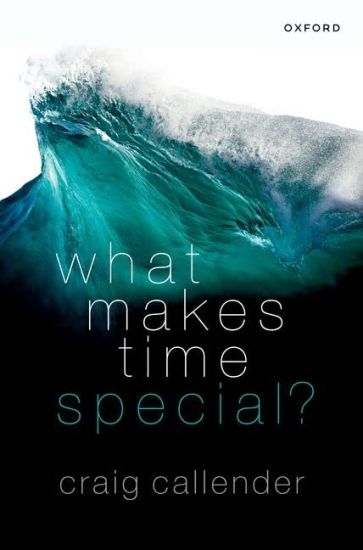
What Makes Time Special?

What Makes Time Special?

Craig Callender

Oxford University Press
2023
nidottu
As we navigate through life we instinctively model time as having a flowing present that divides a fixed past from open future. This model develops in childhood and is deeply saturated within our language, thought and behavior, affecting our conceptions of the universe, freedom and the self. Yet as central as it is to our lives, physics seems to have no room for this flowing present. What Makes Time Special? demonstrates this claim in detail and then turns to two novel positive tasks. First, by looking at the world "sideways" - in the spatial directions — it shows that physics is not "spatializing time" as is commonly alleged. Even relativity theory makes significant distinctions between the spacelike and timelike directions, often with surprising consequences. Second, if the flowing present is an illusion, it is a deep one worthy of explanation. The author develops a picture whereby the temporal flow arises as an interaction effect between an observer and the physics of the world. Using insights from philosophy, cognitive science, biology, psychology and physics, the theory claims that the flowing present model of time is the natural reaction to the perceptual and evolutionary challenges thrown at us. Modeling time as flowing makes sense even if it misrepresents it.
Dolphin Readers Starter Level: Silly Squirrel

Dolphin Readers Starter Level: Silly Squirrel

Craig Wright

Oxford University Press
2005
nidottu
Dolphins are interactive graded readers specially designed to make developing language skills fun for younger learners. Full-colour illustrations and cross-curricular content stimulate students' interest and maintain their attention, while carefully graded English introduces them to new language points in an entertaining context. Integrated activities for every page of story text encourage students to practise newly acquired language skills.
Dolphin Readers Starter Level: Monkeying Around

Dolphin Readers Starter Level: Monkeying Around

Craig Wright

Oxford University Press
2004
nidottu
Dolphins are interactive graded readers specially designed to make developing language skills fun for younger learners. Full-colour illustrations and cross-curricular content stimulate students' interest and maintain their attention, while carefully graded English introduces them to new language points in an entertaining context. Integrated activities for every page of story text encourage students to practise newly acquired language skills.
Dolphin Readers Level 2: Double Trouble

Dolphin Readers Level 2: Double Trouble

Craig Wright

Oxford University Press
2005
nidottu
Dolphins are interactive graded readers specially designed to make developing language skills fun for younger learners. Full-colour illustrations and cross-curricular content stimulate students' interest and maintain their attention, while carefully graded English introduces them to new language points in an entertaining context. Integrated activities for every page of story text encourage students to practise newly acquired language skills.
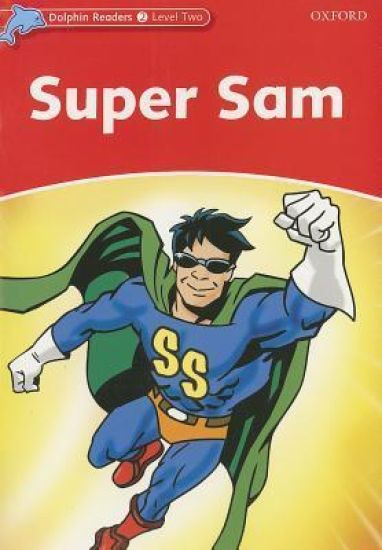
Dolphin Readers Level 2: Super Sam

Dolphin Readers Level 2: Super Sam

Craig Wright

Oxford University Press
2005
nidottu
Dolphins are interactive graded readers specially designed to make developing language skills fun for younger learners. Full-colour illustrations and cross-curricular content stimulate students' interest and maintain their attention, while carefully graded English introduces them to new language points in an entertaining context. Integrated activities for every page of story text encourage students to practise newly acquired language skills.
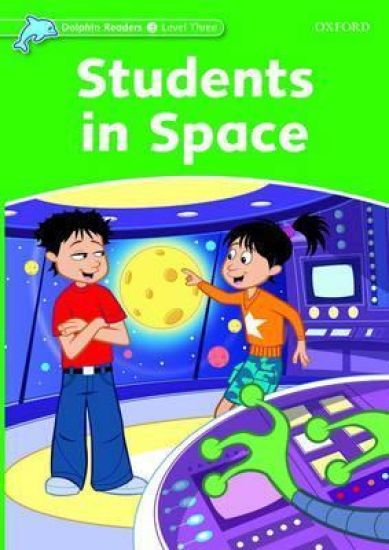
Dolphin Readers: Level 3: Students in Space

Dolphin Readers: Level 3: Students in Space

Craig Wright

Oxford University Press
2005
nidottu
Dolphins are interactive graded readers specially designed to make developing language skills fun for younger learners. Full-colour illustrations and cross-curricular content stimulate students' interest and maintain their attention, while carefully graded English introduces them to new language points in an entertaining context. Integrated activities for every page of story text encourage students to practise newly acquired language skills.
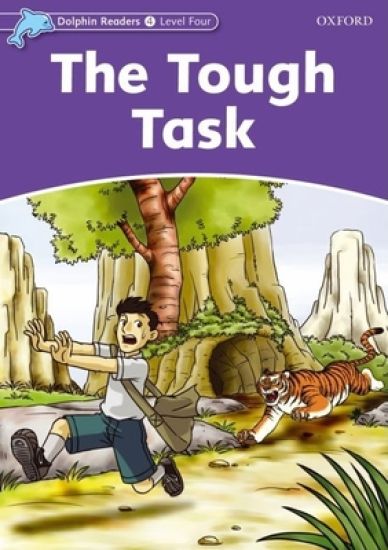
Dolphin Readers Level 4: The Tough Task

Dolphin Readers Level 4: The Tough Task

Craig Wright

Oxford University Press
2005
nidottu
Dolphins are interactive graded readers specially designed to make developing language skills fun for younger learners. Full-colour illustrations and cross-curricular content stimulate students' interest and maintain their attention, while carefully graded English introduces them to new language points in an entertaining context. Integrated activities for every page of story text encourage students to practise newly acquired language skills.