Kirjojen hintavertailu. Mukana 12 381 653 kirjaa ja 12 kauppaa.

Kirjahaku

Etsi kirjoja tekijän nimen, kirjan nimen tai ISBN:n perusteella.

1000 tulosta hakusanalla Cristina Contilli

Participatory Culture and the Social Value of an Architectural Icon: Sydney Opera House
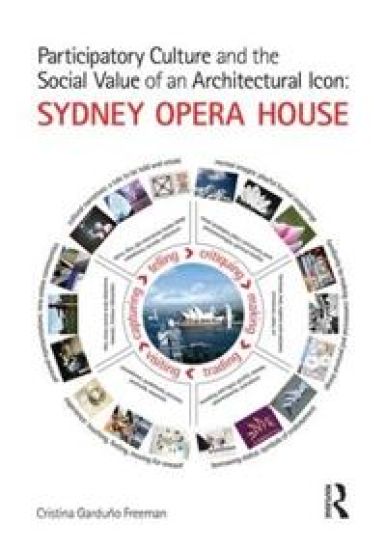
This book develops new and innovative methods for understanding the cultural significance of places such as the World Heritage listed Sydney Opera House. By connecting participatory media, visual culture and social value, Cristina Garduño Freeman contributes to a fast-growing body of scholarship on digital heritage and the popular reception of architecture.In this, her first book, she opens up a fresh perspective on heritage, as well as the ways in which people relate to architecture via participation on social media. Social media sites such as YouTube, Pinterest, Wikipedia, Facebook and Flickr, as well as others, become places for people to express their connections with places, for example, the Sydney Opera House. Garduño Freeman analyses real-world examples, from souvenirs to opera-house-shaped cakes, and untangles the tangible and intangible ways in which the significance of heritage is created, disseminated and maintained.As people’s encounters with World Heritage become increasingly mediated by the digital sphere there is a growing imperative for academics, professionals and policy-makers to understand the social value of significant places. This book is beneficial to academics, students and professionals of architecture.
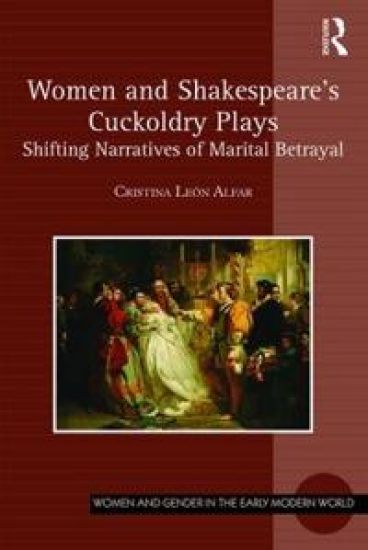
Women and Shakespeare's Cuckoldry Plays

Women and Shakespeare's Cuckoldry Plays

Cristina León Alfar

Routledge
2017
sidottu
How does a woman become a whore? What are the discursive dynamics making a woman a whore? And, more importantly, what are the discursive mechanics of unmaking? In Women and Shakespeare’s Cuckoldry Plays: Shifting Narratives of Marital Betrayal, Cristina León Alfar pursues these questions to tease out familiar cultural stories about female sexuality that recur in the form of a slander narrative throughout William Shakespeare’s work. She argues that the plays stage a structure of accusation and defense that unravels the authority of husbands to make and unmake wives. While men’s accusations are built on a foundation of political, religious, legal, and domestic discourses about men’s superiority to, and rule over, women, whose weaker natures render them perpetually suspect, women’s bonds with other women animate defenses of virtue and obedience, fidelity and love, work loose the fabric of patrilineal power that undergirds masculine privileges in marriage, and signify a discursive shift that constitutes the site of agency within a system of oppression that ought to prohibit such agency. That women’s agency in the early modern period must be tied to the formations of power that officially demand their subjection need not undermine their acts. In what Alfar calls Shakespeare’s cuckoldry plays, women’s rhetoric of defense is both subject to the discourse of sexual honor and finds a ground on which to “shift it” as women take control of and replace sexual slander with their own narratives of marital betrayal.
Stephen Hawking

Stephen Hawking

Cristina Oxtra

Raintree
2020
nidottu
Stephen Hawking was one of the greatest minds of our time. His theories about the universe have changed the way we think about black holes and the Big Bang. Learn more about the brave physicist who discovered so much while coping with disability.
Stan Lee

Stan Lee

Cristina Oxtra

Raintree
2021
nidottu
Stan Lee was one of the most influential people in the comic book world. The memorable heroes he created, including Spider-Man, Iron Man, the X-Men and Daredevil, helped build Marvel Comics into the powerhouse we know today.
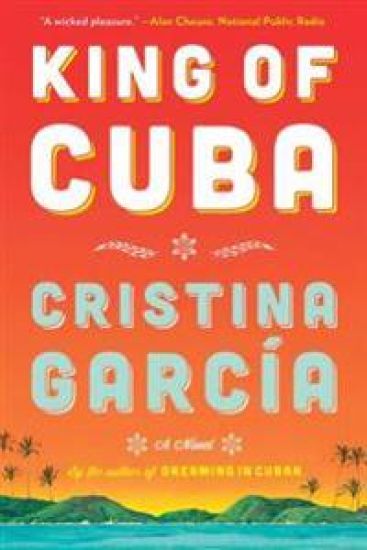
King of Cuba

King of Cuba

Cristina Garcia

Scribner Book Company
2013
nidottu
A "darkly hilarious" (Elle) novel about a fictionalized Fidel Castro and an octogenarian Cuban exile obsessed with seeking revenge by the National Book Award finalist Cristina Garc a, this "clever, well-conceived dual portrait shows what connects and divides Cubans inside and outside of the island" (Kirkus Reviews). Vivid and teeming with life, King of Cuba transports readers to Cuba and Miami, and into the heads of two larger-than-life men: a fictionalized Fidel Castro and an octogenarian Cuban exile obsessed with seeking revenge against the dictator. Garc a's masterful twinning of these characters combines with a rabble of other Cuban voices to portray the passions and realities of two Cubas--on the island and off-- in a pulsating story that entertains and illuminates.
Managed Migrations

Managed Migrations

Cristina Salinas

University of Texas Press
2018
sidottu
2020 National Association for Chicana and Chicano Studies (NACCS) Book Award Winner Honorable Mention, Ramirez Family Award for Most Significant Scholarly Book, Texas Institute of Letters, 2019Managed Migrations examines the concurrent development of a border agricultural industry and changing methods of border enforcement in the Rio Grande Valley of Texas during the past century. Needed at one moment, scorned at others, Mexican agricultural workers have moved back and forth across the US–Mexico border for the past century. In South Texas, Anglo growers’ dreams of creating a modern agricultural empire depended on continuous access to Mexican workers. While this access was officially regulated by immigration laws and policy promulgated in Washington, DC, in practice the migration of Mexican labor involved daily, on-the-ground negotiations among growers, workers, and the US Border Patrol. In a very real sense, these groups set the parameters of border enforcement policy. Managed Migrations examines the relationship between immigration laws and policy and the agricultural labor relations of growers and workers in South Texas and El Paso during the 1940s and 1950s. Cristina Salinas argues that immigration law was mainly enacted not in embassies or the halls of Congress but on the ground, as a result of daily decisions by the Border Patrol that growers and workers negotiated and contested. She describes how the INS devised techniques to facilitate high-volume yearly deportations and shows how the agency used these enforcement practices to manage the seasonal agricultural labor migration across the border. Her pioneering research reveals the great extent to which immigration policy was made at the local level, as well as the agency of Mexican farmworkers who managed to maintain their mobility and kinship networks despite the constraints of grower paternalism and enforcement actions by the Border Patrol.
Managed Migrations

Managed Migrations

Cristina Salinas

UNIVERSITY OF TEXAS PRESS
2023
nidottu
2020 National Association for Chicana and Chicano Studies (NACCS) Book Award Winner Honorable Mention, Ramirez Family Award for Most Significant Scholarly Book, Texas Institute of Letters, 2019Managed Migrations examines the concurrent development of a border agricultural industry and changing methods of border enforcement in the Rio Grande Valley of Texas during the past century. Needed at one moment, scorned at others, Mexican agricultural workers have moved back and forth across the US–Mexico border for the past century. In South Texas, Anglo growers’ dreams of creating a modern agricultural empire depended on continuous access to Mexican workers. While this access was officially regulated by immigration laws and policy promulgated in Washington, DC, in practice the migration of Mexican labor involved daily, on-the-ground negotiations among growers, workers, and the US Border Patrol. In a very real sense, these groups set the parameters of border enforcement policy. Managed Migrations examines the relationship between immigration laws and policy and the agricultural labor relations of growers and workers in South Texas and El Paso during the 1940s and 1950s. Cristina Salinas argues that immigration law was mainly enacted not in embassies or the halls of Congress but on the ground, as a result of daily decisions by the Border Patrol that growers and workers negotiated and contested. She describes how the INS devised techniques to facilitate high-volume yearly deportations and shows how the agency used these enforcement practices to manage the seasonal agricultural labor migration across the border. Her pioneering research reveals the great extent to which immigration policy was made at the local level, as well as the agency of Mexican farmworkers who managed to maintain their mobility and kinship networks despite the constraints of grower paternalism and enforcement actions by the Border Patrol.
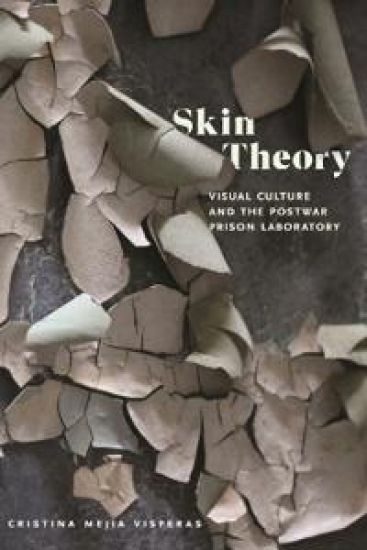
Skin Theory

Skin Theory

Cristina Mejia Visperas

NEW YORK UNIVERSITY PRESS
2022
sidottu
Honorable Mention, Rachel Carson Prize, given by the Society for the Social Studies of Science Finalist, 2023 ASAP Book Award, given by the Association for the Study of the Arts of the Present Studies the intersections of incarceration, medical science, and race in postwar America In February 1966, a local newspaper described the medical science program at Holmesburg Prison, Philadelphia, a "golden opportunity to conduct widespread medical tests under perfect control conditions." Helmed by Albert M. Kligman, a University of Pennsylvania professor, these tests enrolled hundreds of the prison's predominantly Black population in studies determining the efficacy and safety of a wide variety of substances, from common household products to chemical warfare agents. These experiments at Holmesburg were hardly unique; in the postwar United States, the use of incarcerated test subjects was standard practice among many research institutions and pharmaceutical companies. Skin Theory examines the prison as this space for scientific knowledge production, showing how the "perfect control conditions" of the prison dovetailed into the visual regimes of laboratory work. To that end, Skin Theory offers an important reframing of visual approaches to race in histories of science, medicine, and technology, shifting from issues of scientific racism to the scientific rationality of racism itself. In this highly original work, Cristina Mejia Visperas approaches science as a fundamentally racial project by analyzing the privileged object and instrument of Kligman's experiments: the skin. She theorizes the skin as visual technology, as built environment, and as official discourse, developing a compelling framework for understanding the intersections of race, incarceration, and medical science in postwar America.
Skin Theory

Skin Theory

Cristina Mejia Visperas

NEW YORK UNIVERSITY PRESS
2022
pokkari
Honorable Mention, Rachel Carson Prize, given by the Society for the Social Studies of Science Finalist, 2023 ASAP Book Award, given by the Association for the Study of the Arts of the Present Studies the intersections of incarceration, medical science, and race in postwar America In February 1966, a local newspaper described the medical science program at Holmesburg Prison, Philadelphia, a "golden opportunity to conduct widespread medical tests under perfect control conditions." Helmed by Albert M. Kligman, a University of Pennsylvania professor, these tests enrolled hundreds of the prison's predominantly Black population in studies determining the efficacy and safety of a wide variety of substances, from common household products to chemical warfare agents. These experiments at Holmesburg were hardly unique; in the postwar United States, the use of incarcerated test subjects was standard practice among many research institutions and pharmaceutical companies. Skin Theory examines the prison as this space for scientific knowledge production, showing how the "perfect control conditions" of the prison dovetailed into the visual regimes of laboratory work. To that end, Skin Theory offers an important reframing of visual approaches to race in histories of science, medicine, and technology, shifting from issues of scientific racism to the scientific rationality of racism itself. In this highly original work, Cristina Mejia Visperas approaches science as a fundamentally racial project by analyzing the privileged object and instrument of Kligman's experiments: the skin. She theorizes the skin as visual technology, as built environment, and as official discourse, developing a compelling framework for understanding the intersections of race, incarceration, and medical science in postwar America.
Lore of the Ghost Ship

Lore of the Ghost Ship

Cristina Montalva

Lulu.com
2013
pokkari
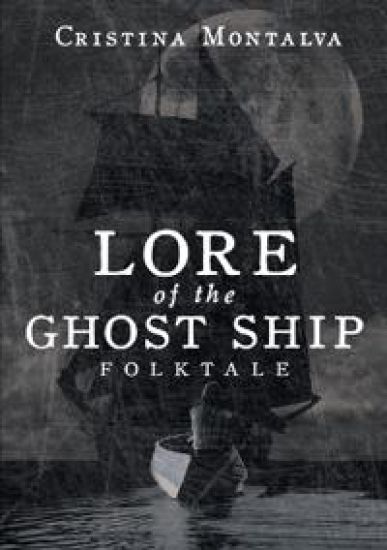
FOLK TALE of the GHOST SHIP set on the Chilean Archipelago of Chiloe story draws on local folk-lore and tradition to create a magical realistic fable filled with colour, action and human depth. Aimed at a readership of 12 to teens or to people of all ages: insights into a fascinating culture and way of life, vivid, believable characters and a tale told with passion and verve. The story follows Pancho, a teenage boy, as he tries to come to terms with and understand his mother's sudden disappearance. One of the ways he does this is to ask his uncle Mateo, who is well versed in the myhology of the island. Mateo's narration of the tale is central to the plot, and it is on the basis of this story-telling that Pancho's final resolution occurs.
Cuentos desde el Espejo

Cuentos desde el Espejo

Cristina Puig

Createspace Independent Publishing Platform
2013
nidottu
Cuentos desde el Espejo es una recopilaci n de relatos fant sticos, donde confluyen fantas a, aventura, romanticismo, elevados ideales tales como la amistad, el amor, el honor... Contados con un estilo directo, conforman una peque a joya literaria muy apta para lectores de todas las edades, pero muy especialmente para j venes lectores. Informaci n de la autora: Cristina Puig Argente nace en Palma de Mallorca el a o 1978. Es licenciada en Historia del Arte por la U.I.B. y M ster en Museolog a y Gesti n del Patrimonio por la Universidad de Barcelona. Ha publicado diversos art culos y textos sobre arte. Escritora de formaci n b sicamente autodidacta. Su obra bebe de la influencia de autores como: H. Phillips Lovecraft; E. Allan Poe; J.R.R. Tolkien, Anne Rice, Borges o Lovecraft. Ha escrito diversos relatos de terror y fantas a. Actualmente se encuentra escribiendo su primera novela de g nero fant stico: "La Reina Oscura". En el terreno art stico, Cristina Puig ha alcanzado entre otros logros el que su dise o "Anfisbena" fuera el elegido para representar los Premios Mallorca Fant stica, premios de car cter internacional que MALLORCA FANT STICA concede anualmente a aquellas personas, empresas e instituciones que con su labor apoyan la Fantas a. Algunos de los premiados han sido: - David G mez, pianista, Premio Mallorca Fant stica a la M sica, - Pep Roig, Premio Mallorca Fant stica al Humor, - Antonio Fern ndez Coca, Premio Mallorca Fant stica al Dise o, - Koldo Royo, Premio Mallorca Fant stica a la Gastronom a, - Etc. Y tambi n han sostenido orgullosamente entre sus manos la Anfisbena de Honor los directores de cine Vicente Aranda, Alvaro S enz de Heredia y Alex de la Iglesia.