

Kirjahaku
Etsi kirjoja tekijän nimen, kirjan nimen tai ISBN:n perusteella.
1000 tulosta hakusanalla David L. Goetsch



Post-Traumatic Stress Disorder and the Casual Link to Crime
David L Daniel
Hutson Street Press
2025
sidottu

Post-Traumatic Stress Disorder and the Casual Link to Crime
David L Daniel
Hutson Street Press
2025
pokkari

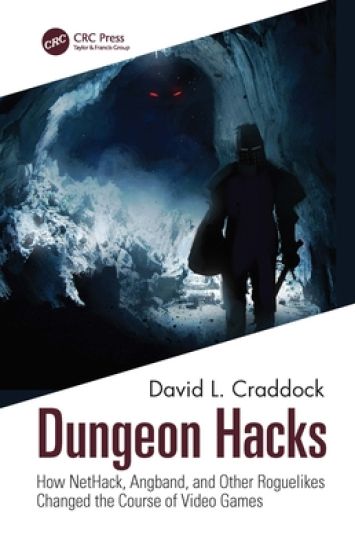
In 1980, computers were instruments of science and mathematics, military secrets and academia. Stern administrators lorded over sterile university laboratories and stressed one point to the wide-eyed students privileged enough to set foot within them: Computers were not toys.Defying authority, hackers seized control of monolithic mainframes to create a new breed of computer game: the roguelike, cryptic and tough-as-nails adventures drawn from text-based symbols instead of state-of-the-art 3D graphics.Despite their visual simplicity, roguelike games captivate thousands of players around the world. From the author of the bestselling Stay Awhile and Listen series, Dungeon Hacks: How NetHack, Angband, and Other Roguelikes Changed the Course of Video Games introduces you to the visionaries behind some of the most popular roguelikes of all time and shows how their creations paved the way for the blockbuster videogames of today—and beyond.
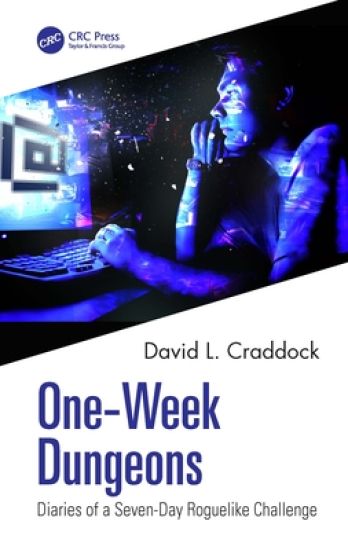
"An entertaining, race-against-time narrative." —Kobo review"A fast-paced look into seven-day roguelikes, something so niche most people wouldn't have heard about, but the book is well written and shows how important it is to get your thoughts down so you can sort out your ideas."—Goodreads reviewEleven game designers. Eight grand ideas. Seven days to will them into reality.Every year, programmers around the world compete in the 7-day roguelike challenge, or 7DRL, a weeklong game jam where participants endeavor to design and program a roguelike role-playing game. Their obstacles: day jobs, family responsibilities, sleep deprivation, and visionary concepts too big for 168 hours to contain.Told over a series of daily journal logs, One-Week Dungeons: Diaries of a Seven-Day Roguelike Challenge chronicles the journeys of eleven 7DRL participants as they race to build their dream games before the clock expires.David L. Craddock writes fiction, nonfiction, and grocery lists. He is the author of over a dozen nonfiction books about video game development and culture, including the bestselling Stay Awhile and Listen series and Arcade Perfect: How Pac-Man, Mortal Kombat, and Other Coin-Op Classics Invaded the Living Room, and fiction for young adults, including The Dumpster Club and Heritage: Book One of the Gairden Chronicles. Find him online @davidlcraddock on Twitter.
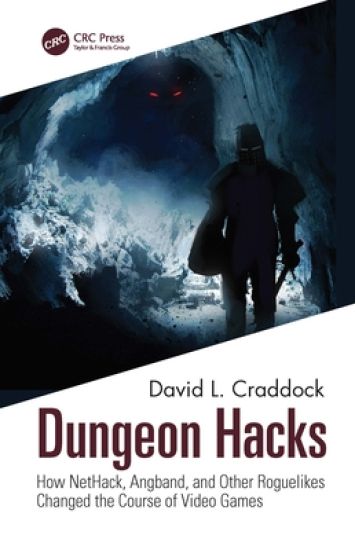
In 1980, computers were instruments of science and mathematics, military secrets and academia. Stern administrators lorded over sterile university laboratories and stressed one point to the wide-eyed students privileged enough to set foot within them: Computers were not toys.Defying authority, hackers seized control of monolithic mainframes to create a new breed of computer game: the roguelike, cryptic and tough-as-nails adventures drawn from text-based symbols instead of state-of-the-art 3D graphics.Despite their visual simplicity, roguelike games captivate thousands of players around the world. From the author of the bestselling Stay Awhile and Listen series, Dungeon Hacks: How NetHack, Angband, and Other Roguelikes Changed the Course of Video Games introduces you to the visionaries behind some of the most popular roguelikes of all time and shows how their creations paved the way for the blockbuster videogames of today—and beyond.
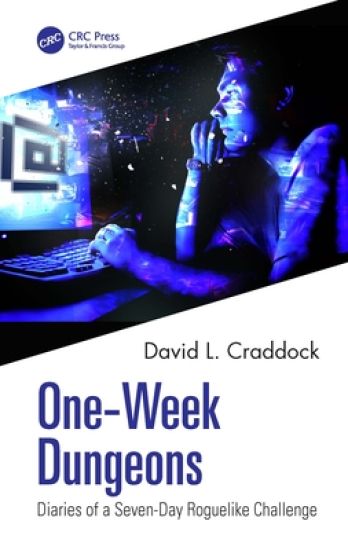
"An entertaining, race-against-time narrative." —Kobo review"A fast-paced look into seven-day roguelikes, something so niche most people wouldn't have heard about, but the book is well written and shows how important it is to get your thoughts down so you can sort out your ideas."—Goodreads reviewEleven game designers. Eight grand ideas. Seven days to will them into reality.Every year, programmers around the world compete in the 7-day roguelike challenge, or 7DRL, a weeklong game jam where participants endeavor to design and program a roguelike role-playing game. Their obstacles: day jobs, family responsibilities, sleep deprivation, and visionary concepts too big for 168 hours to contain.Told over a series of daily journal logs, One-Week Dungeons: Diaries of a Seven-Day Roguelike Challenge chronicles the journeys of eleven 7DRL participants as they race to build their dream games before the clock expires.David L. Craddock writes fiction, nonfiction, and grocery lists. He is the author of over a dozen nonfiction books about video game development and culture, including the bestselling Stay Awhile and Listen series and Arcade Perfect: How Pac-Man, Mortal Kombat, and Other Coin-Op Classics Invaded the Living Room, and fiction for young adults, including The Dumpster Club and Heritage: Book One of the Gairden Chronicles. Find him online @davidlcraddock on Twitter.
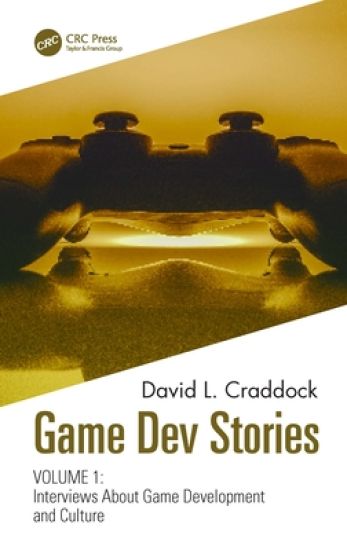
Game Dev Stories: Interviews About Game Development and Culture Volumes 1 and 2 are a collection of interviews from renowned author David L. Craddock as he explores all corners of the video game industry. Collected from the author's archives, Game Dev Stories gathers conversations with individuals from all corners of the industry: Who they are, the paths they paved, and their contributions to this multibillion-dollar industry. This text offers viewpoints from well-known individuals like John Romero, Tom Hall, and Matt Householder. From artists and writers to programmers and designers, Game Dev Stories offers amazing insights and understanding to what occurs behind the screens of your favorite games and may help inspire future game developers in pursuing their dreams. Author BioDavid L. Craddock writes fiction, nonfiction, and grocery lists. He is the author of over a dozen nonfiction books about video game development and culture, including the bestselling Stay Awhile and Listen series, Arcade Perfect: How Pac-Man, Mortal Kombat, and Other Coin-Op Classics Invaded the Living Room, and fiction for young adults, including The Dumpster Club and Heritage: Book One of the Gairden Chronicles. Find him online @davidlcraddock on Twitter.
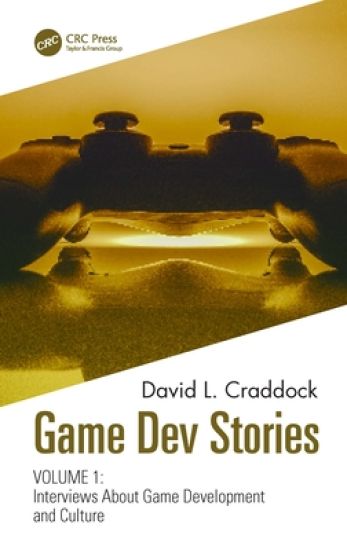
Game Dev Stories: Interviews About Game Development and Culture Volumes 1 and 2 are a collection of interviews from renowned author David L. Craddock as he explores all corners of the video game industry. Collected from the author's archives, Game Dev Stories gathers conversations with individuals from all corners of the industry: Who they are, the paths they paved, and their contributions to this multibillion-dollar industry. This text offers viewpoints from well-known individuals like John Romero, Tom Hall, and Matt Householder. From artists and writers to programmers and designers, Game Dev Stories offers amazing insights and understanding to what occurs behind the screens of your favorite games and may help inspire future game developers in pursuing their dreams. Author BioDavid L. Craddock writes fiction, nonfiction, and grocery lists. He is the author of over a dozen nonfiction books about video game development and culture, including the bestselling Stay Awhile and Listen series, Arcade Perfect: How Pac-Man, Mortal Kombat, and Other Coin-Op Classics Invaded the Living Room, and fiction for young adults, including The Dumpster Club and Heritage: Book One of the Gairden Chronicles. Find him online @davidlcraddock on Twitter.
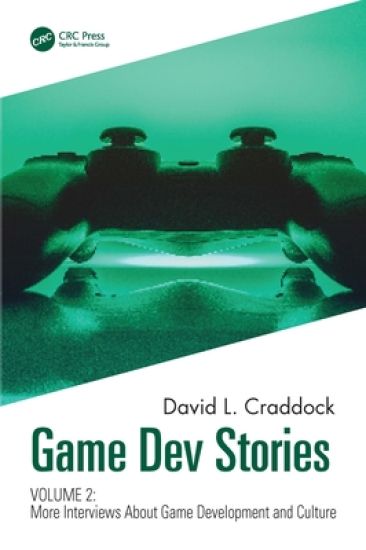
Game Dev Stories: Interviews About Game Development and Culture Volumes 1 and 2 are a collection of interviews from renowned author David L. Craddock as he explores all corners of the video game industry. Collected from the author's archives, Game Dev Stories gathers conversations with individuals from all corners of the industry: Who they are, the paths they paved, and their contributions to this multibillion-dollar industry. This text offers viewpoints from well-known individuals like John Romero, Tom Hall, and Matt Householder. From artists and writers to programmers and designers, Game Dev Stories offers amazing insights and understanding to what occurs behind the screens of your favorite games and may help inspire future game developers in pursuing their dreams. Author BioDavid L. Craddock writes fiction, nonfiction, and grocery lists. He is the author of over a dozen nonfiction books about video game development and culture, including the bestselling Stay Awhile and Listen series, Arcade Perfect: How Pac-Man, Mortal Kombat, and Other Coin-Op Classics Invaded the Living Room, and fiction for young adults, including The Dumpster Club and Heritage: Book One of the Gairden Chronicles. Find him online @davidlcraddock on Twitter.
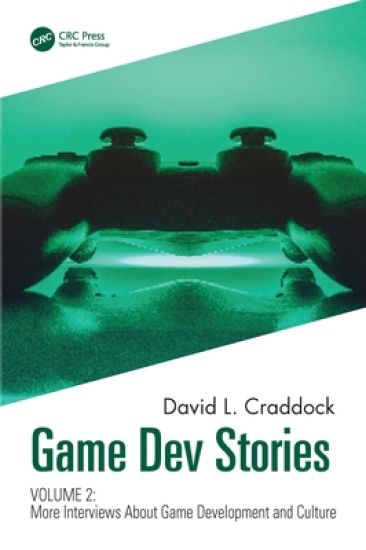
Game Dev Stories: Interviews About Game Development and Culture Volumes 1 and 2 are a collection of interviews from renowned author David L. Craddock as he explores all corners of the video game industry. Collected from the author's archives, Game Dev Stories gathers conversations with individuals from all corners of the industry: Who they are, the paths they paved, and their contributions to this multibillion-dollar industry. This text offers viewpoints from well-known individuals like John Romero, Tom Hall, and Matt Householder. From artists and writers to programmers and designers, Game Dev Stories offers amazing insights and understanding to what occurs behind the screens of your favorite games and may help inspire future game developers in pursuing their dreams. Author BioDavid L. Craddock writes fiction, nonfiction, and grocery lists. He is the author of over a dozen nonfiction books about video game development and culture, including the bestselling Stay Awhile and Listen series, Arcade Perfect: How Pac-Man, Mortal Kombat, and Other Coin-Op Classics Invaded the Living Room, and fiction for young adults, including The Dumpster Club and Heritage: Book One of the Gairden Chronicles. Find him online @davidlcraddock on Twitter.
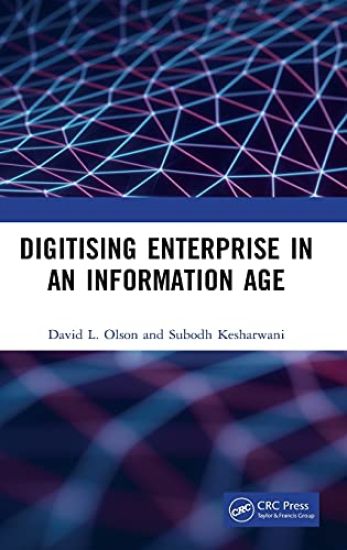
Digitising Enterprise in an Information Age
David L. Olson; Subodh Kesharwani
Taylor Francis Ltd
2021
sidottu
Digitising Enterprise in an Information Age is an e?ort that focuses on a very vast cluster of Enterprises and their digitising technology involvement and take us through the road map of the implementation process in them, some of them being ICT, Banking, Stock Markets, Textile Industry & ICT, Social Media, Software Quality Assurance, Information Systems Security and Risk Management, Employee Resource Planning etc. It delves on increased instances of cyber spamming and the threat that poses to e-Commerce and Banking and tools that help and Enterprise toward of such threats. To quote Confucius, “As the water shapes itself to the vessel that contains it, so does a wise man adapts himself to circumstances.” And the journey of evolution and progression will continue and institutions and enterprises will continue to become smarter and more and more technology savvy. Enterprises and businesses across all genre and spectrum are trying their level best to adopt to change and move on with the changing requirements of technology and as enterprises and companies upgrade and speed up their digital transformations and move their outdate heirloom systems to the cloud, archaic partners that don't keep up will be left behind.Note: T&F does not sell or distribute the Hardback in India, Pakistan, Nepal, Bhutan, Bangladesh and Sri Lanka.
Game Dev Stories: Interviews About Game Development and Culture Volumes 1 and 2 are a collection of interviews from renowned author David L. Craddock as he explores all corners of the video game industry. Collected from the author's archives, Game Dev Stories gathers conversations with individuals from all corners of the industry: Who they are, the paths they paved, and their contributions to this multibillion-dollar industry. This text offers viewpoints from well-known individuals like John Romero, Tom Hall, and Matt Householder. From artists and writers to programmers and designers, Game Dev Stories offers amazing insights and understanding to what occurs behind the screens of your favorite games and may help inspire future game developers in pursuing their dreams.
Game Dev Stories: Interviews About Game Development and Culture Volumes 1 and 2 are a collection of interviews from renowned author David L. Craddock as he explores all corners of the video game industry. Collected from the author's archives, Game Dev Stories gathers conversations with individuals from all corners of the industry: Who they are, the paths they paved, and their contributions to this multibillion-dollar industry. This text offers viewpoints from well-known individuals like John Romero, Tom Hall, and Matt Householder. From artists and writers to programmers and designers, Game Dev Stories offers amazing insights and understanding to what occurs behind the screens of your favorite games and may help inspire future game developers in pursuing their dreams.
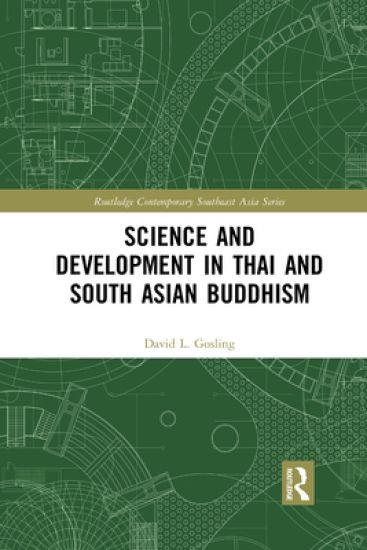
Science and Development in Thai and South Asian Buddhism
David L Gosling
Taylor Francis Ltd
2021
nidottu
Becoming a Buddhist monk in Thailand has for a long time provided the opportunity for access to a good education and to social advancement, both to bright, poor rural youths and to members of the urban elite whose youth often become monks for a few months as a rite of passage into adulthood. Moreover, although women are not allowed to become fully fledged monks, recent developments have encouraged a special status akin to nuns for many devout Thai Buddhist women. All this has resulted in large numbers of well-educated, well-motivated Buddhist religious people, keen both to engage in religious contemplation and also determined to contribute to this-worldly social, economic, educational and medical development goals. This book, by a leading authority on the subject, considers the role of Thai Buddhist religious people in development within Thailand. It discusses how Thai Buddhism has evolved philosophically and in its organisation to allow this, examines various examples of Buddhist people's engagement in development projects, and assesses how the situation is likely to unfold going forward. In addition, the book considers the relationship between science and religion in Thai Buddhism and also some aspects of the parallel situation in Sri Lanka.

Adversarial Risk Analysis
David L. Banks; Jesus M. Rios Aliaga; David Rios Insua
Taylor Francis Ltd
2021
nidottu
Winner of the 2017 De Groot Prize awarded by the International Society for Bayesian Analysis (ISBA)A relatively new area of research, adversarial risk analysis (ARA) informs decision making when there are intelligent opponents and uncertain outcomes. Adversarial Risk Analysis develops methods for allocating defensive or offensive resources against intelligent adversaries. Many examples throughout illustrate the application of the ARA approach to a variety of games and strategic situations.Focuses on the recent subfield of decision analysis, ARA Compares ideas from decision theory and game theoryUses multi-agent influence diagrams (MAIDs) throughout to help readers visualize complex information structuresApplies the ARA approach to simultaneous games, auctions, sequential games, and defend-attack gamesContains an extended case study based on a real application in railway security, which provides a blueprint for how to perform ARA in similar security situations Includes exercises at the end of most chapters, with selected solutions at the back of the bookThe book shows decision makers how to build Bayesian models for the strategic calculation of their opponents, enabling decision makers to maximize their expected utility or minimize their expected loss. This new approach to risk analysis asserts that analysts should use Bayesian thinking to describe their beliefs about an opponent’s goals, resources, optimism, and type of strategic calculation, such as minimax and level-k thinking. Within that framework, analysts then solve the problem from the perspective of the opponent while placing subjective probability distributions on all unknown quantities. This produces a distribution over the actions of the opponent and enables analysts to maximize their expected utilities.

In this brief study, originally published in 1984, David Hirst examines the meaning of the term ‘tragicomedy’ by elucidating the most important theories of the genre and by analysing those plays which represent its most vital and influential expression. He draws a distinction between tragicomedies and conceived as a careful fusion of contrasted dramatic elements and as a mixed genre which seeks to exploit a volatile combination of theatrical extremes.In the first part he compares neo-classical romance and satire. The plays of Shakespeare, Fletcher and Corneille, seen in the context of the literary theory of Guarini, are contrasted with Marlowe and the writers of revenge tragedy. The second part examines the conflict of Romanticism and realism in nineteenth- and twentieth-century theatre. Shaw, Chekhov and the Absurdists are viewed in relation to the key theories of tragicomedy expounded by Brecht, Artaud and Pirandello. The study concludes with a consideration of certain significant contemporary plays – by Edward Bond, Peter Nichols and Peter Barnes – in the context of the historical development of the genre.