In order to cast a satisfying vote, understand politics, or otherwise participate in political discourse or processes, voters must have some idea of what policies parties are pursuing and, more generally, 'who goes with whom.' This Element aims to both advance the study of how voters formulate and update their perceptions of party brands and persuade our colleagues to join us in studying these processes. To make this endeavor more enticing, but no less rigorous, the authors make three contributions to this emerging field of study: presenting a framework for building and interrogating theoretical arguments, aggregating a large, comprehensive data archive, and recommending a parsimonious strategy for statistical analysis. In the process, they provide a definition for voters' perceptions of party brands and an analytical schema to study them, attempt to contextualize and rationalize some competing findings in the existing literature, and derive and test several new hypotheses.
In order to cast a satisfying vote, understand politics, or otherwise participate in political discourse or processes, voters must have some idea of what policies parties are pursuing and, more generally, 'who goes with whom.' This Element aims to both advance the study of how voters formulate and update their perceptions of party brands and persuade our colleagues to join us in studying these processes. To make this endeavor more enticing, but no less rigorous, the authors make three contributions to this emerging field of study: presenting a framework for building and interrogating theoretical arguments, aggregating a large, comprehensive data archive, and recommending a parsimonious strategy for statistical analysis. In the process, they provide a definition for voters' perceptions of party brands and an analytical schema to study them, attempt to contextualize and rationalize some competing findings in the existing literature, and derive and test several new hypotheses.
This work has been selected by scholars as being culturally important and is part of the knowledge base of civilization as we know it.This work is in the public domain in the United States of America, and possibly other nations. Within the United States, you may freely copy and distribute this work, as no entity (individual or corporate) has a copyright on the body of the work.Scholars believe, and we concur, that this work is important enough to be preserved, reproduced, and made generally available to the public. To ensure a quality reading experience, this work has been proofread and republished using a format that seamlessly blends the original graphical elements with text in an easy-to-read typeface.We appreciate your support of the preservation process, and thank you for being an important part of keeping this knowledge alive and relevant.
This work has been selected by scholars as being culturally important and is part of the knowledge base of civilization as we know it.This work is in the public domain in the United States of America, and possibly other nations. Within the United States, you may freely copy and distribute this work, as no entity (individual or corporate) has a copyright on the body of the work.Scholars believe, and we concur, that this work is important enough to be preserved, reproduced, and made generally available to the public. To ensure a quality reading experience, this work has been proofread and republished using a format that seamlessly blends the original graphical elements with text in an easy-to-read typeface.We appreciate your support of the preservation process, and thank you for being an important part of keeping this knowledge alive and relevant.
This work has been selected by scholars as being culturally important, and is part of the knowledge base of civilization as we know it. This work was reproduced from the original artifact, and remains as true to the original work as possible. Therefore, you will see the original copyright references, library stamps (as most of these works have been housed in our most important libraries around the world), and other notations in the work.This work is in the public domain in the United States of America, and possibly other nations. Within the United States, you may freely copy and distribute this work, as no entity (individual or corporate) has a copyright on the body of the work.As a reproduction of a historical artifact, this work may contain missing or blurred pages, poor pictures, errant marks, etc. Scholars believe, and we concur, that this work is important enough to be preserved, reproduced, and made generally available to the public. We appreciate your support of the preservation process, and thank you for being an important part of keeping this knowledge alive and relevant.
Aromatherapy is, of all the alternative medicine protocols the most accessible, and the most enjoyable. Learning how to use essential oils to improve the quality of your life or those of others is not a daunting task. And what could be more enjoyable than experimenting with the different aromas of beautiful plants and flowers.
Charles Woolverton was in Burlington County, New Jersey, by 1693, and appears in records there and in Hunterdon County until 1727. David Macdonald and Nancy McAdams have traced Charles' descendants to the seventh generation, by which time they had spread out to many parts of the country ... This is a beautifully crafted genealogy. The format is easy to follow, and the documentation is impressive. The compilers have carefully explained their handling of problem areas, including the need to refute longstanding family lore about the immigrant ... This is an exemplary work, which descendants will certainly value and other genealogists would be well advised to study. -- Excerpts from a review published in the April 2003 issue of The New York Genealogical and Biographical Record and reprinted with permission of the author, Harry Macy, Jr. and The New York Genealogical and Biographical Society.
Charles Woolverton was in Burlington County, New Jersey, by 1693, and appears in records there and in Hunterdon County until 1727. David Macdonald and Nancy McAdams have traced Charles' descendants to the seventh generation, by which time they had spread out to many parts of the country ... This is a beautifully crafted genealogy. The format is easy to follow, and the documentation is impressive. The compilers have carefully explained their handling of problem areas, including the need to refute longstanding family lore about the immigrant ... This is an exemplary work, which descendants will certainly value and other genealogists would be well advised to study. -- Excerpts from a review published in the April 2003 issue of The New York Genealogical and Biographical Record and reprinted with permission of the author, Harry Macy, Jr. and The New York Genealogical and Biographical Society.
Sources of Knowledge and Entrepreneurial Behavior delves into the nature and importance of the relationship between sources of knowledge and entrepreneurial behavior, and should be of interest to both academics and policy-makers. David B. Audretsch and Albert N. Link use the Knowledge Spillover Theory of Entrepreneurship as the conceptual foundation for why individuals decide to become entrepreneurs. Then, using a database of more than 4,000 small and relatively new European companies from 10 different countries, called the AEGIS database, Audretsch and Link offer new insights about the relationship between knowledge sources and entrepreneurial behavior. In their analysis of the empirical evidence in support of the Knowledge Spillover Theory of Entrepreneurship, Audretsch and Link conclude that there is no singular source of knowledge driving entrepreneurship, but a plethora of knowledge sources, each associated with different dimensions of entrepreneurial activity. The intellectual breakthrough in this book is not that knowledge matters or that it especially matters for entrepreneurship. Rather, Audretsch and Link show that knowledge, and especially entrepreneurial knowledge, is not a homogeneous phenomenon. There are multiple sources of knowledge that act on entrepreneurial performance in a myriad of ways.
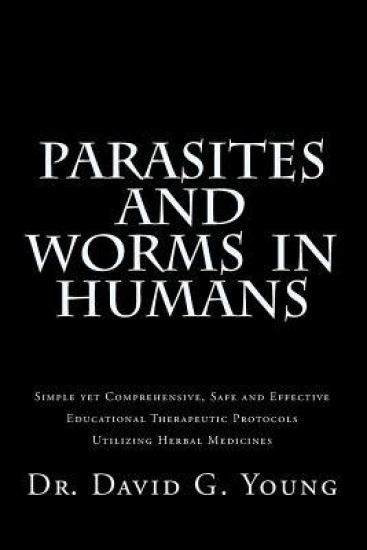
AllNaturalDoctor.com 73% of Pediatricians see cases of pet to human zoonotic parasitic disease every year.* Parasitic zoonoses are diseases that can be transmitted from pets to people. The parasites that pediatricians see most often are roundworms, tapeworms and hookworms. 8 in 10 pediatricians do not believe their clients with young children and pets are aware of the risks. Parasites are transmitted to people through oral ingestion of parasite eggs from a contaminated environment, by hookworm larva penetrating the skin, or from accidentally ingesting a flea infected with tapeworm.* In just one week, 2 puppies infected with roundworms can shed more than 20 million eggs, extensively contaminating a 2,800 sq ft backyard. Roundworm eggs remain alive in the soil for years, waiting to infect pets or people.* Common symptoms in pets infected with parasites are: vomiting, diarrhea, anemia, depression, irritability, and loss of appetite.* *Reference: www.bayerDVM.com A Note from Dr. Young: This book includes colored pictures of parasites and worms. I designed my book "Parasites and Worms in Humans," as a educational medical reference textbook for anyone with an educational level between high-school students, through and including medical students. It will be easily understood by the average lay person who has no medical knowledge, yet contains enough referenced information, genuses, disease types, and ICD -10 billing codes, for medical students who need details. I wrote this book as an instructional resource, with the same information I would present at a weekend educational seminar designed for the average family with children; discussing parasites, worms, and what can be done to eradicate these unwanted pests from the human body using therapeutic grade, natural herbal medicines. As a teaching tool, I've also included the exact remedial protocols I developed and use whenever I treat my patients, for any type of parasite or worm infestations. Instructions are included on how any lay person can easily obtain, directly from the manufacturers, the exact herbal medicines I use in my practice when I treat my parasite and worm patients. There are numerous types of parasites and worms which I've seen infest humans. Some are rare while others are more common. The heart of my book details the most common parasites and worms that can, and do, infest mankind from any part of this globe, including highly developed countries such as the USA. This book discusses the following twelve parasites and worms: 1. Amoebae Acanthamoeba & Balamuthia Mandrillaris, 2. Amoeba Entamoeba Histolytica, 3. Amoeba Naegleria Fowlera, 4. Blastocystis, 5. Giardia, 6. Hookworms, 7. Lymphatic Filariasis (Elephantiasis), 8. Pinworms, 9. Roundworms, 10. Tapeworms, 11. Trichinella, 12. Whipworms. If a parasite is not listed in my book which may be of concern, the Educational Therapeutic Protocols I teach in my book could also be applied to other parasites and worms. An example is the "Human Botfly" (Dermatobia hominis) (a.k.a.: American Warble Fly) and the very similar / related horse botfly, the "Equine Botfly". Both have nearly identical life cycles, infestation and complications to their hosts. I cannot say my protocols will help in all cases of parasites and worms, but I would at least try it. If in doubt, use the strongest protocols. A strong immune system and common sense hygienic practices are paramount to help eradicate and keep a body clear of parasites. Any herbal program works best when a person has a natural strong immunity. This will require paying attention to eating a good wholesome diet and other best-line nutritional support. Chapter One of my book can be read for free on my website: AllNaturalDoctor.com, under the topic "Parasites." This book is for educational purposes only and has not been evaluated by the FDA
Decades before Occupy Wall Street challenged the American financial system, activists began organizing alternatives to provide capital to "unbankable" communities and the poor. With roots in the civil rights, anti-poverty, and other progressive movements, they brought little training in finance. They formed nonprofit loan funds, credit unions, and even a new bank-organizations that by 1992 became known as "community development financial institutions," or CDFIs. By melding their vision with that of President Clinton, CDFIs grew from church basements and kitchen tables to number more than 1,000 institutions with billions of dollars of capital. They have helped transform community development by providing credit and financial services across the United States, from inner cities to Native American reservations. Democratizing Finance traces the roots of community development finance over two centuries, a history that runs from Benjamin Franklin, through an ill-starred bank for African American veterans of the Civil War, the birth of the credit union movement, and the War on Poverty. Drawn from hundreds of interviews with CDFI leaders, presidential archives, and congressional testimony, Democratizing Finance provides an insider view of an extraordinary public policy success. Democratizing Finance is a unique resource for practitioners, policymakers, researchers, and social investors....