

Kirjahaku
Etsi kirjoja tekijän nimen, kirjan nimen tai ISBN:n perusteella.
1000 tulosta hakusanalla Doris Lessing












Blending Astrology, Numerology and the Tarot
Doris Chase Doane
American Federation of Astrologers
2012
pokkari

History of the Portrait Collection, Independence National Historical Park
Doris Devine Fanelli
American Philosophical Society Press
2001
sidottu
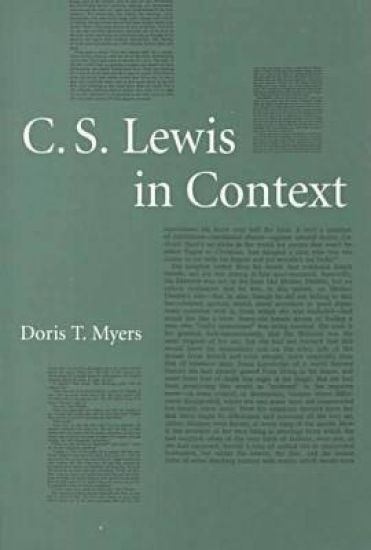
Although C. S. Lewis (1898-1963) achieved a level of popularity as a fiction writer, literary scholars have tended to view him as a minor figure working in an insignificant genre-science fiction-or have pigeonholed him as a Christian apologist and moralist. In C. S. Lewis in Context, Doris T. Myers places his work in the literary milieu of his times and the public context of language rather than in the private realm of personal habits or relationships. A central debate early in the 20th century concerned the nature of language: was it primarily objective and empirical, as Charles K. Ogden and Ivor A. Richards argued in The Meaning of Meaning, or essentially metaphorical and impressionistic, the approach of Owen Garfield in Poetic Diction? Lewis espoused the latter theory and integrated it into the purpose and style of his fiction. Myers therefore argues that he was not “out of touch with his time" as some critics claim, but a 20th-century literary figure engaged in the issues of his day. New readings of many of Lewis’s best known works reflect this linguistic approach. For example, Myers analyzes The Pilgrim’s Regress (1933) in terms of a distinction between archetypal and individual metaphor to highlight the work’s strengths and weaknesses. Instead of interpreting That Hideous Strength (1945) conventionally as a defense of Christianity, she reformulates the debate as that of language the facilitator of rule versus language the instrument of tyranny. She also draws a new parallel between the Chronicles of Narnia and Spenser’s Faerie Queen, showing that they are modeled on similar heroic ideals and narrative technique. Out of the Silent Planet (1938), Perelandra (1943), and Till We Have Faces (1956) are discussed in a new light as well. By approaching Lewis’s fiction through the linguistic controversies of his day, Myers not only develops a new framework within which to evaluate his works, but also clarifies his literary contributions. This valuable study will appeal to literary and linguistic scholars as well as to general enthusiasts of Lewis’s fiction.
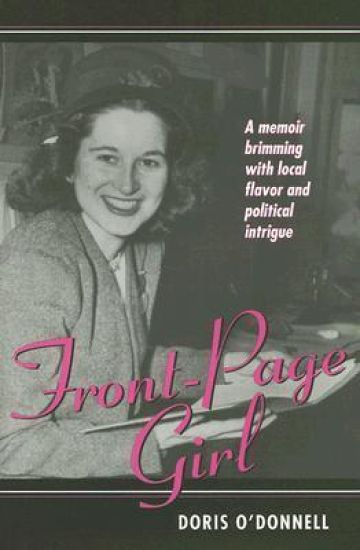
A memoir brimming with local flavor and political intriguePrior to World War II, women were a rarity in the newsrooms of daily papers throughout the country. The assignments given to those few who graced the profession reflected the newspaper culture of the time—society, fashion, and school news. Doris O'Donnell proved the exception. While she began her journalism career with those routine tasks, in short order she broke those barriers and assumed more challenging duties of investigative reporting and covering the crime beat.Her 58-year career as a news reporter included the prestigious assignments of covering such notable events as the assassinations of President John Kennedy, Senator Bobby Kennedy, and Martin Luther King Jr.; the inner-city riots in Cleveland and other major cities during the summer of 1966; Ted Kennedy's Chappaquiddick incident; and the Sam Sheppard murder case. She also traveled with the Cleveland Indians baseball team (the Cleveland Sports Writers voted her out of the all-male press box in Baltimore, D.C., and Boston), lived with an African American family on Cleveland's east side and wrote a three-week series about their daily lives, and traveled to the Soviet Union in 1957 where she reported on the intimate lives of the average Russian.In Front-Page Girl, O'Donnell regales the reader with her tales of Cleveland's mobsters, riots, murders, and corruption and delves into the murkiness of local, national, and global politics. This engaging memoir doubles as an important glimpse into the stories behind the headlines and as a treasure trove of Cleveland history.