Kirjojen hintavertailu. Mukana 11 529 103 kirjaa ja 12 kauppaa.

Kirjahaku

Etsi kirjoja tekijän nimen, kirjan nimen tai ISBN:n perusteella.

1000 tulosta hakusanalla Elizabeth Subrin

The Whole of the Evidence on the Trial of Her Grace Elizabeth, Duchess Dowager of Kingston, Before the Right Honorable the House of Peers, in Westminster-Hall, on Monday the 15th, ... of April, 1776.
The 18th century was a wealth of knowledge, exploration and rapidly growing technology and expanding record-keeping made possible by advances in the printing press. In its determination to preserve the century of revolution, Gale initiated a revolution of its own: digitization of epic proportions to preserve these invaluable works in the largest archive of its kind. Now for the first time these high-quality digital copies of original 18th century manuscripts are available in print, making them highly accessible to libraries, undergraduate students, and independent scholars.This collection reveals the history of English common law and Empire law in a vastly changing world of British expansion. Dominating the legal field is the Commentaries of the Law of England by Sir William Blackstone, which first appeared in 1765. Reference works such as almanacs and catalogues continue to educate us by revealing the day-to-day workings of society.++++The below data was compiled from various identification fields in the bibliographic record of this title. This data is provided as an additional tool in helping to insure edition identification: ++++British LibraryT092942Horizontal chain lines. No errata on the verso of the titlepage; a variant has the errata thus. London]: Sold by G. Kearsley, No. 46, Fleet-Street, 1776]. xii,40p.; 2
Truth Vindicated, by the Faithful Testimony and Writings of the Innocent Servant and Hand-maid of the Lord, Elizabeth Bathurst, Deceased. The Fourth Edition
The 18th century was a wealth of knowledge, exploration and rapidly growing technology and expanding record-keeping made possible by advances in the printing press. In its determination to preserve the century of revolution, Gale initiated a revolution of its own: digitization of epic proportions to preserve these invaluable works in the largest archive of its kind. Now for the first time these high-quality digital copies of original 18th century manuscripts are available in print, making them highly accessible to libraries, undergraduate students, and independent scholars.The Age of Enlightenment profoundly enriched religious and philosophical understanding and continues to influence present-day thinking. Works collected here include masterpieces by David Hume, Immanuel Kant, and Jean-Jacques Rousseau, as well as religious sermons and moral debates on the issues of the day, such as the slave trade. The Age of Reason saw conflict between Protestantism and Catholicism transformed into one between faith and logic -- a debate that continues in the twenty-first century.++++The below data was compiled from various identification fields in the bibliographic record of this title. This data is provided as an additional tool in helping to insure edition identification: ++++Huntington LibraryN014194First published as 'Truth's vindication'. Vertical chain lines.London: printed and sold by Mary Hinde, 1774. 72],255, 1]p.; 12
The Memoirs of Mrs. Sophia Baddeley, Late of Drury-Lane Theatre. By Mrs. Elizabeth Steele. A new Edition. In six Volumes. ... of 6; Volume 1
The 18th century was a wealth of knowledge, exploration and rapidly growing technology and expanding record-keeping made possible by advances in the printing press. In its determination to preserve the century of revolution, Gale initiated a revolution of its own: digitization of epic proportions to preserve these invaluable works in the largest archive of its kind. Now for the first time these high-quality digital copies of original 18th century manuscripts are available in print, making them highly accessible to libraries, undergraduate students, and independent scholars.Rich in titles on English life and social history, this collection spans the world as it was known to eighteenth-century historians and explorers. Titles include a wealth of travel accounts and diaries, histories of nations from throughout the world, and maps and charts of a world that was still being discovered. Students of the War of American Independence will find fascinating accounts from the British side of conflict. ++++The below data was compiled from various identification fields in the bibliographic record of this title. This data is provided as an additional tool in helping to insure edition identification: ++++Huntington LibraryT155077London: printed for the author, and sold by all the booksellers, 1787. 6v.; 12
An Answer to the Author of the Critical Review, for March, 1760. Upon the Article of Mrs. Nihell's Treatise on the art of Midwifery. By Mrs. Elizabeth Nihell,
The 18th century was a wealth of knowledge, exploration and rapidly growing technology and expanding record-keeping made possible by advances in the printing press. In its determination to preserve the century of revolution, Gale initiated a revolution of its own: digitization of epic proportions to preserve these invaluable works in the largest archive of its kind. Now for the first time these high-quality digital copies of original 18th century manuscripts are available in print, making them highly accessible to libraries, undergraduate students, and independent scholars.Medical theory and practice of the 1700s developed rapidly, as is evidenced by the extensive collection, which includes descriptions of diseases, their conditions, and treatments. Books on science and technology, agriculture, military technology, natural philosophy, even cookbooks, are all contained here.++++The below data was compiled from various identification fields in the bibliographic record of this title. This data is provided as an additional tool in helping to insure edition identification: ++++National Library of MedicineN016534With a half-title.London: printed for A. Morley, 1760. 4],42p.; 8
A Curious Herbal, Containing Five Hundred Cuts, of the Most Useful Plants, ... By Elizabeth Blackwell. To Which is Added a Short Description of ye Plants; ... of 2; Volume 1
The 18th century was a wealth of knowledge, exploration and rapidly growing technology and expanding record-keeping made possible by advances in the printing press. In its determination to preserve the century of revolution, Gale initiated a revolution of its own: digitization of epic proportions to preserve these invaluable works in the largest archive of its kind. Now for the first time these high-quality digital copies of original 18th century manuscripts are available in print, making them highly accessible to libraries, undergraduate students, and independent scholars.Medical theory and practice of the 1700s developed rapidly, as is evidenced by the extensive collection, which includes descriptions of diseases, their conditions, and treatments. Books on science and technology, agriculture, military technology, natural philosophy, even cookbooks, are all contained here.++++The below data was compiled from various identification fields in the bibliographic record of this title. This data is provided as an additional tool in helping to insure edition identification: ++++National Library of ScotlandT151096Engraved throughout. With an index to each volume. Originally published in weekly instalments. A reissue of the 1737 edition with the imprints re-engraved and volume statements in roman numerals. Make-up of the preliminaries varies.London: printed for John Nourse, 1739. 2v., plates; 2
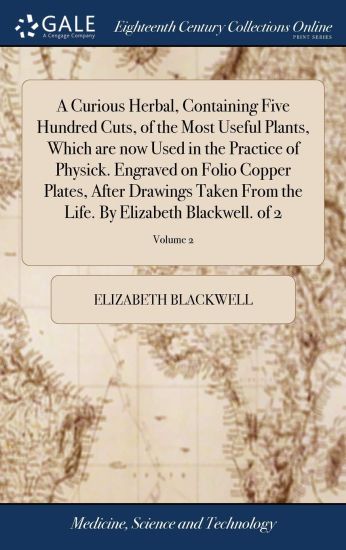
A Curious Herbal, Containing Five Hundred Cuts, of the Most Useful Plants, ... By Elizabeth Blackwell. To Which is Added a Short Description of ye Plants; ... of 2; Volume 2
The 18th century was a wealth of knowledge, exploration and rapidly growing technology and expanding record-keeping made possible by advances in the printing press. In its determination to preserve the century of revolution, Gale initiated a revolution of its own: digitization of epic proportions to preserve these invaluable works in the largest archive of its kind. Now for the first time these high-quality digital copies of original 18th century manuscripts are available in print, making them highly accessible to libraries, undergraduate students, and independent scholars.Medical theory and practice of the 1700s developed rapidly, as is evidenced by the extensive collection, which includes descriptions of diseases, their conditions, and treatments. Books on science and technology, agriculture, military technology, natural philosophy, even cookbooks, are all contained here.++++The below data was compiled from various identification fields in the bibliographic record of this title. This data is provided as an additional tool in helping to insure edition identification: ++++National Library of ScotlandT151096Engraved throughout. With an index to each volume. Originally published in weekly instalments. A reissue of the 1737 edition with the imprints re-engraved and volume statements in roman numerals. Make-up of the preliminaries varies.London: printed for John Nourse, 1739. 2v., plates; 2
Memoirs of the Life of Elizabeth Cairns, Written by Herself Some Years Before Her Death; And Now Taken from Her Own Original Copy with Great Care and Diligence
The 18th century was a wealth of knowledge, exploration and rapidly growing technology and expanding record-keeping made possible by advances in the printing press. In its determination to preserve the century of revolution, Gale initiated a revolution of its own: digitization of epic proportions to preserve these invaluable works in the largest archive of its kind. Now for the first time these high-quality digital copies of original 18th century manuscripts are available in print, making them highly accessible to libraries, undergraduate students, and independent scholars.Rich in titles on English life and social history, this collection spans the world as it was known to eighteenth-century historians and explorers. Titles include a wealth of travel accounts and diaries, histories of nations from throughout the world, and maps and charts of a world that was still being discovered. Students of the War of American Independence will find fascinating accounts from the British side of conflict. ++++The below data was compiled from various identification fields in the bibliographic record of this title. This data is provided as an additional tool in helping to insure edition identification: ++++National Library of ScotlandN035374The 12p. section is a preface to the reader signed by John Greig, includes errata at the foot of p. 12.Glasgow: printed for, and sold by John Greig sadler there, and at Edinburgh, Perth and Stirling, 1762?]. 12,228p.; 8
Elizabeth in her Holy Retirement. An Essay to Prepare a Pious Woman for her Lying in. Or, Maxims and Methods of Piety, to Direct and Support an Handmaid of the Lord, who Expects a Time of Travail. [Three Lines of Quotations]
The 18th century was a wealth of knowledge, exploration and rapidly growing technology and expanding record-keeping made possible by advances in the printing press. In its determination to preserve the century of revolution, Gale initiated a revolution of its own: digitization of epic proportions to preserve these invaluable works in the largest archive of its kind. Now for the first time these high-quality digital copies of original 18th century manuscripts are available in print, making them highly accessible to libraries, undergraduate students, and independent scholars.The Age of Enlightenment profoundly enriched religious and philosophical understanding and continues to influence present-day thinking. Works collected here include masterpieces by David Hume, Immanuel Kant, and Jean-Jacques Rousseau, as well as religious sermons and moral debates on the issues of the day, such as the slave trade. The Age of Reason saw conflict between Protestantism and Catholicism transformed into one between faith and logic -- a debate that continues in the twenty-first century.++++The below data was compiled from various identification fields in the bibliographic record of this title. This data is provided as an additional tool in helping to insure edition identification: ++++Bodleian Library (Oxford)W031866Attributed to Cotton Mather by Holmes.Boston in N.E.: Printed by B. Green, for Nicholas Boone, at his shop in Corn Hill, 1710. 4],36p.; 12
A Curious Herbal, Containing Five Hundred Cuts, of the Most Useful Plants, Which are now Used in the Practice of Physick. Engraved on Folio Copper Plates, After Drawings Taken From the Life. By Elizabeth Blackwell. of 2; Volume 1
The 18th century was a wealth of knowledge, exploration and rapidly growing technology and expanding record-keeping made possible by advances in the printing press. In its determination to preserve the century of revolution, Gale initiated a revolution of its own: digitization of epic proportions to preserve these invaluable works in the largest archive of its kind. Now for the first time these high-quality digital copies of original 18th century manuscripts are available in print, making them highly accessible to libraries, undergraduate students, and independent scholars.Medical theory and practice of the 1700s developed rapidly, as is evidenced by the extensive collection, which includes descriptions of diseases, their conditions, and treatments. Books on science and technology, agriculture, military technology, natural philosophy, even cookbooks, are all contained here.++++The below data was compiled from various identification fields in the bibliographic record of this title. This data is provided as an additional tool in helping to insure edition identification: ++++British LibraryT083979With an index to each volume. Originally published in weekly instalments. Titlepage of vol.I printed from the copper-plate used in the 1751 edition, that in vol.II from the 1737 edition; both titlepages with a new imprint. Make-up of the preliminaries London: printed for C. Nourse, 1782. 2v., plates; 2
An Account of the Life and Death of Mrs. Elizabeth Bury, who Died, May the 11th 1720. Aged 76. Chiefly Collected out of her own Diary. Together With her Funeral Sermon, Preach'd at Bristol. The Third Edition
The 18th century was a wealth of knowledge, exploration and rapidly growing technology and expanding record-keeping made possible by advances in the printing press. In its determination to preserve the century of revolution, Gale initiated a revolution of its own: digitization of epic proportions to preserve these invaluable works in the largest archive of its kind. Now for the first time these high-quality digital copies of original 18th century manuscripts are available in print, making them highly accessible to libraries, undergraduate students, and independent scholars.The Age of Enlightenment profoundly enriched religious and philosophical understanding and continues to influence present-day thinking. Works collected here include masterpieces by David Hume, Immanuel Kant, and Jean-Jacques Rousseau, as well as religious sermons and moral debates on the issues of the day, such as the slave trade. The Age of Reason saw conflict between Protestantism and Catholicism transformed into one between faith and logic -- a debate that continues in the twenty-first century.++++The below data was compiled from various identification fields in the bibliographic record of this title. This data is provided as an additional tool in helping to insure edition identification: ++++British LibraryT069835Edited by Samuel Bury. In fact a reissue of the sheets of the second edition, 1721. The final eight pages contain 'In fact an clergy on the much lamanted death of Mrs. Elizabeth Bury.' with its own divisional titlepage.Bristol: printed by and for J. Penn, and sold by J. Sprint; and Em. Matthews, booksellers in London, 1721. 10],230, 8]p.; 8
A Journey Through the Crimea to Constantinople. In a Series of Letters From ... Elizabeth Lady Craven, to His Serene Highness the Margrave of Brandebourg, Anspach, and Bareith. Written in the Year M DCC LXXXVI
The 18th century was a wealth of knowledge, exploration and rapidly growing technology and expanding record-keeping made possible by advances in the printing press. In its determination to preserve the century of revolution, Gale initiated a revolution of its own: digitization of epic proportions to preserve these invaluable works in the largest archive of its kind. Now for the first time these high-quality digital copies of original 18th century manuscripts are available in print, making them highly accessible to libraries, undergraduate students, and independent scholars.Delve into what it was like to live during the eighteenth century by reading the first-hand accounts of everyday people, including city dwellers and farmers, businessmen and bankers, artisans and merchants, artists and their patrons, politicians and their constituents. Original texts make the American, French, and Industrial revolutions vividly contemporary.++++The below data was compiled from various identification fields in the bibliographic record of this title. This data is provided as an additional tool in helping to insure edition identification: ++++Library of CongressN029219With a half-title.Vienna: printed for R. Sammer, 1800. 468p.; 12
A Curious Herbal, Containing Five Hundred Cuts, of the Most Useful Plants, Which are now Used in the Practice of Physick Engraved on Folio Copper Plates, After Drawings, Taken From the Life By Elizabeth Blackwell v 1 of 2
The 18th century was a wealth of knowledge, exploration and rapidly growing technology and expanding record-keeping made possible by advances in the printing press. In its determination to preserve the century of revolution, Gale initiated a revolution of its own: digitization of epic proportions to preserve these invaluable works in the largest archive of its kind. Now for the first time these high-quality digital copies of original 18th century manuscripts are available in print, making them highly accessible to libraries, undergraduate students, and independent scholars.Medical theory and practice of the 1700s developed rapidly, as is evidenced by the extensive collection, which includes descriptions of diseases, their conditions, and treatments. Books on science and technology, agriculture, military technology, natural philosophy, even cookbooks, are all contained here.++++The below data was compiled from various identification fields in the bibliographic record of this title. This data is provided as an additional tool in helping to insure edition identification: ++++British LibraryT083977Engraved throughout. With an index to each volume. Originally published in weekly instalments.London: printed for Samuel Harding, 1737. 2v., plates; 2
English Housewifery, Exemplified in Above Four Hundred and Fifty Receipts, Giving Directions in Most Parts of Cookery; ... With Cuts for the Orderly Placing the Dishes and Courses; ... By Elizabeth Moxon. Ed 13
The 18th century was a wealth of knowledge, exploration and rapidly growing technology and expanding record-keeping made possible by advances in the printing press. In its determination to preserve the century of revolution, Gale initiated a revolution of its own: digitization of epic proportions to preserve these invaluable works in the largest archive of its kind. Now for the first time these high-quality digital copies of original 18th century manuscripts are available in print, making them highly accessible to libraries, undergraduate students, and independent scholars.Medical theory and practice of the 1700s developed rapidly, as is evidenced by the extensive collection, which includes descriptions of diseases, their conditions, and treatments. Books on science and technology, agriculture, military technology, natural philosophy, even cookbooks, are all contained here.++++The below data was compiled from various identification fields in the bibliographic record of this title. This data is provided as an additional tool in helping to insure edition identification: ++++British LibraryT229921The appendix has separate titlepage and pagination, and is entitled 'English housewifery improved; or, a supplement to Moxon's cookery. ... The fifth edition'.London: printed for W. Osborne, T. Griffin, and H. Mozley, Gainsbro', 1789. viii,203, 1],33, 17]p., plates; 12
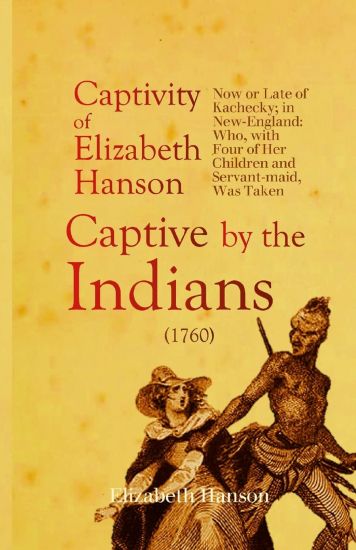
An Account of the Captivity of Elizabeth Hanson Now or Late of Kachecky; in New-England
"Elizabeth Hanson's captivity narrative reveals the difficulties New England families faced...after captivity among the Indians." - Abraham in Arms: War and Gender in Colonial New England (2013) "As in the Puritan captivities, Hanson was taken from her house with her children...subjected to terrible suffering on the trail." - The Oxford Handbook of Early American Literature (2008) "Hunger, a primary concern of many captives, is the focal condition in Hanson's account." -Captive Selves, Captivating Others: The Politics And Poetics Of Colonial American Captivity Narratives (2018) "Not the most well-known colonial captivity narrative, but it was sufficiently popular before 1800 to go through 13 editions." - Authority and Female Authorship in Colonial America (2021) How did this heroic 18th century New Hampshire Quaker woman survive five months of harrowing captivity among the hostile Wabanaki tribe, eventually to be reunited with her surviving children? In 1760, the short 40-page book authored by former captive Elizabeth Hanson(1684-1737) would be published posthumously under the title "An Account of the Captivity of Elizabeth Hanson." Elizabeth Hanson (September 17, 1684-c1737) was a colonial Anglo-American woman from Dover, New Hampshire, who survived Native American Abenaki capture and captivity in the year 1725 alongside four of her children. Five months after capture, a French family ransomed Elizabeth and her two children in Canada. Her husband was then able to secure them and find another daughter before having to return home, leaving the eldest daughter, Sarah, behind. Elizabeth's captivity narrative became popular because of its detailed insights into Native American captivity, which was a threat to the people in New England due to the almost constant wars with the Native Americans and French in the seventeenth and eighteenth centuries. Her religious take on her experiences was heavily emphasized in her story. Because Elizabeth and her family were Quakers, they refused to take refuge in the garrison when the Abenaki first attacked their area during Dummer's War. Elizabeth and four of her children, Sarah, Elizabeth Jr, Daniel, and her two week old daughter, were taken from her home in Dover, New Hampshire on August 27, 1724. They were held captive by Native Americans until early 1725.
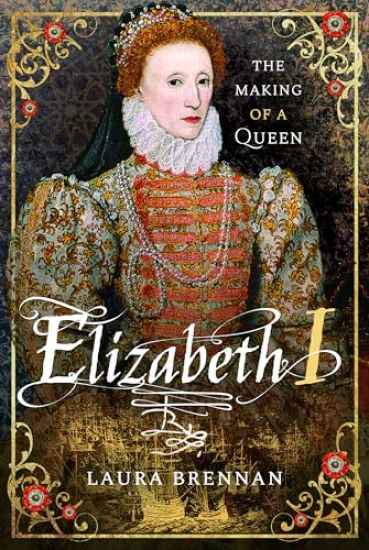
Elizabeth I

Elizabeth I

Laura Brennan

PEN SWORD BOOKS LTD
2025
nidottu
Elizabeth I is arguably one of the greatest monarchs that ever lived. Against an uncertain political and religious backdrop of post-reformation Europe, she ruled at the conception of social modernisation, living in the shadow of the infamy of her parents' reputations and striving to prove herself an equal to the monarchs who had gone before her. This book seeks to explore some of the key events of her life, both before and after she ascended the English throne in late 1558\. By looking at the history of these selected events, as well as investigating the influence of various people in her life, this book sets out to explain Elizabeth’s decisions, both as a queen and as a woman. Amongst the events examined are the death of her mother, the role and fates of her step-mothers, the fate of Lady Jane Grey and the subsequent behaviour and reign of her half sister Mary Tudor, along with the death of Amy Dudley, the return of Mary Queen of Scots to Scotland, the Papal Bull and the Spanish Armada.
Elizabeth of York and the Birth of the Tudor Dynasty
Elizabeth of York has often been overlooked by Tudor historians in favour of her infamous son King Henry VIII and his six wives, as well as her glorious ‘Virgin Queen’ granddaughter Queen Elizabeth I. But Elizabeth, the daughter of King Edward IV and Elizabeth Woodville, deserves far more recognition than she currently receives. She suffered the loss of her younger brothers, the Princes in the Tower, and lived through the reign of her maligned uncle King Richard III, who it has been suggested plotted to marry his niece. Elizabeth was born at a time when having women in power was not considered desirable, but if she had been able to rule then Elizabeth would have been England’s first queen regnant. It was her position as the heiress to the House of York that solidified her husband’s claim to the throne. When she married Henry VII they finally united the warring houses of Lancaster and York. It is often thought that Elizabeth was a weak, ineffectual and pious woman who was too meek to challenge her husband’s rule, but in reality she held some sway over her husband and he often valued her opinion. If anything, Elizabeth was a resolute, well-respected and influential queen. Despite being of Plantagenet blood, Elizabeth of York was the mother of the Tudor dynasty, one of England’s most powerful and ruthless monarchies. Yet she was a devoted mother and an adored queen to the people of England.
Elizabeth Heyrick: The Making of an Anti-Slavery Campaigner
Elizabeth Heyrick fought fiercely for the rights of oppressed people. After a disastrous marriage, she became a prolific pamphleteer, a Quaker and one of the most outspoken anti-slavery campaigners of her time. Despite renewed contemporary interest in slavery, and in the stories of those who opposed it, female abolitionists are still much less well known than their male counterparts. Yet they were often more radical and more daring. Heyrick defied male authority and she led others in challenging William Wilberforce and his colleagues to fight for the immediate rather than the gradual abolition of slavery. This book is the first full length biography of Elizabeth Heyrick and it sets her life in the context of the British anti-slavery movement of the eighteenth and early nineteenth centuries. She was a woman who dared to put her head above the parapet and to call out those responsible for one of the worst abuses of human rights in history. She was courageous, loyal and uncompromising, and did not suffer fools gladly. It was not until long after her death in 1831 that her contribution to the anti-slavery cause started to be recognised and even today, she remains hidden in the shadows of the movement. Using archival records and recently unearthed family materials, as well as contemporary fiction and memoirs, the author creates a compelling account of an unsettled life set in turbulent times.
Elizabeth I's Final Years

Elizabeth I's Final Years

Robert Stedall

PEN SWORD BOOKS LTD
2022
sidottu
Elizabeth I's Final Years outlines the interwoven relationships and rivalries between politicians and courtiers surrounding England's omnipotent queen in the years following the death in 1588 of the Earl of Leicester. Elizabeth now surrounded herself with magnetically attractive younger men with the courtly graces to provide her with what Alison Weir has called an eroticised political relationship'. With these favourites' holding sway at court, they saw personal bravery in the tiltyard or on military exploits as their means to political authority. They failed to appreciate that the parsimonious queen would always resist military aggression and resolutely backed her meticulously cautious advisors, William Cecil, Lord Burghley, and later his son Robert. With its access to New World treasure, it was Spain who threatened the fragile balance of power in Continental Europe. With English military intervention becoming inevitable, the Cecils diverted the likes of Walter Raleigh and the Earl of Essex, despite their lack of military experience, away from the limelight at court into colonial and military expeditions, leaving them just short of the resources needed for success. The favourites' promotions caused friction when seasoned soldiers, like Sir Francis Vere with his unparalleled military record in the Low Countries, were left in subordinate roles. When Spanish support for rebellion in Ireland threatened English security, Robert Cecil encouraged Elizabeth to send Essex, knowing that high command was beyond his capabilities. Essex retorted by rebelling against Cecil's government, for which he lost his head. Both Elizabeth and Cecil realised that only the bookish Lord Mountjoy, another favourite, had the military acumen to resolve the Irish crisis, but his mistress, Essex's sister, the incomparable Penelope Rich, was mired by involvement in her brother's conspiracy. Despite this, Cecil gave Mountjoy unstinting support, biding his time to tarnish his name with James I, as he did against Raleigh and his other political foes.