Jules Gabriel Verne was born on 8 February 1828 on le Feydeau, a small artificial island on the Loire River within the town of Nantes, in No. 4 Rue de Clisson, the house of his maternal grandmother Dame Sophie Allotte de la Fuÿe. His parents were Pierre Verne, an attorney originally from Provins, and Sophie Allote de la Fuÿe, a Nantes woman from a local family of navigators and shipowners, of distant Scottish descent. In 1829, the Verne family moved some hundred meters away to No. 2 Quai Jean-Bart, where Verne's brother Paul was born the same year. Three sisters, Anna, Mathilde, and Marie, would follow (in 1836, 1839, and 1842, respectively). In 1834, at the age of six, Verne was sent to boarding school at 5 Place du Bouffay in Nantes. The teacher, Mme Sambin, was the widow of a naval captain who had disappeared some 30 years before. Mme Sambin often told the students that her husband was a shipwrecked castaway and that he would eventually return like Robinson Crusoe from his desert island paradise. 9] The theme of the Robinsonade would stay with Verne throughout his life and appear in many of his novels, including The Mysterious Island (1874), Second Fatherland (1900), and The School for Robinsons (1882).
LETTERS OF THE EMPRESS FREDERICK, a selection of correspondence from the Empress to her mother, Queen Victoria, was published in 1928. The former Princess Royal of England, who married Prince Frederick William of Prussia in 1858, had never been popular in court circles in Germany because of her liberal influence on her husband and was known behind her back as 'die Engl nderin'. When Emperor Frederick III ascended the throne in March 1888, he was fatally stricken with cancer and died after a reign of three months. Their eldest so, who became Emperor William II, the 'Kaiser Bill' of the First World War, had no respect for their ideals. Sir Frederick Ponsonby, her godson, was entrusted with the safe keeping of her letters shortly before her death in 1901, and he took them back to England. His purpose in publishing them, in his words, was 'to allow the Empress's own words to provide the answer to those cruel and slanderous accusations from which her memory has suffered'. This new edition includes the complete text, a Foreword by John Van der Kiste, and additional illustrations.
Just south of the Mason-Dixon line, Frederick, Maryland, was poised at the crossroads of the Civil War. Here, Confederate troops passed west to the Battles of Antietam and South Monocacy, and Union troops passed north en route to Gettysburg and south to raid the resources of the Shenandoah Valley. Heroes and villains were made in the spired city, from Dame Barbara Fritchie, who is said to have defied General Jackson, and the local doctors and nurses who cared for thousands of wounded soldiers to General Jubal Early, who threatened to put the town to the torch. Join local historian John Schildt as he recounts the fascinating history of Frederick in the Civil War.
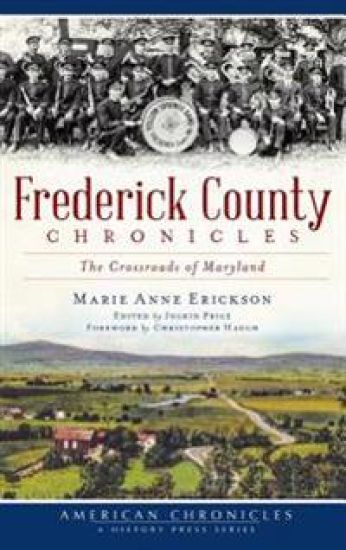
The rails and covered bridges of Frederick County are framed by the waters of the Potomac River to the south and the Mason-Dixon line to the north. The county rests at a crossroads of Maryland cultures and history, and journalist Marie Anne Erickson sought out the oldest members of this diverse community to record their colorful stories. Twenty years after the articles appeared as the Crossroads" series for Frederick Magazine, Ingrid Price has compiled her mother's fascinating essays for the first time. Stories of Civil War battles and Prohibition-era raids share the pages with memories of sledding by moonlight and the hunt for the mythical Snallygaster in Erickson's spirited history. From Brunswick to Mount Airy and from Emmitsburg to Point of Rocks, discover an affectionate and occasionally offbeat portrait of Frederick County."