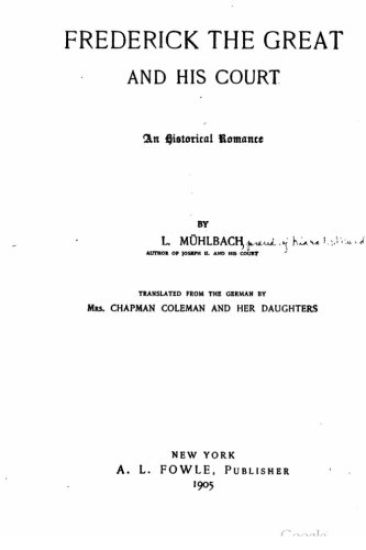
Frederick the Great and his court, an historical romance by L. M hlbach. This book is a reproduction of the original book published in 1900 and may have some imperfections such as marks or hand-written notes.
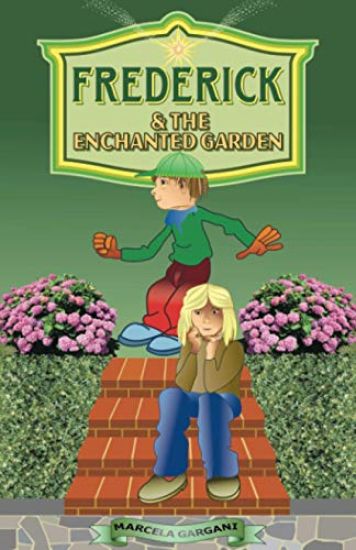
Frederick is a young boy who lives very happily in an old apartment building with a garden in the back. He spent most of his childhood playing in the garden. One day, he finds out that they will have to move. The building is scheduled to be demolished where a highway will be built. Frederick is devastated and refuses to let that happen. For this, he engages himself in a mission to save the garden. The garden has many inhabitants, and some are the legendary trees, the beautiful flowers, and the animals that came to live there. They are all from different origins but together in sharing their vivid lives. They have served for years to protect each other and protect the children while playing there. The garden also kept all memories and secrets of all the people who set foot in there. In this journey, Frederick meets Eloise, who will become his partner and friend. Eloise and Frederick love nature and animals. They both engage in the mission of saving the garden. This experience will help them grow up together and appreciate the world better. What they don't know is that this friendship is the beginning of many adventures.
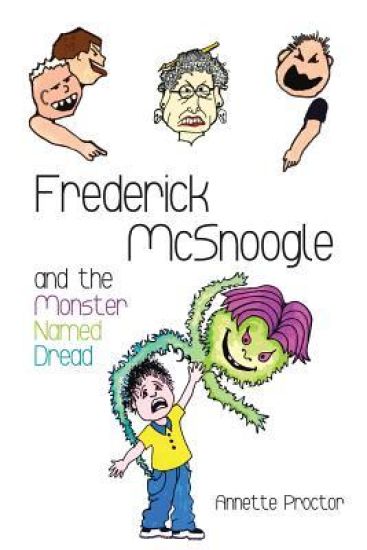
Frederick McSnoogle is haunted by a strange monster that lives in his pocket, plays in his mind, and fills him with worry and dread. He tells his mother he can't go to his first year in school. As Frederick wrestles with his monster, he learns to overcome his fears as he faces new challenges with prayer and Bible verses he's learned at home or in Sunday school. This book is not just for children; as parents, we too need to rely on the precious and powerful promises in God's word for our daily lives. ""This is a wonderful story helping children discover the importance of knowing God's Word, developing a relationship with Him through prayer, and trusting God above all when we are afraid. Children will enjoy the rhyming storyline and parents will appreciate a helpful tool to direct their children back to God's Word and the power of His love over our fears."" --Kristine Jung, Children's Ministry Director ""Mrs. Proctor has created a children's book that is good for all ages Even as an adult, I am Frederick Fear has no age limit, yet the use of Bible verses calms the reader as with Frederick. I can see using this book in my seventh grade classroom to help students understand the concept of theme as well as giving them a subject to which they can readily relate."" --Susan Sieg, Middle School Language Arts Teacher, Seattle Christian School Annette Proctor has a bachelor's degree in art, and taught the subject to children from kindergarten through twelfth grade at three different Christian schools in two states for twenty-three years. She also has four children of her own. Frederick McSnoogle came as a result of the many years with students and parents dealing with all the challenges school can present and how marvelously our Lord God can provide wonderful answers, peace, and confidence to both children and parents.
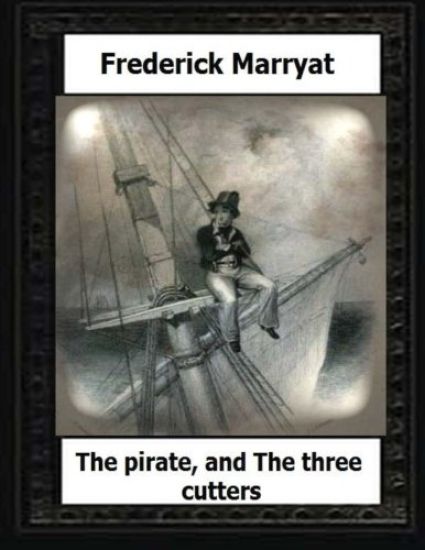
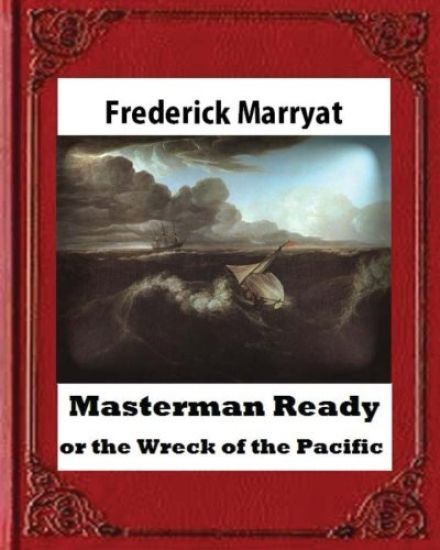
Captain Frederick Marryat (10 July 1792 - 9 August 1848) was a British Royal Navy officer, novelist, and an acquaintance of Charles Dickens, noted today as an early pioneer of the sea story. He is now known particularly for the semi-autobiographical novel Mr Midshipman Easy and his children's novel The Children of the New Forest, and for a widely used system of maritime flag signalling, known as Marryat's Code Marryat was born in London, the son of Joseph Marryat, a "merchant prince" and member of Parliament, and his American wife Charlotte, n e von Geyer. After trying to run away to sea several times, Marryat was permitted to enter the Royal Navy in 1806 as a midshipman on board HMS Imperieuse, a frigate commanded by Lord Cochrane (who later served as inspiration for both Marryat and other authors). Marryat's time aboard the Imperieuse included action off the Gironde, the rescue of a fellow midshipman who had fallen overboard, captures of many ships off the Mediterranean coast of Spain, and the capture of the castle of Montgat. The Imperieuse shifted to operations in the Scheldt in 1809, where Marryat contracted malaria; he returned to England on the 74-gun HMS Victorious.
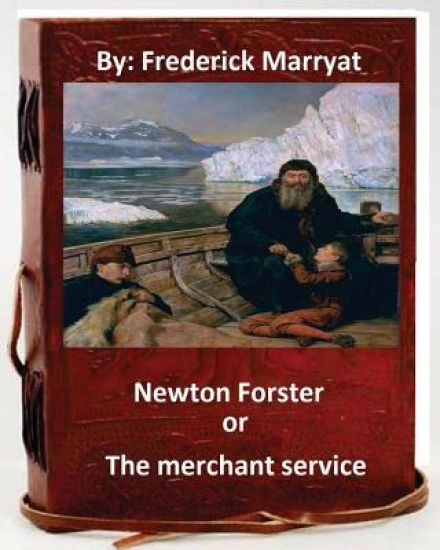
Captain Frederick Marryat (10 July 1792 - 9 August 1848) was a British Royal Navy officer, novelist, and an acquaintance of Charles Dickens, noted today as an early pioneer of the sea story. He is now known particularly for the semi-autobiographical novel Mr Midshipman Easy and his children's novel The Children of the New Forest, and for a widely used system of maritime flag signalling, known as Marryat's Code.Captain Frederick Marryat (1792-1848) was an English novelist, a contemporary and acquaintance of Charles Dickens, noted today as an early pioneer of the sea story. He is now known particularly for the semi-autobiographical novel Mr Midshipman Easy (1836) and his children's novel The Children of the New Forest (1847). After trying to run away to sea several times, he was permitted to enter the Royal Navy in 1806, as a midshipman on board HMS Imperieuse. In 1829 he was commanding the frigate HMS Ariadne on a mission to search for shoals around the Madeira and Canary Islands. This was an uninspiring exercise, and between that and the recent publication of his first novel, The Naval Officer (1829) he decided to resign his commission and take up writing full time. Other works include The King's Own (1830), Newton Forster; or, The Merchant Service (1832), Peter Simple, and The Three Cutters (1834), Jacob Faithful (1834), The Pacha of Many Tales (1835), Japhet, in Search of a Father (1836), The Pirate (1836), The Phantom Ship (1839), Poor Jack (1840), Masterman Ready (1841), Percival Keene (1842), The Privateersman (1846) and The Mission; or, Scenes in Africa (1845). Marryat then turned to scientific studies. He invented a lifeboat, which earned him a gold medal from the Royal Humane Society and the nickname "Lifeboat". Based on his experience in the Napoleonic Wars escorting merchant ships in convoys, he developed a practical, widely used system of maritime flag signalling known as Marryat's Code. During his scientific studies in 1818, he described a new gastropod genus Cyclostrema with the type species Cyclostrema cancellatum Marryat, 1818. In 1819, Marryat married Catherine Shairp, with whom he had four sons (of whom only the youngest Frank outlived him) and seven daughters, including Florence, a prolific novelist and his biographer; Emilia, a writer of moralist adventure novels in her father's vein; and Augusta, also a writer of adventure fiction. Around this time, Marryat collaborated with George Cruikshank the caricaturist to produce The New Union Club, an extravagant satire against abolitionism. In 1820, Marryat commanded the sloop HMS Beaver and temporarily commanded HMS Rosario for the purpose of bringing back to England the despatches announcing the death of Napoleon on Saint Helena. He also took the opportunity to make a sketch of Napoleon's body on his deathbed, which was later published as a lithograph. His artistic skills were modest, but his sketches of shipboard life above and below deck have considerable charm. In 1823, he was appointed to HMS Larne and took part in an expedition against Burma in 1824. (This expedition resulted in large losses due to disease.) He was promoted to command the 28-gun HMS Tees, which gave him the rank of post-captain. He was back in England in 1826. In 1829, he was commanding the frigate HMS Ariadne on a mission to search for shoals around the Madeira and Canary Islands. This was an uninspiring exercise and, between that and the recent publication of his first novel The Naval Officer, he decided to resign his commission in November 1830 and take up writing full time....