Kirjojen hintavertailu. Mukana 12 390 323 kirjaa ja 12 kauppaa.

Kirjahaku

Etsi kirjoja tekijän nimen, kirjan nimen tai ISBN:n perusteella.

1000 tulosta hakusanalla Frederick Starr Jr.

Frederick Douglass, Letter for Civil Rights (Embellished Manuscripts Collection) Midi Lined Hardcover Journal
Frederick Douglass was a former slave who became a leading abolitionist and social reformer. When too ill to continue his speaking engagements, he wrote letters of support for the anti-lynching activist Ida B. Wells to take his place. With this journal cover, we celebrate the legacies of two of the most revered leaders in African American history.
Frederick Douglass, Letter for Civil Rights (Embellished Manuscripts Collection) Ultra Lined Hardcover Journal
Frederick Douglass was a former slave who became a leading abolitionist and social reformer. When too ill to continue his speaking engagements, he wrote letters of support for the anti-lynching activist Ida B. Wells to take his place. With this journal cover, we celebrate the legacies of two of the most revered leaders in African American history.
Frederick Douglass, Letter for Civil Rights (Embellished Manuscripts Collection) Maxi 18-month Dayplanner 2024
Frederick Douglass (1818–1895) was a former slave who became a leading abolitionist and social reformer. When too ill to continue his speaking engagements, he wrote letters of support for the anti-lynching activist and investigative journalist Ida B. Wells (1862–1931) to take his place. With the letter reproduced here, we celebrate the legacies of Douglass and Wells – two of the most revered leaders in African American history.
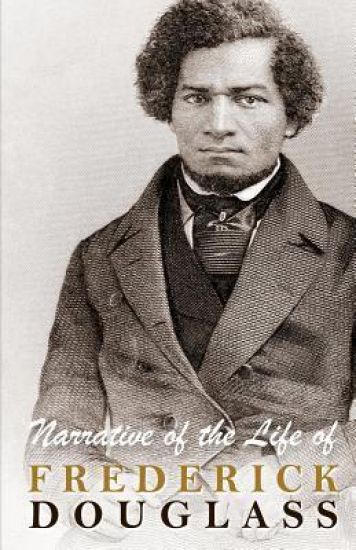
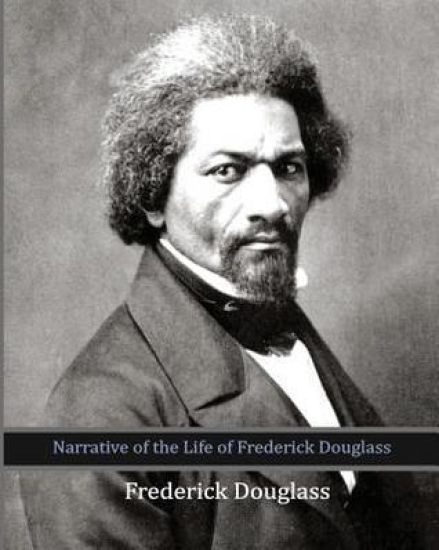
Narrative of the Life of Frederick Douglass

Narrative of the Life of Frederick Douglass

Frederick Douglass

Createspace Independent Publishing Platform
2010
nidottu
Frederick Douglass (c.1818 1895) was born into slavery but escaped in 1838, quickly becoming involved in the abolitionist movement. Following publication in 1845 of this autobiography he risked recognition and recapture by his owner, and so fled the United States. This reissue is of the Dublin edition of 1845, with a preface by Douglass explaining his reasons for his journey to Britain. Opening with a touching explanation of how he doesn't know his birthday, Douglass describes his early life and the growing awareness of the injustices he suffered. The beatings he witnessed and received himself are described in painful detail. Later, Douglass highlights the hypocrisy of the 'slaveholding religion of this land', condemning it as 'the grossest of libels'. The eloquence of the writing, with an immediacy and honesty found shocking at the time, make this an invaluable first-hand record of one of humanity's most shameful acts.
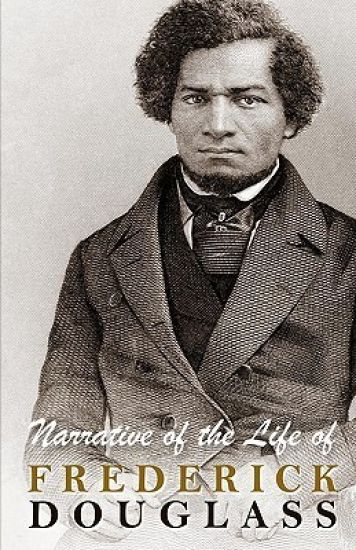
Narrative of the Life of Frederick Douglass

Narrative of the Life of Frederick Douglass

Frederick Douglass

Createspace Independent Publishing Platform
2010
nidottu
Frederick Douglass (c.1818 1895) was born into slavery but escaped in 1838, quickly becoming involved in the abolitionist movement. Following publication in 1845 of this autobiography he risked recognition and recapture by his owner, and so fled the United States. This reissue is of the Dublin edition of 1845, with a preface by Douglass explaining his reasons for his journey to Britain. Opening with a touching explanation of how he doesn't know his birthday, Douglass describes his early life and the growing awareness of the injustices he suffered. The beatings he witnessed and received himself are described in painful detail. Later, Douglass highlights the hypocrisy of the 'slaveholding religion of this land', condemning it as 'the grossest of libels'. The eloquence of the writing, with an immediacy and honesty found shocking at the time, make this an invaluable first-hand record of one of humanity's most shameful acts.
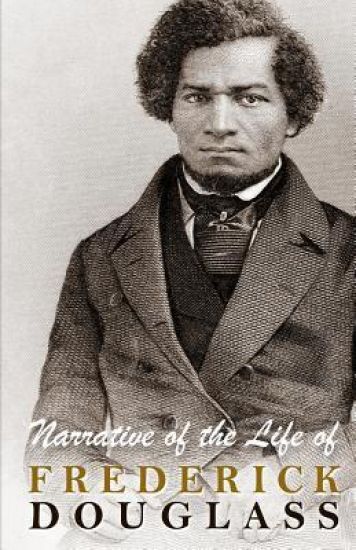
Narrative of the Life of Frederick Douglass

Narrative of the Life of Frederick Douglass

Frederick Douglass

Createspace Independent Publishing Platform
2010
nidottu
Narrative of the Life of Frederick Douglass is a pioneering account of one man's journey from slavery to freedom. Douglass's powerful autobiography was an instant bestseller upon publication in 1845 and played a fundamental role in the abolition of slavery, a movement that Douglass dedicated his life to. Part of the Macmillan Collector's Library; a series of stunning, clothbound, pocket-sized classics with gold foiled edges and ribbon markers. These beautiful books make perfect gifts or a treat for any book lover. This edition is introduced by Dr. Lydia Plath. Born on a plantation in Maryland, Douglass was sent to Baltimore aged only seven. There, he had the rare opportunity to learn to read, which opened his eyes to the existence of the abolition movement. From then on, he was determined to escape, but first suffered at the hands of harsh masters, thwarted plans and deep-rooted racial prejudice before he saved up enough money to get to New York, where he finally freed himself from slavery.
Narrative of the Life of Frederick Douglass

Narrative of the Life of Frederick Douglass

Frederick Douglass

Createspace Independent Publishing Platform
2010
nidottu
Frederick Douglass (c.1818 1895) was born into slavery but escaped in 1838, quickly becoming involved in the abolitionist movement. Following publication in 1845 of this autobiography he risked recognition and recapture by his owner, and so fled the United States. This reissue is of the Dublin edition of 1845, with a preface by Douglass explaining his reasons for his journey to Britain. Opening with a touching explanation of how he doesn't know his birthday, Douglass describes his early life and the growing awareness of the injustices he suffered. The beatings he witnessed and received himself are described in painful detail. Later, Douglass highlights the hypocrisy of the 'slaveholding religion of this land', condemning it as 'the grossest of libels'. The eloquence of the writing, with an immediacy and honesty found shocking at the time, make this an invaluable first-hand record of one of humanity's most shameful acts.
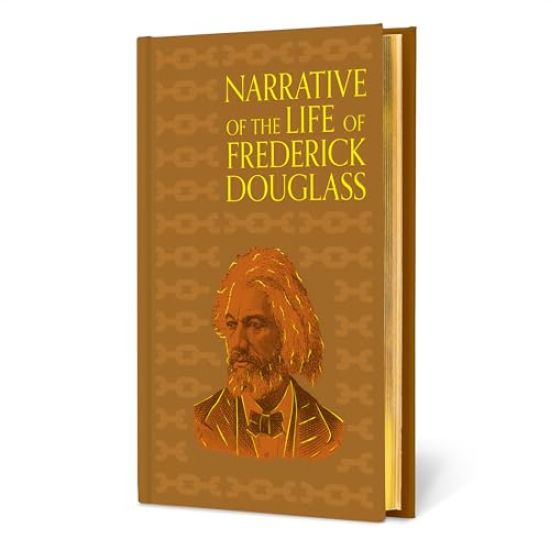
Narrative of the Life of Frederick Douglass (Special Edition)
Discover Frederick Douglass's memoir and treatise on slavery with this exquisite edition from Union Square & Co.’s Signature Gilded Editions series! The stunning Narrative of the Life of Frederick Douglass, An American Slave special edition features sprayed edges, color end pages, a built-in ribbon bookmark, and embossed foil cover. The beautiful design and attention to detail set this special edition book apart, whether you’re reading for the first time or building a library of your favorite classic literature books. Frederick Douglass (born Frederick Bailey) doesn't know the year of his birth. Separated from his mother in infancy, he sees her only a few times, always at night, before her death. His fellow slaves agree that his father is a white man. At the age of seven or eight, Frederick is sent from the Maryland plantation of his birth to Baltimore. His kindly new mistress starts teaching him to read, until her furious husband forbids it. Frederick realizes then that reading is his path to freedom, but his journey is long and difficult. In writing his narrative, Frederick Douglass, a fugitive slave, revealed his slave name, the names of his masters and overseers, and the locations of his servitude, putting him in danger of being captured and returned into slavery. This volume also includes eleven selected essays and speeches. Frederick Douglass’s 1845 autobiography, Narrative of the Life of Frederick Douglass, remains a crucial work in American literature and history, chronicling his life from slavery to freedom and his emergence as an influential voice in the abolitionist movement. Douglass's eloquent examination of slavery’s brutalities and his passionate advocacy for human rights resonate today amid ongoing discussions about racial injustice and inequality. His narrative underscores the enduring struggle for dignity and equality, serving as both a historical document and a source of inspiration for movements advocating social change and civil rights in contemporary society.
Frederick Schiller: The essay on Aesthetics

Frederick Schiller: The essay on Aesthetics

J-Marc Rakotolahy

Createspace Independent Publishing Platform
2012
nidottu
Broadly defined, Aesthetics inform us about what is worth our time and interest in Nature and Art, or in life in general. For Schiller, it is the aesthetic condition which everyone should be reaching for, to allow the advent of the true republic where the human being "neither has to offend the freedom of others in order to affirm his, nor has to throw away his dignity in order to show grace". Hence, the following collection of essays is divided into two parts, an individual level aimed at giving supplemental awareness to the human being about what he or she can do with his or her inner drive and actions; and a national level geared at the continuous education of the citizens through the appropriate exhibition of national events. Part One: Aesthetics of the individual "On the moral use of aesthetic behaviors" is an educational text about taste as something that helps people in the practice of virtues. Taste, here, is a component of Freedom in which the person acts and behaves from inner drive. "On the cohesion of the animal and spiritual natures of the human being" attempts to demonstrate the close relationship between our body and soul. A very audacious essay for its time and still for our century, because it asserts the pre-eminence of the mental condition, and therefore, of the aesthetic education in our overall well-being. This is also the writing which owed F. Schiller his first literary censure. "On the necessity to have limits in the use of beautiful forms" is the aesthetic essay par excellence, and exposes the different relationships among our personal skills, of which we should be aware, in order to use discernment. "On the common and minor treatment of artistic subjects" refines our judgmental capacity further by pointing out at these two manners of dealing with an artistic subject (also applicable in literary style); some will notice that this essay is expressed in a rather incisive manner.
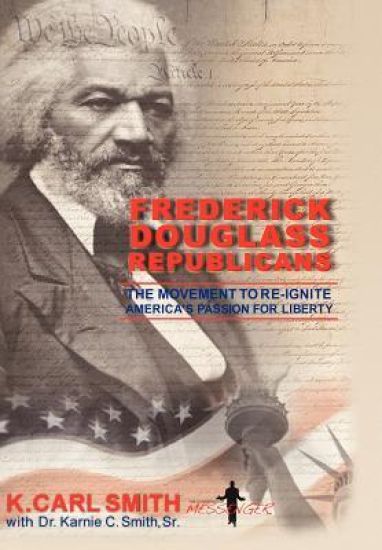
Frederick Douglass Republicans

Frederick Douglass Republicans

K Carl Smith

Authorhouse
2011
sidottu
Frederick Douglass is an iconic historical figure whose noble qualities are visible in the lives of four major Biblical characters: Like Joseph, who was sold into slavery by his brothers and later became second-in-command of Egypt. Douglass was born into slavery and served as an advisor to five US presidents. Like Moses, who liberated the Israelites from Egypt by confronting Pharaoh. Douglass fought to liberate blacks from slavery by agitating President Lincoln. Like Paul, who wrote the majority of the New Testament and composed letters that changed the world. Douglass authored three books and penned thousands of articles, speeches, and editorials that transformed the nature of politics in America. Like Jesus, who forgave those who nailed Him to the cross and yes He died for the salvation of humanity. Douglass forgave his slave masters and dedicated his life for the liberation of all people. For these reasons and more, Douglass' political and social principles can heal our nation. Frederick Douglass-the role model for the next generation-the "Quintessential Conservative."