Kirjojen hintavertailu. Mukana 12 363 183 kirjaa ja 12 kauppaa.

Kirjahaku

Etsi kirjoja tekijän nimen, kirjan nimen tai ISBN:n perusteella.

1000 tulosta hakusanalla Friedrich Neumann

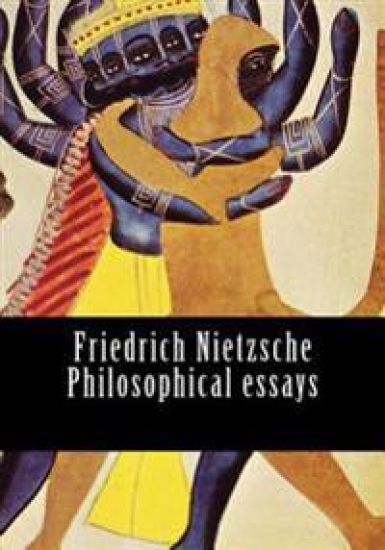
Friedrich Nietzsche Philosophical essays

Friedrich Nietzsche Philosophical essays

Createspace Independent Publishing Platform
2017
nidottu
Friedrich Wilhelm Nietzsche (1844 - 1900) was a German philologist, philosopher, cultural critic, poet and composer. He wrote several critical texts on religion, morality, contemporary culture, philosophy and science, displaying a fondness for metaphor, irony and aphorism. Nietzsche's key ideas include the Apollonian/Dionysian dichotomy, perspectivism, the Will to Power, the "death of God", the bermensch and eternal recurrence. One of the key tenets of his philosophy is the concept of "life-affirmation," which embraces the realities of the world in which we live over the idea of a world beyond. It further champions the creative powers of the individual to strive beyond social, cultural, and moral contexts. His radical questioning of the value and objectivity of truth has been the focus of extensive commentary, and his influence remains substantial, particularly in the continental philosophical schools of existentialism, postmodernism, and post-structuralism. In this book: Beyond Good and Evil Translator: Helen Zimmern Thus Spake Zarathustra, A Book for All and None Translator: Thomas Common The Antichrist Translator: H. L. Mencken
Friedrich Nietzsche: 100 Quotes on Strength, Power, and Honor

Friedrich Nietzsche: 100 Quotes on Strength, Power, and Honor

Jason Kingston; Friedrich Wilhelm Nietzsche

Createspace Independent Publishing Platform
2017
nidottu
"The Great Man... is colder, harder, less hesitating, and without fear of 'opinion'; he lacks the virtues that accompany respect and 'respectability, ' and altogether everything that is the 'virtue of the herd.' If he cannot lead, he goes alone... He knows he is incommunicable: he finds it tasteless to be familiar... When not speaking to himself, he wears a mask. There is a solitude within him that is inaccessible to praise or blame."
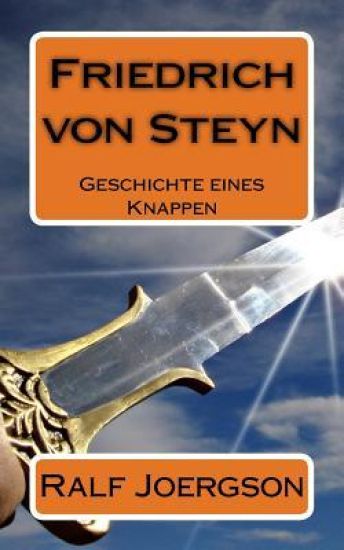
Friedrich von Steyn: Geschichte eines Knappen

Friedrich von Steyn: Geschichte eines Knappen

Ralf Joergson

Createspace Independent Publishing Platform
2017
nidottu
Friedrich von Stein- 16 Jahre jung erz hlt seine Erlebnisse, als Knappe, an der Seite des Junkers Kunz von Kaufungen. Er erlebt L gen, Habgier, Betrug, Krieg und Intrigen. Allerdings lehrt ihn ein M dchen aus niederem Stande was Liebe ist. An der Seite des Junkers lernt er nicht nur lesen und schreiben, sondern auch Ehrlichkeit und Treue.
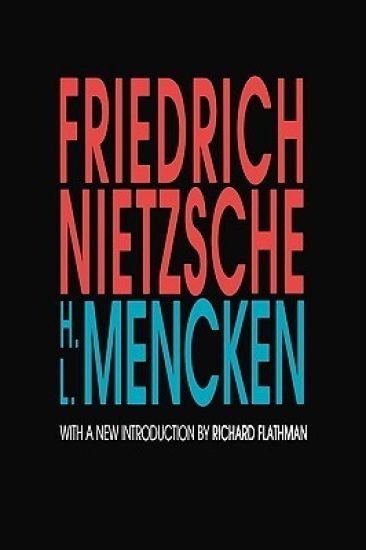
Friedrich Nietzsche

Friedrich Nietzsche

H.L. Mencken

Transaction Publishers
1993
nidottu
The decisive influence of Friedrich Nietzsche on H.L. Mencken is readily acknowledged in the vast literature on the great American journalist and social critic. However, Mencken's 1908 study of the philosopher has been relegated to footnote status by Mencken's critics and biographers and has been largely ignored by Nietzsche scholars. There are good reasons for reversing this judgment. Mencken's work was one of the first comprehensive and sympathetic treatments of Nietzsche's thought in the English language. It is a provocative engagement with the German philosopher's complex and elusive ideas, enhanced by a style that reverberates with a verve and dynamism approaching Nietzsche's own.Mencken presents a view of Nietzsche that elucidates the latter's complex and contentious form of the "gospel of individualism" while evincing a keen appreciation of his unrivalled capacity for critical analysis. The historical scope of Nietzsche's thought is fully evident in Mencken's analysis as is its application to modern societies and politics. In tracing the biographical and intellectual impetus for Nietzsche's relentless attacks on conventional moralities and established modes of thought, Mencken discerned both an ideal and a method for grappling with social and cultural issues that remain salient in our own time.
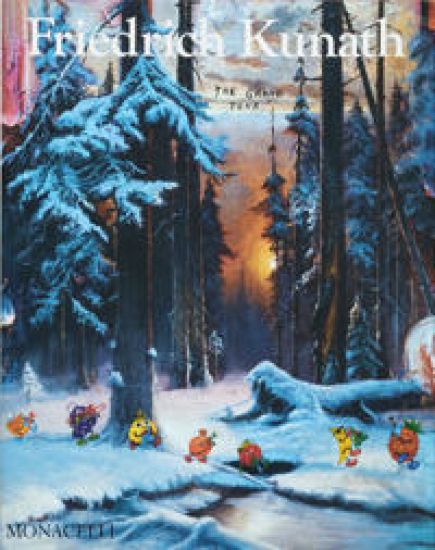
Friedrich Kunath

Friedrich Kunath

Monacelli Press
2025
sidottu
The most comprehensive book to date on contemporary artist Friedrich Kunath Born in former East Germany and now based in Los Angeles, Friedrich Kunath makes work whose core lies in the fusion of the two cultures. Kunath’s paintings combine the sublime aesthetic of German Romanticism with motifs from western popular culture, incorporating lyrical references, cartoon imagery, and album covers with his signature style combining pathos and a witty sense of humor. This unique monograph features works from the past 30 years. A dedicated section of the book documents one of Kunath’s immersive installations, constructed by the artist to house his paintings and sculptures, along with books, record albums, DVDs, posters, and trinkets, all individually inventoried in the book. Accompanying the paintings is a visual narrative that follows Kunath along his travels around the world, encapsulating his many identities as artist, tennis coach, car enthusiast, and consummate collector.
Friedrich Nietzsche

Friedrich Nietzsche

Rudolf Steiner; Bernard J Garber

STEINERBOOKS, INC
2024
pokkari
Written in 1889 (CW 5)Immediately upon reading Nietzsche's Beyond Good and Evil in 1889, Rudolf Steiner recognized a kindred spirit--a courageous fighter for the freedom of the human individuality who waged a fierce but unconscious battle against the unspiritual views of the age. Rudolf Steiner met Nietzsche once in Naumburg in 1895. By this time, Nietzsche's mental state had already deteriorated. In his autobiography, Steiner recounts his intensely affecting encounter with Nietzsche, facilitated by Nietzsche's sister, Frau Foerster-Nietzsche. There, Steiner describes the profound impact of being led into Nietzsche's room and observing him lying on his bed in a state Steiner called "spirit-night." In a radiant vision, Steiner saw Nietzsche's ill-starred destiny, his soul yearning for the spiritual enlightenment it sought but could not fully grasp. This moment transformed Steiner's previous impression of Nietzsche into an encompassing spiritual understanding. Soon afterward, Frau Foerster-Nietzsche asked Steiner to organize the Nietzsche Library at the Archive in Naumberg, and for several weeks Steiner was able to immerse himself in the books Nietzsche had read. Reflecting on Nietzsche's intense, devoted, and wide-ranging studies, Steiner especially pointed to a heavily annotated volume by Ralph Waldo Emerson. Rudolf Steiner's meeting with Nietzsche and his experience in the Archive immediately preceded his writing this book. They are the heart of Friedrich Nietzsche: Fighter for Freedom and inform the mood in which it was written. Friedrich Nietzsche: Fighter for Freedom is an intimate and unique portrait of Friedrich Nietzsche himself and a true characterization of his eternal creative goal, the "superman." Through authentic spiritual research, Rudolf Steiner illuminates for us Nietzsche's enduring legacy and provides a deep, spiritual understanding of his life and work.This book is a translation from German of Friedrich Nietzsche, ein K mpfer gegen seine Zeit (GA 5).
Friedrich Nietzsche: Truth and Affirmation

Friedrich Nietzsche: Truth and Affirmation

Louis Russell

Independently Published
2019
nidottu
The 19th-century German philosopher Friedrich Nietzsche demands no more of his reader than one simple thing: tell yourself the truth. The trouble is, Nietzsche says, some of the lies we tell ourselves are the very structure that gives life meaning. His question, then, is this: How can I be unflinchingly honest with myself but remain committed to living the most prosperous possible life? In philosopher Louis Russell's follow-up to Spinoza's Science: The Ethics of Knowledge, Russell explores, explains, and expands upon Nietzsche's attempts to solve this problem, as well as details several of Nietzsche's key ideas including nihilism, genealogy, truth, and the affirmation of life.
Twilight of the Idols: Friedrich Nietzsche

Twilight of the Idols: Friedrich Nietzsche

Friedrich Nietzsche

Createspace Independent Publishing Platform
2018
nidottu
Twilight of the Idols by Friedrich Nietzsche. Twilight of the Idols, or, How to Philosophize with a Hammer is a book by Friedrich Nietzsche, written in 1888, and published in 1889. Twilight of the Idols was written in just over a week, between 26 August and 3 September 1888, while Nietzsche was on holiday in Sils Maria. About life, the wisest men of all ages have come to the same conclusion: it is no good. Always and everywhere one has heard the same sound from their mouths - a sound full of doubt, full of melancholy, full of weariness of life, full of resistance to life. Even Socrates said, as he died: "To live - that means to be sick a long time: I owe Asclepius the Savior a rooster." Even Socrates was tired of life. What does that prove? What does it demonstrate? At one time, one would have said (and it has been said loud enough by our pessimists): "At least something must be true here The consensus of the sages must show us the truth." Shall we still talk like that today? May we? "At least something must be sick here," we retort. These wisest men of all ages - they should first be scrutinized closely. Were they all perhaps shaky on their legs? tottery? decadent? late? Could it be that wisdom appears on earth as a raven, attracted by a little whiff of carrion?
Ecce Homo: The Autobiography of Friedrich Nietzsche

Ecce Homo: The Autobiography of Friedrich Nietzsche

Friedrich Wilhelm Nietzsche

Createspace Independent Publishing Platform
2018
nidottu
Ecce Homo is the last original book written by philosopher Friedrich Nietzsche before his final years of insanity that lasted until his death in 1900. It was written in 1888 and was not published until 1908. According to one of Nietzsche's most prominent English translators, Walter Kaufmann, the book offers "Nietzsche's own interpretation of his development, his works, and his significance." The book contains several chapters with ironic self-laudatory titles, such as "Why I Am So Wise", "Why I Am So Clever", "Why I Write Such Good Books" and "Why I Am a Destiny". Walter Kaufmann, in his biography Nietzsche: Philosopher, Psychologist, Antichrist noticed the internal parallels, in form and language, to Plato's Apology which documented the Trial of Socrates. In effect, Nietzsche was putting himself on trial with this work, and his sardonic judgments and chapter headings are mordant, mocking, self-deprecating, sly, and they turn this trial against his future accusers, distorters, and superficial judges.
Friedrich Nietzsche

Friedrich Nietzsche

Ritchie Robertson

REAKTION BOOKS
2022
nidottu
In this concise yet comprehensive critical biography, Ritchie Robertson examines the work of Friedrich Nietzsche within the context of his life. The book traces Nietzsche’s development from outstanding classical scholar to cultural critic, who measured Imperial Germany by the standards of ancient Greece. It follows him thence to prophet (in the persona of Zarathustra) and savage polemicist against modern liberal values, offering a ‘philosophy of the future’. Robertson argues that Nietzsche’s middle-period writings offer a subtle and searching analysis of his culture, more rewarding than the strident and often-controversial later works. The book also assesses Nietzsche’s claim to be continuing the Enlightenment, and shows that he valued reason, evidence and fact, without which his historical case against Christianity would make no sense.
The Best of Friedrich Nietzche 3 Volume Set

The Best of Friedrich Nietzche 3 Volume Set

Friedrich Nietzche

WORDSWORTH EDITIONS
2016
nidottu
Wordsworth Classics' new 'Best of' series enables you to buy a collection of the key works of the finest authors at an unbeatable price. Friedrich Nietzsche is best known as a 19th century German philosopher and classical philologist, he wrote critical texts on religion, morality, contemporary culture, philosophy and science, displaying a fondness for metaphor, irony and aphorism. Some of his most famous works include: Human, All Too Human; Beyond Good and Evil; Thus Spake Zarathustra; Twilight of the Idols; The Antichrist and Ecce Homo. This collection contains: - Human, All Too Human / Beyond Good and Evil; Thus Spake Zarathustra; Twilight of the Idols with The Antichrist and Ecce Homo