

Kirjahaku
Etsi kirjoja tekijän nimen, kirjan nimen tai ISBN:n perusteella.
1000 tulosta hakusanalla Gerald Durrell
The Commercialization of News in the Nineteenth Century
Gerald J. Baldasty
University of Wisconsin Press
1992
nidottu
The Commercialization of News in the Nineteenth Century traces the major transformation of newspapers from a politically based press to a commercially based press in the 19th century. Gerald J. Baldasty argues that broad changes in American society, the national economy and the newspaper industry brought about this dramatic shift. Increasingly in the 19th century, news became a commodity valued more for its profitability than for its role in informing or persuading the public on political issues. Newspapers started out as highly partisan adjuncts of political parties. As advertisers replaced political parties as the chief financial support of the press, they influenced newspapers in directing their content toward consumers, especially women. The results were recipes, fiction, contests and features on everything from sports to fashion alongside more standard news about politics. Baldasty makes use of 19th century materials - newspapers from throughout the era, manuscript letters from journalists and politicians, journalism and advertising trade publications, government reports - to document the changing role of the press during the period. He identifies three important phases: the partisan newpapers of the Jacksonian era (1825-1835), the transition of the press in the middle of the century, and the influence of commercialisation of the news in the last two decades of the century.
These 14 essays on the philosophy of the law address topics which include legislative intent and negative and positive freedom.

In this wide-ranging meditation on the nature and purpose of hermeneutics, Gerald L. Bruns argues that hermeneutics is not merely a contemporary theory but an extended family of questions about understanding and interpretation that have multiple and conflicting histories going back to before the beginning of writing.What does it mean to understand a riddle, an action, a concept, a law, an alien culture, or oneself? Bruns expands our sense of the horizons of hermeneutics by situating its basic questions against a background of different cultural traditions and philosophical topics. He discusses, for example, the interpretation of oracles, the silencing of the muses and the writing of history, the quarrel between philosophy and poetry, the canonization of sacred texts, the nature of allegorical exegesis, rabbinical midrash, the mystical exegesis of the Qur'an, the rise of literalism and the individual interpreter, and the nature of Romantic hermeneutics. Dealing with thinkers ranging from Socrates to Luther to Wordsworth to Ricoeur, Bruns also ponders several basic dilemmas about the nature of hermeneutical experience, the meaning of tradition, the hermeneutical function of narrative, and the conflict between truth and freedom in philosophy and literature. His eloquent book demonstrates the continuing power of hermeneutical thinking to open up questions about the world and our place in it.
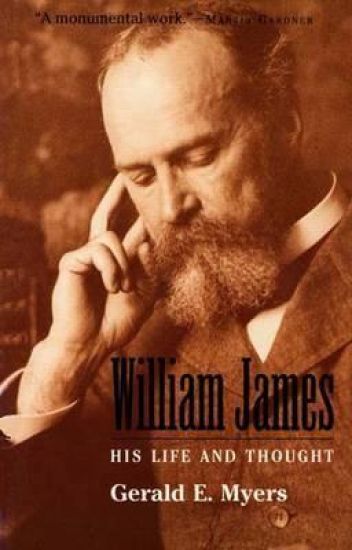
This magisterial book is the first comprehensive interpretive and critical study of one of America’s foremost philosophers and psychologists. Gerald Myers traces James’s life and career and then uses this fresh biographical information to illuminate his writings and ideas.
A renowned neuroscientist explains how our brains and bodies give rise to knowledge, creativity, and mental experience Burgeoning advancements in brain science are opening up new perspectives on how we acquire knowledge. Indeed, it is now possible to explore consciousness—the very center of human concern—by scientific means. In this illuminating book, Dr. Gerald M. Edelman offers a new theory of knowledge based on striking scientific findings about how the brain works. And he addresses the related compelling question: Does the latest research imply that all knowledge can be reduced to scientific description? Edelman’s brain-based approach to knowledge has rich implications for our understanding of creativity, of the normal and abnormal functioning of the brain, and of the connections among the different ways we have of knowing. While the gulf between science and the humanities and their respective views of the world has seemed enormous in the past, the author shows that their differences can be dissolved by considering their origins in brain functions. He foresees a day when brain-based devices will be conscious, and he reflects on this and other fascinating ideas about how we come to know the world and ourselves.

The organization of middle schools and the practices of middle school teachers in Japan and the United States differ dramatically, Gerald K. LeTendre demonstrates in this compelling comparative study. Based on his long-term observations in Japanese and American schools and on analyses of curricula and classroom practices, the author describes what teachers, administrators, and counselors in each country believe about adolescent development. He explores how these beliefs are put into practice and how they affect adolescent development.In both nations, LeTendre observes, school personnel are extremely concerned with volition: the developing willpower of young adolescents. But while both Americans and Japanese believe that nurturing a young person’s ability to use his or her will is crucial, they take very different approaches to dealing with expressions of will. LeTendre also finds conflicting expectations and theories about adolescent development within each system, and he investigates how these can lead to confusion and contradictory rules.

A comprehensive history of deafness, signed languages, and the unresolved struggles of the Deaf to be taught in their unspoken tongue Partially deaf due to a childhood illness, Gerald Shea is no stranger to the search for communicative grace and clarity. In this eloquent and thoroughly researched book, he uncovers the centuries-long struggle of the Deaf to be taught in sign language—the only language that renders them complete, fully communicative human beings. Shea explores the history of the deeply biased attitudes toward the Deaf in Europe and America, which illogically forced them to be taught in a language they could neither hear nor speak. As even A.G. Bell, a fervent oralist, admitted, sign language is "the quickest method of reaching the mind of a deaf child." Shea’s research exposes a persistent but misguided determination among hearing educators to teach the Deaf orally, making the very faculty they lacked the principal instrument of their instruction. To forbid their education in sign language—the “language of light”—is to deny the Deaf their human rights, he concludes.

The Physics and Chemistry of Liquid Crystal Devices
Gerald J. Sprokel
Kluwer Academic/Plenum Publishers
1980
sidottu
Over 100 scientists met at the IBM Research Laboratory in San Jose. California for a symposium on the Physics and Chemistry of Liquid Crystal Devices. The two-day meeting was intellectually stimulating with excellent oral presentations and with person-to-person discussions. The applications of liquid crystals have developed dramatically in the past ten years. In these few years, they have moved from being a laboratory curiosity to products in the market place. The first commercial application (1940's) of liquid crystals was the preparation of a light polarizer. The second commercial application was their use as temperature sensors. The third major application of liquid crystals dealt with commercial displays. Other current applications include polymeric and graphitic fibers and light attenuators. The future of liquid crystals looks very promising indeed. One can expect to see new fibers of qualities which will be superior to those presently known. Graphitic fibers or other physical forms of graphitic materials will be used as catalytic surfaces for chemical synthesis. In the display area. one can expect to see television screens using liquid crystals. Larger displays than are now used in wrist watches and pocket calculators will become available. Liquid crystals using color displays will become commercially practical. Watches. calculators and television screens will have color.

This textbook is for a course in advanced solid-state theory. It is aimed at graduate students in their third or fourth year of study who wish to learn the advanced techniques of solid-state theoretical physics. The method of Green's functions is introduced at the beginning and used throughout. Indeed, it could be considered a book on practical applications of Green's functions, although I prefer to call it a book on physics. The method of Green's functions has been used by many theorists to derive equations which, when solved, provide an accurate numerical description of many processes in solids and quantum fluids. In this book I attempt to summarize many of these theories in order to show how Green's functions are used to solve real problems. My goal, in writing each section, is to describe calculations which can be compared with experiments and to provide these comparisons whenever available. The student is expected to have a background in quantum mechanics at the level acquired from a graduate course using the textbook by either L. I. Schiff, A. S. Davydov, or I. Landau and E. M. Lifshiftz. Similarly, a prior course in solid-state physics is expected, since the reader is assumed to know concepts such as Brillouin zones and energy band theory. Each chapter has problems which are an important part of the lesson; the problems often provide physical insights which are not in the text. Sometimes the answers to the problems are provided, but usually not.

Local Density Theory of Polarizability
Gerald D. Mahan; K.R. Subbaswamy
Kluwer Academic/Plenum Publishers
1990
sidottu
During the past decade the theoretical physics community has learned how to evaluate accurately polarizabilities and susceptibilities for many-electron systems such as atoms, solids, and liquids. The most accurate numerical technique employs a method often called the Time-Dependent Local Density Approximation, which is abbreviated TDLDA. The present volume is a review of recent research on the theory of po larizabilities and susceptibilities. Both authors have been doing these cal culations. However, this review surveys the entire field, summarizing the research of many contributors. The application of an external field, either ac or de, will induce a dipole moment which can be calculated and compared with experiment. For mod erately strong fields, both linear and nonlinear processes contribute to the moment. We cover topics such as polarizability, hyperpolarizability, pho toionization, phonons, and piezoelectricity. Density functional theory in the Local Density Approximation (LDA) has been shown to be a very accurate method for calculating ground state prop erties of electronic system. For static external fields, the induced moments are properties of the ground state. Then the calculation of the polarizability · is very accurate. For ac fields, the moment is not part of the ground state. However, the TDLDA methods are still very accurate.
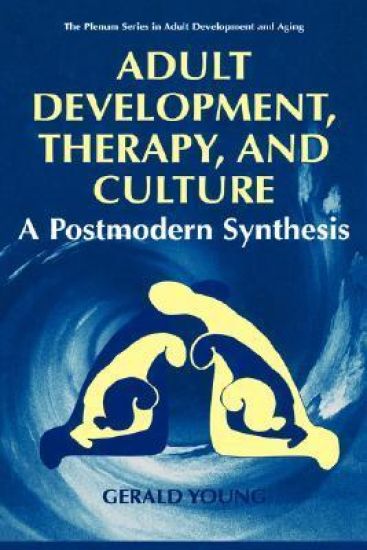
Adult Development, Therapy, and Culture
Gerald D. Young
Kluwer Academic/Plenum Publishers
1997
sidottu
This volume proposes a theoretical integration of several major streams in contemporary psychological theory about adult development and therapy. It adopts the perspective that there are steps in development throughout the adult period, and that they are characterized by a union of the cognitive and affective, the self and the other, and idea with idea (in second-order collective abstractions). That is, they are at once postformal in terms of Piaget's theory, sociocultural in terms ofVygotsky's theory, and postmodern with the latter perspective providing an integrating theme. The affirmative, multivoiced, contextual, relational, other-sensitive side ofpostmodernism is emphasized. Levinas's philosophy of responsibility for the other is seen as congruent with this ethos. The neopiagetian model of development on which the current ap proach is based proposes that the last stage in development concerns collective intelligence, or postmodern, postformal thought. Kegan (1994) has attempted independently to describe adult development from the same perspective. His work on the development of the postmodern mind of the adult is groundbreaking and impressive in its depth. However, I ana lyze the limitations as well as the contributions of his approach, under scoring the advantages of my particular model.

The first, second, and third editions of this book seem to occur at ten year intervals. The intent is to keep the book up-to-date. Many-body theory is a field which continually evolves in time. Journals only publish new results, conferences only invite speakers to report new phenomena, and agencies only fund scientists to do new physics. Today's physics is old hat by tomorrow. Students want to learn new material, and textbooks must be modified to keep up with the times. The early chapters in this book teach the techniques of many-body theory. They are largely unchanged in format. The later chapters apply the techniques to specific problems. The third edition increases the number of applications. New sections have been added, while old sections have been modified to include recent applications. The previous editions were set in type using pre-computer technology. No computer file existed of the prior editions. The publisher scanned the second edition and gave me a disk with the contents. This scan recorded the words accurately and scrambled the equations into unintelligible form. So I retyped the equations using LaTeX. Although tedious, it allowed me to correct the infinite numbers of typographical errors in the previous edition. The earlier typesetting methods did not permit such corrections. The entire book was edited sentence-by sentence. Most old sections of the book were shortened by editing sentences and paragraphs.

The present work is the second in a series constituting an extension of my doctoral thesis done at Stanford in the early 1970s. Like the earlier work, The Reciprocal Modular Brain in Economics and Politics, Shaping the Rational and Moral Basis ofOrganization, Exchange, and Choice (Plenum Publishing, 1999), it may also be considered to respond to the call for consilience by Edward O. Wilson. I agree with Wilson that there is a pressing need in the sciences today for the unification of the social with the natural sciences. I consider the present work to proceed from the perspective of behavioral ecology, specifically a subfield which I choose to call interpersonal behavioral ecology th Ecology, as a general field, has emerged in the last quarter of the 20 century as a major theme of concern as we have become increasingly aware that we must preserve the planet whose limited resources we share with all other earthly creatures. Interpersonal behavioral ecology, however, focuses not on the physical environment, but upon our social environment. It concerns our interpersonal behavioral interactions at all levels, from simple dyadic one-to-one personal interactions to our larger, even global, social, economic, and political interactions.

This book aims to rethink systemic intervention to enhance its relevance for supporting social change in the 21st Century. It offers a new systems philosophy and methodology, focusing upon the fundamental importance of exploring value and boundary judgements as part of the intervention process. A pluralist practice is also promoted, and the reader learns how s/he can draw upon a wide variety of theories and methods to maximise flexibility and responsiveness during interventions. Four detailed examples of the practice of systemic intervention are also provided, each of which is used to illustrate a different aspect of the methodology outlined in the book.

This volume is a textbook for a year-long graduate level course in All research universities have applied mathematics for scientists and engineers. such a course, which could be taught in different departments, such as mathematics, physics, or engineering. I volunteered to teach this course when I realized that my own research students did not learn much in this course at my university. Then I learned that the available textbooks were too introduc tory. While teaching this course without an assigned text, I wrote up my lecture notes and gave them to the students. This textbook is a result of that endeavor. When I took this course many, many, years ago, the primary references were the two volumes of P. M. Morse and H. Feshbach, Methods of Theoretical Physics (McGraw-Hill, 1953). The present text returns the contents to a similar level, although the syllabus is quite different than given in this venerable pair of books.
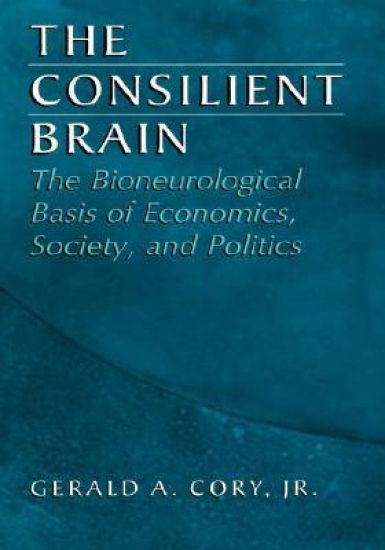
The present work is the third in a series constituting an extension of my doctoral thesis done at Stanford in the early 1970s. Like the earlier works, The Reciprocal Modular Brain in Economics and Politics, Shaping the Rational and Moral Basis of Organization, Exchange, and Choice (Kluwer AcademicfPlenum Publishing, 1999) and Toward Consilience: The Bioneurological Basis of Behavior, Thought, Experience, and Language (Kluwer AcademicfPlenum Publishing, 2000), it may also be considered to respond to the call for consilience by Edward O. Wilson. I agree with Wilson that there is a pressing need in the sciences today for the unification of the social with the natural sciences. I consider the present work to proceed from the perspective of behavioral ecology, specifically a subfield which I choose to call interpersonal behavioral ecology. Ecology, as a general field, has emerged in the last quarter of the 20th century as a major theme of concern as we have become increasingly aware that we must preserve the planet whose limited resources we share with all other earthly creatures. Interpersonal behavioral ecology, however, focuses not on the physical environment, but upon our social environment. It concerns our interpersonal behavioral interactions at all levels, from simple dyadic one-to-one personal interactions to our larger, even global, social, economic, and political interactions.

Gene Therapy of Autoimmune Disease
Gerald J. Prud'homme
Kluwer Academic/Plenum Publishers
2005
sidottu
Autoimmune diseases are diverse and responsible for considerable morbidity. Their etiology remains largely unknown, and current therapy with anti-inflammatory drugs is prone to adverse effects, and rarely curative. New therapies with anti-cytokine antibodies or receptors are promising, but require frequent administration of expensive protein drugs. Gene Therapy of Autoimmune Diseases comprehensively reviews research in gene therapy for autoimmune diseases with viral or non-viral vectors. Gene therapy offers the possibility of long-term, continuous delivery of a wide variety of immunosuppressive, anti-inflammatory, or tolerance-inducing agents. Moreover, highly specific genetically modified cells can be produced. This book discusses the most promising avenues in this exciting new field.

The SS,short for the German Schutzstaffeln ,was a far-flung organization, of which the Gestapo was only one branch, that served as the tyrannical expression of Nazi bureaucracy, a politics of terror. Germans in high places still use the SS as a standard excuse for the acts of murder, extortion, and genocide that were facts of daily life under the Nazis. Reitlinger explores the complex social machinery that allowed the SS to operate,the administration and internal rivalries, the SS field divisions, German military intelligence, and the organization of the concentration and death camps. He shows how the SS was embedded in the basic government of the country during those years and how its members were not so much lunatic killers as loyal citizens doing the bidding of a country that had gone insane. Powerful, objective, and based on original German documents and interviews,including information from Himmler's statistician,this book rejects the SS as an alibi for a nation's responsibility in the most far-reaching racial massacre in history.

In August 1965 the predominantly black neighbourhood of Watts in Los Angeles erupted in flames and violence following an incident of police brutality. The official death toll was thirty-four property losses reached hundreds of millions of dollars but the political results were even more profound. The civil rights movement was placed on the defensive as the image of rioting blacks in the West replaced the image of meek and angelic protestors in the South. A white backlash ensued that led directly to Ronald Reagan's election as governor of California in 1966.This is the first comprehensive treatment of the uprising, its causes, and its aftermath, and is based on hundreds of oral histories and unprecedented archival research. With a cast that includes Ronald Reagan, Tom Bradley, Martin Luther King, Jr., Edmund G. Brown, the NAACP, the Black Panthers, the Nation of Islam, and thousands of blacks and whites, Fire This Time is a compelling account of an event that changed the face of racial justice in America.