Kirjahaku
Etsi kirjoja tekijän nimen, kirjan nimen tai ISBN:n perusteella.
1000 tulosta hakusanalla Guy L. Diffenbaugh

Guy Fawkes: Or a Complete History of the Gunpowder Treason, 1605 (1839)
Thomas Lathbury
Literary Licensing, LLC
2014
nidottu

The Alien Hand and other stories: A Guy Antibes Science Fiction Anthology
Guy Antibes
Createspace Independent Publishing Platform
2014
nidottu
The Alien Handand Other StoriesAn ancient artifact changes a young woman's life forever. A glutton gladiator is marooned in a hostile desert. An investigator searches for magic on a ravaged world and finds something quite unexpected. A member of a survey team must work with his ex-girlfriend in extremely dangerous circumstances. A boy yearns for a special toy. A recent graduate has invented a unique tool for espionage. A doctor is exiled among the worst creatures he can imagine.
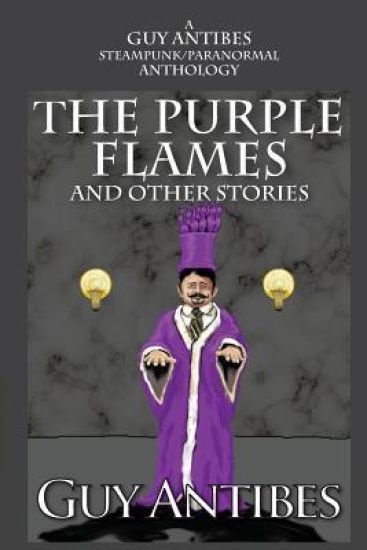
The Purple Flames and other stories: A Guy Antibes Steampunk/Paranormal Anthology
Guy Antibes
Createspace Independent Publishing Platform
2014
nidottu
The Purple Flames and Other StoriesA Guy Antibes AnthologyA reject from a Magic Academy finds purpose. A detective works on a reservation in New Mexico, except the reservation is for ghouls, demons, ghosts, zombies, and the paranormal. A steampunk story about a woman whose mission in life is to destroy vampires that have infested the earth. The grisly story about Tommy Tonsil. In a post-apocalyptic world, two mutants find out about themselves when placed under duress. A magician-impresario seeks who sabotaged his latest production.Steampunk & Paranormal settings with a few tinges of Horror
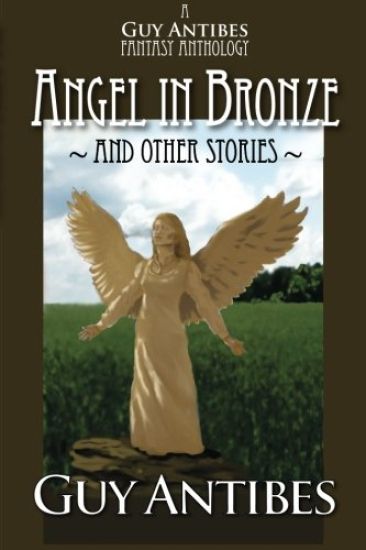
Angel in Bronze and other stories: A Guy Antibes Fantasy Anthology
Guy Antibes
Createspace Independent Publishing Platform
2014
nidottu
Angel in Bronzeand Other StoriesA statue is magically transformed into a woman and sets out to avenge her creator's death. A wizard attempts to destroy a seven-hundred-year-old curse. A boy is appalled by the truth of his parents' midnight disappearances. A Captain's coat is much more than it seems. A healer must decide if the maxim that he has held to his entire life is still valid. A fisherman realizes that there is more to victory than defeating one's enemy.An anthology of fantasy.

The Hard Way: The story of the enlistment & service of Guy Burrell RAOC
Guy Burrell
Createspace Independent Publishing Platform
2014
nidottu


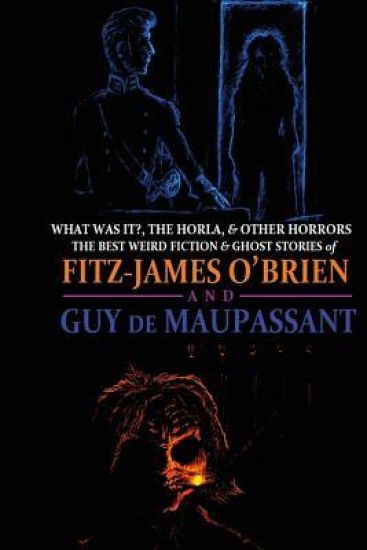
What Was It?, The Horla, and Other Horrors: The Best Weird Fiction and Ghost Stories of Fitz-James O'Brien and Guy de Maupassant: Introduced and Illus
Guy de Maupassant; M. Grant Kellermeyer
Createspace Independent Publishing Platform
2014
nidottu

Guy Mannering Or, the Astrologer Volume I
Sir Walter Scott
Createspace Independent Publishing Platform
2014
nidottu


Guy Livingstone; Or, "Thorough"
George A. Lawrence
Createspace Independent Publishing Platform
2014
nidottu

Guy de Maupassant, novels and short stories
Guy De Maupassant
Createspace Independent Publishing Platform
2014
nidottu
Henri Ren Albert Guy de Maupassant (1850 - 1893) was a popular French writer, considered one of the fathers of the modern short story and one of the form's finest exponents. His stories are characterized by economy of style and efficient, effortless outcomes. Many are set during the Franco-Prussian War of the 1870s, describing the futility of war and the innocent civilians who, caught up in events beyond their control, are permanently changed by their experiences. He wrote more than 300 short stories, six novels, three travel books, and one volume of verse. His first published story, "Boule de Suif" ("Ball of Fat", 1880), is often considered his masterpiece. In this book: Bel Ami (A Ladies' Man) Strong as Death Pierre and Jean Une vie and other stories The Viaticum and other stories The old maid and other stories
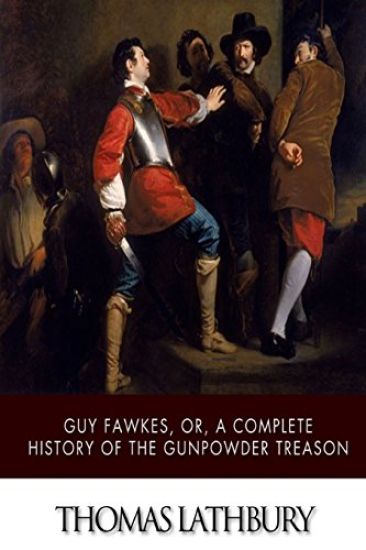
Guy Fawkes, or, a Complete History of the Gunpowder Treason
Thomas Lathbury
Createspace Independent Publishing Platform
2014
nidottu
In 1605, Guy Fawkes was one of over a dozen conspirators in the famous Gunpowder Plot, an attempt to assassinate England's King James I. When the plot was discovered on the 5th of November, Fawkes and other conspirators were quickly convicted and executed, and the King asked his subjects to remember 5 November as "the joyful day of deliverance". Fawkes was but one of a countless number of failed assassins, but in a perversely ironic way, the King's declaration ultimately turned 5 November into Guy Fawkes Day, a celebratory day that usually had children creating an effigy that would then be burned in a bonfire. While the effigy was usually Fawkes, others made it a custom to burn an effigy of the pope, a tradition that came to the Thirteen Colonies in America as well. Though he was only one of the plotters, Fawkes became the one most associated with the act, and he was viewed as a symbol of treason. A strange thing happened, however, in the 19th century, as Fawkes began to undergo a sort of character rehabilitation, beginning with William Harrison Ainsworth's 1841 historical fiction Guy Fawkes; or, The Gunpowder Treason. Suddenly, Fawkes became an anti-hero who had the best interest of the public and was taking action to effect change. Other British literature of the century depicted Fawkes as a kind of action hero. In 2005's Remember, Remember: A Cultural History of Guy Fawkes Day, writer J.A. Sharpe noted Fawks is sometimes remembered tongue-in-cheek as "the last man to enter Parliament with honest intentions." With that new perception of Fawkes taking hold, Fawkes managed to become a symbol of defiance against government. The popular movie V for Vendetta reintroduced Fawkes to American audiences, and Fawkes and the Guy Fawkes Mask have taken on a new life as a rally cry and symbol for groups protesting the government. The major hacking network Anonymous uses the Guy Fawkes Mask as its hallmark, and the Guy Fawkes Mask was a common sight at Occupy protests across America in 2011.
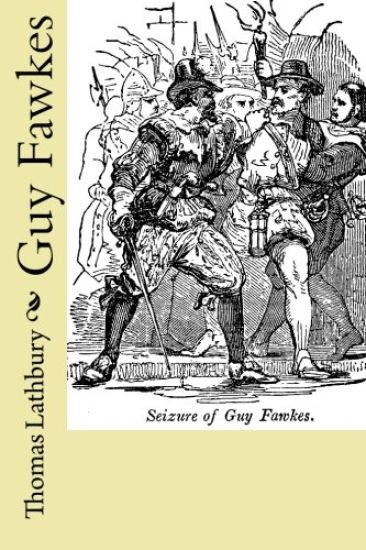
Though the particulars connected with the Gunpowder Treason may be perused in the general histories of the period, yet I am not aware, that any modern narrative of that dark design is to be found in a separate form. Many brief sketches have, indeed, been published in various modern works: but no full and complete history of the Treason has ever been set forth. In compiling the present volume, I have collected, from various quarters, all the information which I could discover on the subject. Guy Fawkes also known as Guido Fawkes, the name he adopted while fighting for the Spanish, was a member of a group of provincial English Catholics who planned the failed Gunpowder Plot of 1605. Fawkes was born and educated in York. His father died when Fawkes was eight years old, after which his mother married a recusant Catholic. Fawkes converted to Catholicism and left for the continent, where he fought in the Eighty Years' War on the side of Catholic Spain against Protestant Dutch reformers in the Low Countries. He travelled to Spain to seek support for a Catholic rebellion in England without success. He later met Thomas Wintour, with whom he returned to England. Wintour introduced Fawkes to Robert Catesby, who planned to assassinate King James I and restore a Catholic monarch to the throne. The plotters leased an undercroft beneath the House of Lords, and Fawkes was placed in charge of the gunpowder they stockpiled there. Prompted by the receipt of an anonymous letter, the authorities searched Westminster Palace during the early hours of 5 November and found Fawkes guarding the explosives. Over the next few days, he was questioned and tortured and eventually confessed. Immediately before his execution on 31 January, Fawkes fell from the scaffold where he was to be hanged and broke his neck, thus avoiding the agony of the mutilation that followed. Fawkes became synonymous with the Gunpowder Plot, the failure of which has been commemorated in Britain since 5 November 1605. His effigy is traditionally burned on a bonfire, commonly accompanied by a fireworks display. In 1604 Fawkes became involved with a small group of English Catholics, led by Robert Catesby, who planned to assassinate the Protestant King James and replace him with his daughter, third in the line of succession, Princess Elizabeth. Fawkes was described by the Jesuit priest and former school friend Oswald Tesimond as "pleasant of approach and cheerful of manner, opposed to quarrels and strife ... loyal to his friends". Tesimond also claimed Fawkes was "a man highly skilled in matters of war", and that it was this mixture of piety and professionalism that endeared him to his fellow conspirators. 3] The author Antonia Fraser describes Fawkes as "a tall, powerfully built man, with thick reddish-brown hair, a flowing moustache in the tradition of the time, and a bushy reddish-brown beard", and that he was "a man of action ... capable of intelligent argument as well as physical endurance, somewhat to the surprise of his enemies." The first meeting of the five central conspirators in the gunpowder plot took place on Sunday 20 May 1604, at an inn called the Duck and Drake, in the fashionable Strand district of London. Catesby had already proposed at an earlier meeting with Thomas Wintour and John Wright to kill the King and his government by blowing up "the Parliament House with gunpowder". Wintour, who at first objected to the plan, was convinced by Catesby to travel to the continent to seek help. Wintour met with the Constable of Castile, the exiled Welsh spy Hugh Owen, 18] and Sir William Stanley, who said that Catesby would receive no support from Spain. Owen did, however, introduce Wintour to Fawkes, who had by then been away from England for many years, and thus was largely unknown in the country. Wintour and Fawkes were contemporaries; each was militant, and had first-hand experience of the unwillingness of the Spaniards to help.

Guy Garrick: (Arthur B Reeve Classics Collection)
Arthur B. Reeve
Createspace Independent Publishing Platform
2015
nidottu