La pollution menace l'environnement et notamment les ressources hydrauliques. Le secteur de l'assainissement joue un r le tr s important pour lutter contre les diff rents types de pollutions urbaines, industrielles... La cr ation des stations d' puration dans plusieurs r gions de pays s'av re n cessaire pour prot ger l' cosyst me et exploiter les eaux us es. L'office national d'assainissement (ONAS) est en fait l' tablissement dou de g rer ces stations d' puration et de veiller de l'analyse des eaux us es domestiques et industrielles pour limiter et contr ler la pollution. Dans ce rapport, un aper u des principales caract ristiques de plusieurs stations d' puration de la r gion de Sfax-Tunisie est donn en d taillant en particulier la station d' puration de Sfax Nord.
Le secteur ol icole occupe une place pr pond rante en Tunisie qui dispose d'un patrimoine assez riche en vari t s d'olive de table. Dans le cadre de ce travail, nous nous sommes int ress s suivre les diff rents stades ph nologiques des vari t s Meski et Picholine aux deux sites d' tude Taous et Bouladhieb de la r gion de Sfax. Par la suite, nous avons approfondi l' tude de l'incompatibilit pollinique par le dosage des compos s ph noliques des pistils des vari t s d'olives de table Meski et Picholine, leur effet sur la germination des grains de pollen de Meski et sur la tol rance aux maladies et galement l' tude pomologique de ces deux vari t s tout au long des mois d' tude dans des oliveraies de la r gion de Sfax. Mots cl s: Stades ph nologiques, Meski, Picholine, Compos s ph noliques, Germination, Pomologie.
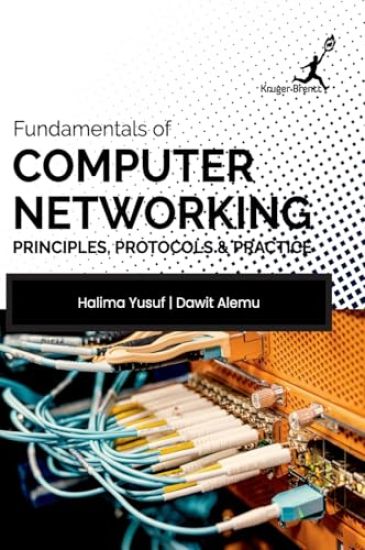
Strong foundation in networking architecture and principles: Explains how networks function, covering OSI and TCP/IP models, data encapsulation, switching, multiplexing, and communication protocols from the ground up. Detailed exploration of core protocols and technologies: Covers IP addressing, routing protocols, ARP, DHCP, DNS, TCP/UDP communication, Ethernet, Wi-Fi, and network addressing mechanisms with clarity and practical depth. Hands-on understanding of real-world network operations: Includes practical insights into routers, switches, subnetting, VLANs, NAT, firewalls, VPNs, and network monitoring tools used in modern enterprise settings. Coverage of emerging and advanced networking trends: Explores SDN, network virtualization, cloud networking, 5G, IoT communication standards, edge computing, and modern cybersecurity challenges. Application-oriented examples and case studies: Demonstrates how networking concepts apply to home networks, enterprise systems, data centers, mobile networks, and the global Internet infrastructure. Extensive exercises and problem-solving approach: Each chapter includes review questions, numerical problems (e.g., subnetting), scenario-based tasks, and lab-oriented activities to reinforce conceptual understanding.
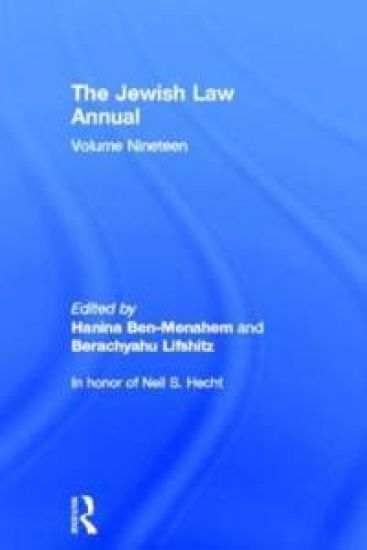
Volume 19 of The Jewish Law Annual is a festschrift in honor of Professor Neil S. Hecht. It contains thirteen articles, ten in English and three in Hebrew. Several articles are jurisprudential in nature, focusing on analysis of halakhic institutions and concepts. Elisha Ancselovits discusses the concept of the prosbul, asking whether it is correct to construe it as a legal fiction, as several scholars have asserted. He takes issue with this characterization of the prosbul, and with other scholarly readings of Tannaitic law in general. The concepts of dignity and shame are addressed in two very different articles, one by Nahum Rakover, and the other by Hanina Ben-Menahem. The former discusses halakhic sources pertaining to the dignity inherent in human existence, and the importance of nurturing it. The latter presents a fascinating survey of actual legal practices that contravened this haklakhic norm. Attestations of these practices are adduced not only from halakhic and semi-halakhic documents, but also from literary, historical, and ethnographic sources. Three articles tackle topical issues of considerable contemporary interest. Bernard S. Jackson comments on legal issues relating to the concept of conversion arising from the story of the biblical heroine Ruth, and compares that concept to the notion of conversion invoked by a recent English court decision on eligibility for admission to denominational schools. An article by Dov I. Frimer explores the much agonized-over question of halakhic remedies for the wife whose husband refuses to grant her a get (bill of divorce), precluding her remarriage. Frimer’s focus is the feasibility of inducing the husband to grant the get through monetary pressure, specifically, by awarding the chained wife compensatory tort damages. Tort remedies are also discussed in the third topical article, by Ronnie Warburg, on negligent misrepresentation by investment advisors. Two papers focus on theory of law. Shai Wozner explores the decision rules–conduct rules dichotomy in the Jewish law context, clarifying how analysis of which category a given law falls under enhances our understanding of the law’s intent. Daniel Sinclair explores the doctrine of normative transparency in the writings of Maimonides, the Hatam Sofer, and R. Abraham Isaac Kook, demonstrating that although transparency was universally endorsed as an ideal, some rabbinical authorities were willing to forego transparency where maintenance of the halakhic system itself was imperiled. An article by Alfredo M. Rabello reviews the primary and secondary literature on end-of-life issues, and contextualizes the much-discussed talmudic passage bAvoda Zara 18a. And an article by Chaim Saiman offers a critical survey of the main approaches to conceptualizing and teaching Jewish law in American universities; it also makes suggestions for new, and perhaps more illuminating pedagogic direction. In the Hebrew section, an intriguing article by Berachyahu Lifshitz presents a comparison of Persian and talmudic law on the status of promises and the role of the divine in their enforcement. Yuval Sinai discusses the halakhic law of evidence, particularly the well-known "two witnesses" requirement and departures from it. The volume closes with a historical article by Elimelech Westreich on the official rabbinical court in nineteenth century Jerusalem. It focuses on the rabbinical figures who served on the court, the communities for whom it adjudicated, and its role in the broader geopolitical and sociocultural context.
Volume 19 of The Jewish Law Annual is a festschrift in honor of Professor Neil S. Hecht. It contains thirteen articles, ten in English and three in Hebrew. Several articles are jurisprudential in nature, focusing on analysis of halakhic institutions and concepts. Elisha Ancselovits discusses the concept of the prosbul, asking whether it is correct to construe it as a legal fiction, as several scholars have asserted. He takes issue with this characterization of the prosbul, and with other scholarly readings of Tannaitic law in general. The concepts of dignity and shame are addressed in two very different articles, one by Nahum Rakover, and the other by Hanina Ben-Menahem. The former discusses halakhic sources pertaining to the dignity inherent in human existence, and the importance of nurturing it. The latter presents a fascinating survey of actual legal practices that contravened this haklakhic norm. Attestations of these practices are adduced not only from halakhic and semi-halakhic documents, but also from literary, historical, and ethnographic sources. Three articles tackle topical issues of considerable contemporary interest. Bernard S. Jackson comments on legal issues relating to the concept of conversion arising from the story of the biblical heroine Ruth, and compares that concept to the notion of conversion invoked by a recent English court decision on eligibility for admission to denominational schools. An article by Dov I. Frimer explores the much agonized-over question of halakhic remedies for the wife whose husband refuses to grant her a get (bill of divorce), precluding her remarriage. Frimer’s focus is the feasibility of inducing the husband to grant the get through monetary pressure, specifically, by awarding the chained wife compensatory tort damages. Tort remedies are also discussed in the third topical article, by Ronnie Warburg, on negligent misrepresentation by investment advisors. Two papers focus on theory of law. Shai Wozner explores the decision rules–conduct rules dichotomy in the Jewish law context, clarifying how analysis of which category a given law falls under enhances our understanding of the law’s intent. Daniel Sinclair explores the doctrine of normative transparency in the writings of Maimonides, the Hatam Sofer, and R. Abraham Isaac Kook, demonstrating that although transparency was universally endorsed as an ideal, some rabbinical authorities were willing to forego transparency where maintenance of the halakhic system itself was imperiled. An article by Alfredo M. Rabello reviews the primary and secondary literature on end-of-life issues, and contextualizes the much-discussed talmudic passage bAvoda Zara 18a. And an article by Chaim Saiman offers a critical survey of the main approaches to conceptualizing and teaching Jewish law in American universities; it also makes suggestions for new, and perhaps more illuminating pedagogic direction. In the Hebrew section, an intriguing article by Berachyahu Lifshitz presents a comparison of Persian and talmudic law on the status of promises and the role of the divine in their enforcement. Yuval Sinai discusses the halakhic law of evidence, particularly the well-known "two witnesses" requirement and departures from it. The volume closes with a historical article by Elimelech Westreich on the official rabbinical court in nineteenth century Jerusalem. It focuses on the rabbinical figures who served on the court, the communities for whom it adjudicated, and its role in the broader geopolitical and sociocultural context.
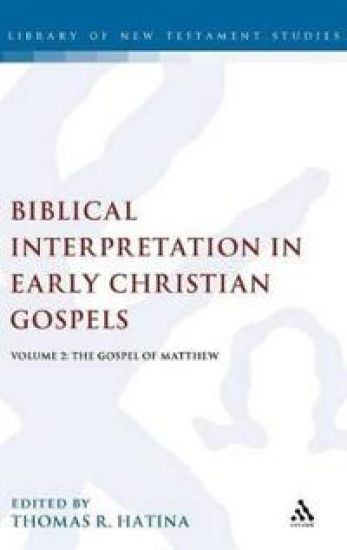
The second title in a proposed five-volume work; volume two, following on from the volume on Mark's Gospel, concentrates on Matthew's Gospel. Contributors consider the function of embedded scripture texts in the context of the Gospels written and read/heard in their early Christian settings. The project is wide ranging, with essays on the function of scripture in the compositional history of the gospels and the collection is broad in scope as a result of current interest in the integration of methods (especially historical and narrative ones). Advancements over the last 20 years in the study of genre and narrative criticism have left a void in the study of the function of embedded biblical texts in the Gospels. This collection of essays will move the study of scripture within scripture forwards.
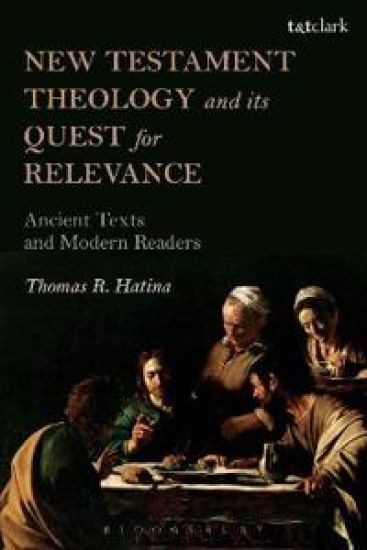
New Testament theology raises many questions, not only within its own boundaries, but also in relation to other fields such as history, literary criticism, sociology, psychology, history, politics, philosophy, and religious studies. But, the overarching question concerns the relevance of two thousand year old writings in today's world. How does one establish what is and is not relevant in the New Testament? How does one communicate the ancient ideas, presented in an alien language, alien time, and alien culture to a contemporary audience? This book is intended to serve as a methodological introduction to the field of New Testament theology, aimed at a range of readers-undergraduate and Seminary students, clergy, and laypersons interested in the relevance of scripture. It is a guide which aims to help readers understand how practitioners of New Testament theology have wrestled with the relationship between historical reconstruction of the New Testament, and its interpretation in the modern world.