Kirjojen hintavertailu. Mukana 12 016 292 kirjaa ja 12 kauppaa.

Kirjahaku

Etsi kirjoja tekijän nimen, kirjan nimen tai ISBN:n perusteella.

1000 tulosta hakusanalla Henri Conscience

Henri Cartier-Bresson

Henri Cartier-Bresson

Clement Chéroux

Schirmer /Mosel Verlag Gm
2012
nidottu
Zum 100. Geburtstag von Henri Cartier-Bresson am 22. August dieses Jahres legt der französische Schriftsteller und Photohistoriker Cl?ment Ch?roux eine erste wissenschaftliche und reich bebilderte Biographie dieses Jahrhundertkünstlers vor. Die Lebensgeschichte Henri Cartier-Bressons liest sich wie ein Roman. Der begabte junge Mann, der aus einer wohlhabenden Pariser Industriellenfamilie stammte, studierte zunächst Malerei bei Andr? Lhote, bevor er im Kreis der Surrealisten Zaungast wird, um dann bei Jean Renoir die Anfänge von Film- und Schauspielkunst zu erlernen. Es dauerte nicht lange, bis Henri Cartier-Bresson seine wahre Leidenschaft entdeckt. Sie geht einher mit der Entwicklung einer deutschen Erfindung, der Kleinbildkamera von Leica. In den Händen von Henri Cartier-Bresson entwickelte sich dieser Apparat zu einem magischen Instrument, und fortan sind es Henri Cartier-Bresson und die Leica-Photographie in Symbiose, die gemeinsam die Lichtbildkunst des Jahrhunderts revolutionieren. Mechanisch-technische und geistig-artistische Schnelligkeit haben in den Bildern von Henri Cartier-Bresson zueinander gefunden. Eine Liaison, die Epoche machte, neue, sehr hohe Maßstäbe setzte und trotz vieler Versuche, sie zu kopieren, bis heute einzigartig geblieben ist.
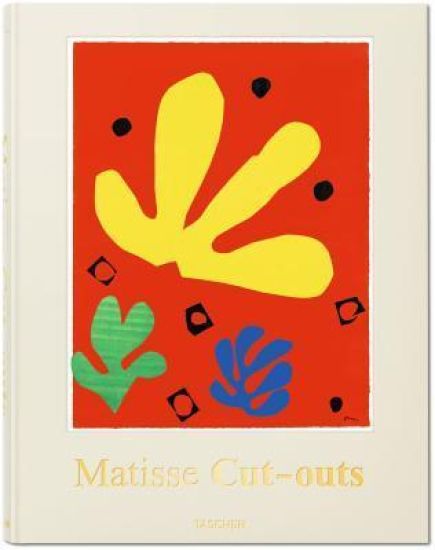
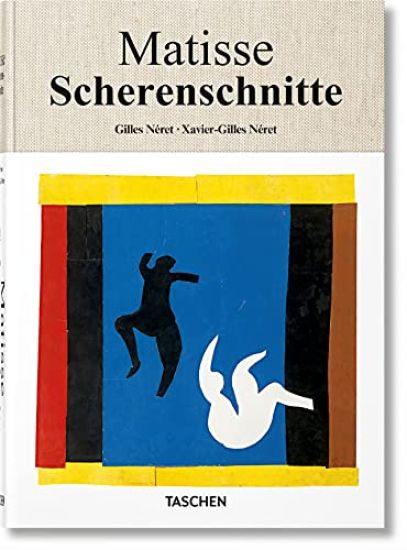
Henri Matisse. Cut-outs. Drawing With Scissors
Towards the end of his monumental career as a painter, sculptor, and lithographer, an elderly, sickly Matisse was unable to stand and use a paintbrush for a longer period of time. In this late phase of his life—he was almost 80 years of age—he developed the technique of ‘carving into color’, creating bright, bold paper cut-outs. Though dismissed by some contemporary critics as the folly of a senile old man, these gouaches decoupées (gouache cut-outs) in fact represented a revolution in modern art, a whole new medium that re-imagined the age-old conflict between color and line.This fresh, standard TASCHEN edition of the first volume of our original prize-winning XL book provides a thorough historical context to Matisse’s cut-outs, tracing their roots in his 1930 trip to Tahiti, through to his final years in Nice. It includes many photos of Matisse, some rare images, by Henri Cartier-Bresson and the filmmaker F.W. Murnau and text from Matisse, publisher E. Tériade, the poets Louis Aragon, Henri Michaux, and Pierre Reverdy, and Matisse’s son-in-law, Georges Duthuit.In their deceptive simplicity, the cut-outs achieved both a sculptural quality and an early minimalist abstraction which would profoundly influence generations of artists to come. Exuberant, multi-hued, and often grand in scale, these works are true pillars of 20th century art, and as bold and innovative to behold today as they were in Matisse’s lifetime.