Kirjojen hintavertailu. Mukana 11 244 527 kirjaa ja 12 kauppaa.

Kirjahaku

Etsi kirjoja tekijän nimen, kirjan nimen tai ISBN:n perusteella.

1000 tulosta hakusanalla Henry-Rider Haggard

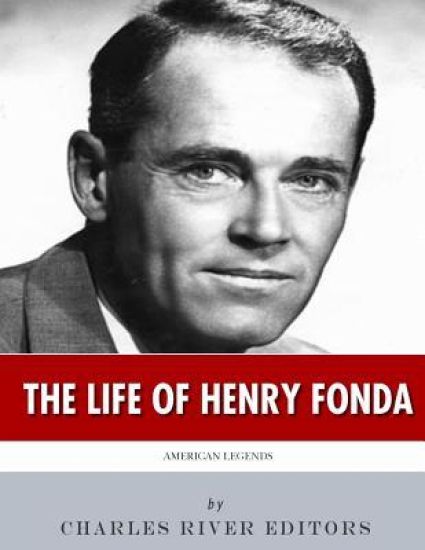
American Legends: The Life of Henry Fonda

American Legends: The Life of Henry Fonda

Charles River

Createspace Independent Publishing Platform
2018
nidottu
*Includes pictures. *Includes quotes about Fonda and Fonda's own quotes about his life and career. *Includes a bibliography for further reading. "I must have had faith that day. When I went out, I was Henry Fonda again. An unemployed actor but a man." - Henry Fonda A lot of ink has been spilled covering the lives of history's most influential figures, but how much of the forest is lost for the trees? In Charles River Editors' American Legends series, readers can get caught up to speed on the lives of America's most important men and women in the time it takes to finish a commute, while learning interesting facts long forgotten or never known. Among all of Hollywood's iconic leading men, arguably none proved as versatile at acting as Henry Fonda, whose career spanned six decades and earned him Academy Awards for roles in various genres. After breaking into Hollywood in 1935, Fonda quickly rose the ranks, earning an Academy Award nomination in the classic Twelve Angry Men (1940), but Fonda had the kind of staying power that most actors could only dream of. In fact, Fonda had already received an honorary lifetime achievement award from the Academy (in 1980) before winning the Oscar for Best Actor for his role in On Golden Pond (1981), an award he earned when he was already well into his 70s and only about a year away from his death. Fonda would also earn Emmy nominations for his work on two different shows and even a Grammy for a spoken word album in 1977. And as if all that wasn't enough, he was also a critically acclaimed stage performer, winning a Tony for Mister Roberts in 1948. A lot of Fonda's success could be attributed to the fact that he could convincingly play the all-American man that everybody in the nation adored and/or wanted to be, to the extent that one magazine called him "the man we wished we lived next door to." At the same time, Fonda could portray characters like Tom Joad, who maintain their status as heroes even while breaking rules on-screen. His personal life also seemed to mirror his acting versatility; while his World War II service helped cement his all-American persona, his family life was also extremely troubled, even after he became recognized as the patriarch of a family full of famous actors, including Jane and Bridget Fonda. When Henry played a distant father on-screen in On Golden Pond alongside his daughter Jane, the autobiographical elements of the film were apparent to those who knew him. One of the remarkable aspects of Henry Fonda's career is that he was able to play vastly different roles despite not changing his style of acting. As Henry's distant personality would suggest, he hailed from an old-school breed of actors who didn't express emotions outwardly, and even as his progeny would become associated with Method Acting, Henry remained in the same mold as actors like Cary Grant and Jimmy Stewart. Of course, the seemingly effortless nature of Henry's acting only made him more endearing to contemporary audiences, even as his acting style would eventually go out of style. American Legends: The Life of Henry Fonda examines the life and career of one of the Golden Era of Hollywood's biggest stars. Along with pictures of important people, places, and events, you will learn about Henry Fonda like never before, in no time at all.
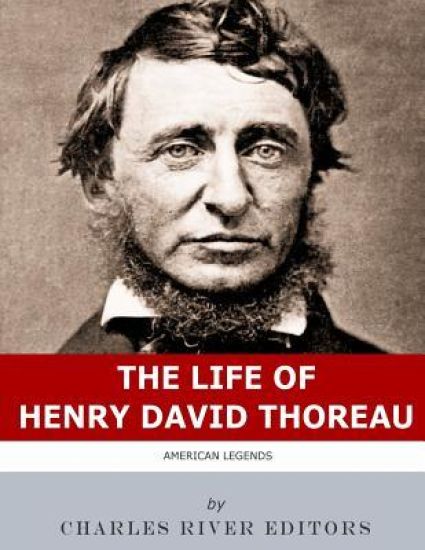
American Legends: The Life of Henry David Thoreau

American Legends: The Life of Henry David Thoreau

Charles River

Createspace Independent Publishing Platform
2018
nidottu
*Includes dozens of Thoreau's quotes. *Includes Emerson's article about Thoreau's life in the August 1862 edition of Atlantic Monthly. *Includes pictures of Thoreau and important people and places in his life. *Includes a Bibliography of Thoreau's works and works about him. "A living dog is better than a dead lion. Shall a man go and hang himself because he belongs to the race of pygmies, and not be the biggest pygmy that he can? Let every one mind his own business, and endeavor to be what he was made. Why should we be in such desperate haste to succeed and in such desperate enterprises? If a man does not keep pace with his companions, perhaps it is because he hears a different drummer. Let him step to the music which he hears, however measured or far away." - Henry David Thoreau A lot of ink has been spilled covering the lives of history's most influential figures, but how much of the forest is lost for the trees? In Charles River Editors' American Legends series, readers can get caught up to speed on the lives of America's most important men and women in the time it takes to finish a commute, while learning interesting facts long forgotten or never known. In the mid-19th century, Romantic literature was still in full bloom across the West, but some American authors began producing literature that, while still Romantic, was unique enough to be considered a different genre. This new genre, Transcendentalism, focused on the spirituality of the self and nature, not rejecting religion outright but concentrating on pragmatism and the importance of individuals as the spiritual center of the cosmos. In addition to drawing upon the Age of Enlightenment, Transcendentalist authors also utilized the philosophy of Plato, who taught that self-fulfillment through attaining knowledge should be an individual's ultimate goal. One of the most famous Transcendentalists, and possibly its most ardent practitioner, was Henry David Thoreau (1817-1862). As a prot g of Ralph Waldo Emerson, Thoreau took the values of the movement to heart and was particularly interested in the interconnection between man and nature, writing in Walden, "Most of the luxuries and many of the so-called comforts of life are not only not indispensable, but positive hindrances to the elevation of mankind." That famous work was Thoreau's account of his experience living for two years in a small cabin in a forest along the shore of Walden Pond in Concord, Massachusetts. In 1846, Thoreau was arrested for failing to pay taxes, which was based on his opposition to slavery and other ways the government spent taxpayers' money. After being freed, he gave a lecture about the roles of governments and individuals in society, which eventually became the famous essay "Civil Disobedience." In addition to rejecting any government "which is the slave's government also," Thoreau famously advocated "the majority of one", calling upon people to break unjust laws. As fate would have it, Thoreau's message of civil disobedience has resonated more than any of his other Transcendentalist values, and it had a profound influence on the philosophy and nonviolent protests of activists like Mahatma Gandhi and Martin Luther King, Jr. American Legends: The Life of Henry David Thoreau looks at the life and work of Thoreau, and it examines his ideology and the Transcendentalist movement. Along with pictures of important people and places, you will learn about Thoreau like you never have before, in no time at all.
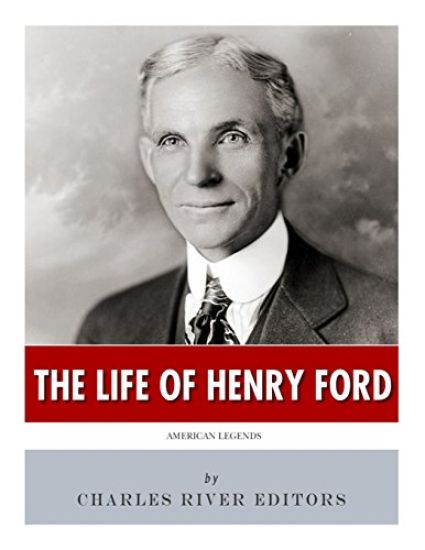
American Legends: The Life of Henry Ford

American Legends: The Life of Henry Ford

Charles River

Createspace Independent Publishing Platform
2018
nidottu
*Includes pictures. *Includes Ford's quotes about his own life and career. *Discusses the controversies surrounding Ford and Nazi Germany. *Includes a bibliography for further reading. "A business that makes nothing but money is a poor business." - Henry Ford "I don't know much about history, and I wouldn't give a nickel for all the history in the world. It means nothing to me. History is more or less bunk. It's tradition. We don't want tradition. We want to live in the present and the only history that is worth a tinker's damn is the history we make today." - Henry Ford in a 1916 newspaper interview. A lot of ink has been spilled covering the lives of history's most influential figures, but how much of the forest is lost for the trees? In Charles River Editors' American Legends series, readers can get caught up to speed on the lives of America's most important men and women in the time it takes to finish a commute, while learning interesting facts long forgotten or never known. Few Americans have a reputation and legacy anything like Henry Ford's, the man whose name is still associated with one of the world's most famous car companies. Ford is unquestionably one of his country's most famous industrialists, and his use of an assembly line to mass produce automobiles was not only innovative but also made it possible for Americans to own cars en masse. To this day, Ford Motor Company's Model T is a household name more than a century after they were manufactured, not only because they were famous cars but because they represented affordable purchases that revolutionized the way people traveled across the country. Cars would never be a luxury item only for the wealthy again. Although Ford's use of an assembly line meant human labor was not as necessary as it would otherwise be, he became known for advocating on behalf of labor rights, including offering an unprecedented $5 work day (the equivalent of $120 today), which doubled how much his workers were previously making and helped ensure his company would be both popular and a destination for workers. Ford helped Detroit become the Motor Capital, and he was progressive when it came to hiring minorities and women. In the process, Ford, who was born into a farming family of modest means, also enriched himself beyond his wildest imaginations, with Forbes magazine recently estimating that his net worth in today's dollars was nearly $190 billion. However, while Ford may arguably be America's most famous businessman, part of that is due to his virulent anti-Semitism and his association with Nazi Germany in the 1930s and the lead up to World War II. He invested in a weekly publication that became notorious for its screeds, and Ford was the only American praised in Hitler's Mein Kampf because of his antagonism towards Jews. Hitler went so far as to call Ford an "inspiration". On his 75th birthday, Ford was awarded the Grand Cross of the German Eagle, which was the highest honor a non-German could receive from Nazi Germany, but one acquaintance later claimed that Ford was disgusted when he saw footage of Nazi concentration camps and what had happened to Jews across Europe. American Legends: The Life of Henry Ford profiles the life and career of one of America's most famous and infamous industrialists. Along with pictures of important people, places, and events, you will learn about Henry Ford like never before, in no time at all.
American Legends: The Life of Henry Kissinger

American Legends: The Life of Henry Kissinger

Charles River

Createspace Independent Publishing Platform
2018
nidottu
*Includes pictures *Includes Kissinger's own quotes about his life and career *Includes online resources, footnotes and a bibliography for further reading *Includes a table of contents "There cannot be a crisis next week. My schedule is already full." - Henry Kissinger "The longer I am out of office, the more infallible I appear to myself." - Henry Kissinger A lot of ink has been spilled covering the lives of history's most influential figures, but how much of the forest is lost for the trees? In Charles River Editors' American Legends series, readers can get caught up to speed on the lives of America's most important men and women in the time it takes to finish a commute, while learning interesting facts long forgotten or never known. The latter half of the 20th century was privy to one of the greatest displays of ongoing international diplomacy seen in American history, but to say that Henry A. Kissinger's career as an American diplomat was purely American would be short-sighted and simplistic. The diplomatic atmosphere, particularly in the 1970s, was far from the image of a public official manning an office in Washington, D.C., greeting foreign dignitaries, and traveling on occasion to sign foreign agreements. In the post-World War II environment, old allies became new enemies, and a series of crises appeared almost simultaneously around the world, involving virtually every nation in the world, on every continent. From Richard Nixon's opening of relations with China to the ensuing conflict with Taiwan, as well as the potential benefits of d tente with the Soviet Union, a fellow nuclear power, Secretary of State Kissinger had his hands full. In addition to that, he had to deal with the churning of leadership changes and military rule in South America, the seething tension between the newly-founded Israel and its surrounding Arab states. The diplomatic demands on the United States as a central and powerful presence were profound and ongoing. As the man who would become the 56th American Secretary of State, Kissinger presided over a vast network of partnerships, rivalries, cultural obstacle courses, and world ideologies. His dealings with every section of the globe were conducted in parallel regimens of public and private negotiations, and power plays in both natural and purposefully manipulated scenarios. As a staunch devotee of the "Realpolitik" concept, which espouses a dispassionate, amoral approach to all conflict, based on ultimate practicality and circumstantial realism, Kissinger, with his deeply embedded pragmatic streak, has been hailed by some as the Archimedes of Diplomacy, a diplomatic genius. Others, on both the left and right, refer to him overtly as a war criminal, with some still insisting that he be brought to justice decades after the zenith of his career for surreptitious policies that interfered with the normal progression of foreign governments. All, however, agree that Kissinger was a master of power plays and superb rhetorical influence; whether ruthless or gentle, he was a diplomatic artist who could inexplicably "manufacture opportunities out of chaos." Through his work with the Nixon administration, Kissinger ultimately became the most celebrated foreign diplomat since Thomas Jefferson, and for a time, he was, according to a national Gallup Poll, the most popular and admired man in America. The highest ranking Jewish official in the history of the United States, even Egyptian politicians sitting across the desk in direct and vehement opposition referred to him behind closed doors as "the magician." American Legends: The Life of Henry Kissinger explores the life and career of one of America's most famous diplomats. Along with pictures of important people, places, and events, you will learn about Kissinger like never before, in no time at all.
The Naturalist on the River Amazons

The Naturalist on the River Amazons

Bates Henry Walter

Hansebooks
2017
pokkari
The Naturalist on the River Amazons - A Record of Adventures. Second Edition is an unchanged, high-quality reprint of the original edition of 1864. Hansebooks is editor of the literature on different topic areas such as research and science, travel and expeditions, cooking and nutrition, medicine, and other genres. As a publisher we focus on the preservation of historical literature. Many works of historical writers and scientists are available today as antiques only. Hansebooks newly publishes these books and contributes to the preservation of literature which has become rare and historical knowledge for the future.
A Voyage up the River Amazon

A Voyage up the River Amazon

William Henry Edwards

Hansebooks
2017
pokkari
A Voyage up the River Amazon - Including a Residence at Par is an unchanged, high-quality reprint of the original edition of 1861. Hansebooks is editor of the literature on different topic areas such as research and science, travel and expeditions, cooking and nutrition, medicine, and other genres. As a publisher we focus on the preservation of historical literature. Many works of historical writers and scientists are available today as antiques only. Hansebooks newly publishes these books and contributes to the preservation of literature which has become rare and historical knowledge for the future.
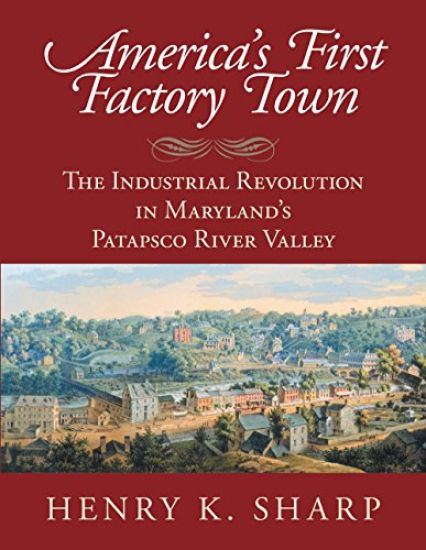
America's First Factory Town: The Industrial Revolution in Maryland's Patapsco River Valley
After extensive research in eighteenth- and early nineteenth-century tax and land records, ledgers, journals, and newspapers, architectural historian Henry K. Sharp convincingly demonstrates how the five Ellicott brothers created America's first factory town, not in New England, but in Maryland's Patapsco River Valley, and modeled it according to the Quaker concept of community. As the first merchant mills prospered in grain, other entrepreneurial spirits added cotton mills and ironworks. By the Civil War, the valley was a booming industrial center, but what the powerful and unpredictable river had given it swiftly destroyed in two terrifying floods. Perceptive and elegantly written, this book challenges long-held beliefs about the origins of the Industrial Revolution in the United States, and brings to life once more a time and place almost lost to history.
Index and Directory to Map of the Country Bordering Upon the River Hunter; The Lands of the Australian-Agricultural Company; With the Ground-Plan and Allotments of King's Town, New South Wales
Title: Index and Directory to Map of the Country bordering upon the River Hunter; the lands of the Australian-Agricultural Company; with the ground-plan and allotments of King's Town, New South Wales: containing a detail of the annual quit rent, and amount of the redemption of the same; also, historical notes upon the tenure and principle of granting lands in the colony since 1810 ... with a view of the present state of agriculture in the colony ... the whole forming, with regard to land affairs in that colony, a complete emigrant's guide.Publisher: British Library, Historical Print EditionsThe British Library is the national library of the United Kingdom. It is one of the world's largest research libraries holding over 150 million items in all known languages and formats: books, journals, newspapers, sound recordings, patents, maps, stamps, prints and much more. Its collections include around 14 million books, along with substantial additional collections of manuscripts and historical items dating back as far as 300 BC.The HISTORY OF EUROPE collection includes books from the British Library digitised by Microsoft. This collection includes works chronicling the development of Western civilisation to the modern age. Highlights include the development of language, political and educational systems, philosophy, science, and the arts. The selection documents periods of civil war, migration, shifts in power, Muslim expansion into Central Europe, complex feudal loyalties, the aristocracy of new nations, and European expansion into the New World. ++++The below data was compiled from various identification fields in the bibliographic record of this title. This data is provided as an additional tool in helping to insure edition identification: ++++ British Library Dangar, Henry; 1828. vii. 128 p.; 8 . 798.e.7.
The River of Golden Sand

The River of Golden Sand

William John Gill; Henry Yule

Cambridge University Press
2010
pokkari
William Gill (1843–1883) was an explorer and commissioned officer in the Royal Engineers. After inheriting a fortune from a distant relative in 1871, Gill decided to remain in the Army and use his inheritance to finance explorations of remote countries, satisfying his love of travel and gathering intelligence for the British government. He was awarded a gold medal by the Royal Geographical Society in 1879 for his scientific observations on his expeditions. This two volume work, first published in 1880, is Gill's account of his expedition from Chengdu, China through Sichuan, along the eastern edge of Tibet via Litang, to Bhamo in Burma, a region little explored by westerners before him. Gill describes in vivid detail the cultures, societies and settlements of the region, and their political and economic systems. Volume 1 covers the area around Chengdu and includes an introductory chapter by the eminent orientalist Henry Yule (1820–1889).
The River of Golden Sand

The River of Golden Sand

William John Gill; Henry Yule

Cambridge University Press
2010
pokkari
William Gill (1843–1883) was an explorer and commissioned officer in the Royal Engineers. After inheriting a fortune from a distant relative in 1871, Gill decided to remain in the Army and use his inheritance to finance explorations of remote countries, satisfying his love of travel and gathering intelligence for the British government. He was awarded a gold medal by the Royal Geographical Society in 1879 for his scientific observations on his expeditions. This two volume work, first published in 1880, is Gill's account of his expedition from Chengdu, China through Sichuan, along the eastern edge of Tibet via Litang, to Bhamo in Burma, a region little explored by westerners before him. Gill describes in vivid detail the cultures, societies and settlements of the region, and their political and economic systems. Volume 2 recounts his travels across the plateau to the upper reaches of the Irrawaddy, partly retracing Marco Polo's route.
The River of Golden Sand, the Narrative of a Journey Through China and Eastern Tibet to Burmah. with Illustrations and ... Maps ... with an Introductory Essay by Col. H. Yule.
Title: The River of Golden Sand, the narrative of a journey through China and Eastern Tibet to Burmah. With illustrations and ... maps ... With an introductory essay by Col. H. Yule.Publisher: British Library, Historical Print EditionsThe British Library is the national library of the United Kingdom. It is one of the world's largest research libraries holding over 150 million items in all known languages and formats: books, journals, newspapers, sound recordings, patents, maps, stamps, prints and much more. Its collections include around 14 million books, along with substantial additional collections of manuscripts and historical items dating back as far as 300 BC.The HISTORY OF ASIA collection includes books from the British Library digitised by Microsoft. This series includes ethnographic and general histories of distinct peripheral coastal regions that comprise South and East Asia. Other works focus on cultural history, archaeology, and linguistics. These books help readers understand the forces that shaped the ancient civilisations and influenced the modern countries of Asia. ++++The below data was compiled from various identification fields in the bibliographic record of this title. This data is provided as an additional tool in helping to insure edition identification: ++++ British Library Gill, William John; Yule, Henry; 1880. 2 vol.; 8 . 10057.d.34.
The River of Golden Sand, the narrative of a journey through China and Eastern Tibet to Burmah. With illustrations and ... maps ... With an introductory essay by Col. H. Yule. Vol. I
Title: The River of Golden Sand, the narrative of a journey through China and Eastern Tibet to Burmah. With illustrations and ... maps ... With an introductory essay by Col. H. Yule.Publisher: British Library, Historical Print EditionsThe British Library is the national library of the United Kingdom. It is one of the world's largest research libraries holding over 150 million items in all known languages and formats: books, journals, newspapers, sound recordings, patents, maps, stamps, prints and much more. Its collections include around 14 million books, along with substantial additional collections of manuscripts and historical items dating back as far as 300 BC.The HISTORY OF ASIA collection includes books from the British Library digitised by Microsoft. This series includes ethnographic and general histories of distinct peripheral coastal regions that comprise South and East Asia. Other works focus on cultural history, archaeology, and linguistics. These books help readers understand the forces that shaped the ancient civilisations and influenced the modern countries of Asia. ++++The below data was compiled from various identification fields in the bibliographic record of this title. This data is provided as an additional tool in helping to insure edition identification: ++++ British Library Gill, William John; Yule, Henry; 1880. 2 vol.; 8 . 10057.d.34.