
Kirjahaku
Etsi kirjoja tekijän nimen, kirjan nimen tai ISBN:n perusteella.
1000 tulosta hakusanalla Hermann Obert
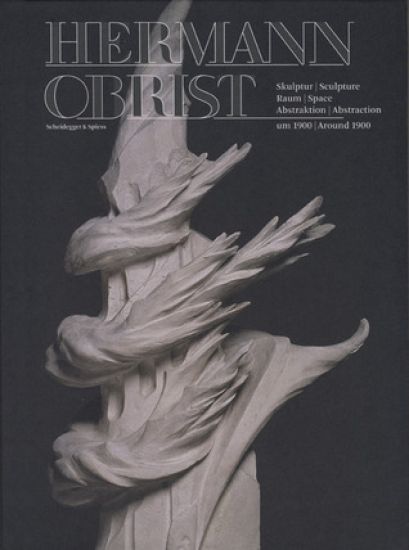
Hermann Obrist
Scheidegger und Spiess AG, Verlag
2017
sidottu
Hermann Obrist (1863-1927) is regarded as one of the most influential founders and visionaries of the German 'Jugendstil' (art nouveau) movement. His oeuvre includes tapestries, ceramics, furniture designs, metal work but also sculptural works, such as monuments and fountains. Born in Switzerland and educated in Italy, Paris, Switzerland and Germany, Obrist settled in Munich, centre of the art nouveau movent in Germany, in 1895, where he made a strong career as a teacher, artist and pioneer of the reform of applied art.This book, accompanying exhibitions in Zurich and Munich, presents the entire range of Hermann Obrist's work in a large number of colour and b/w illustrations. The essays investigate Obrist's ideas and concepts, his inspiration for new abstract designs by natural forms and phenomenons, and on his monuments. The Museum Bellrive in Zurich owns almost all of Obrist's known sculptural works, of which many remained unrealised or have been destroyed during World War II. All his plaster models and a unique photographic documentation of both realised works and models were saved by his widow and daughter and bequeathed to the museum in 1944. This collection is subject of a separate essay.
Hermann Braun
Sharp Ink
2023
pokkari
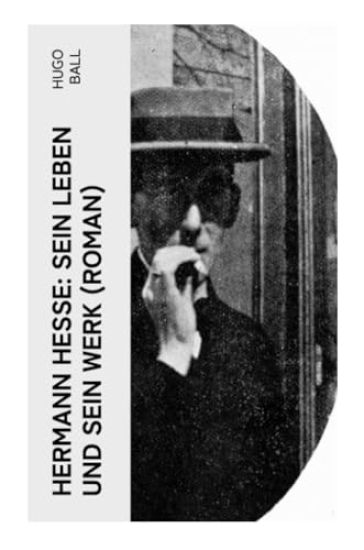
Hermann Hesse
Sharp Ink
2023
pokkari

Hermann und Dorothea
e-artnow
2023
pokkari

Hermann und Dorothea
e-artnow
2023
pokkari
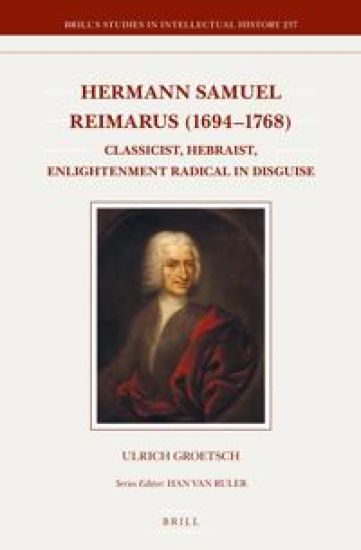
Over the course of thirty years, Hermann Samuel Reimarus (1694-1768) secretly drafted what would become the most thorough attack on revelation to date, ushering the quest for the historical Jesus and foreshadowing the religious criticism of the new atheism of the twentieth century. Peeling away the layers of Reimarus’s radical work by looking at hitherto unpublished manuscript evidence, Ulrich Groetsch shows that the Radical Enlightenment was more than just an international philosophical movement. By demonstrating the importance philology, antiquarianism, and Semitic languages played in Reimarus’s upbringing, scholarship, and teaching, this new study provides a vivid portrayal of an Enlightenment radical at the cusp of the secular age, whose debt to earlier traditions of scholarship remains undisputed.
Hermann Hesse Today / Hermann Hesse Heute
BRILL
2005
sidottu
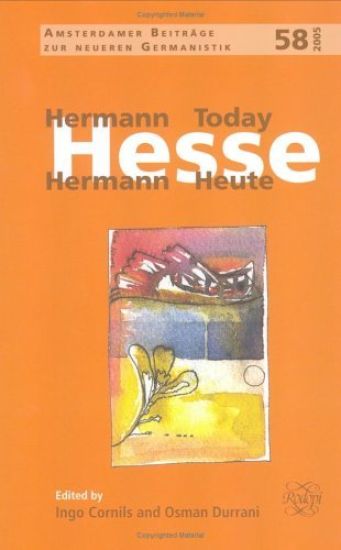
In November 2002, an international conference was held at the Institute of Germanic Studies in London in order to commemorate the 125th anniversary of Hermann Hesse’s birth. Twenty distinguished speakers from North and South America, Russia, Switzerland, Germany and the United Kingdom attended the three-day conference with the specific aim of exploring the continuing importance of this widely read German-language author. This volume brings together the various responses to the complex challenge that Hesse, whose sheer success is sometimes seen as detracting from his status, presents to literary scholarship around the world. The author’s current image among readers and scholars is approached from several distinct thematic and theoretical perspectives, with the objective of providing a concise overview of current research. The volume offers new readings of a number of Hesse’s seminal works and makes a significant contribution to academic research into his past and present standing as a global icon. As the title suggests, the focus is on ‘Hermann Hesse Today’. The book investigates his current significance for a modern readership, taking account of his importance in the lecture theatre and classroom, the multi-facetted applicability of his moral, ethical and aesthetic concerns in the context of a fragmented world, and the continuing relevance of his writings. With the ever-increasing importance of modern preoccupations such as the ecological movement or the growth of the internet, a fresh look at Hesse’s works is long overdue. The most obvious sign of this is the appearance of a definitive, historical-critical edition of his works (prose, poetry, and literary criticism), which will give access to much hitherto unpublished material and stimulate fresh debates on an author who ranks among the best-known and most influential figures of the twentieth century. This volume will be of interest to teachers of German in higher education and their students as well as researchers and the general readership that continues to take an interest in Hesse on both sides of the Atlantic.
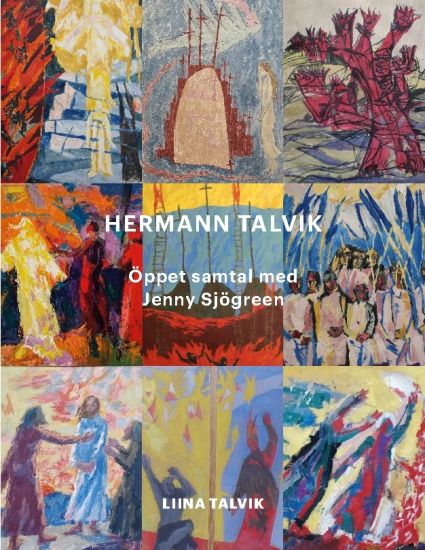
Vad ser du? frågade han. Ofta. Frågan var riktad mot vårt inre. För vad ser vi? Vad ser du och vad ser jag? Vilka är vi? Vet vi egentligen vilka vi är? Du och jag? I den här bokserien, Öppet samtal med, samtalar jag med människor som på olika sätt blivit berörda av min far Hermann Talviks starkt personliga och känsliga kompositioner. Min förhoppning är att du som läsare ska känna dig inbjuden att mentalt delta i detta samtal. Att du ska tillåta dig att reflektera, ifrågasätta och acceptera, såväl dina tankar som mina tankar och våra tankar. I den här boken möter jag prästen Jenny Sjögreen för ett långt samtal om Bibelns avtryck i Hermann Talviks konst. Hermann Talvik (1906-1984) var en mångsidig konstnär. Både vad gäller tekniker och motiv. Hans måleri sträcker sig från lyriska landskap till kompositioner av andlig karaktär. Grafiken spänner över hela fältet från träsnitt och linoleumsnitt till torrnålsgravyrer och etsningar. Han är också monotypiens mästare, en teknisk där målningen från ett plant underlag trycks i ett enda exemplar. En stor del av hans konst har sitt ursprung i upplevelser från en värld bortom den fysiska. Kompositionerna är laddade med ett komplext symbolspråk, ibland en gestaltning av en våldsam händelse, ibland ett möte i bländande ljus, andra verk kan vara en illustration av en bibelberättelse. Han ville inte berätta om sin egen vision, vad som låg bakom verket, han ville helst inte ens ge sina konstverk namn, eftersom han menade att det skulle stå i vägen för våra personliga tolkningar. Tolkningar som färgas av våra unika erfarenheter och som knyter an till vår egen själsliga närvaro. Vad ser du?
Hermann Hirschfeld (1825-1885) - Badearzt und Publizist aus Pommern
Ingolf Wernicke
Solivagus-Verlag
2026
nidottu
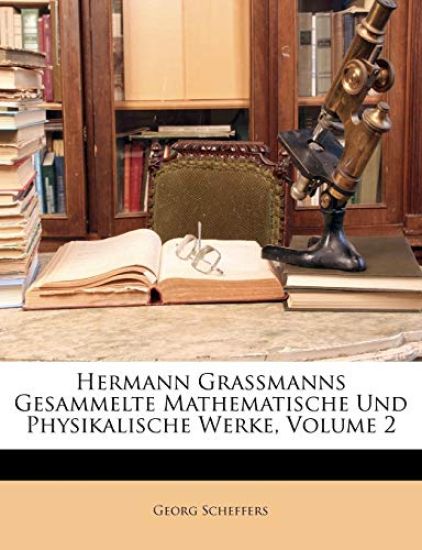
Hermann Grassmanns Gesammelte Mathematische Und Physikalische Werke. Zweiten Bandes Zweiter Theil
Georg Scheffers
Nabu Press
2010
pokkari

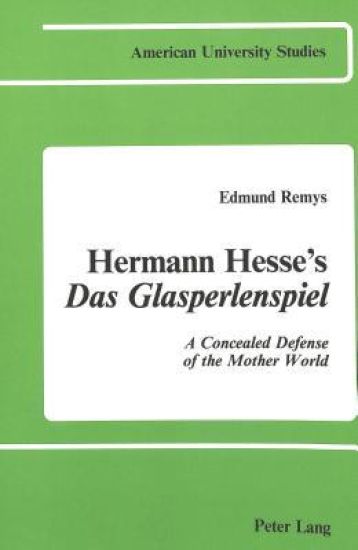
The book gives a detailed analysis of the novel, based upon J.J. Bachofen's concepts of hetaerism, conjugal matriarchy, and patri- archy and upon basic theories of C.G. Jung. It enhances the under- standing of the central theme: quest for self-fulfillment and reverence for the conjugal mother world. The author shows that Hesse, in this novel as in several earlier works, rejects the limitations of an illusionary and fictitious father world symbolized by Castalia and accepts Bachofen's principle of an all-encompassing conjugal world of the mother, which corresponds to the Jungian concept of the integration of the self, as the most perfect stage of human development.
Hermann Brochs «Pasenow»-Roman
Ursula Ritzenhoff
Herbert Cie Lang AG, Buchhandlung Antiquariat
1977
nidottu
Hermann Brochs Roman 1888 - -Pasenow oder die Romantik- (1930) wird hier zum erstenmal weitgehend losgelost von den folgenden Banden der -Schlafwandler--Trilogie betrachtet. Es zeigt sich, dass das Leben von Haupt- und Nebenfiguren mit dem Begriff -Einsamkeit ohne Ausweg- erlautert werden kann. Das bedeutet, dass Brochs erstes grosseres Werk auch im Inhaltlichen der Romankunst des 20. Jahrhunderts zuzurechnen ist und nicht - wie in der Forschung bisher geschah - Fontanes -Irrungen- -Wirrungen- an die Seite zu stellen ist. Eine Re-Orientierung ist diese Analyse auch insofern, als die Grundkonzepte des Romans -Romantik- und -Schlafwandeln-, nunmehr auf Denken und Handeln aller wichtigen Gestalten anwendbar werden und nicht nur auf Joachim v. Pasenow bezogen sind."
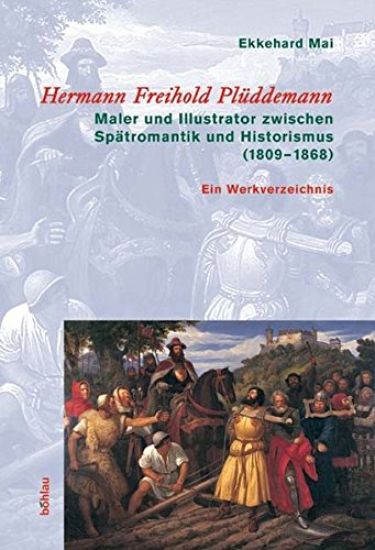
Die Dusseldorfer Malerschule reprasentiert ein wichtiges Kapitel deutscher Malereigeschichte vor und um die Mitte des 19. Jahrhunderts. Einer, der das Kunstgeschehen in Dusseldorf in nachster Nahe zu Peter von Cornelius, Wilhelm von Schadow und Carl Friedrich Lessing, aber auch Alfred Rethel mit gepragt hat, war der geburtige Kolberger Hermann Freihold Pluddemann. Er gehorte den geselligen Zirkeln der Dusseldorfer an und verkehrte seit seiner Ubersiedlung 1848 nach Dresden im Freundeskreis zwischen Carl Gustav Carus und Ludwig Richter, Eduard Bendemann und Julius Schnorr von Carolsfeld. Als Historien- und Bildnismaler, vor allem aber als Illustrator von Balladen hinterliess er ein von den Zeitgenossen viel beachtetes Werk, das hier erstmals monographisch vorgestellt wird. Er war daruber hinaus ein vorzuglicher Beobachter des Kunstlebens seiner Zeit, was sich in zahlreichen Briefen an seine Frau und seine Freunde niederschlug, darunter eine umfangreiche Korrespondenz von der italienischen Reise 1857/58, die er ungemein anschaulich zu schildern wusste. Sein Werk und sein Leben stehen exemplarisch fur einen deutschen Kunstler im 19. Jahrhundert.
Hermann Weinsberg (1518–1597)
Bohlau Verlag
2006
isokokoinen pokkari
Hermann Von Mangoldt (1895-1953): Das Leben Des Staatsrechtlers Vom Kaiserreich Bis Zur Bonner Republik
Angelo O. Rohlfs
Duncker Humblot
1997
nidottu
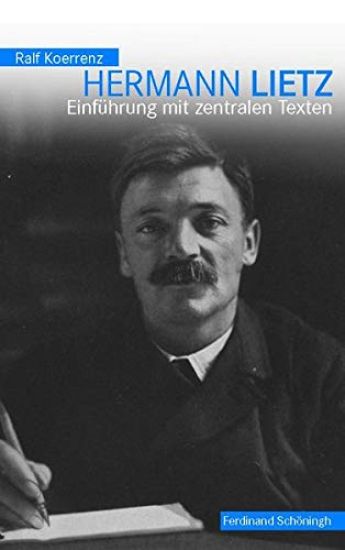
Die von Hermann Lietz (1868-1919) gegr ndeten Deutschen Landerziehungsheime (DLEH) geh ren zu den nachhaltigsten Schulmodellen der Reformp dagogik zu Beginn des 20. Jahrhunderts. Die vorliegende Quellenauswahl erm glicht eine differenzierte Auseinandersetzung mit den Grundlagen dieser bis heute erfolgreichen Internatsschulen. Lietz hatte den von Herbart formulierten Erziehungsanspruch in einer neuen Qualit t auf die Organisation von Schule bezogen. Der Kerngedanke lautet: Die Erziehung zu einer - bei Lietz religi s gedachten - Sittlichkeit ben tigt einen umgrenzten Ort, an dem die vom englischen Internatswesen inspirierte Charakterbildung mit der wissenschaftlichen Didaktik des Herbartianismus verbunden werden kann. Dieser Ort ist das DLEH.