

Kirjahaku
Etsi kirjoja tekijän nimen, kirjan nimen tai ISBN:n perusteella.
1000 tulosta hakusanalla Hubert Mathieu

Notes On The Early History Of The Dioceses Of Tuam, Killala And Achonry
Hubert Thomas Knox
Kessinger Pub
2008
pokkari

The Schoolmaster In Literature
Hubert Marshall (EDT) Skinner; Edward (INT) Eggleston
Kessinger Pub
2008
pokkari

The Efficient Purchase And Utilization Of Mine Supplies
Hubert Nicholas Stronck; John Reginald Billyard
Kessinger Pub
2008
pokkari



Gonadectomy In Relation To The Secondary Sexual Characters Of Some Domestic Birds
Hubert Dana Goodale
Kessinger Pub
2008
pokkari




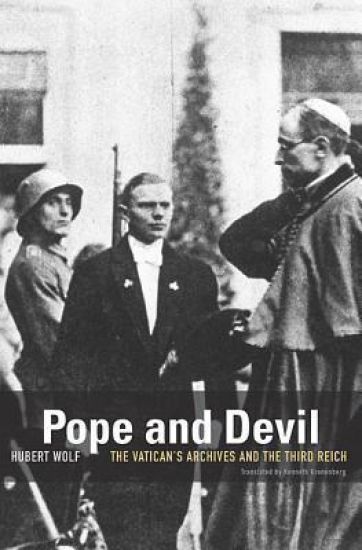
The Vatican’s dealings with the Weimar Republic and the Third Reich have long been swathed in myth and speculation. After almost seventy years, the crucial records for the years leading up to 1939 were finally opened to the public, revealing the bitter conflicts that raged behind the walls of the Holy See. Anti-Semites and philo-Semites, adroit diplomats and dogmatic fundamentalists, influential bishops and powerful cardinals argued passionately over the best way to contend with the intellectual and political currents of the modern age: liberalism, communism, fascism, and National Socialism. Hubert Wolf explains why a philo-Semitic association was dissolved even as anti-Semitism was condemned, how the Vatican concluded a concordat with the Third Reich in 1933, why Hitler’s Mein Kampf was never proscribed by the Church, and what factors surrounded the Pope’s silence on the persecution of the Jews. In rich detail, Wolf presents astonishing findings from the recently opened Vatican archives—discoveries that clarify the relations between National Socialism and the Vatican. He illuminates the thinking of the popes, cardinals, and bishops who saw themselves in a historic struggle against evil. Never have the inner workings of the Vatican—its most important decisions and actions—been portrayed so fully and vividly.

“Compact and engaging, Retrieving Realism is more approachable than its weighty subject matter might predict…[An] adventurous combination of arguments and mixing of philosophical cultures.” —Boston Review“A picture held us captive,” writes Wittgenstein in the Philosophical Investigations, describing the powerful image of mind that underlies the modern epistemological tradition from Descartes onward. Retrieving Realism offers a radical critique of the Cartesian epistemic picture that has captivated philosophy for too long and restores a realist view affirming our direct access to the everyday world and to the physical universe.According to Descartes, knowledge exists in the form of ideas in the mind that purportedly represent the world. This “mediational” epistemology—internal ideas mediating external reality—continues to exert a grip on Western thought, and even philosophers such as Quine, Rorty, and Davidson who have claimed to refute Descartes remain imprisoned within its regime. As Hubert Dreyfus and Charles Taylor show, knowledge consists of much more than the explicit representations we formulate. We gain knowledge of the world through bodily engagement with it—by handling things, moving among them, responding to them—and these forms of knowing cannot be understood in mediational terms. Dreyfus and Taylor also contest Descartes’s privileging of the individual mind, arguing that much of our understanding of the world is necessarily shared.Once we deconstruct Cartesian mediationalism, the problems that Hume, Kant, and many of our contemporaries still struggle with—trying to prove the existence of objects beyond our representations—fall away, as does the motivation for nonrealist doctrines. We can then begin to describe the background everyday world we are absorbed in and the universe of natural kinds discovered by science.
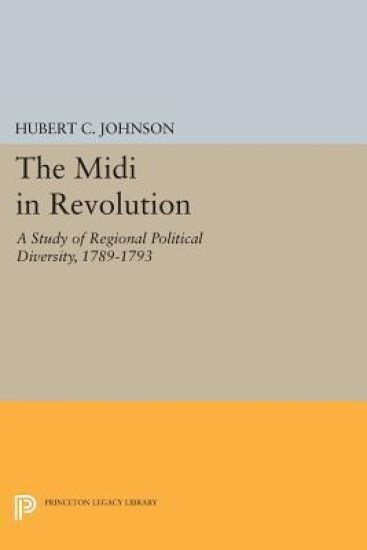
Hubert Johnson examines eight departments in southeastern France from the outbreak of the French Revolution through the Federalist Revolt in 1793. This study of the Midi clarifies the ways in which the revolt embodied the political, social, and economic contradictions of the region. Originally published in 1986. The Princeton Legacy Library uses the latest print-on-demand technology to again make available previously out-of-print books from the distinguished backlist of Princeton University Press. These editions preserve the original texts of these important books while presenting them in durable paperback and hardcover editions. The goal of the Princeton Legacy Library is to vastly increase access to the rich scholarly heritage found in the thousands of books published by Princeton University Press since its founding in 1905.

Hubert Johnson examines eight departments in southeastern France from the outbreak of the French Revolution through the Federalist Revolt in 1793. This study of the Midi clarifies the ways in which the revolt embodied the political, social, and economic contradictions of the region. Originally published in 1986. The Princeton Legacy Library uses the latest print-on-demand technology to again make available previously out-of-print books from the distinguished backlist of Princeton University Press. These editions preserve the original texts of these important books while presenting them in durable paperback and hardcover editions. The goal of the Princeton Legacy Library is to vastly increase access to the rich scholarly heritage found in the thousands of books published by Princeton University Press since its founding in 1905.

The Covenant of Grace: A Thread Through Scripture
Hubert W. Morrow
Cumberland Presbyterian Church
2014
nidottu

Deposit of Faith: How Can We Meet God Today?
Hubert Michael Sanders Jr. M. a.
Hubert Sanders
2015
nidottu
In its two-thousand-year history, the Catholic Church remains an unchanging yet developing entity. Since the church's infancy, Catholic theologians have referenced the "deposit of faith," which in early years referred to the written or orally revealed doctrines that formed the backbone of church teaching. Through the centuries, the definition came to be understood as the word of God, delivered through Jesus Christ and passed on to his apostles. Still, the deposit included both oral and written traditions and provided moral direction. The Second Vatican Council brought about many changes in the church, and once again, bishops and theologians addressed the deposit of faith. This invaluable concept came to be seen, not as mere dogma, but the expression of faith embodied in the words and deeds of Christ. The deposit is relevant to all elements of Catholic life: prayer, sacraments, and moral living. While the deposit has always addressed divine revelation, the post-Vatican II definition directs the faithful to think holistically. Hubert M. Sanders Jr.'s Deposit of Faith is intricate Catholic theology for the lay reader. It encourages Catholics to reach beyond dogma and written instructions to embrace the fullness of the Christian experience in all aspects of life.