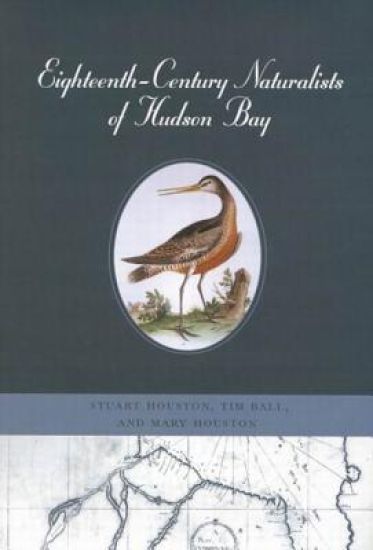
A long-overdue look at the outstanding achievements of a group of early naturalists who studied weather and natural history at isolated fur-trading posts on Hudson Bay.
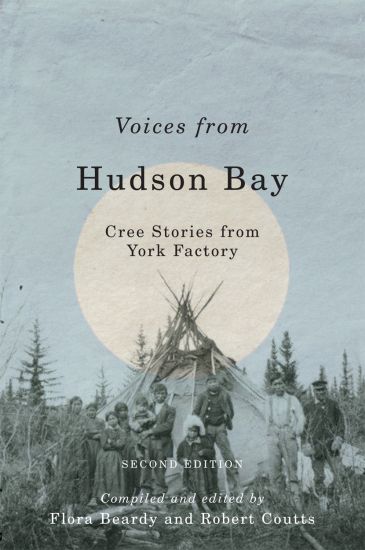
In Voices from Hudson Bay Cree elders recall the daily lives and experiences of the men and women who lived and worked at the Hudson's Bay Company post at York Factory in Manitoba. Their stories, their memories of family, community, and daily life, define their past and provide insights into a way of life that has largely disappeared in northern Canada. The era the elders describe, from the end of World War I to the closing of York Factory in 1957, saw dramatic changes - both positive and negative - to Indigenous life in the North. The extension of Treaty 5 in 1910 to include members of the York Factory band, the arrival of police and government agents, and the shifting economy of the fur trade are all discussed. Despite these upheavals, the elders' accounts demonstrate the continuity of northern life in the twentieth century, from the persistence of traditional ways to the ongoing role of community and kinship ties. Perceptions of Cree life have been shaped largely by non-Native accounts that offered limited views of Indigenous history and recorded little beyond the social and economic interaction that was part of life in the fur trade. The stories in this collection provide Cree perspectives on northern life and history, and represent a legacy bequeathed to a younger generation of Indigenous people. This second edition includes updates to the original text and a new preface.
In Voices from Hudson Bay Cree elders recall the daily lives and experiences of the men and women who lived and worked at the Hudson's Bay Company post at York Factory in Manitoba. Their stories, their memories of family, community, and daily life, define their past and provide insights into a way of life that has largely disappeared in northern Canada. The era the elders describe, from the end of World War I to the closing of York Factory in 1957, saw dramatic changes - both positive and negative - to Indigenous life in the North. The extension of Treaty 5 in 1910 to include members of the York Factory band, the arrival of police and government agents, and the shifting economy of the fur trade are all discussed. Despite these upheavals, the elders' accounts demonstrate the continuity of northern life in the twentieth century, from the persistence of traditional ways to the ongoing role of community and kinship ties. Perceptions of Cree life have been shaped largely by non-Native accounts that offered limited views of Indigenous history and recorded little beyond the social and economic interaction that was part of life in the fur trade. The stories in this collection provide Cree perspectives on northern life and history, and represent a legacy bequeathed to a younger generation of Indigenous people. This second edition includes updates to the original text and a new preface.
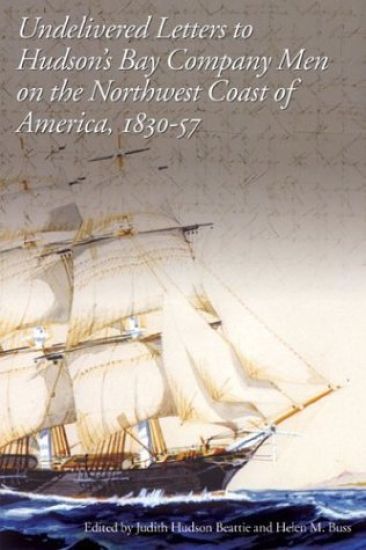
In the early nineteenth century, when the Hudson's Bay Company sent men to its furthest posts along the coast of North America's Pacific Northwest, the letters of those who cared for those men followed them in the Company's supply ships. Sometimes, these letters missed their objects – the men had returned to Britain, or deserted their ships, or died. The Company returned the correspondence to its London office and over the years amassed a file of "undelivered letters." Many of these remained sealed for 150 years and until they were opened by archivist Judith Hudson Beattie, when the Company archives were moved to Canada.These letters tell the fascinating stories of ordinary people whose lives are rarely recounted in traditional histories. Beattie and Helen M. Buss skilfully introduce us to both the lives of the letter writers and their would-be recipients. Their commentaries frame, for contemporary readers, the words of early nineteenth century working and middle class British folk as well as letters to "voyageurs" from Quebec. The stories of their lives – fathers struggling to support a family, widowed mothers yearning to see their sons, bereft sweethearts left behind, and wives raising their children alone – reach out over two centuries to offer rare insight into the varied worlds of men and women in the early nineteenth century, many of whom became settlers in Washington, Oregon, and the new British colony of Vancouver Island.
This fascinating book follows the travels of English explorer and sea navigator Henry Hudson. Historical information and high-interest fact boxes are presented in an entertaining tabloid style that guides readers through major voyages, explorations, and discoveries. Topics include what led Hudson to become an explorer, Northern exploration, life on sea voyages, merchant companies, and Hudson's legacy. Teacher's guide available.
This English translation of De Quilmes a Hyde Park: Las fronteras culturales en la vida y la obra de W. H. Hudson, which won the 2001 Annual Prize in Literature of Uruguay, analyzes how the richness of Hudson's work is linked to the overlapping of several cultures in his life. His work and life developed in the opposition of Romanticism to Enlightenment, wavering between literature and science. Combining biographical details with analysis of his philosophy and works, the study follows Hudson's life from his childhood on a cattle farm in Argentina to his emigration to England in 1874, including the years he fought on the frontier between whites and indigenous populations and the years he spent traveling abroad. The study concludes with a bibliography of Hudson's books, poems, posthumously published works, and translations into Spanish, as well as critical studies of Hudson.
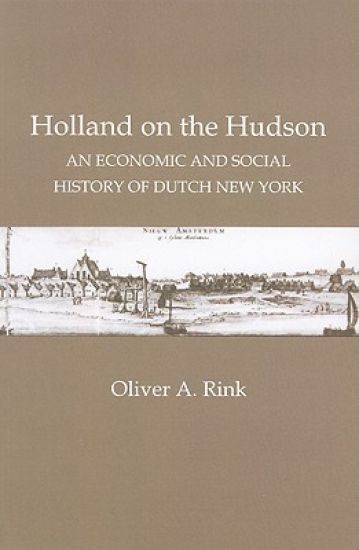
Holland on the Hudson traces the history of New Netherland from Henry Hudson's exploration of the region in 1609 to the surrender of the Dutch colony to an English fleet in 1664. Oliver A. Rink's approach is both narrative an analytic as he describes in detail the colony's commercial origins, its social and economic development, and the colonists' rivalry with the English in the New World.
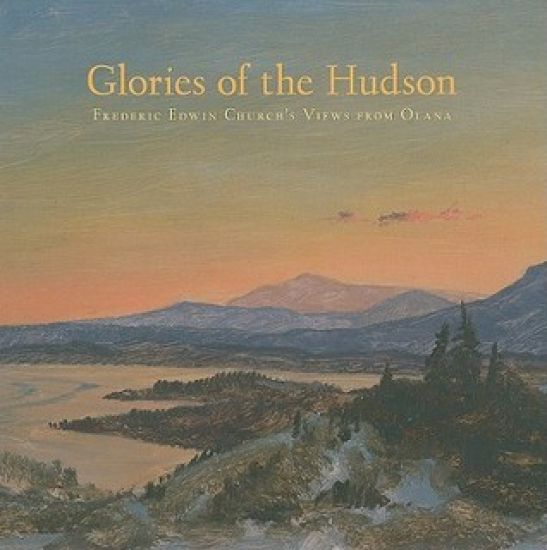
"The site is the result of a careful study of the river-banks, and commands so many views of varied beauty, that all the glories of the Hudson may be said to circle it."—H. W. French, Art and Artists in Connecticut, 1879 In 1609, Henry Hudson sailed up the river that now bears his name. The exhibition and its accompanying publication Glories of the Hudson: Frederic Edwin Church's Views from Olana mark the quadricentennial of his discovery by highlighting Frederic Church's sketches of the prospect from his hilltop home overlooking the river. Church made his first sketch of the Hudson River and Catskill Mountains from Red Hill—the south end of the property that became his home, Olana—in 1845, on a sketching expedition suggested by his teacher Thomas Cole. Returning to the Hudson Valley in 1860 as the nation's most famous and best-paid artist, Church settled on a farm on the lower slope of the Sienghenbergh, securing for himself and his new wife a splendid vantage point for studying, sketching, and painting the river. Church continued to add land to his property, attaining new and varied vistas of the river, and crowned the estate with a Persian-inspired house designed to frame splendid views of the Hudson River and Catskill Mountains. Church never tired of his views of the river, documenting his passion for the Hudson in paintings, oil sketches, and drawings. From Olana, he observed the transformations wrought by the changing seasons, weather, and light, capturing chilly winter snows, brilliant sunsets, and passing storms in sketches executed with a few brushstrokes or autumn colors and clear winter light in more finished easel paintings. The best of these are reproduced here, in eighty-three illustrations, sixty-nine in full color, some of them published for the first time. The essay by Evelyn D. Trebilcock and Valerie A. Balint, the introduction by Kenneth John Myers, and the foreword by John K. Howat together provide an absorbing narrative of the development of the Hudson River School and its most successful artist. The Olana Partnership, Hudson, New York, and New York State Office of Parks, Recreation and Historic Preservation, Albany, New York, organized Glories of the Hudson: Frederic Edwin Church's Views from Olana, held from May 23 to October 12, 2009
Holland on the Hudson traces the history of New Netherland from Henry Hudson's exploration of the region in 1609 to the surrender of the Dutch colony to an English fleet in 1664. Oliver A. Rink's approach is both narrative an analytic as he describes in detail the colony's commercial origins, its social and economic development, and the colonists' rivalry with the English in the New World.
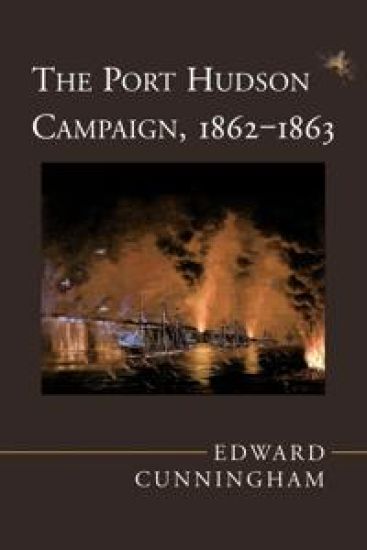
The determination with which the Confederate garrison of Port Hudson, Louisiana, held out, for seven weeks, fewer than five thousand Confederate troops fended off almost thirty thousand Yankees, makes it one of the most interesting campaigns of the Civil War. It was, in fact, the longest siege in United States military history.In The Port Hudson Campaign, 1862-1863, Edward Cunningham tells for the first time the complete story of the Union operation against this Confederate stronghold on the Lower Mississippi. The initial phase was the costly attempt by the Union fleet to run the Port Hudson batteries, the naval engagement in which the historic warship Mississippi was lost. The second phase was the even more costly effort by General Nathaniel P. Banks to take the stronghold from the landward side. The third and final phase, the siege itself, culminated in surrender, less than a week after the capture of Vicksburg.Cunningham has unearthed in his research a greater abundance of sources and more information on the campaign than most historians thought existed. The resulting dramatic story of Port Hudson, told with great clarity and verve, reveals the importance of that campaign to the course of the Civil War.
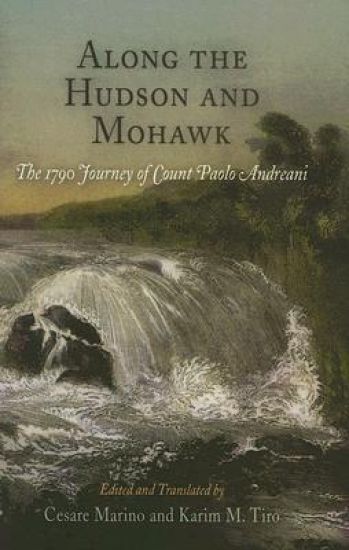
In the summer of 1790 the Italian explorer Count Paolo Andreani embarked on a journey that would take him through New York State and eastern Iroquoia. Traveling along the Hudson and Mohawk Rivers, Andreani kept a meticulous record of his observations and experiences in the New World. Published complete for the first time in English, the diary is of major importance to those interested in life after the American Revolution, political affairs in the New Republic, and Native American peoples. Through Andreani's writings, we glimpse a world in cultural, economic, and political transition. An active participant in Enlightenment science, Andreani provides detailed observations of the landscape and natural history of his route. He also documents the manners and customs of the Iroquois, Shakers, and German, Dutch, and Anglo New Yorkers. Andreani was particularly interested in the Oneida and Onondaga Indians he visited, and his description of an Oneida lacrosse match accompanies the earliest known depiction of a lacrosse stick. Andreani's American letters, included here, relate his sometimes difficult but always revealing personal relationships with Washington, Jefferson, and Adams. Prefaced by an illuminating historical and biographical introduction, Along the Hudson and Mohawk is a fascinating look at the New Republic as seen through the eyes of an observant and curious explorer.
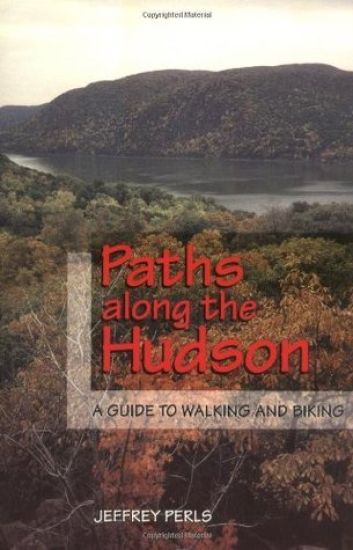
Whether you are an ardent hiker or prefer to enjoy the great outdoors from your living-room armchair, Jeffrey Perls has written the essential guidebook on one of the most majestic natural areas of the eastern United States-the Hudson River.From the rugged topography of the Hudson Highlands Gorge to the crowded towers of Manhattan, the Hudson has been an inspiration for poets, writers, artists, and countless others who have enjoyed the many wonders of the river. The area surrounding the Hudson abounds in history. It’s played a pivotal part in our country's development, from its strategic role in the American Revolution to its heritage as the nation’s primary entry point for immigrants to this country. The river also supports an incredibly rich diversity of flora and fauna, from the bald eagle to the short-nosed sturgeon.Perls brings together the culture, history, nature, and recreational activities along the Hudson River in one convenient guide book. He not only maps out walks and bike trails, both urban and rural, but also introduces readers to the landscape, geology, history, and culture of the Hudson Valley region. Perls provides a practical and geographically comprehensive guide to exploring the area on foot and by bike. The trail routes bring readers as close to the river as possible and guides them to rewarding vistas, nature preserves, and historic landmarks. It’s a useful guide for visitors to the Hudson region and local residents as it acquaints them to the natural treasures to be found in their own backyards.
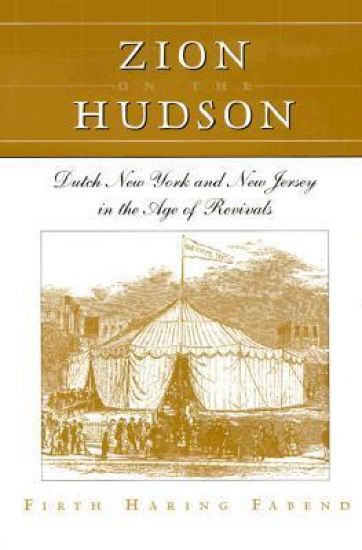
Winner of the 2001 New Jersey Author's Award by the New Jersey Academic Alliance The Dutch came to the New World in the seventeenth century as explorers and traders, but religion soon followed, for it was accepted in the Netherlands that state and church were mutually benefited by advancing the “true Christian religion.” The influence of “Dutchness”—defined here as loyalty to what are presumed to be the distinctive qualities of Dutch national character and culture—persisted in New York and New Jersey for more than 200 years after Dutch emigration ended. Why?Firth Haring Fabend finds the explanation in the devotion of the Reformed Dutch Church membership to the doctrines and traditions of their church. She looks at the individual and personal beliefs and behaviors of this often-neglected ethnic group. Thus, Zion on the Hudson presents both a broad and an intimate look at the way one mainstream Protestant denomination dealt with the transformative events of the evangelical era.As Fabend describes the efforts of the Dutch to preserve the European standards and traditions of their church, while developing a taste for a new kind of theology and a preference for an American identity, she documents how Dutchness finally became a historical memory. The Americanization of the Reformed Dutch Church, Fabend writes, is a microcosm of the story of the Americanization of the United States itself.
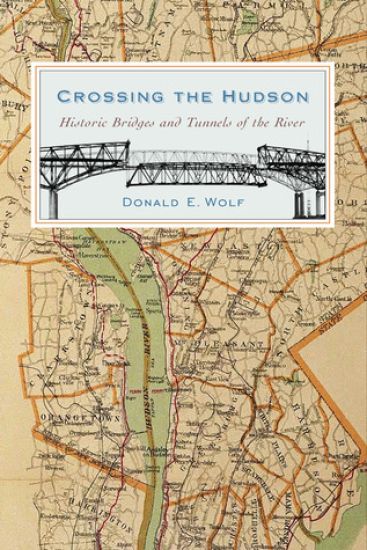
This title focuese on construction feats across the Hudson - technical elegance, physical beauty. Fog, tide, ice, and human error - before the American Revolution those who ventured to cross the vast Hudson Valley waterway did so on ferryboats powered by humans, animals, and even fierce winds. Before that war, not a single Hudson River bridge or tunnel had been built. It wasn't until Americans looked to the land in the fight for independence that the importance of crossing the river efficiently became a subject of serious interest, especially militarily. Later, the needs of a new transportation system became critical - when steam railroads first rolled along there was no practical way to get them across the water without bridges. ""Crossing the Hudson"" continues this story soon after the end of the war, in 1805, when the first bridge was completed. Donald E. Wolf simultaneously tracks the founding of the towns and villages along the water's edge and the development of technologies such as steam and internal combustion that demanded new ways to cross the river. As a result, innovative engineering was created to provide for these resources. From hybrid, timber arch, and truss bridges on stone piers to long-span suspension and cantilevered bridges, railroad tunnels, and improvements in iron and steel technology, the construction feats that cross the Hudson represent technical elegance and physical beauty. ""Crossing the Hudson"" reveals their often multileveled stories - a history of where, why, when, and how these structures were built; the social, political, and commercial forces that influenced decisions to erect them; the personalities of the planners and builders; the unique connection between a builder and his bridge; and, the design and construction techniques that turned mythical goals into structures of utility and beauty. Two centuries of ""Crossing the Hudson"" include...Waterford, the First Bridge; Steam and Bridge at Troy; three Railroad Bridges at Albany; the Last of the Railroad Bridges - Poughkeepsie and Castleton; the Railroad Tunnels; the Bear Mountain Bridge; the Holland and Lincoln Tunnels; the George Washington Bridge; the Mid-Hudson Bridge; the Rip Van Winkle Bridge; the Tappan Zee Bridge; the Kingston-Rhinecliff Bridge; the Newburgh-Beacon Bridges; and, more.
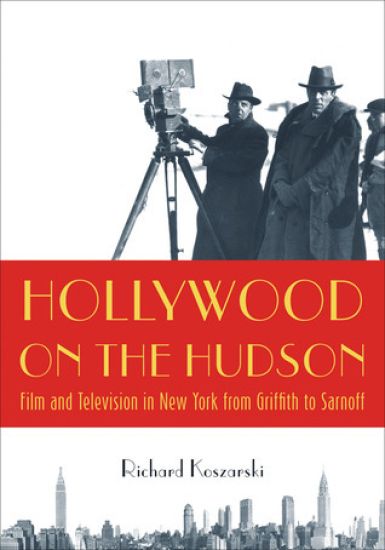
In Hollywood on the Hudson, Richard Koszarski rewrites an important part of the history of American cinema. During the 1920s and 1930s, film industry executives had centralized the mass production of feature pictures in a series of gigantic film factories scattered across Southern California, while maintaining New York as the economic and administrative center. But as Koszarski reveals, many writers, producers, and directors also continued to work here, especially if their independent vision was too big for the Hollywood production line.
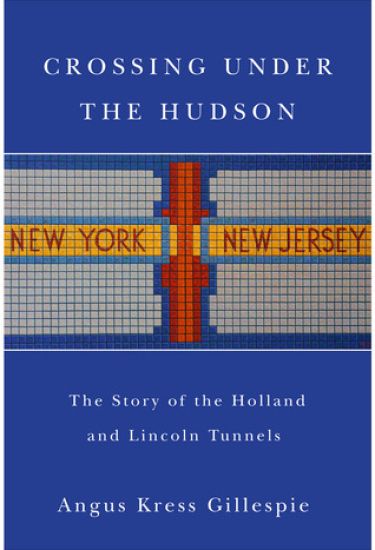
Crossing Under the Hudson takes a fresh look at the planning and construction of two key links in the transportation infrastructure of New York and New Jersey--the Holland and Lincoln Tunnels. Writing in an accessible style that incorporates historical accounts with a lively and entertaining approach, Angus Kress Gillespie explores these two monumental works of civil engineering and the public who embraced them. He describes and analyzes the building of the tunnels, introduces readers to the people who worked there--then and now--and places the structures into a meaningful cultural context with the music, art, literature, and motion pictures that these tunnels, engineering marvels of their day, have inspired over the years.Today, when new concerns about global terrorism may trump bouts of simple tunnel tension, Gillespie's Crossing Under the Hudson continues to cast a light at the end of the Holland and Lincoln Tunnels.
The State of New York is now building one of the world’s longest, widest, and most expensive bridges—the new Tappan Zee Bridge—stretching more than three miles across the Hudson River, approximately thirteen miles north of New York City. In Politics Across the Hudson, urban planner Philip Plotch offers a behind-the-scenes look at three decades of contentious planning and politics centered around this bridge, recently renamed for Governor Mario M. Cuomo, the state's governor from 1983 to 1994. He reveals valuable lessons for those trying to tackle complex public policies while also confirming our worst fears about government dysfunction. Drawing on his extensive experience planning megaprojects, interviews with more than a hundred key figures—including governors, agency heads, engineers, civic advocates, and business leaders—and extraordinary access to internal government records, Plotch tells a compelling story of high-stakes battles between powerful players in the public, private, and civic sectors. He reveals how state officials abandoned viable options, squandered hundreds of millions of dollars, forfeited more than three billion dollars in federal funds, and missed out on important opportunities. Faced with the public’s unrealistic expectations, no one could identify a practical solution to a vexing problem, a dilemma that led three governors to study various alternatives rather than disappoint key constituencies. Politics Across the Hudson continues where Robert Caro’s The Power Broker left off and illuminates the power struggles involved in building New York’s first major new bridge since the Robert Moses era. Plotch describes how one governor, Andrew Cuomo, shrewdly overcame the seemingly insurmountable obstacles of onerous environmental regulations, vehement community opposition, insufficient funding, interagency battles, and overly optimistic expectations.
Winner of the 2015 American Planning Association New York Metro Chapter Journalism Award The State of New York built one of the world’s longest, widest, and most expensive bridges—the new Tappan Zee Bridge—stretching more than three miles across the Hudson River, approximately thirteen miles north of New York City. In Politics Across the Hudson, urban planner Philip Plotch offers a behind-the-scenes look at three decades of contentious planning and politics centered around this bridge, recently renamed for Governor Mario M. Cuomo, the state's governor from 1983 to 1994. He reveals valuable lessons for those trying to tackle complex public policies while also confirming our worst fears about government dysfunction. Drawing on his extensive experience planning megaprojects, interviews with more than a hundred key figures—including governors, agency heads, engineers, civic advocates, and business leaders—and extraordinary access to internal government records, Plotch tells a compelling story of high-stakes battles between powerful players in the public, private, and civic sectors. He reveals how state officials abandoned viable options, squandered hundreds of millions of dollars, forfeited more than three billion dollars in federal funds, and missed out on important opportunities. Faced with the public’s unrealistic expectations, no one could identify a practical solution to a vexing problem, a dilemma that led three governors to study various alternatives rather than disappoint key constituencies. This revised and updated edition includes a new epilogue and more photographs, and continues where Robert Caro’s The Power Broker left off and illuminates the power struggles involved in building New York’s first major new bridge since the Robert Moses era. Plotch describes how one governor, Andrew Cuomo, shrewdly overcame the seemingly insurmountable obstacles of onerous environmental regulations, vehement community opposition, insufficient funding, interagency battles, and overly optimistic expectations...
The 20,000 German Jews who fled Hitler's Germany and settled in Washington Heights were unusual in many ways. They preserved their Jewish identity while fostering a culture that was still heavily German-a difficult combination in light of their origins.In his study of this immigrant group, Steven Lowenstein strives for more that a chronicle of their institutions and leaders. He analyzes both the social structure of the community and the folk culture of the immigrants. He deals with such issues as the formal nature of German Jewish cultural style, the relationships between the generations, and intergroup relations. Using organizational bulletins, surveys, interviews, and personal observations and anecdotes, Lowenstein paints a picture of a unique lifestyle now in the process of merging into American Jewry and disappearing.