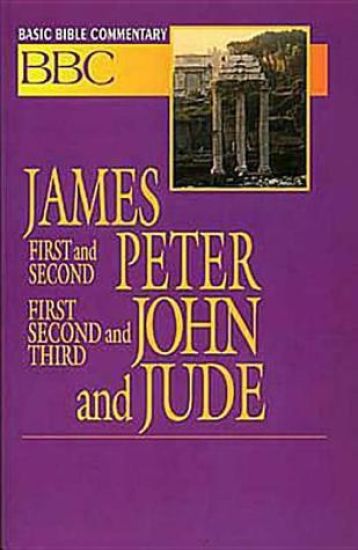
Renowned biblical scholar N. T. Wright examines early Christian letters from the apostles James, Peter, John and Judah in this highly accessible and insightful commentary.The early Christian letters from James, Peter, John and Judah offer practical advice for newcomers to the faith, equipping them to navigate challenges. They reflect the joy of newfound faith and hope, emphasizing Jesus' sacrifice and revelation of God's nature. These letters acknowledge real-world threats to Christian communities, encouraging believers not to conform to the world's values and urging them to let the living God work freely in their lives.The biblical text is thoughtfully divided into easily manageable sections, ensuring accessibility for readers of all backgrounds. As you engage with this ancient narrative, you'll discover its timeless resonance with the spiritual quests of today's readers, whether they are newcomers or seasoned followers of Jesus.This expanded edition includes Wright's updated biblical translation, complemented by a new introduction and a dynamic study guide tailored for both group study sessions and individual contemplation. The inclusion of helpful summaries and thought-provoking questions makes James, Peter, John and Judah for Everyone an ideal companion for those seeking to explore the New Testament with renewed enthusiasm and profound insights.
An enlarged print edition James, Peter, Joh, and Judah for Everyone.A renowned Bible scholar opens up the message and meaning of the books of James; 1 and 2 Peter; 1, 2, and 3 John; and Judah for today's readers.The books of James; 1 and 2 Peter; 1, 2, and 3 John; and Judah come alive in N. T. Wright's updated, reader-friendly translation and insightful commentary. He guides the reader through the world of the New Testament, explaining the ideas and events that shaped the writers' understanding of the gospel. Breaking down these early Christian letters into brief, easy-to-study segments, Wright explains how the letters' portrait of an early church finding its place in a hostile world speaks powerfully to the spiritual longings of contemporary readers. New Christians and longtime followers of Jesus alike will find inspiration and practical wisdom for their journey within these pages. This expanded edition contains Wright's updated translation of the biblical text, a new introduction, and a study guide designed for use in Bible study classes and individual reflection. Helpful summaries and insightful questions assist group leaders, study participants, and solo learners to encounter these early Christian writings in exciting and enriching new ways.
James Fenimore Cooper's magnificent vision of American civilization was probably doomed from the outset. Yet the dream died hard, as the years (1845-1851) recorded in volumes V and VI of his Letters and Journals show. Vigorous and perceptive as ever at 55, he continued to combat forces in the national life that he feared were destroying its civility and constitutional structures. When, finally, he realized that his efforts were barren, he found some solace in religion. Cooper mellowed perceptibly in his later years, and his genius for friendship is perhaps better revealed here than in earlier volumes. And his range of observation remained kaleidoscopic: the Mexican War, the Navy, the French Revolution of 1848, the theatre, and the latest New York scandal. Nor did his productivity slacken. Between 1845 and 1850, he averaged two books a year, undertook a revised edition of his works in fine format, composed a play, and, at the time of his death, had in press The Towns of Manhattan, which was to have been the first history of Greater New York City.
James Fenimore Cooper's magnificent vision of American civilization was probably doomed from the outset. Yet the dream died hard, as the years (1845-1851) recorded in volumes V and VI of his Letters and Journals show. Vigorous and perceptive as ever at 55, he continued to combat forces in the national life that he feared were destroying its civility and constitutional structures. When, finally, he realized that his efforts were barren, he found some solace in religion. Cooper mellowed perceptibly in his later years, and his genius for friendship is perhaps better revealed here than in earlier volumes. And his range of observation remained kaleidoscopic: the Mexican War, the Navy, the French Revolution of 1848, the theatre, and the latest New York scandal. Nor did his productivity slacken. Between 1845 and 1850, he averaged two books a year, undertook a revised edition of his works in fine format, composed a play, and, at the time of his death, had in press The Towns of Manhattan, which was to have been the first history of Greater New York City. Volume VI provides a cumulative index to the entire edition and contains an important section of additional letters (1825-1844) discovered since the earlier volumes were published.
In the first decade of the twentieth century, William James and Josiah Royce, both professors of philosophy at Harvard, towered over American philosophy and exerted wide influence on European thought. Both thinkers delivered Gifford Lectures on Natural Religion in Scotland, as well as Lowell Lectures in Boston. A century following the publication of James' Lowell Lectures, known as "Pragmatism", and Royce's delivery of his lectures that would become "The Philosophy of Loyalty", renowned biographers, historians, and philosophers of American thought and philosophy gathered at Harvard to assess the legacy and continued interest in both thinkers. One of the most vibrant conferences on these figures in living memory, contributors presented papers and debated the import of James' and Royce's thought for understanding their time and for the present and future. Noteworthy both for the presence of most leading scholars in the field and for its attention to the European influence of these thinkers and the revival of interest in America and Europe, this volume offers a unique view of the state of the discussion on James and Royce across several disciplines.
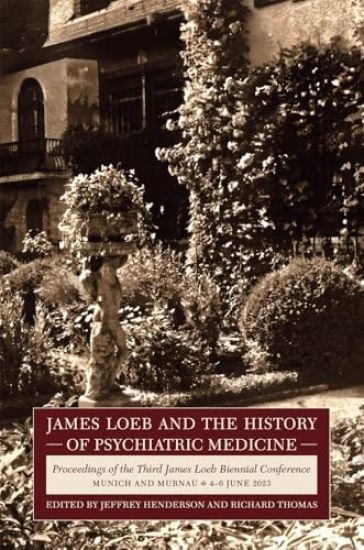
James Loeb (1867–1933), one of the great patrons and philanthropists of his time, left many enduring legacies both to America, where he was born and educated, and to his ancestral Germany, where he spent the second half of his life. Organized in celebration of the sesquicentenary of his birth, the James Loeb Biennial Conferences were convened to commemorate his achievements in four areas: the Loeb Classical Library (2017), collection and connoisseurship (2019), and after pandemic postponement, psychology and medicine (2023), and music (2025).The subject of the second conference was Loeb’s deep and multifaceted engagement with the material culture of the ancient world as a scholar, connoisseur, collector, and curator. The volume’s contributors range broadly over the manifold connections and contexts, both personal and institutional, of Loeb’s archaeological interests, and consider these in light of the long history of collection and connoisseurship from antiquity to the present. Their essays also reflect on the contemporary significance of Loeb’s work, as the collections he shaped continue to be curated and studied in today’s rapidly evolving environment for the arts.
James Loeb (1867–1933), one of the great patrons and philanthropists of his time, left many enduring legacies both to America, where he was born and educated, and to his ancestral Germany, where he spent the second half of his life. Organized in celebration of the sesquicentenary of his birth, the James Loeb Biennial Conferences were convened to commemorate his achievements in four areas: the Loeb Classical Library (2017), collection and connoisseurship (2019), and after pandemic postponement, psychology and medicine (2023), and music (2025).While the focus of the third conference shifted from Loeb as practitioner to Loeb as patient, the connection between his philanthropy and his personal experience remains clear and fascinating. Loeb suffered from the illness known today as severe bipolar disorder, for which he was treated by Emil Kraepelin (1856–1926), a pioneer in interdisciplinary brain and psychiatric research. Starting from the extensive records of this treatment, the volume’s contributors examine the history of mental illness from antiquity to the present in light of Loeb’s own condition, research, and contributions to medical humanism and psychiatric medicine.
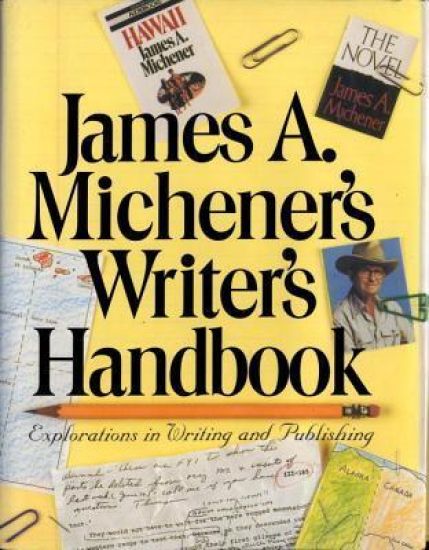
Pulitzer Prize-winning author James A. Michener has written about everything from the pristine islands of the South Pacific and the endless wilds of Africa to Spanish bullfighters, American revolutionaries, and pirates of the Caribbean. Now Michener turns to his favorite and most personal subject: the written word. Reproducing pages from his own handwritten rough drafts and working manuscripts, Michener walks the reader through a step-by-step guide to the entire process of writing, editing, revising, and publishing. Addressing challenges specific to both fiction and nonfiction, all the while providing thoughtful and useful solutions, James A. Michener's Writer's Handbook is an invaluable resource for book lovers, editors, and, of course, writers--aspiring and accomplished alike. Praise for James A. Michener "A master storyteller . . . Michener, by any standards, is a phenomenon."--The Wall Street Journal "Sentence for sentence, writing's fastest attention grabber."--The New York Times "Michener has become an institution in America, ranking somewhere between Disneyland and the Library of Congress. You learn a lot from him."--Chicago Tribune "While he fascinates and engrosses, Michener also educates."--Los Angeles Times
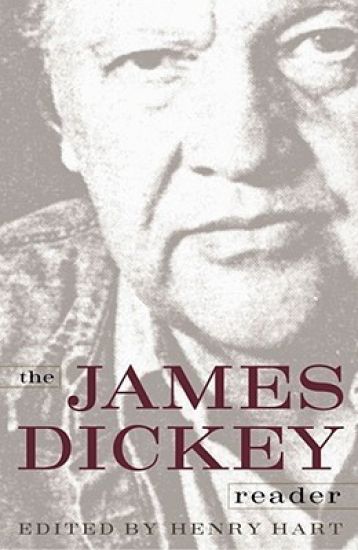
This collection of James Dickey's poems and prose includes choice selections of the author's poetry, fiction, and essays, as well as some early unpublished poetry and excerpts from his unfinished novel Crux. Organized chronologically by genre, this is the definitive collection of works by one of the twentieth century's most important talents.
* Revised and updated * Based on the NRSV and NIV translations * Covers every book verse by verse * Each volume also contains maps, charts, a pronunciation guide, and a glossary * Available in sets or individually
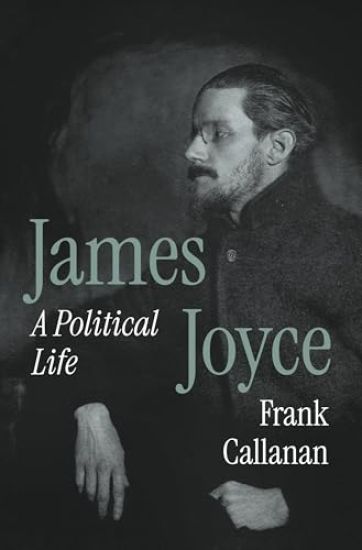
A major new biography that reveals how politics profoundly shaped Joyce’s life, thought and writings The young James Joyce (1882–1941) was forged in the smithy of Irish political controversies, and he took into his European exile a depth of political insight unrivalled among his fellow modernists. In this biography of Joyce in his youth and early exile, acclaimed Irish historian and biographer Frank Callanan reveals a Joyce who is markedly more politically conscious, informed and complex than the Joyce of Richard Ellmann’s classic account. Written in a sparkling style and rich with historical insights, Callanan’s deeply researched biography is the first sustained account of how Joyce’s Irish and European political and cultural context shaped his life, thought, and writings. Joyce was eight years old in 1890 when the O’Shea divorce scandal tore Irish nationalism apart, leading to the split in the Irish Parliamentary Party, the death of nationalist leader Charles Stewart Parnell, and a long, bitter period dominated by the anti-Parnellites. This was the Ireland that Joyce grew up in and rebelled against, and which determined his literary direction. Callanan uncovers a Joyce who was a highly original and dissenting Irish nationalist, who refused to avow or vaunt his nationalism and whose understanding was refined by the experience of living in multicultural Trieste with its fraught ethnic politics and differing models of statehood. Callanan’s Joyce is as heroic as Ellmann’s defiantly modernistic artist but in a more interesting way—a writer who didn’t lack political conviction but whose views didn’t yield to the expectations of his time. Energizing, witty, profound, and elegant, James Joyce: A Political Life is a magisterial biography that will transform how readers look at Joyce and his politics.