Kirjojen hintavertailu. Mukana 12 016 292 kirjaa ja 12 kauppaa.

Kirjahaku

Etsi kirjoja tekijän nimen, kirjan nimen tai ISBN:n perusteella.

1000 tulosta hakusanalla Janice Maynard

Jazz Books in the 1990s

Jazz Books in the 1990s

Janice Leslie Hochstat Greenberg

Scarecrow Press
2010
nidottu
Jazz Books in the 1990s: An Annotated Bibliography contains over 700 entries covering adult non-fiction books on jazz published from 1990 through 1999. International in scope, the books included range from such places as Finland, Slovakia, Australia, Japan, India, and South Africa, as well as Canada, the United Kingdom, and the United States. Entries are organized by category, including biographies, history, individual instruments, essays and criticism, musicology, regional studies, discographies, and reference works. Greenberg has amassed an impressive collection of entries with each entry including the author, title, publisher, year, and number of pages, and also indicating when a book contains a bibliography, discography, footnotes, musical transcriptions, illustrations, photographs, or any other additional material. The discography entries also note whether books contain unissued material or reissues. Three indexes—by title, author, and subject—make this a valuable and comprehensive reference guide for researchers, students, and jazz aficionados alike.
Women of the Constitution

Women of the Constitution

Janice E. McKenney

Scarecrow Press
2012
sidottu
Women of the Constitution follows in the footsteps of the 1912 work The Wives of the Signers, which was devoted to biographical sketches of the spouses of the signers of the Declaration of Independence. This new publication will be the first work devoted exclusively to brief biographies of the forty-three wives of the signers of the U.S. Constitution on September 17, 1787. Each entry includes vital information, where known—such as birth, parents, marriage, children, and death—as well as a footnoted biography with its own bibliography. Also provided are illustrations of many of the wives and their homes, as well as an appendix describing the now historic residences in which the signers and their spouses resided.
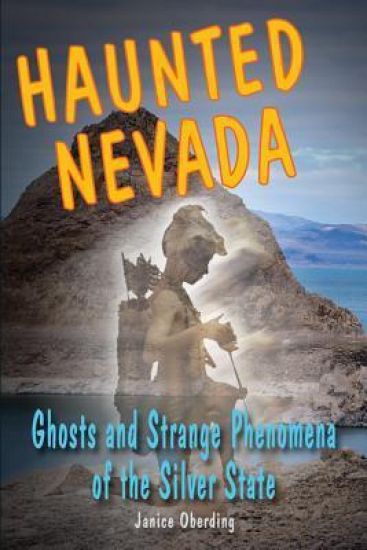
Haunted Nevada

Haunted Nevada

Janice Oberding

Stackpole Books
2013
nidottu
The Silver State's most bizarre and creepy stories of paranormal activity, including . . . The Lost City outside Las Vegas Lynching apparitions on downtown Reno's Wedding Ring Bridge The haunted Goldfield Hotel The cursed airbase in Tonopah Apparitions of celebrities at Cal Neva Resort in Lake Tahoe, including Marilyn Monroe, Frank Sinatra, and gangster Sam Giancana"
Girlbomb: A Halfway Homeless Memoir

Girlbomb: A Halfway Homeless Memoir

Janice Erlbaum

Villard Books
2007
nidottu
A columnist describes her troubled adolescence as a runaway in New York City, explaining why she exchanged her home for a life on the city streets; her struggle to balance school, the shelter system, and the temptations of the street; and her eventual successful battle to rescue herself from street life. Reprint. 10,000 first printing.
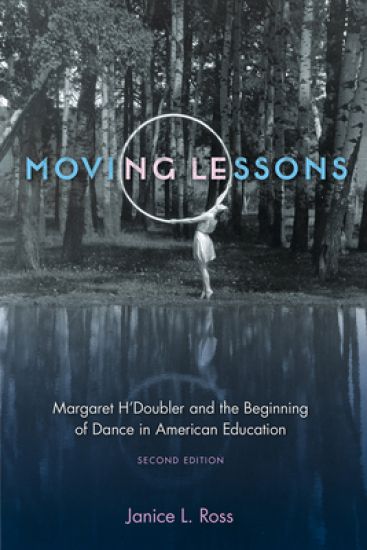
Moving Lessons

Moving Lessons

Janice L. Ross

University Press of Florida
2020
pokkari
Moving Lessons is an insightful and sophisticated look at the origins and influence of dance in American universities, focusing on Margaret H'Doubler (1889–1982), who established the first university courses and the first degree program in dance. Janice Ross shows how H'Doubler changed the way Americans thought, not just about female physicality but also about higher education for women. In this second edition, Ross adds new details on H'Doubler's radical pedagogy—including her use of a skeleton as a teaching tool in the classroom—and reflections on recent developments in dance studies and education.
The Enduring Hills

The Enduring Hills

Janice Holt Giles

The University Press of Kentucky
1988
nidottu
Originally published in 1950, The Enduring Hills was Janice Holt Giles's first novel. It is based in part on her own courtship and introduction to the Kentucky mountain country. Here, Giles introduces Hod and Mary Pierce and begins her Appalachian trilogy.Hod Pierce, a boy not unlike Henry Giles, who grows up on Piney Ridge, where generations of Pierces have made a living from the stubborn soil. Hod loves his people and the land but longs also for wider horizons, for more education, and for the freedom he imagines can be found in the outside world. It takes World War II to carry Hod away from the Ridge and out into the great world, and it is a long time before he comes back. After the war is over, Hod settles into marriage and a factory job in the city. Finally it is Mary, his city-bred wife, who sees at last that to Hod, Piney Ridge will always be home.In her preface to the second edition, Mrs. Giles wrote, "I believe [the story] is timeless and as the hands of the clock have turned and turned, people are turning back to the earth, knowing now that saving this earth is the most important work in the world, that we must all become, as Hod and Mary Pierce did, a man and woman with faith in the earth."Janice Holt Giles (1905-1979), author of nineteen books, lived and wrote near Knifley, Kentucky, for thirty-four years. Her biography is told in Janice Holt Giles: A Writer's Life.
Hannah Fowler

Hannah Fowler

Janice Holt Giles

The University Press of Kentucky
1992
nidottu
In the novel Hannah Fowler, Janice Holt Giles created a pioneer woman who would, In Giles's words, "endow her own physical seed with her strength and courage, and her own tenderness and love." First published in 1956, this work is the second in Giles's series of historical novels on Kentucky, which includes The Kentuckians and The Believers. Samuel Moore and his daughter Hannah set out for the border country with a party led by George Rogers Clark but left to follow the Kentucky River to Boones' Fort. As the story opens, Hannah is nursing her father, injured when an axe slips and cuts his leg. By the time Tice Fowler, on his way to Logan's Fort, stumbles upon them alone in the wilderness, Samuel is dying from blood poisoning. When Samuel dies, Tice takes Hannah to the fort, where women are scarce, and Hannah finds herself besieged by suitors. Only with Tice, as silent and downright as herself, does Hannah feel at ease. Finally, she turns to the bashful Tice and asks him to marry her and take her away from the crowded fort. Together, they take their claim to land, build a cabin, and start a family. They endure the harsh frontier life, the threat of hungry wolves, a killing blizzard, and Indian raids. Hannah is an unforgettable character -- tall, physically and psychologically strong, the epitome of frontier womanhood -- brought to life by a woman who knew and loved the Kentucky people and setting about which she wrote. Janice Holt Giles (1905-1979), author of nineteen books, lived and wrote near Knifley, Kentucky, for thirty-four years. Her biography is told in Janice Holt Giles: A Writer's Life.
Southern Africa in World Politics

Southern Africa in World Politics

Janice Love

Westview Press Inc
2005
nidottu
These days, politics often seem to be local and global simultaneously, challenging people, politicians, and scholars to sort out what is domestic from what is international and how the two are related. Janice Love demonstrates the complex realities of how local and global politics are intimately interwoven, sometimes inextricably so, specifically in southern Africa. In southern Africa, like many other regions, such linkages have existed for decades, if not centuries. Yet the current era is different from previous times when human communities found themselves closely intertwined. Love examines military, political, and economic changes in recent decades. Students of international relations, comparative politics, and African studies will find the region's experience instructive in understanding larger trends in the world. Students particularly interested in Africa will gain insight not only about this region, but also its significance for the whole continent. Deliberately crosses the boundaries of domestic politics and foreign policy as well as comparative politics and international relations. By taking a globalization approach, connecting the local, regional and global, the book offers fresh insights into the dynamics of war and peace, wealth and poverty as well as local to global governance in southern Africa. Examines globalization in three arenas or domains (military, political, and economic), not only distinguishing them from each other, but also probing what has changed and what has remained the same across time.
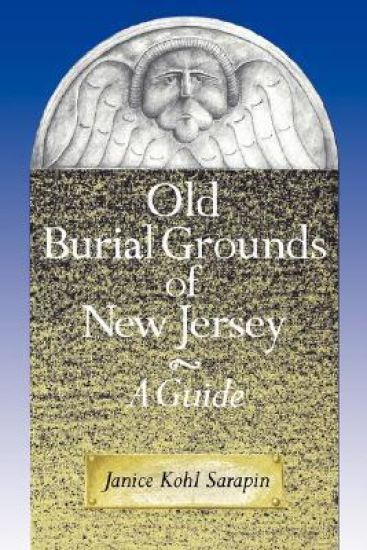
Old Burial Grounds of New Jersey

Old Burial Grounds of New Jersey

Janice Kohl Sarapin

Rutgers University Press
1994
nidottu
This illustrated guidebook to New Jersey's old burial grounds is unique, not just for New Jersey, but for anywhere in America. Janice Kohl Sarapin introduces you to the history and lore of old graveyards. She shows you how to read epitaphs, how to date gravestones by style, how to restore an abandoned graveyard, and how to find out the stories of the people buried there. She describes more than 120 fascinating old burial grounds throughout the state (including the cemeteries of African-Americans, Jewish communities, and other ethnic and religious groups). She provides full directions and details about what makes each one special as well as suggestions for planning your visit and for educational activities to use with children and adults.
Pillar of Salt

Pillar of Salt

Janice Haaken

Rutgers University Press
2000
nidottu
Pillar of Salt introduces the controversy over recollections of childhood sexual abuse as the window onto a much broader field of ideas concerning memory, storytelling, and the psychology of women. The book moves beyond the poles of “true” and “false” memories to show how women’s stories reveal layers of gendered and ambiguous meanings, spanning a wide historical, cultural, literary, and clinical landscape. The author offers the concept of transformative remembering as an alternative framework for looking back, one that makes use of fantasy in understanding the narrative truth of childhood recollections. Haaken provides an alternative reading of clinical material, showing how sexual storytelling transcends the symbolic and the “real” and how cultural repression of desire remains as problematic for women as the psychological legacy of trauma.
Changing Contexts in Spatial Planning

Changing Contexts in Spatial Planning

Janice Morphet

CRC Press Inc
2018
sidottu
This book considers the major forces that have emerged to reshape planning following 2010, including national infrastructure project delivery, the Localism Act (2011) and neighbourhood planning. This period also saw the introduction of the replacement of regional plans by new strategic sub-regional approaches in combined local authorities for functional economic areas. All of this is set within the UN’s New Urban Agenda, Brexit, the changing programme for the EU post 2021 and the likely effects that these will have on UK planning practice. There is also a discussion on the evolving planning policies in Scotland, Wales and Northern Ireland and the ways in which the UK nations are beginning to work together more closely and with Ireland, Jersey, Guernsey and the Isle of Man through the spatial planning group in the British–Irish Council. Although primarily focused on the UK, the text sets some of the policy discussions in a wider international context including agreements on the environment and the emerging alignment of governance and economies in newly recognised sub-regional spaces. It follows Effective Practice in Spatial Planning (2011), which addressed the developments in planning in the UK between 2004 and 2010, and discusses the major changes in all aspects of planning policy in the following period.
Changing Contexts in Spatial Planning

Changing Contexts in Spatial Planning

Janice Morphet

CRC Press Inc
2018
nidottu
This book considers the major forces that have emerged to reshape planning following 2010, including national infrastructure project delivery, the Localism Act (2011) and neighbourhood planning. This period also saw the introduction of the replacement of regional plans by new strategic sub-regional approaches in combined local authorities for functional economic areas. All of this is set within the UN’s New Urban Agenda, Brexit, the changing programme for the EU post 2021 and the likely effects that these will have on UK planning practice. There is also a discussion on the evolving planning policies in Scotland, Wales and Northern Ireland and the ways in which the UK nations are beginning to work together more closely and with Ireland, Jersey, Guernsey and the Isle of Man through the spatial planning group in the British–Irish Council. Although primarily focused on the UK, the text sets some of the policy discussions in a wider international context including agreements on the environment and the emerging alignment of governance and economies in newly recognised sub-regional spaces. It follows Effective Practice in Spatial Planning (2011), which addressed the developments in planning in the UK between 2004 and 2010, and discusses the major changes in all aspects of planning policy in the following period.
A Sense of Place

A Sense of Place

Janice Emily Bowers

University of Arizona Press
1988
sidottu
Forrest Shreve (1878-1950) was an internationally known plant ecologist who spent most of his career at the Carnegie Institution's Desert Laboratory in Tucson, Arizona. Shreve's contributions to the study of plant ecology laid the groundwork for modern studies and several of his works came to be regarded as classics by ecologists worldwide. This first full-length study of Shreve's life and work demonstrates that he was more than a desert ecologist. His early work in Maryland and Jamaica gave him a breadth of expertise matched by few of his ecological contemporaries, and his studies of desert plant demography, the physiological ecology of rain-forest plants, and vegetational gradients on southwestern mountain ranges anticipated by decades recent trends in ecology. Tracing Shreve's development from student to scientist, Bowers evokes the rigors and delights of fieldwork in the first half of this century and shows how Shreve's sense of place informed his scientific thought making him, in his own words, ""not an exile from some better place, but a man at home in an environment to which his life can be adjusted without physical or intellectual loss.
The Mountains Next Door

The Mountains Next Door

Janice Emily Bowers

University of Arizona Press
1991
sidottu
The Rincon Mountains east of Tucson are a small and seemingly undistinguished range; rounded and arid, they are more a site for foothill walks than serious exploring. Yet these unassuming mountains disclose many wonders and curiosities upon close inspection, as Janice Emily Bowers discovered while conducting a botanical study there. Over the course of two years she made 38 excursions into the Rincons some for two or three days at a time and garnered not only plant specimens but thoughts along the way. The Mountains Next Door is the first book to describe and celebrate the natural history of these mountains that even longtime Arizonans may often take for granted. ""I watched the seasons march through the canyons,"" writes Bowers, ""followed the wildflower parade from February through November, and throughout it all realized that I could travel in the Rincon Mountains forever and never learn all they contained."" It is also a book of meditations, as Bowers reflects upon the meaning of nature, the similarities between the scientific and creative processes, the value of wilderness in the face of urban encroachment, and other ideas. Participating in the long tradition of reflective natural history writing, she has produced a memorable book that depicts the delights and dilemmas of field botany as it explores the perennial struggle between science and mysticism that tugs at every naturalist's heart.
A Full Life in a Small Place and Other Essays from a Desert Garden

A Full Life in a Small Place and Other Essays from a Desert Garden

Janice Emily Bowers

University of Arizona Press
1992
nidottu
The frustrations and pleasures of gardening are evident; its implications for life are more subtle, lurking under a leaf or buried in a compost pile. Janice Emily Bowers senses these implications, and communicates them as only a fine writer can. In A Full Life in a Small Place, she shows how backyard gardening opens up a broader appreciation of both life and living. Her observations on organic gardening inspire further meditations on nature and wildlife, and demonstrate how gardens both complicate and enrich our lives. In their entirety, these sixteen essays ask how we shall live, and recognize that "before we can determine how, we need to find out why."
Earthquake Weather

Earthquake Weather

Janice Gould

University of Arizona Press
1996
nidottu
It's unmistakable, that strangely calm air and sky that signals big change ahead: earthquake weather. These are familiar signs to Janice Gould, a poet, a lesbian, and a mixed-blood California Indian of Koyangk, uwi Maidu descent. Her sense of isolation is intense, her search for identity is relentless, and her words can take one's breath away. Sometimes accepting, sometimes full of anger, Gould's work is rare, filtered through the feelings, thoughts, and experiences of a lesbian of Indian heritage. Over and over again, she speaks as an outsider looking in at the lives of others--through a doorway, out of a car window, or from the shambles of a broken relationship. Showing a steady courage in the midst of this alienation, her words are also stark testimony to the struggle of an individual caught in social and emotional contexts defined by others. In Earthquake Weather, as in an evolving friendship, Gould opens herself to the reader in stages. "I did not know how lonely I was / till we began to talk," she writes in an opening section, setting the introspective tone of what's to come. She begins with a focus on those universal truths that both bind us and isolate us from each other: the pain of loss, the finality of death, our longing to see beneath the surface of things. Next, the poet turns to her growing-up years during the Vietnam War and the civil rights movement. She describes a family in turmoil and an Indian heritage that, oddly, was one of the factors that made her feel most disconnected from other people. And she writes poignantly about her increasing alienation from prescribed sexual roles. "What's wrong with me? / Where do I belong? Why / am I here? Why can t I / hold on?" Finally, as in a trusting friendship, Gould offers the reader vivid word portraits of relationships in her life--women she has loved and who have loved her. Erotic and deeply personal, these poems serve as both a reconciliation and affirmation of her individuality. "Yet would you deny / that between women desire exists / that in our friendship a delicate / and erotic strand of fire unites us?" The poems in this book, says critic Toby Langen, are most powerful for their "courageous drawing on experience and feelings." They will speak to many general readers as well as anyone interested in questions of gender and identity, including students of literature, lesbian/women's studies, social/cultural studies, or American Indian studies.
Fear Falls Away and Other Essays from Hard and Rocky Places

Fear Falls Away and Other Essays from Hard and Rocky Places

Janice Emily Bowers

University of Arizona Press
1997
nidottu
Jan Bowers lives in the right place. A lover of nature and the outdoors, an avid hiker and backpacker, she is surrounded by mountain ridges, peaks, and canyons of almost every description. In this book, she invites us to come along and find out why some of these places are special, why some of them stay in her mind long after she has returned to the workaday world of the city. Readers have come to expect the best from this writer, termed "a rare talent...uncommonly good at the craft" by Wilderness magazine. Her new book is filled with creeks and meadows, tiny ferns and towering oaks, bears and butterflies and Red-tailed Hawks. We see gray clouds clogging the sky in a canyon, "wildly, almost tastelessly romantic, as full of clouds as a tea kettle with steam," and we startle a female grouse and her half-dozen fuzzy chicks "exploding from underfoot like billiard balls scattered with a cue stick." Faced with the prospect of moving to another place, Bowers finds herself thinking about the familiar world in new and unfamiliar ways. Through her eyes, too, we see how an interest in nature and the outdoors developed from early childhood and how simple curiosity has led her to the most surprising discoveries. At odd and unexpected moments, her work also seems to bring new insights into herself and her life as a writer, a wife, and a mother. These pages promise a new adventure at every turn in the trail. For sheer terror, there's a climb up the face of Baboquivari, for laughs, there's the great bagworm caper, and for some quiet truths, there are themes of gain and loss, of connection and reconcilliation. Crunching through winter snow or sweating under summer sun, we know we're in the hands of an experienced guide. And we know we couldn't ask for a better companion.
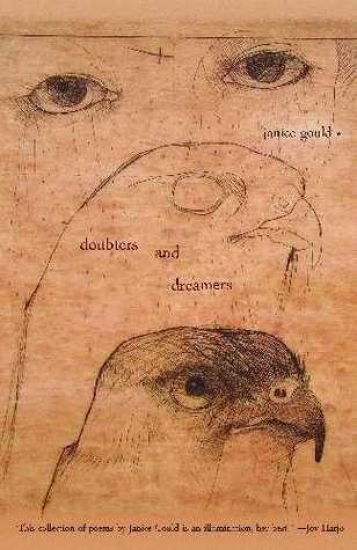
Doubters and Dreamers

Doubters and Dreamers

Janice Gould

University of Arizona Press
2011
nidottu
Doubters and Dreamers opens with a question from a young girl faced with the spectacle of Indian effigies lynched and burned "in jest" before UC Berkeley's annual Big Game against Stanford: "What's a debacle, Mom?" This innocent but telling question marks the girl's entr e into the complicated knowledge of her heritage as a mixed-blood Native American of Koyangk'auwi (Concow) Maidu descent. The girl is a young Janice Gould, and the poems and narrations that follow constitute a remarkable work of sustained and courageous self-revelation, retracing the precarious emotional terrain of an adolescence shaped by a mother's tough love and a growing consciousness of an ancestral and familial past. In the first half of the book, "Tribal History," Gould ingeniously repurposes the sonnet form to preserve the stories of her mother and aunt, who grew up when "muleback was the customary mode / of transport" and the "spirit world was present"--stories of "old ways" and places claimed in memory but lost in time. Elsewhere, she remembers her mother's "ferocious, upright anger" and her unexpected tenderness ("Like a miracle, I was still her child"), culminating in the profound expression of loss that is the poem "Our Mother's Death." In the second half of the book, "It Was Raining," Gould tells of the years of lonely self-making and "unfulfilled dreams" as she comes to terms with what she has been told are her "crazy longings" as a lesbian: "It's been hammered into me / that I'll be spurned / by a 'real woman, ' / the only kind I like." The writing here commemorates old loves and relationships in language that mingles hope and despair, doubt and devotion, veering at times into dreamlike moments of consciousness. One poem and vignette at a time, Doubters and Dreamers explores what it means to be a mixed-blood Native American who grew up urban, lesbian, and middle class in the West.
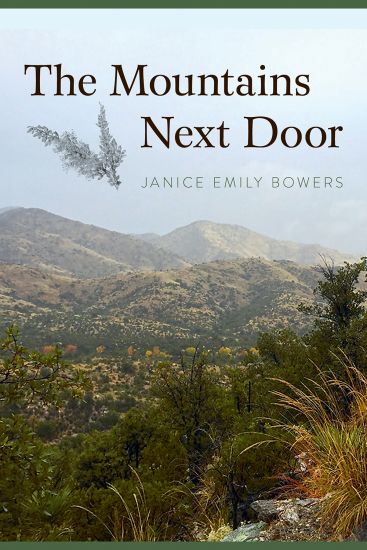
The Mountains Next Door

The Mountains Next Door

Janice Emily Bowers

University of Arizona Press
2022
nidottu
The Rincon Mountains east of Tucson are a small and seemingly undistinguished range; rounded and arid, they are more a site for foothill walks than serious exploring. Yet, upon close inspection, these unassuming mountains disclose many wonders and curiosities, as Janice Emily Bowers discovered while conducting a botanical study there. Over the course of two years, she made thirty-eight excursions into the Rincons—some for two or three days at a time—and garnered not only plant specimens but thoughts along the way. The Mountains Next Door is the first book to describe and celebrate the natural history of these mountains that even longtime Arizonans may often take for granted. "I watched the seasons march through the canyons," writes Bowers, "followed the wildflower parade from February through November, and throughout it all realized that I could travel in the Rincon Mountains forever and never learn all they contained." It is also a book of meditations, as Bowers reflects upon the meaning of nature, the similarities between the scientific and creative processes, the value of wilderness in the face of urban encroachment, and other ideas. Participating in the long tradition of reflective natural history writing, she has produced a memorable book that depicts the delights and dilemmas of field botany as it explores the perennial struggle between science and mysticism that tugs at every naturalist's heart.