Kirjojen hintavertailu. Mukana 12 152 606 kirjaa ja 12 kauppaa.

Kirjahaku

Etsi kirjoja tekijän nimen, kirjan nimen tai ISBN:n perusteella.

1000 tulosta hakusanalla Janis A. Spring

Isis, Vampires and Ghosts - Oh My!

Isis, Vampires and Ghosts - Oh My!

Janis Hill

Hague Publishing
2018
pokkari
Too late to save her sister's life, Stephanie Anders must now try to save her soul from the vampire who has possessed her, Branwyre, eighteenth vampire Lord of the Aegean. With only the aid of the ghost of a pissed-off Buddhist monk with a potty mouth and the modern day Priestess of Isis, Stephanie must take on demons and other denizens of a world she knows nothing about if she is to succeed in banishing Branwyre. But even more difficult than that, she must learn how to forgive her sister Estella for what she did to her if she is to have even half a chance of saving her soul. Welcome to a world within our own - the Other World.
There's No Place Like Hell

There's No Place Like Hell

Janis Hill

Hague Publishing
2019
pokkari
Stephanie Anders is facing her hardest task yet: saving the soul of an enemy.To do this she must make deals with demons, argue with reapers, and sneak into hell. It's the getting back out again safely that might be a bit tricky.
Your Pregnancy Companion

Your Pregnancy Companion

Janis Graham

Gallery
1991
pokkari
From Simon & Schuster, Your Pregnancy Companion: Month-By-Month Guide to All You Need to Know Before, During, and After is the perfect guide to pregnancy from the author of Breastfeeding Secrets and Solutions.Winner of A Child Magazine Book Award for Excellence in Family Issues, Janis Graham's Your Pregnancy Companion is a month-by-month guide to all you need to know before, during and after pregnancy.
Goya

Goya

Janis Tomlinson

PRINCETON UNIVERSITY PRESS
2020
sidottu
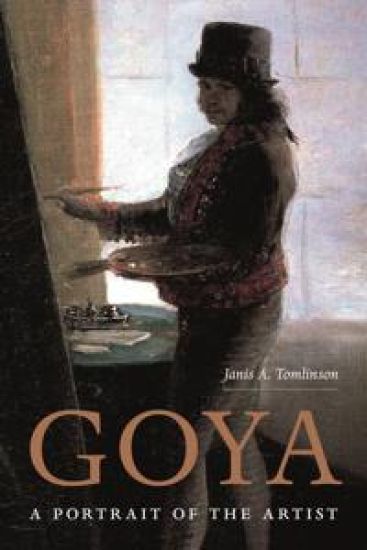
The first major English-language biography of Francisco Goya y Lucientes, who ushered in the modern eraThe life of Francisco Goya (1746–1828) coincided with an age of transformation in Spanish history that brought upheavals in the country's politics and at the court which Goya served, changes in society, the devastation of the Iberian Peninsula in the war against Napoleon, and an ensuing period of political instability. In this revelatory biography, Janis Tomlinson draws on a wide range of documents—including letters, court papers, and a sketchbook used by Goya in the early years of his career—to provide a nuanced portrait of a complex and multifaceted painter and printmaker, whose art is synonymous with compelling images of the people, events, and social revolution that defined his life and era.Tomlinson challenges the popular image of the artist as an isolated figure obsessed with darkness and death, showing how Goya's likeability and ambition contributed to his success at court, and offering new perspectives on his youth, rich family life, extensive travels, and lifelong friendships. She explores the full breadth of his imagery—from scenes inspired by life in Madrid to visions of worlds without reason, from royal portraits to the atrocities of war. She sheds light on the artist's personal trials, including the deaths of six children and the onset of deafness in middle age, but also reconsiders the conventional interpretation of Goya's late years as a period of disillusion, viewing them instead as years of liberated artistic invention, most famously in the murals on the walls of his country house, popularly known as the "black" paintings.A monumental achievement, Goya: A Portrait of the Artist is the definitive biography of an artist whose faith in his art and his genius inspired paintings, drawings, prints, and frescoes that continue to captivate, challenge, and surprise us two centuries later.
Goya

Goya

Janis Tomlinson

PRINCETON UNIVERSITY PRESS
2022
pokkari
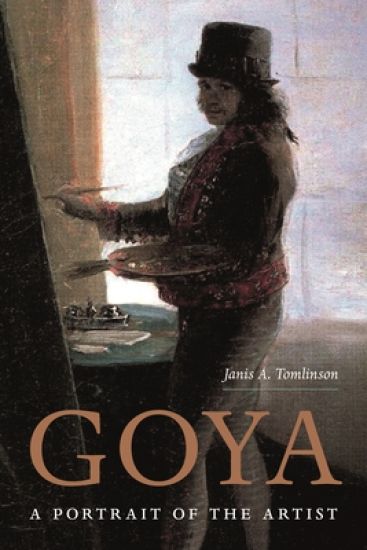
The first major English-language biography of Francisco Goya y Lucientes, who ushered in the modern eraThe life of Francisco Goya (1746–1828) coincided with an age of transformation in Spanish history that brought upheavals in the country's politics and at the court which Goya served, changes in society, the devastation of the Iberian Peninsula in the war against Napoleon, and an ensuing period of political instability. In this revelatory biography, Janis Tomlinson draws on a wide range of documents—including letters, court papers, and a sketchbook used by Goya in the early years of his career—to provide a nuanced portrait of a complex and multifaceted painter and printmaker, whose art is synonymous with compelling images of the people, events, and social revolution that defined his life and era.Tomlinson challenges the popular image of the artist as an isolated figure obsessed with darkness and death, showing how Goya's likeability and ambition contributed to his success at court, and offering new perspectives on his youth, rich family life, extensive travels, and lifelong friendships. She explores the full breadth of his imagery—from scenes inspired by life in Madrid to visions of worlds without reason, from royal portraits to the atrocities of war. She sheds light on the artist's personal trials, including the deaths of six children and the onset of deafness in middle age, but also reconsiders the conventional interpretation of Goya's late years as a period of disillusion, viewing them instead as years of liberated artistic invention, most famously in the murals on the walls of his country house, popularly known as the "black" paintings.A monumental achievement, Goya: A Portrait of the Artist is the definitive biography of an artist whose faith in his art and his genius inspired paintings, drawings, prints, and frescoes that continue to captivate, challenge, and surprise us two centuries later.
Legacies: Interviews with Masters of Photography from Darkroom Photography Magazine
During her tenure at Darkroom Photography magazine from 1981-88, Janis Bultman met the movers and shakers of the photography world. She was privileged to interview twenty-one celebrated photographers, photojournalists, and artists for the magazine's Masters of Photography series. Now those candid, in-depth conversations have been compiled into book form for the first time. Included in the collection are Bultman's interviews with these luminaries: Herbert Bayer Sonja Bullaty & Angelo Lomeo Barbara Crane Alfred Eisenstaedt Elliott Erwitt Ernst Haas Andr Kert sz James J. Kriegsmann Robert Mapplethorpe Mary Ellen Mark Ray K. Metzker Ruth Orkin Gordon Parks Bill Pierce Aaron Siskind Lou Stoumen Pete Turner Val Telberg Roman Vishniac Lee D. Witkin Bultman's easy rapport with the artists is apparent throughout the book. Besides sharing important technical information about their equipment, many of the interviewees volunteer fascinating anecdotes and observations about the rewards and hazards of photography as a profession. Herbert Bayer compares photography to architecture. Pete Turner explains how science fiction inspired his work. Alfred Eisenstaedt recounts his long career with Life. Legacies offers twenty-first-century readers a fascinating, intimate look at the creative methods and inspirations of some of the most influential photographers of the twentieth century.
The Church of Santa Maria Donna Regina

The Church of Santa Maria Donna Regina

Janis Elliott

Ashgate Publishing Limited
2004
sidottu
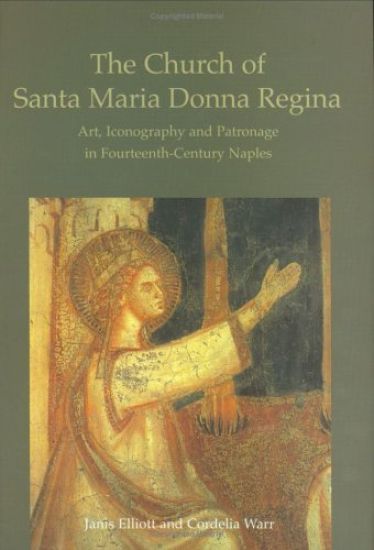
The church of Santa Maria Donna Regina in Naples is a rare example of aristocratic convent architecture in Italy, designed and built for the devotional use of the Clarissan nuns. Its decorative programme rivals that of Giotto's Arena Chapel in Padua in scope, iconographical complexity, and quality of artistic production. The first book in English on this important church, this elegantly written volume is also the first full-scale study to bring together innovative interdisciplinary research on the building. The authors explore themes relating to the architecture, decoration, sculpture, iconography, audience, liturgy, and patronage of Santa Maria Donna Regina, enriching our understanding of the art patronage of royal women and the monastic experience of Clarissan nuns, as well as the politics, culture and patronage of trecento Naples. Over one hundred illustrations, many commissioned specially for the book, accompany the text.
Public Finance and Post-Communist Party Development

Public Finance and Post-Communist Party Development

Janis Ikstens

Ashgate Publishing Limited
2008
sidottu
This key volume explores how party and campaign finance in post-communist countries have influenced the development of the party system. Based on an analysis of nine case studies, the work examines how the implementation of public finance affects the pattern of party competition and the role of money in elections. One of the lessons from the post-communist experience is that, no matter how well-designed, public finance systems are subject to constant revision as parties, politicians and business elites exploit loopholes which can undermine the integrity of the entire system. Party and campaign finance systems must therefore be considered in a larger discussion involving party regulation and electoral rules.
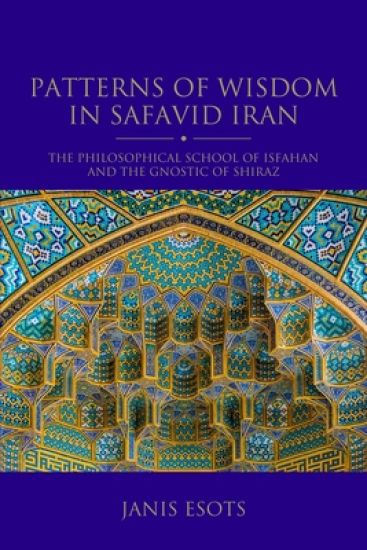
Patterns of Wisdom in Safavid Iran

Patterns of Wisdom in Safavid Iran

Janis Esots

BLOOMSBURY PUBLISHING PLC
2021
sidottu
I.B. Tauris in association with the Institute of Ismaili StudiesThe exceptional intellectual richness of seventeenth-century Safavid Iran is epitomised by the philosophical school of Isfahan, and in particular by its ostensible founder, Mir Damad (d. 1631), and his great student Mulla Sadra (aka Sadr al-Din Shirazi, d. 1636). Equally important to the school is the apophatic wisdom of Rajab 'Ali Tabrizi that followed later (d. 1669/70). However, despite these philosophers’ renown, the identification of the 'philosophical school of Isfahan' was only proposed in 1956, by the celebrated French Iranologist Henry Corbin, who noted the unifying Islamic Neoplatonist character of some 20 thinkers and spiritual figures; this grouping has subsequently remained unchallenged for some fifty years.In this highly original work, Janis Esots investigates the legitimacy of the term 'school', delving into the complex philosophies of these three major Shi'i figures and drawing comparisons between them. The author makes the case that Mulla Sadra’s thought is independent and actually incompatible with the thoughts of Mir Damad and Rajab Ali Tabrizi. This not only presents a new way of thinking about how we understand the ‘school of Isfahan’, it also identifies Mir Damad and Rajab Ali Tabrizi as pioneers in their own right.
Patterns of Wisdom in Safavid Iran

Patterns of Wisdom in Safavid Iran

Janis Esots

BLOOMSBURY PUBLISHING PLC
2021
nidottu
I.B. Tauris in association with the Institute of Ismaili StudiesThe exceptional intellectual richness of seventeenth-century Safavid Iran is epitomised by the philosophical school of Isfahan, and in particular by its ostensible founder, Mir Damad (d. 1631), and his great student Mulla Sadra (aka Sadr al-Din Shirazi, d. 1636). Equally important to the school is the apophatic wisdom of Rajab 'Ali Tabrizi that followed later (d. 1669/70). However, despite these philosophers’ renown, the identification of the 'philosophical school of Isfahan' was only proposed in 1956, by the celebrated French Iranologist Henry Corbin, who noted the unifying Islamic Neoplatonist character of some 20 thinkers and spiritual figures; this grouping has subsequently remained unchallenged for some fifty years.In this highly original work, Janis Esots investigates the legitimacy of the term 'school', delving into the complex philosophies of these three major Shi'i figures and drawing comparisons between them. The author makes the case that Mulla Sadra’s thought is independent and actually incompatible with the thoughts of Mir Damad and Rajab Ali Tabrizi. This not only presents a new way of thinking about how we understand the ‘school of Isfahan’, it also identifies Mir Damad and Rajab Ali Tabrizi as pioneers in their own right.
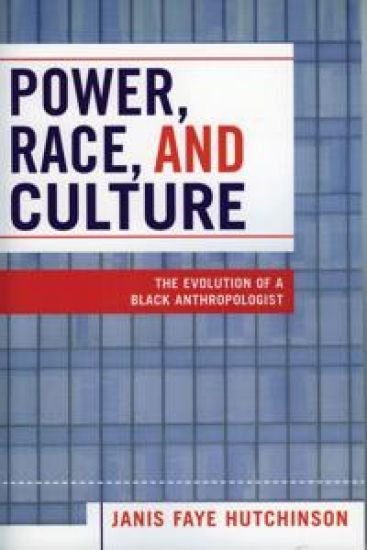
Power, Race, and Culture

Power, Race, and Culture

Janis Faye Hutchinson

University Press of America
2005
nidottu
As an African American female who grew up in Birmingham, Alabama during the Civil Rights period, Janis Faye Hutchinson has always had a strong consciousness about race and racism. In this book, she examines becoming an anthropologist from the perspective of a black female who grew up in the South during the Civil Rights era. This book intertwines Hutchinson's childhood experiences and socialization in a segregated South, with her academic experiences and training in anthropology, to examine race and race relations in the United States. Hutchinson specifically examines the impact of the concept of race on her professional development and provides a modern outlook on diversity. Power, Race, and Culture: The Evolution of a Black Anthropologist encourages readers to think about their history, in terms of social development, and to make their own observations about race.
The Coexistence of Race and Racism

The Coexistence of Race and Racism

Janis Faye Hutchinson

University Press of America
2005
nidottu
Race and racism are interconnected historically and in the modern world. This connection is related to changing social, political, and economic conditions that impact how we think of others and ourselves. Race and racism are also connected to biological discoveries that justify how we think of others and ourselves. The main focus of this book is the examination of these connections. It is argued that while both race and racism are social constructions, the justification for racism changed as the definition and attributes of races were modified to correspond with new developments in biology and genetics. Whereas biological discoveries are one side of this construction, changing social situations represent the other. That is, racism also responds to changing social, political, and economic conditions that alter its justification. In addition, scientific constructions of race are impacted by social factors that serve to direct the "scientific disclosures" on human diversity. These factors form the context for the intricate relationship between race and racism.
Not Talking Union

Not Talking Union

Janis Thiessen

McGill-Queen's University Press
2016
sidottu
How does one write a labour history of a people who have not been involved in the labour movement in significant numbers and, historically, have opposed union membership? While North American Mennonites have traditionally been associated with rural life, in light of the adjustments demanded by post-1945 urbanization and industrialization, they in fact became very involved in the workforce at a time of important labour foment. Drawing on over a hundred interviews, Janis Thiessen explores Mennonite responses to labour movements such as Cesar Chavez and the United Farm Workers, as well as Mennonite involvement in conscientious objection to unions. This innovative study of the Mennonites - a people at once united by an ethnic and religious identity, yet also shaped by differences in geography, immigration histories, denomination, and class position - provides insights into how and why they have resisted involvement in organized labour. Not Talking Union adds a unique perspective to the history of labour, exploring how people negotiate tensions between their commitments to faith and conscience and the demands of their employment. Not Talking Union breaks new methodological ground in its close analysis of the oral narratives of North American Mennonites. Reflecting on both oral and archival sources, Thiessen shows why Mennonite labour history matters, and reveals the role of power and inequality in that history.
Not Talking Union

Not Talking Union

Janis Thiessen

McGill-Queen's University Press
2016
nidottu
How does one write a labour history of a people who have not been involved in the labour movement in significant numbers and, historically, have opposed union membership? While North American Mennonites have traditionally been associated with rural life, in light of the adjustments demanded by post-1945 urbanization and industrialization, they in fact became very involved in the workforce at a time of important labour foment. Drawing on over a hundred interviews, Janis Thiessen explores Mennonite responses to labour movements such as Cesar Chavez and the United Farm Workers, as well as Mennonite involvement in conscientious objection to unions. This innovative study of the Mennonites - a people at once united by an ethnic and religious identity, yet also shaped by differences in geography, immigration histories, denomination, and class position - provides insights into how and why they have resisted involvement in organized labour. Not Talking Union adds a unique perspective to the history of labour, exploring how people negotiate tensions between their commitments to faith and conscience and the demands of their employment. Not Talking Union breaks new methodological ground in its close analysis of the oral narratives of North American Mennonites. Reflecting on both oral and archival sources, Thiessen shows why Mennonite labour history matters, and reveals the role of power and inequality in that history.
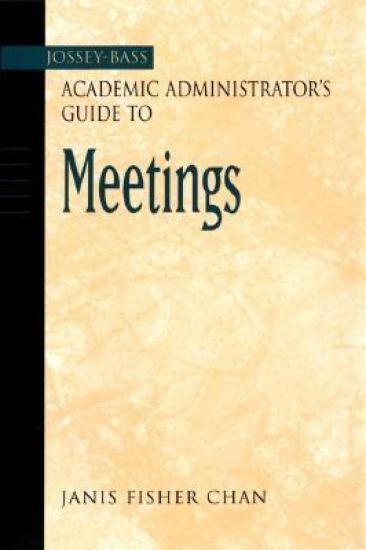
The Jossey-Bass Academic Administrator's Guide to Meetings

The Jossey-Bass Academic Administrator's Guide to Meetings

Janis Fisher Chan

Jossey-Bass Inc.,U.S.
2003
nidottu
Newly appointed academic managers are expected to conduct and lead a wide variety of meetings. Often, however, these managers lack the skills needed to lead meetings that get meaningful results. The Jossey-Bass Academic Administrator's Guide to Meetings is specifically designed to help managers understand how to conduct successful meetings that accomplish specific objectives as efficiently as possible. This helpful resource includes practical guidelines and information that can be put into place immediately to help ensure that meetings run effectively.
Creditor Rights and the Public Interest

Creditor Rights and the Public Interest

Janis Sarra

University of Toronto Press
2003
pokkari
Creditor Rights and the Public Interest supports the greater representation of non-traditional creditors in the process of insolvency restructuring in Canada, concentrating particularly on restructuring under the federal Companies' Creditors' Arrangement Act (CCAA). Arguing in favour of the representation of such non-traditional creditors as workers, consumers, trade suppliers, and local governments, Janis Sarra describes the existing process of addressing their interests, analyzes four case studies that focus on non-creditor groups, and compares the Canadian approach to that of several other countries, such as Germany, France, and the United States. Sarra draws on a comprehensive body of academic literature that covers a broad range of issues-insolvency theory, corporate governance theory, legislative history, and bankruptcy and insolvency practice. She further surveys the relevant legislation and supplements her analysis with insights drawn from extensive primary research of court records and personal interviews with lawyers, judges, and government officials. Creditor Rights and the Public Interest ultimately illustrates the way in which the concept of the public interest can be utilized to foreground the concerns of non-traditional stakeholders. Sarra provides a coherent account of the justification for recognizing these creditors by situating insolvency law in a legal regime that realizes a duty to maximize all of the interests and investments at stake in the corporation. In an academic field where scholarship is currently scarce, Sarra's text will be a welcome contribution.
Creditor Rights and the Public Interest

Creditor Rights and the Public Interest

Janis Sarra

University of Toronto Press
2003
sidottu
Creditor Rights and the Public Interest supports the greater representation of non-traditional creditors in the process of insolvency restructuring in Canada, concentrating particularly on restructuring under the federal Companies' Creditors' Arrangement Act (CCAA). Arguing in favour of the representation of such non-traditional creditors as workers, consumers, trade suppliers, and local governments, Janis Sarra describes the existing process of addressing their interests, analyzes four case studies that focus on non-creditor groups, and compares the Canadian approach to that of several other countries, such as Germany, France, and the United States. Sarra draws on a comprehensive body of academic literature that covers a broad range of issues-insolvency theory, corporate governance theory, legislative history, and bankruptcy and insolvency practice. She further surveys the relevant legislation and supplements her analysis with insights drawn from extensive primary research of court records and personal interviews with lawyers, judges, and government officials. Creditor Rights and the Public Interest ultimately illustrates the way in which the concept of the public interest can be utilized to foreground the concerns of non-traditional stakeholders. Sarra provides a coherent account of the justification for recognizing these creditors by situating insolvency law in a legal regime that realizes a duty to maximize all of the interests and investments at stake in the corporation. In an academic field where scholarship is currently scarce, Sarra's text will be a welcome contribution.
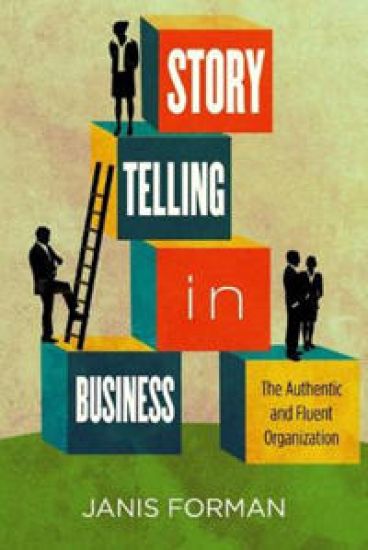
Storytelling in Business

Storytelling in Business

Janis Forman

Stanford University Press
2013
sidottu
Storytelling can be a lifelong and life sustaining habit of mind, a personal inheritance that connects us to our communities. It can also serve as an organizational inheritance—a management tool that helps businesses to develop and thrive. For more than a decade, award-winning author Janis Forman has been helping executives to tell stories in service of their organizational objectives. In Storytelling in Business: The Authentic and Fluent Organization, she teaches readers everywhere how the craft of storytelling can help them to achieve their professional goals. Focusing on the role of storytelling at the enterprise level, this book provides a research-driven framework for engaging in organizational storytelling. Forman presents original cases from Chevron, FedEx, Phillips, and Schering-Plough. Organizations like those featured in the book can make use of storytelling for good purposes, such as making sense of their strategy, communicating it, and developing or strengthening culture and brand. These uses of storytelling generate positive consequences that can have a sustained and significant impact on an organization. While large firms employ teams of digital and communication professionals, there's much that any of us can extrapolate from their experience to create stories to further our own objectives. To show the reach of storytelling, Forman conducted 140 interviews with professionals ranging from CEOs in small and thriving firms, to corporate communication and digital media experts, to filmmakers—arguably the world experts in visual storytelling. She draws out specific lessons learned, and shows how to employ the road-tested strategies demonstrated by these leaders. Although this book focuses on storytelling in the context of business, Forman takes inspiration from narratives in literature and film, philosophical and social thought, and relevant concepts from a variety of other disciplines to instruct the reader on how to develop truly authentic and meaningful tales to drive success. A final chapter brings readers back to square one: the development of their own "signature story." This book is a pioneering work that guides us beyond the pressure and noise of daily organizational life to influence people in a sustained, powerful way. It teaches us to be fluent storytellers who succeed by mastering this vital skill.