

Kirjahaku
Etsi kirjoja tekijän nimen, kirjan nimen tai ISBN:n perusteella.
1000 tulosta hakusanalla Jessica Innes

Some babies can't stay; it's true, I'm afraid, but they're never forgotten, and their love never fades. This book is gentle poem for anyone who has ever experienced the unimaginable loss of a baby. It speaks to families who have experienced miscarriage, still birth, or any type of infant loss.

Some babies can't stay; it's true, I'm afraid, but they're never forgotten, and their love never fades. This book is gentle poem for anyone who has ever experienced the unimaginable loss of a baby. It speaks to families who have experienced miscarriage, still birth, or any type of infant loss.

A supportive resource for foster and adoptive parents. Filled with opportunities to explore creativity, guided processing, journal reflection and trauma-informed wisdom to encourage you as you parent.
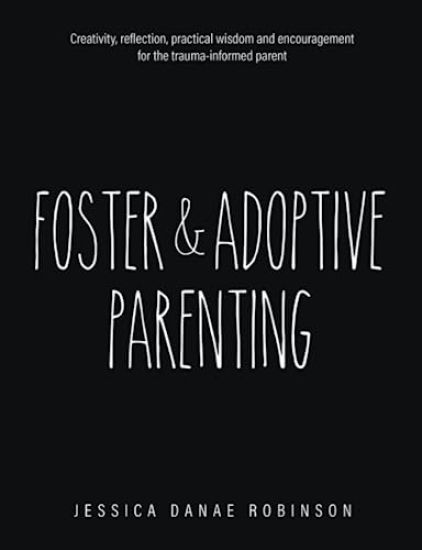
A supportive resource for foster and adoptive parents. Filled with opportunities to explore creativity, guided processing, journal reflection and trauma-informed wisdom to encourage you as you parent.

A psychoanalytic understanding of violence is key to successful treatment strategies. This book draws on the expanding discipline of forensic psychotherapy to explore the theory behind violent behaviour in adults. With key definitions and practical case studies, it offers an accessible framework for mental health workers.
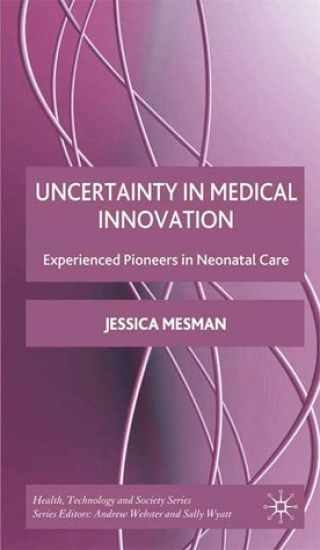
The Neonatal Intensive Care Unit is a site where hi-tech medicine and vulnerable human beings come into close contact. Focusing on a number of medical and ethical challenges encountered by staff and parents, this book provides a new perspective on the complexity of these treatments and the inventiveness of those involved.

Exploring how understandings of masculinity were constructed by British First World war servicemen through examination of their personal narratives, including letters home from the front and wartime diaries. This book presents a nuanced investigation of masculine identity in Britain during and after the First World War.

The Romance of Gambling in the Eighteenth-Century British Novel
Jessica Richard
Palgrave Macmillan
2011
sidottu
Gambling permeated the daily lives of eighteenth-century Britons of all classes. This book explicates the relationship between the rampant gambling in eighteenth-century England, the new forms of gambling-inspired capitalism that transformed British society, and novels that interrogate the new socio-economy of long odds and lucky breaks.

Exploring how understandings of masculinity were constructed by British First World war servicemen through examination of their personal narratives, including letters home from the front and wartime diaries. This book presents a nuanced investigation of masculine identity in Britain during and after the First World War.

A brand new title in this popular series of 'Tests that teach', designed to help improve students' exam performance and increase language competence. Task types familiarise students with the tasks they will face in the exam, further practice and guidance pages build confidence in answering them and an expanded answer key gives clear explanations as to why the given answer is correct. It can be used in the classroom or for self-study. The Testbuilder for the TOEIC Tests offers three complete tests for the Listening & Reading TOEIC test, followed by three tests for the Speaking TOEIC test and three tests for the Writing TOEIC test.

Testbuilder for the TOEIC tests is designed to improve test performance and increase language competence for success in the TOEIC Listening and Reading test and the Speaking and Writing tests. Three practice tests full range of TOEIC test question types TOEIC test strategies section Further Practice and Guidance pages Include question-specific exercises to develop test techniques Focus on common problem areas in each test Build confidence in all test question types Focus on Speaking and Writing subskills Answer key Complete answer key with useful explanations Model answers for comparison Includes listening scripts for all tests Accompanying audio CDs contain all Listening and Speaking test material as well as Speaking model answers and Further Practice listening support. Macmillan Practice Online Access code to more practice at Macmillan Practice Online
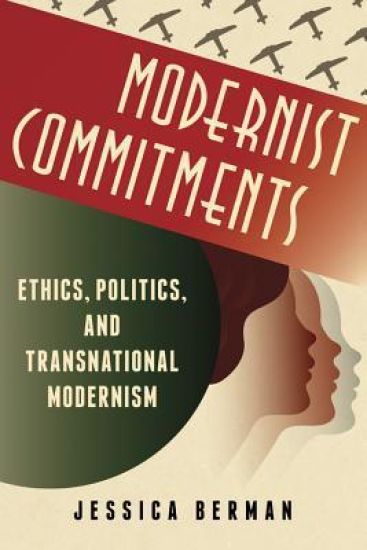
Jessica Berman demonstrates how modernist narrative connects ethical attitudes and responsibilities to the active creation of political relationships and the way we imagine justice. She challenges divisions between "modernist" and "committed" writing, arguing that a continuum of political engagement undergirds modernisms worldwide and that it is strengthened rather than hindered by formal experimentation. In addition to making the case for a transnational model of modernism, Berman shows how modernism's play with formal matters, its challenge to the boundaries between fact and fiction, its incorporation of vernacular and folkways, and its engagement with embodied experience and intimacy offer not only an expanded account of modernist texts and commitments but a new way of thinking about what modernism is and can do.
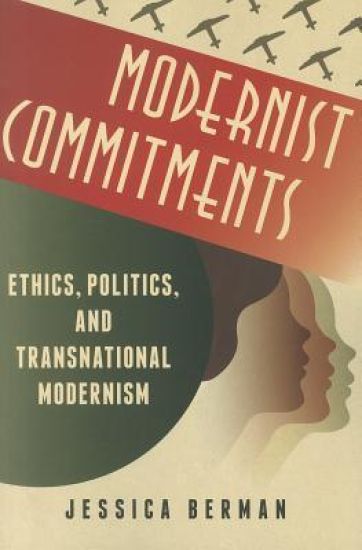
Jessica Berman demonstrates how modernist narrative connects ethical attitudes and responsibilities to the active creation of political relationships and the way we imagine justice. She challenges divisions between "modernist" and "committed" writing, arguing that a continuum of political engagement undergirds modernisms worldwide and that it is strengthened rather than hindered by formal experimentation. In addition to making the case for a transnational model of modernism, Berman shows how modernism's play with formal matters, its challenge to the boundaries between fact and fiction, its incorporation of vernacular and folkways, and its engagement with embodied experience and intimacy offer not only an expanded account of modernist texts and commitments but a new way of thinking about what modernism is and can do.

Twenty-first-century culture is obsessed with books. In a time when many voices have joined to predict the death of print, books continue to resurface in new and unexpected ways. From the proliferation of “shelfies” to Jane Austen–themed leggings and from decorative pillows printed with beloved book covers to bookwork sculptures exhibited in prestigious collections, books are everywhere and are not just for reading. Writers have caught up with this trend: many contemporary novels depict books as central characters or fetishize paper and print thematically and formally.In Bookishness, Jessica Pressman examines the new status of the book as object and symbol. She explores the rise of “bookishness” as an identity and an aesthetic strategy that proliferates from store-window décor to experimental writing. Ranging from literature to kitsch objects, stop-motion animation films to book design, Pressman considers the multivalent meanings of books in contemporary culture. Books can represent shelter from—or a weapon against—the dangers of the digital; they can act as memorials and express a sense of loss. Examining the works of writers such as Jonathan Safran Foer, Jennifer Egan, Mark Z. Danielewski, and Leanne Shapton, Pressman illuminates the status of the book as a fetish object and its significance for understanding contemporary fakery. Bringing together media studies, book history, and literary criticism, Bookishness explains how books still give meaning to our lives in a digital age.

Twenty-first-century culture is obsessed with books. In a time when many voices have joined to predict the death of print, books continue to resurface in new and unexpected ways. From the proliferation of “shelfies” to Jane Austen–themed leggings and from decorative pillows printed with beloved book covers to bookwork sculptures exhibited in prestigious collections, books are everywhere and are not just for reading. Writers have caught up with this trend: many contemporary novels depict books as central characters or fetishize paper and print thematically and formally.In Bookishness, Jessica Pressman examines the new status of the book as object and symbol. She explores the rise of “bookishness” as an identity and an aesthetic strategy that proliferates from store-window décor to experimental writing. Ranging from literature to kitsch objects, stop-motion animation films to book design, Pressman considers the multivalent meanings of books in contemporary culture. Books can represent shelter from—or a weapon against—the dangers of the digital; they can act as memorials and express a sense of loss. Examining the works of writers such as Jonathan Safran Foer, Jennifer Egan, Mark Z. Danielewski, and Leanne Shapton, Pressman illuminates the status of the book as a fetish object and its significance for understanding contemporary fakery. Bringing together media studies, book history, and literary criticism, Bookishness explains how books still give meaning to our lives in a digital age.
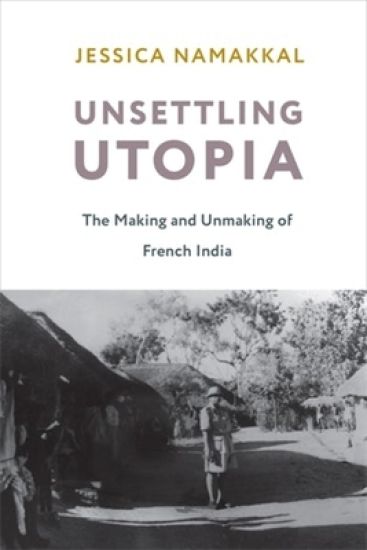
After India achieved independence from the British in 1947, there remained five scattered territories governed by the French imperial state. It was not until 1962 that France fully relinquished control. Once decolonization took hold across the subcontinent, Western-led ashrams and utopian communities remained in and around the former French territory of Pondicherry—most notably the Sri Aurobindo Ashram and the Auroville experimental township, which continue to thrive and draw tourists today.Unsettling Utopia presents a new account of the history of twentieth-century French India to show how colonial projects persisted beyond formal decolonization. Through the experience of the French territories, Jessica Namakkal recasts the relationships among colonization, settlement, postcolonial sovereignty, utopianism, and liberation, considering questions of borders, exile, violence, and citizenship from the margins. She demonstrates how state-sponsored decolonization—the bureaucratic process of transferring governance from an imperial state to a postcolonial state—rarely aligned with local desires. Namakkal examines the colonial histories of the Aurobindo Ashram and Auroville, arguing that their continued success shows how decolonization paradoxically opened new spaces of settlement, perpetuating imperial power. Challenging conventional markers of the boundaries of the colonial era as well as nationalist narratives, Unsettling Utopia sheds new light on the legacies of colonialism and offers bold thinking on what decolonization might yet mean.
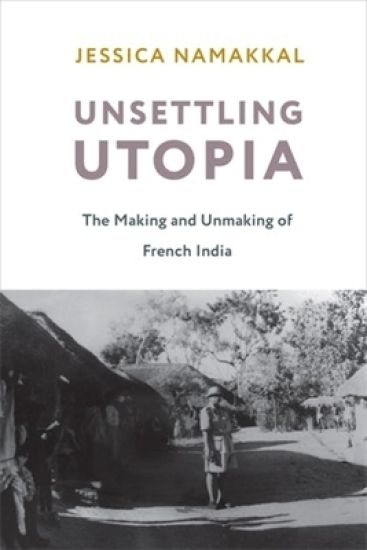
After India achieved independence from the British in 1947, there remained five scattered territories governed by the French imperial state. It was not until 1962 that France fully relinquished control. Once decolonization took hold across the subcontinent, Western-led ashrams and utopian communities remained in and around the former French territory of Pondicherry—most notably the Sri Aurobindo Ashram and the Auroville experimental township, which continue to thrive and draw tourists today.Unsettling Utopia presents a new account of the history of twentieth-century French India to show how colonial projects persisted beyond formal decolonization. Through the experience of the French territories, Jessica Namakkal recasts the relationships among colonization, settlement, postcolonial sovereignty, utopianism, and liberation, considering questions of borders, exile, violence, and citizenship from the margins. She demonstrates how state-sponsored decolonization—the bureaucratic process of transferring governance from an imperial state to a postcolonial state—rarely aligned with local desires. Namakkal examines the colonial histories of the Aurobindo Ashram and Auroville, arguing that their continued success shows how decolonization paradoxically opened new spaces of settlement, perpetuating imperial power. Challenging conventional markers of the boundaries of the colonial era as well as nationalist narratives, Unsettling Utopia sheds new light on the legacies of colonialism and offers bold thinking on what decolonization might yet mean.
Just Awakening uncovers a forgotten philosophy of social democracy inspired by Yogacara, an ancient, nondualistic Buddhist philosophy that claims everything in the perceptible cosmos is mere consciousness and consists of multiple karmically connected yet bounded lifeworlds. This Yogacara social philosophy emerged in the late nineteenth and early twentieth centuries among Chinese intellectuals who struggled against the violent Social Darwinist logic of the survival of the fittest. Its proponents were convinced that the root cause of crisis in both China and the West was epistemic—an unexamined faith in one common, objective world and a subject-object divide. This dualistic paradigm, in their view, had dire consequences, including moral egoism, competition for material wealth, and racial war. Yogacara insights about plurality, interdependence, and intersubjectivity, however, had the capacity to awaken the world from these deadly dreams.Jessica X. Zu reconstructs this account of modern Yogacara philosophy, arguing that it offers new vocabularies with which to reconceptualize equality and freedom. Yogacara thinking, she shows, diffracts the illusions of individual identity, social categories, and material wealth into aggregated, recurring karmic processes. It then guides the reassembly of a complex society through nonhierarchical, noncoercive, and collaborative actions, sustained by new behavior patterns and modes of thought. Demonstrating why Chinese Buddhist social philosophy offers powerful resources for social justice and liberation today, Just Awakening invites readers to think with modern Yogacara philosophers about other ways of building egalitarian futures.
Just Awakening uncovers a forgotten philosophy of social democracy inspired by Yogacara, an ancient, nondualistic Buddhist philosophy that claims everything in the perceptible cosmos is mere consciousness and consists of multiple karmically connected yet bounded lifeworlds. This Yogacara social philosophy emerged in the late nineteenth and early twentieth centuries among Chinese intellectuals who struggled against the violent Social Darwinist logic of the survival of the fittest. Its proponents were convinced that the root cause of crisis in both China and the West was epistemic—an unexamined faith in one common, objective world and a subject-object divide. This dualistic paradigm, in their view, had dire consequences, including moral egoism, competition for material wealth, and racial war. Yogacara insights about plurality, interdependence, and intersubjectivity, however, had the capacity to awaken the world from these deadly dreams.Jessica X. Zu reconstructs this account of modern Yogacara philosophy, arguing that it offers new vocabularies with which to reconceptualize equality and freedom. Yogacara thinking, she shows, diffracts the illusions of individual identity, social categories, and material wealth into aggregated, recurring karmic processes. It then guides the reassembly of a complex society through nonhierarchical, noncoercive, and collaborative actions, sustained by new behavior patterns and modes of thought. Demonstrating why Chinese Buddhist social philosophy offers powerful resources for social justice and liberation today, Just Awakening invites readers to think with modern Yogacara philosophers about other ways of building egalitarian futures.