Kirjojen hintavertailu. Mukana 11 627 220 kirjaa ja 12 kauppaa.

Kirjahaku

Etsi kirjoja tekijän nimen, kirjan nimen tai ISBN:n perusteella.

1000 tulosta hakusanalla Jon B. Fish

New Spirituality, Self, and Belonging

New Spirituality, Self, and Belonging

Jon P. Bloch

Praeger Publishers Inc
1998
sidottu
Through in-depth interviews with 22 New Agers and Neo-Pagans, this study proposes a new model of religious identity from a sociological standpoint. The analysis demonstrates that in spite of their great diversity of beliefs and lack of strong organizational ties, a discernible community of alternative spiritualists does exist.This volume will appeal not only to scholars of the sociology of religion, but also to sociologists interested in community building, social movements, and self-identity.
Confederates against the Confederacy

Confederates against the Confederacy

Jon L. Wakelyn

Praeger Publishers Inc
2002
sidottu
Far from being a monolith with unanimous leadership loyalty to the cause of a separate nation, the Confederacy was in reality deeply divided over how to achieve independence. Many supposedly loyal leaders, civilian as well as elected officials, opposed governmental policies on the national and state levels, and their actions ultimately influenced non-support for military policies. Congressional differences over arming the slaves and bureaucratic squabbles over how to conduct the war disrupted the government and Cabinet of President Jefferson Davis. Rumors of such irreconcilable differences spread throughout the South, contributing to an overall decline in morale and support for the war effort and causing the Confederacy to come apart from within.When asked to make sacrifices, civilian leaders found themselves caught in the dilemma of either aiding the Confederacy or losing money through poor utilization of slave labor. To sustain profits, the business and planter classes often traded with the enemy. Upon consideration of arming the slaves, many members of Congress proclaimed that the war effort was not worth the demise of slavery and preferred instead to take their chances with the Northern government. Cultural leaders, clergy, newspapermen, and men of letters claimed their loyalty to the war effort, but often criticized government policies in public. By asking for financial support and instituting a military draft, the national government infuriated local patriots who wanted to defend their own states more than they desired to defeat the enemy.
The Sword of Damocles

The Sword of Damocles

Jon Kofas

Praeger Publishers Inc
2002
sidottu
Focusing on Chile and Colombia during the 1950s and 1960s, Kofas examines the impact of IMF, World Bank, and U.S. foreign policy on the economies and social and political institutions of Latin America. Far from fostering democracy and social justice, foreign loans and aid were major impediments to these ideals. Symptomatic of systematic underdevelopment, cyclical Third World foreign borrowing and debt crises have been responsible for maintaining the debtor nations integrated into the global market economy, perpetuating their dependency, and maintaining low living standards. Comparing Colombia and Chile, the book examines the complex factors of domestic and international forces that account for structural underdevelopment in the Third World.A study on the historical antecedents of globalism and its impact on the Third World, this book analyzes the interplay between IMF, World Bank, and U.S. foreign policy in shaping the economies of the Third World through loans that are the catalyst to global integration. Through its in-depth look at a complex topic, this book will prove provocative and valuable reading to students of globalization, inter-American relations, international finance, Latin American History, and U.S. diplomatic history.
Under the Eagle's Claw

Under the Eagle's Claw

Jon Kofas

Praeger Publishers Inc
2003
sidottu
The record shows that the United States often acts as if it has license to disregard the sovereign rights of other peoples and nations. Kofas argues the United States has used Greece as a means of satisfying its own interests for the past half-century, and that Greece has suffered mightily at the hands of its protector. The United States has deemed this strategically situated nation too important to its own geopolitical ambitions to allow it to realize the democratic freedoms so often espoused.Because of U.S. pressure, Greeks have been subjected to authoritarian regimes and have carried huge military budgets that have significantly weakened social programs. Kofas shows that Greece's own domestic and international interests were consistently subordinated to America's.
The Chora of Croton 1

The Chora of Croton 1

Jon Morter

University of Texas Press
2010
sidottu
From 1974 to the present, the Institute of Classical Archaeology (ICA) at the University of Texas at Austin has carried out archaeological excavations and surveys in ancient territories (chorae) in southern Italy. This wide-ranging investigation, which covers a large number of sites and a time period ranging from prehistory to the Middle Ages, has unearthed a wealth of new information about ancient rural economies and cultures in the region. These discoveries will be published in two multivolume series (Metaponto and Croton). This volume on the Neolithic settlement at Capo Alfiere is the first in the Croton series.The Chora of Croton 1 reports the excavation results of a remarkable Neolithic site at Capo Alfiere on the Ionian coast. Capo Alfiere is one of a very few early inhabitation sites in this area to have been excavated extensively, with a full team of scientific specialists providing interdisciplinary studies on early farming and animal husbandry. It provides comprehensive documentation of the economy, material culture, and way of life in the central Mediterranean in the sixth and fifth millennia BC. Most notable are the remains of a wattle-and-daub hut enclosed within a massive stone wall. Unique for this area, this well-preserved structure may have been used for special purposes such as ritual, as well as for habitation. The presence of Stentinello wares shows that the range of this pottery type extended further east than previously thought and casts new light on the development of ceramics in the area.
Texas Bobwhites

Texas Bobwhites

Jon A. Larson; Timothy E. Fulbright; Leonard A. Brennan; Fidel Hernández; Fred C. Bryant

University of Texas Press
2010
pokkari
Northern bobwhites are one of the most popular game birds in the United States. In Texas alone, nearly 100,000 hunters take to the field each fall and winter to pursue wild bobwhite quail. Texas is arguably the last remaining state with sufficient habitat to provide quail-hunting opportunities on a grand scale, and Texas ranchers with good bobwhite habitat often generate a greater proportion of their income from fees paid by quail hunters than from livestock production. Managing and expanding bobwhite habitat makes good sense economically, and it benefits the environment as well. The rangelands and woodlands of Texas that produce quail also support scores of other species of wildlife.Texas Bobwhites is a field guide to the seeds commonly eaten by northern bobwhites, as well as a handbook for conserving and improving northern bobwhite habitat. It provides identifying characteristics for the seeds of 91 species of grasses, forbs, woody plants, and succulents. Each seed description includes a close-up and a scale photo of the seed and the plant that produces it, along with a range map. Using this information, hunters can readily identify concentrations of plants that are most likely to attract quail. Landowners and rangeland managers will greatly benefit from the book's state-of-the-art guidance for habitat management and restoration, including improving habitat dominated by invasive and nonnative grasses.
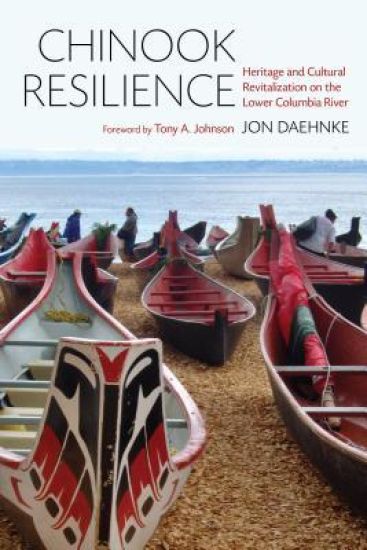
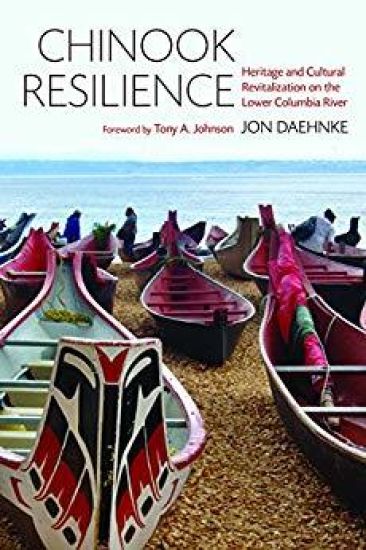
Chinook Resilience

Chinook Resilience

Jon D. Daehnke; Tony A. Johnson

University of Washington Press
2017
sidottu
The Chinook Indian Nation—whose ancestors lived along both shores of the lower Columbia River, as well as north and south along the Pacific coast at the river's mouth—continue to reside near traditional lands. Because of its nonrecognized status, the Chinook Indian Nation often faces challenges in its efforts to claim and control cultural heritage and its own history and to assert a right to place on the Columbia River.Chinook Resilience is a collaborative ethnography of how the Chinook Indian Nation, whose land and heritage are under assault, continues to move forward and remain culturally strong and resilient. Jon Daehnke focuses on Chinook participation in archaeological projects and sites of public history as well as the tribe's role in the revitalization of canoe culture in the Pacific Northwest. This lived and embodied enactment of heritage, one steeped in reciprocity and protocol rather than documentation and preservation of material objects, offers a tribally relevant, forward-looking, and decolonized approach for the cultural resilience and survival of the Chinook Indian Nation, even in the face of federal nonrecognition.A Capell Family Book
Chinook Resilience

Chinook Resilience

Jon D. Daehnke; Tony A. Johnson

University of Washington Press
2017
pokkari
The Chinook Indian Nation—whose ancestors lived along both shores of the lower Columbia River, as well as north and south along the Pacific coast at the river's mouth—continue to reside near traditional lands. Because of its nonrecognized status, the Chinook Indian Nation often faces challenges in its efforts to claim and control cultural heritage and its own history and to assert a right to place on the Columbia River.Chinook Resilience is a collaborative ethnography of how the Chinook Indian Nation, whose land and heritage are under assault, continues to move forward and remain culturally strong and resilient. Jon Daehnke focuses on Chinook participation in archaeological projects and sites of public history as well as the tribe's role in the revitalization of canoe culture in the Pacific Northwest. This lived and embodied enactment of heritage, one steeped in reciprocity and protocol rather than documentation and preservation of material objects, offers a tribally relevant, forward-looking, and decolonized approach for the cultural resilience and survival of the Chinook Indian Nation, even in the face of federal nonrecognition.A Capell Family Book
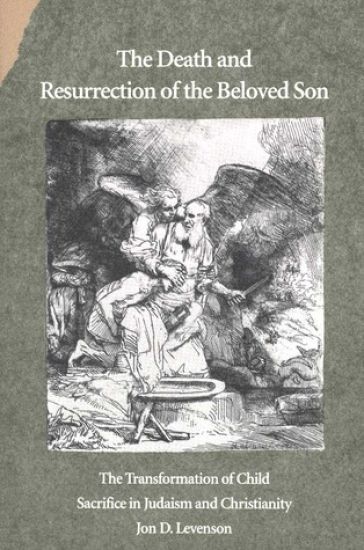
The Death and Resurrection of the Beloved Son

The Death and Resurrection of the Beloved Son

Jon D. Levenson

Yale University Press
1995
pokkari
The near-sacrifice and miraculous restoration of a beloved son is a central but largely overlooked theme in both Judaism and Christianity, celebrated in biblical texts on Isaac, Ishmael, Jacob, Joseph, and Jesus. In this highly original book, Jon D. Levenson explores how this notion of child sacrifice constitutes an overlooked bond between the two religions.Levenson argues that although the practice of child sacrifice was eradicated during the late seventh and sixth centuries B.C.E, the idea of sacrificing the first-born son (or the late-born son whose preferential treatment promotes him to that exalted rank) remained potent in religious literature. Analyzing texts from the ancient Near East, the Hebrew Bible, the New Testament, and rabbinic literature, Levenson shows how tales of the son handed over to death by his loving father in the Hebrew Bible influenced the Church's identification of Jesus as sacrificial victim. According to Levenson, the transformation of the idea of child sacrifice was central to the accounts given by the people Israel and the early Church of their respective origins, and it also underlay the theologies of chosenness embraced, in their differing ways, by the two religions. Furthermore, the longstanding claim of the Church that it supersedes the Jews, says Levenson, both continues and transforms elements of the old narrative pattern in which a late-born son dislodges his first-born brothers. Levenson's book, which offers novel interpretations of several areas crucial to biblical studies, will be essential reading for scholars in the field.
Perception and Prejudice

Perception and Prejudice

Jon Hurwitz

Yale University Press
1998
sidottu
Based on one of the most extensive scientific surveys of race ever conducted, this book investigates the relationship between racial perceptions and policy choices in America. The contributors—leading scholars in the fields of public opinion, race relations, and political behavior—clarify and explore images of African-Americans that white Americans hold and the complex ways that racial stereotypes shape modern political debates about such issues as affirmative action, housing, welfare, and crime.The authors make use of the largest national study of public opinion on racial issues in more than a generation—the Race and Politics Study (RPS) conducted by the Survey Research Center at the University of California. The RPS employed methodological improvements made possible by Computer Assisted Telephone Interviewing, a technique that enables analysts to combine the internal validity of laboratory experiments with the external validity of probability sampling. Taking full advantage of these research methods, the authors offer highly nuanced analyses of subjects ranging from the sources of racial stereotypes to the racial policy preferences of Democrats and Republicans to the reasons for resistance to affirmative action. Their findings indicate that while crude and explicit forms of racial prejudice may have declined in recent decades, racial stereotypes persist among many whites and exert a powerful influence on the ways they view certain public policies.
Vicious

Vicious

Jon T. Coleman

Yale University Press
2006
pokkari
A provocative history of wolves in America and of the humans who first destroyed them and now offer them protection“A shocking cultural study of our long, sadistic crusade against wolves. Moving brilliantly through history, economics, and biology, Coleman...explains America’s fevered obsession with these animals."—Ron Charles, Washington Post Book Club Over a continent and three centuries, American livestock owners destroyed wolves to protect the beasts that supplied them with food, clothing, mobility, and wealth. The brutality of the campaign soon exceeded wolves’ misdeeds. Wolves menaced property, not people, but storytellers often depicted the animals as ravenous threats to human safety. Subjects of nightmares and legends, wolves fell prey not only to Americans’ thirst for land and resources but also to their deeper anxieties about the untamed frontier.Now Americans study and protect wolves and jail hunters who shoot them without authorization. Wolves have become the poster beasts of the great American wilderness, and the federal government has paid millions of dollars to reintroduce them to scenic habitats like Yellowstone National Park.Why did Americans hate wolves for centuries? And, given the ferocity of this loathing, why are Americans now so protective of the animals? In this ambitious history of wolves in America—and of the humans who have hated and then loved them—Jon Coleman investigates a fraught relationship between two species and uncovers striking similarities, deadly differences, and, all too frequently, tragic misunderstanding.
Resurrection and the Restoration of Israel

Resurrection and the Restoration of Israel

Jon D. Levenson

Yale University Press
2008
pokkari
This provocative volume explores the origins of the Jewish doctrine of the resurrection of the dead. Jon D. Levenson argues that, contrary to a very widespread misconception, the ancient rabbis were keenly committed to the belief that at the end of time, God would restore the deserving dead to life. In fact, Levenson points out, the rabbis saw the Hebrew Bible itself as committed to that idea.The author meticulously traces the belief in resurrection backward from its undoubted attestations in rabbinic literature and in the Book of Daniel, showing where the belief stands in continuity with earlier Israelite culture and where it departs from that culture. Focusing on the biblical roots of resurrection, Levenson challenges the notion that it was a foreign import into Judaism, and in the process he develops a neglected continuity between Judaism and Christianity. His book will shake the thinking of scholars and lay readers alike, revising the way we understand the history of Jewish ideas about life, death, and the destiny of the Jewish people.
Resurrection

Resurrection

Jon D. Levenson; Kevin Madigan

Yale University Press
2009
pokkari
Two scholars—one a Christian and the other a Jew—find deep and meaningful connections between their two faiths This book, written for religious and nonreligious people alike in clear and accessible language, Although this expectation, known as the resurrection of the dead, is widely understood to have been a part of Christianity from its beginnings nearly two thousand years ago, many people are surprised to learn that the Jews believed in resurrection long before the emergence of Christianity. In this sensitively written and historically accurate book, religious scholars Kevin J. Madigan and Jon D. Levenson aim to clarify confusion and dispel misconceptions about Judaism, Jesus, and Christian origins.Madigan and Levenson tell the fascinating but little-known story of the origins of the belief in resurrection, investigating why some Christians and some Jews opposed the idea in ancient times while others believed it was essential to their faith. The authors also discuss how the two religious traditions relate their respective practices in the here and now to the new life they believe will follow resurrection. Making the rich insights of contemporary scholars of antiquity available to a wide readership, Madigan and Levenson offer a new understanding of Jewish-Christian relations and of the profound connections that tie the faiths together.
All These Worlds Are Yours

All These Worlds Are Yours

Jon Willis

Yale University Press
2016
sidottu
Where would you look for alien life? An astronomer and science popularizer explains the basics of astrobiology to outline five plausible scenarios for finding extraterrestrials Long before space travel was possible, the idea of life beyond Earth transfixed humans. In this fascinating book, astronomer Jon Willis explores the science of astrobiology and the possibility of locating other life in our own galaxy. Describing the most recent discoveries by space exploration missions, including the Kepler space telescope, the Mars Curiosity rover, and the New Horizons probe, Willis asks readers to imagine—and choose among—five scenarios for finding life. He encourages us to wonder whether life might exist within Mars’s subsoil ice. He reveals the vital possibilities on the water-ice moons Europa and Enceladus. He views Saturn’s moon Titan through the lens of our own planet’s ancient past. And, he even looks beyond our solar system, investigating the top candidates for a “second Earth” in a myriad of exoplanets and imagining the case of a radio signal arriving from deep space. Covering the most up-to-date research, this accessibly written book provides readers with the basic knowledge necessary to decide where they would look for alien life.
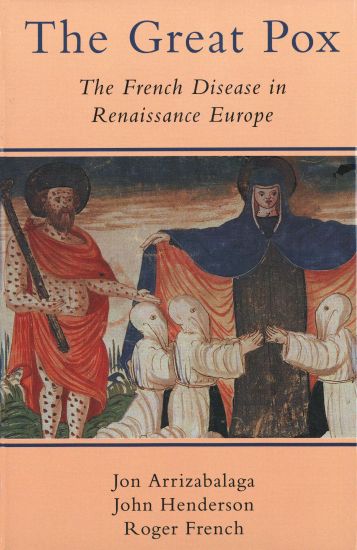
The Great Pox

The Great Pox

Jon Arrizabalaga; John Henderson; Roger French

Yale University Press
2014
pokkari
One hundred and fifty years after the Black Death killed a third of the population of Western Europe, a new plague swept across the continent. The Great Pox—commonly known as the French disease—brought a different kind of horror: instead of killing its victims rapidly, it endured in their bodies for years, causing acute pain, disfigurement, and ultimately an agonizing death.In this new study, three experts explore the impact of the new plague and society's reaction to its challenge. Using a range of contemporary sources, from the archives of charitable and sanitary institutions that coped with the sick to the medical tracts of those who sought to cure it, they provide the first detailed account of the experience of the disease across Renaissance Italy as well as in France and Germany.The authors analyze the symptoms of the Great Pox and the identity of patients, richly documented in the records of the massive hospital for "incurables" established in early sixteenth-century Rome. They show how it challenged accepted medical theory and practice and provoked public disputations among university teachers. And at the most practical level, they reveal the plight of its victims at all levels of society, from ecclesiastical lords to the diseased poor who begged in the streets. Examining a range of contexts from princely courts and republics to university faculties, confraternities, and hospitals, the authors argue powerfully for a historical understanding of the Great Pox based on contemporary perceptions rather than a retrospective diagnosis of what later generations came to know as "syphilis."
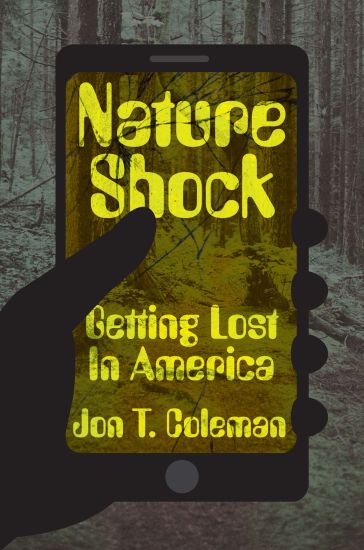
Nature Shock

Nature Shock

Jon T. Coleman

Yale University Press
2020
sidottu
An award-winning environmental historian explores American history through wrenching, tragic, and sometimes humorous stories of getting lost"Fascinating. . . . Underlying . . . is a deep belief in the importance of collaboration and cooperation between humans and their environments, as well as between humans and other humans."—Robert Macfarlane, New York Review of Books The human species has a propensity for getting lost. The American people, inhabiting a mental landscape shaped by their attempts to plant roots and to break free, are no exception. In this engaging book, environmental historian Jon Coleman bypasses the trailblazers so often described in American history to follow instead the strays and drifters who went missing. From Hernando de Soto’s failed quest for riches in the American southeast to the recent trend of getting lost as a therapeutic escape from modernity, this book details a unique history of location and movement as well as the confrontations that occur when our physical and mental conceptions of space become disjointed. Whether we get lost in the woods, the plains, or the digital grid, Coleman argues that getting lost allows us to see wilderness anew and connect with generations across five centuries to discover a surprising and edgy American identity.
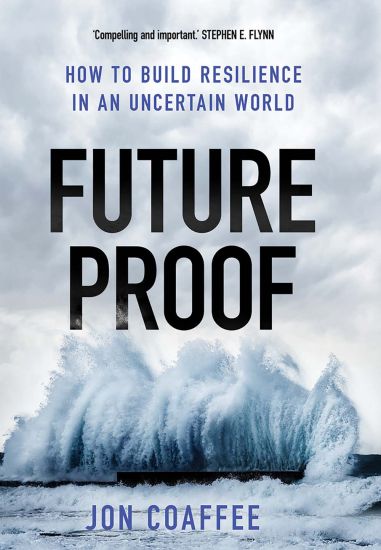
Futureproof

Futureproof

Jon Coaffee

Yale University Press
2019
sidottu
A compelling and definitive account of why we need to radically rethink our approach to dealing with catastrophic events Catastrophic events such as 9/11, Hurricane Katrina, and the Tohoku "Triple Disaster" of earthquake, tsunami, and nuclear meltdown that hit the eastern seaboard of Japan in 2012 are seen as surprises that have a low probability of occurring but have a debilitating impact when they do. In this eye-opening journey through modern and ancient risk management practices, Jon Coaffee explains why we need to find a new way to navigate the deeply uncertain world that we live in. Examining how governments have responded to terrorist threats, climate change, and natural hazards, Coaffee shows how and why these measures have proven inadequate and what should be done to make us more resilient. While conventional approaches have focused on planning and preparing for disruptions and enhanced our ability to "bounce back," our focus should be on anticipating future challenges and enhancing our capacity to adapt to new threats.
The Illusion of Control

The Illusion of Control

Jon Danielsson

YALE UNIVERSITY PRESS
2022
sidottu
A challenge to the conventional wisdom surrounding financial risk, providing insight into why easy solutions to control the financial system are doomed to fail Finance plays a key role in the prosperity of the modern world, but it also brings grave dangers. We seek to manage those threats with a vast array of sophisticated mathematical tools and techniques of financial risk management. Too often, though, we fail to address the greatest risk—the peril posed by our own behavior. Jón Daníelsson argues that critical risk is generated from within, through the interactions of individuals and perpetuated by their beliefs, objectives, abilities, and prejudices. He asserts that the widespread belief that risk originates outside the financial system frustrates our ability to measure and manage it, and the likely consequences of new regulations will help alleviate small-scale risks but, perversely, encourage excessive risk taking. Daníelsson uses lessons from past and recent crises to show that diversity is the best way to safeguard our financial system.
Early Hunter-Gatherers of the California Coast

Early Hunter-Gatherers of the California Coast

Jon M. Erlandson

Kluwer Academic/Plenum Publishers
1994
sidottu
Based on detailed excavation data, the author reconstructs the paleography of the Santa Barbara coast ca. 8500 years ago, makes comparisons to other early California sites, and applies his findings to current theories of hunter-gatherers and coastal environments. With an emphasis on paleographic reconstructions, site formation processes, chronological studies, and integrated faunal analyses, the work will be of interest to a wide range of scholars working in shell middens, hunter-gatherer ecology, geoarchaeology, and coatal or aquatic adaptations.
Mississippian Political Economy

Mississippian Political Economy

Jon Muller

Kluwer Academic/Plenum Publishers
1997
sidottu
This book is written from a particular theoretical and practical postnon. The first chapter outlines some of these issues, but a few issues requireemphasis. The first is what is meant by "political economy. " The concept of political econ- omy used here derives from common economic and social science usage. Sometimes, however, a few individuals seem to consider political economy to consist only of power relationships, especially in regard to distribution and consumption, often excluding or ignoring social reproduction or production. Although power and its uses are important issues, this is a very incomplete view of political economy from my perspective, one that ignores arguably eentral issues. Another issue is that of historieal eomparisons. Some of the ehapters that follow have mueh historieal data. The historical eomparisons are not the point of this volume, however. Testing of historieal "models" is important, but the reader should not be distraeted by them. I have long preaehed against misuse of historieal analogy. I do argue that the historie and prehistorie Southeastem societies have been misunderstood so as to make an artifieial gap between them, but this is a seeondary issue. In any ease, the thesis of similarity is being tested against empirieal evidenee. The historieal data are absolutely not being used to interpret the prehistorie data.