Kirjojen hintavertailu. Mukana 11 244 527 kirjaa ja 12 kauppaa.

Kirjahaku

Etsi kirjoja tekijän nimen, kirjan nimen tai ISBN:n perusteella.

1000 tulosta hakusanalla Keith Harding

Metamind

Metamind

Keith Lehrer

Clarendon Press
1990
sidottu
The essays in this book, published here as a collection for the first time, are unified by the thesis that freedom, rationality, social consensus, and knowledge depend on thoughts about thoughts, that is, on metamental operations. These provide for our optionality, plasticity, and most of all for the evaluation and control of lower-level information. The collection argues that the human mind is essentially a metamind.
The Struggle for Civil Liberties

The Struggle for Civil Liberties

Keith Ewing; Conor Anthony Gearty

Clarendon Press
2000
sidottu
It is widely believed that there was a golden age in which political freedom in Britain was protected by the rule of law, and by judges developing the common law in favour of individual liberty. In an uncompromising and withering account based on a wide range of official and unofficial sources, this path-breaking study by two of the country's leading civil liberties lawyers exposes the mythical nature of much of this traditional learning. The Struggle for Civil Liberties: Political Freedom and the Rule of Law in Britain, 1914-1945 traces the hostile response of the executive and judicial branches of government to the various groups and individuals who confronted the power of the State in the first half of the twentieth century: the wartime peace movements, the Communist Party of Great Britain, the striking trade unionists in 1926, the hunger marches, and the Irish Nationalists. In addressing these issues, the study has a loud contemporary resonance, by placing in a new and alarming historical context the struggles for civil liberties that have been and are being fought by radical groups in contemporary British Society, and during the Thatcher decade in particular. This book will change forever the way in which open-minded public lawyers think about their subject, and will require a fundamental re-examination of the foundations of the discipline.
Business Performance in the Retail Sector

Business Performance in the Retail Sector

Keith Bradley; Simon Taylor

Clarendon Press
1992
sidottu
This book investigates how John Lewis's unique ownership and organizational arrangements have enabled it to become one of the largest and longest-surviving employee-owned firms in the Western world. From its emergence in 1864, the John Lewis Partnership has placed its trust in an explicit set of business principles, emphasizing employee share-ownership, employee motivation, and profit-sharing. This study examines the success of these principles and the lessons to be learned from them for successful retailing strategy and competitiveness in the 1990s.
England, Ireland, Scotland, Wales

England, Ireland, Scotland, Wales

Keith Robbins

Oxford University Press
2008
sidottu
Keith Robbins, building on his previous writing on the modern history of the interlocking but distinctive territories of the British Isles, takes a wide-ranging, innovative and challenging look at the twentieth-century history of the main bodies, at once national and universal, which have collectively constituted the Christian Church. The protracted search for elusive unity is emphasized. Particular beliefs, attitudes, policies and structures are located in their social and cultural contexts. Prominent individuals, clerical and lay, are scrutinized. Religion and politics intermingle, highlighting, for churches and states, fundamental questions of identity and allegiance, of public and private values, in a century of ideological conflict, violent confrontation (in Ireland), two world wars and protracted Cold War. The massive change experienced by the countries and people of the Isles since 1900 has encompassed shifting relationships between England, Ireland (and Northern Ireland), Scotland, and Wales, the end of the British Empire, the emergence of a new Europe and, latterly, major immigration of adherents of Islam, Hinduism, Sikhism, and other faiths from outside Europe: developments scarcely conceivable at the outset. Such a broad contextual perspective provides an essential background to understanding the puzzling ambiguities evident both in secularization and enduring Christian faith. Robbins provides a cogent and compelling overview of this turbulent century for the churches of the Isles.
Religion and Revelation

Religion and Revelation

Keith Ward

Clarendon Press
1994
nidottu
Since first Thomas Aquinas defined theology as revelation, or the rational elucidation of revealed truth, the idea of revelation has played a fundamental role in the history of western theology. This book provides a new and detailed investigation of the concept, examining its nature, sources, and limitations in all five of the major scriptural religions of the world: Christianity, Judaism, Islam, Hinduism, and Buddhism. The first part of the book discusses the nature of theology, and expounds the comparative method as the most useful and appropriate for the modern age. Part Two focuses on the nature of religion and its early historical manifestations, whilst the third part of the book goes on to consider the idea of revelation as found in the great canonical traditions of the religions of the world. Part Four develops the distinctively Christian idea of revelation as divine self-expression in history. The final part of the book discusses how far the idea of revelation must be revised or adapted in the light of modern historical and scientific thought, and proposes a new and positive theology of revelation for the future. The book includes discussions of the work of most major theologians and scholars in the study of religion - Aquinas, Tillich, Barth, Temple, Frazer, and Evans Pritchard - and should be of interest to many scholars and students of comparative religion and theology, and anthropologists.
Religion and Creation

Religion and Creation

Keith Ward

Clarendon Press
1996
sidottu
This book is the second part of a major project of comparative theology begun with Religion and Revelation (Clarendon Press, 1994), which looks at major concepts of faith in all four of the main scriptural religions of the world. In Religion and Creation, the author explores the idea of a creator God in the work of twentieth century writers from Judaism, Islam, Hinduism, and Christianity. He develops a positive concept of God which stresses God's dynamic and responsive relation to the temporal structure of the universe, and the importance of that structure to the self-expression of the divine being. Professor Ward goes on to present a Trinitarian doctrine of creation, drawing inspiration from a wider set of theistic traditions and recent discussions in physics in the realm of cosmology.
Religion and Creation

Religion and Creation

Keith Ward

Clarendon Press
1996
nidottu
This book is the second part of a major project of comparative theology begun with Religion and Revelation (Clarendon Press, 1994), which looks at major concepts of faith in all four of the main scriptural religions of the world. In Religion and Creation, the author explores the idea of a creator God in the work of twentieth century writers from Judaism, Islam, Hinduism, and Christianity. He develops a positive concept of God which stresses God's dynamic and responsive relation to the temporal structure of the universe, and the importance of that structure to the self-expression of the divine being. Professor Ward goes on to present a Trinitarian doctrine of creation, drawing inspiration from a wider set of theistic traditions and recent discussions in physics in the realm of cosmology.
Religion and Revelation

Religion and Revelation

Keith Ward

Clarendon Press
1994
sidottu
Since first Thomas Aquinas defined theology as revelation, or the rational elucidation of revealed truth, the idea of revelation has played a fundamental role in the history of western theology. This book provides a new and detailed investigation of the concept, examining its nature, sources, and limitations in all five of the major scriptural religions of the world: Christianity, Judaism, Islam, Hinduism, and Buddhism. The first part of the book discusses the nature of theology, and expounds the comparative method as the most useful and appropriate for the modern age. Part Two focuses on the nature of religion and its early historical manifestations, whilst the third part of the book goes on to consider the idea of revelation as found in the great canonical traditions of the religions of the world. Part Four develops the distinctively Christian idea of revelation as divine self-expression in history. The final part of the book discusses how far the idea of revelation must be revised or adapted in the light of modern historical and scientific thought, and proposes a new and positive theology of revelation for the future. The book includes discussions of the work of most major theologians and scholars in the study of religion - Aquinas, Tillich, Barth, Temple, Frazer, and Evans Pritchard - and should be of interest to many scholars and students of comparative religion and theology, and anthropologists.
Religion and Human Nature

Religion and Human Nature

Keith Ward

Oxford University Press
1998
sidottu
Continuing Keith Ward's series on comparative religion, this book deals with religious views of human nature and destiny. The beliefs of six major traditions are presented: the view of Advaita Vedanta that there is one Supreme Self, unfolding into the illusion of individual existence; the Vaishnava belief that there is an infinite number of souls, whose destiny is to be released from material embodiment; the Buddhist view that there is no eternal Self; the Abrahamic belief that persons are essentially embodied souls; and the materialistic position that persons are complex material organisms. Indian ideas of rebirth, karma, and liberation from samsara are critically analysed and compared with semitic belief in the intermediate state of Sheol, Purgatory or Paradise, the Final Judgement and the resurrection of the body. The impact of scientific theories of cosmic and biological evolution on religious beliefs is assessed, and a form of 'soft emergent materialism' is defended, with regard to the soul. In this context, a Christian doctrine of original sin and atonement is presented, stressing the idea of soterial, as opposed to forensic, justice. Finally, a Christian view of personal immortality and the 'end of all things' is developed in conversation with Jewish and Muslim beliefs about judgement and resurrection.
Religion and Human Nature

Religion and Human Nature

Keith Ward

Oxford University Press
1998
nidottu
Continuing Keith Ward's series on comparative religion, this book deals with religious views of human nature and destiny. The beliefs of six major traditions are presented: the view of Advaita Vedanta that there is one Supreme Self, unfolding into the illusion of individual existence; the Vaishnava belief that there is an infinite number of souls, whose destiny is to be released from material embodiment; the Buddhist view that there is no eternal Self; the Abrahamic belief that persons are essentially embodied souls; and the materialistic position that persons are complex material organisms. Indian ideas of rebirth, karma, and liberation from samsara are critically analysed and compared with semitic belief in the intermediate state of Sheol, Purgatory or Paradise, the Final Judgement and the resurrection of the body. The impact of scientific theories of cosmic and biological evolution on religious beliefs is assessed, and a form of 'soft emergent materialism' is defended, with regard to the soul. In this context, a Christian doctrine of original sin and atonement is presented, stressing the idea of soterial, as opposed to forensic, justice. Finally, a Christian view of personal immortality and the 'end of all things' is developed in conversation with Jewish and Muslim beliefs about judgement and resurrection.
Environment and Enforcement

Environment and Enforcement

Keith Hawkins

Clarendon Press
1984
nidottu
Most studies of law enforcement deal with police work, and many are concerned with underenforcement of selective enforcement as problems. This book shifts the focus to social and economic regulation and the issue of compliance.
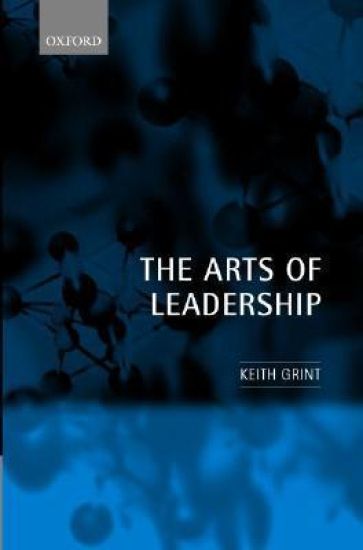
The Arts of Leadership

The Arts of Leadership

Keith Grint

Oxford University Press
2000
sidottu
Leadership is still much discussed, studied, and sought after, even though we now live in supposedly more democratic times with flatter organizations and empowered employees. But how can we best understand leadership? Are leaders born or made? Do they have particular traits or are we all potential leaders? Do the requirements for leadership change over time or are there timeless patterns? Do traditional approaches help us to pick and develop leaders or are there alternative ways that advance our understanding? In this book, Keith Grint–who has been studying and teaching leadership for over a decade–investigates the notion of leadership in a series of historical case studies and rich essay portraits of some of the most famous, and infamous, leaders (e.g. Florence Nightingale, Richard Branson, Horatio Nelson, Martin Luther King, Henry Ford, etc.). The scenarios are drawn from right across the spectrum to include business, politics, society, and the military. The first part of the book considers four sets of parallel cases where leadership appears to be a major explanation of success and failure. The second part takes the four critical issues arising from these parallel cases (identity, strategic vision, organizational tactics, and persuasive communication) and explores them in detail. One main reason we have such difficulty in explaining and enhancing leadership, Grint argues, is because we often adopt perspectives and models that obscure rather than illuminate the issues involved. The reliance upon traditional scientific analysis has not provided the anticipated advances in our understanding because leadership is more fruitfully considered as an art, or more exactly an array of arts, rather than as a science. Grint's rich and meticulously-researched profiles combine to reveal these Arts of Leadership.
Physics for You

Physics for You

Keith Johnson

Oxford University Press
2016
muu
Covering all GCSE specifications, this tried and tested series has been fully updated to match the (9-1) GCSE Physics specifications for first examination in 2018, as well as international specifications. With a focus on science, concepts develop naturally, engaging students and enabling them to get a thorough understanding of Physics.
Seeing Reason

Seeing Reason

Keith Stenning

Oxford University Press
2002
nidottu
'A picture is worth a thousand words' Or is it? What difference does it make whether information is presented using illustrations or language? 'Seeing Reason' is an interdisciplinary study of a central topic in cognitive science: how does the mind respond to different kinds of representation of the same information, especially when learning, reasoning, and communicating. It uses philosophical, logical, linguistic, psychological, and educational methods to explore this topic, reporting theories, observations, and arguments developed during several years' research. Though the focus is on fundamental cognitive theories of human capacities, the issues are closely related to intensely practical issues about the teaching and learning of reasoning and communication skills. Along the way it examines why the human mind has so evolved, the relationship between private language and public thought, and integrates cognitive and social accounts of communication. Written to be accessible to students and researchers within the fields of philosophy and psychology, this book shares new insights into how people process information, and how we use that information to reason, make decisions, and develop theories about the world in which we live.
An Introduction to Quantum Theory

An Introduction to Quantum Theory

Keith Hannabuss

Clarendon Press
1997
sidottu
This book provides an introduction to quantum theory primarily for students of mathematics. Although the approach is mainly traditional the discussion exploits ideas of linear algebra, and points out some of the mathematical subtleties of the theory. Amongst the less traditional topics are Bell's inequalities, coherent and squeezed states, and introductions to group representation theory. Later chapters discuss relativistic wave equations and elementary particle symmetries from a group theoretical standpoint rather than the customary Lie algebraic approach. This book is intended for the later years of an undergraduate course or for graduates. It assumes a knowledge of basic linear algebra and elementary group theory, though for convenience these are also summarized in an appendix.
After the Invasion

After the Invasion

Keith Bodner

Oxford University Press
2015
sidottu
In the wake of the Babylonian destruction of Jerusalem and the displacement of exile, there is a unique story that is told about the remnant left behind after the invasion. The narrative of Jeremiah 40--44 unfolds the challenges and crises of this community who remain in Judah as they negotiate their survival following the catastrophe of Jerusalem's fall. After the Invasion shares the often overlooked, but compelling story that emerges from the five later chapters of Jeremiah. Keith Bodner expertly reveals the assortment of personalities, geographic locations, shifts in point of view, temporal compression, and layers of irony. Primary focused on the narrative design of this text, Professor Bodner proves that these chapters form a creative and sophisticated narrative that make a rich, though perhaps underestimated, contribution to the book of Jeremiah as a whole.
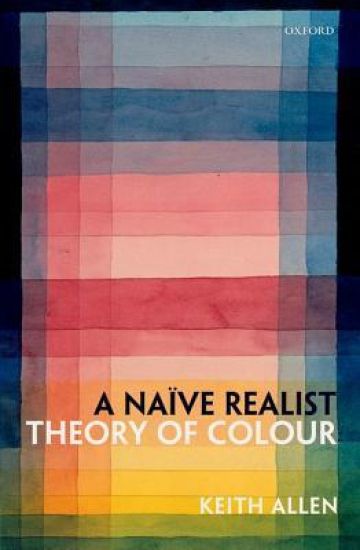
A Naïve Realist Theory of Colour

A Naïve Realist Theory of Colour

Keith Allen

Oxford University Press
2016
sidottu
A Naïve Realist Theory of Colour defends the view that colours are mind-independent properties of things in the environment, that are distinct from properties identified by the physical sciences. This view stands in contrast to the long-standing and wide-spread view amongst philosophers and scientists that colours don't really exist - or at any rate, that if they do exist, then they are radically different from the way that they appear. It is argued that a naïve realist theory of colour best explains how colours appear to perceiving subjects, and that this view is not undermined either by reflecting on variations in colour perception between perceivers and across perceptual conditions, or by our modern scientific understanding of the world. A Naïve Realist Theory of Colour also illustrates how our understanding of what colours are has far-reaching implications for wider questions about the nature of perceptual experience, the relationship between mind and world, the problem of consciousness, the apparent tension between common sense and scientific representations of the world, and even the very nature and possibility of philosophical inquiry.
The Struggle for Civil Liberties

The Struggle for Civil Liberties

Keith Ewing; Conor Anthony Gearty

Oxford University Press
2001
nidottu
It is widely believed that there is a golden age in which political freedom in Britain was protected by the rule of law, and by judges developing the common law in favour of individual liberty. In an uncompromising and withering account based on a wide range of official and unofficial sources, this path-breaking study by two of the country's leading civil liberties lawyers exposes the mythical nature of much of this traditional learning. The Struggle for Civil Liberties: Political Freedom and the Rule of law in Britain, 1914-1945 traces the hostile response of the executive and judicial branches of government to the various groups and individuals who confronted the power of the State in the first half of the twentieth century: the wartime peace movements, the Communist Party of Great Britain, the striking trade unionists in 1926, the hunger marches, and the Irish Nationalists. In addressing these issues, the study has a loud contemporary resonance, by placing in a new and alarming historical context the struggles for civil liberties that have been and are being fought by radical groups in contemporary British Society, and during the Thatcher decade in particular. This book will change forever the way in which open-minded public lawyers think about their subject, and will require a fundamental re-examination of the foundations of the discipline.
Fuzzy Management

Fuzzy Management

Keith Grint

Oxford University Press
1997
nidottu
Fuzzy Management is designed for thsoe who find current management orthodoxies inadequate, who are interested in alternative ideas and how they might be applied to management practice, but are not enthralled by the esoteric world of theoretical books about theory. This book offers a bridge between the `esoteric' world of theory and the `practical' world of management by exploring and illustrating some current theories (Fuzzy Logic, Actor-Network Theory, Chaos Theory, Constructivism etc.) through discussion of some everyday management issues (Strategic Decision Making, Appraisals, Negotiation, Leadership, Culture, and Motivation). Crisp and concise, it will be a useful guide to all concerned with the relationship between management theory and practice.
Fuzzy Management

Fuzzy Management

Keith Grint

Oxford University Press
1997
sidottu
Fuzzy Management is designed for those who find current management orthodoxies inadequate, who are interested in alternative ideas and how they might be applied to management practice, but are not enthralled by the esoteric world of theoretical books about theory. This book offers a bridge between the 'esoteric world of theory and the practical world of management by exploring and illustrating some current theories (Fuzzy Logic, ActorNetwork Theory, Chaos Theory, Constructivism etc.) through discussion of some everyday management issues (Strategic Decision Making, Appraisals, Negotiation, Leadership, Culture, and Motivation). Crisp and concise, it will be a useful guide to all concerned with the relationship between management theory and practice.