The 18th century was a wealth of knowledge, exploration and rapidly growing technology and expanding record-keeping made possible by advances in the printing press. In its determination to preserve the century of revolution, Gale initiated a revolution of its own: digitization of epic proportions to preserve these invaluable works in the largest archive of its kind. Now for the first time these high-quality digital copies of original 18th century manuscripts are available in print, making them highly accessible to libraries, undergraduate students, and independent scholars.Delve into what it was like to live during the eighteenth century by reading the first-hand accounts of everyday people, including city dwellers and farmers, businessmen and bankers, artisans and merchants, artists and their patrons, politicians and their constituents. Original texts make the American, French, and Industrial revolutions vividly contemporary.++++The below data was compiled from various identification fields in the bibliographic record of this title. This data is provided as an additional tool in helping to insure edition identification: ++++British LibraryT086119The table is between pp.36 and 38. Aberdeen?], 1792. 2],36,38-43p., table; 8
The 18th century was a wealth of knowledge, exploration and rapidly growing technology and expanding record-keeping made possible by advances in the printing press. In its determination to preserve the century of revolution, Gale initiated a revolution of its own: digitization of epic proportions to preserve these invaluable works in the largest archive of its kind. Now for the first time these high-quality digital copies of original 18th century manuscripts are available in print, making them highly accessible to libraries, undergraduate students, and independent scholars.Rich in titles on English life and social history, this collection spans the world as it was known to eighteenth-century historians and explorers. Titles include a wealth of travel accounts and diaries, histories of nations from throughout the world, and maps and charts of a world that was still being discovered. Students of the War of American Independence will find fascinating accounts from the British side of conflict. ++++The below data was compiled from various identification fields in the bibliographic record of this title. This data is provided as an additional tool in helping to insure edition identification: ++++Cambridge University LibraryT172093London: printed for G. Burnet, 1759. 4],83, 1]p., plate: port.; 8
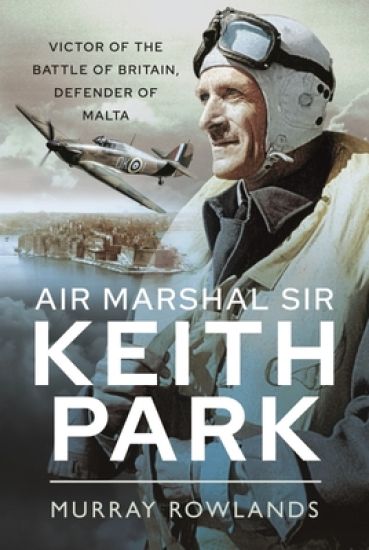
The Battle of Britain from July to September 1940 is one of the finest moments in our Nation's history. While credit rightly goes to The Few', victory could never have happened without the inspirational command and leadership of New Zealander Keith Park. He and Air Chief Marshal Sir Hugh Dowding ensured that Fighter Command was prepared for the Nazi onslaught. Promoted to Air Vice Marshal, Park took over No 11 Group, responsible for the defence of London and South East England in April 1940\. A shrewd tactician and hands-on commander, Park carefully husbanded his limited resources and famously wore down Goering's Luftwaffe, thus forcing Hitler to abandon his invasion plans. Shamefully Dowding and Park were dismissed from their commands in the aftermath of victory due to internal RAF politics. Fortunately, Park's career was far from over and his management of the defence of Malta made significant contribution to victory in the Mediterranean. This balanced and well overdue account hopefully ensures that Air Chief Marshal Sir Keith Park receives the credit for victory that he so richly deserves.
Keith Lehrer is one of the leading proponents of a coherence theory of knowledge that seeks to explain what it means to know in a characteristically human way. Central to his account are the pivotal role played by a principle of self-trust and his insistence that a sound epistemology must ultimately be ecumenical in nature, combining elements of internalism and externalism. The present book is an extensive, self-contained, up-to-date study of Lehrer's epistemological work. Covering all major aspects, it contains original contributions by some of the most distinguished specialists in the field, outgoing from the latest, significantly revised version of Lehrer's theory. All basic ideas are explained in an introductory chapter. Lehrer's extensive replies in a final chapter give unique access to his current epistemological thinking.
What is a wiseman? What is a prophet? Someone with a strange, unflappable demeanor. Someone who speaks in cryptic koans, words whose meanings take years to unravel. Someone who has confronted death, God, sin, and the immortal soul. Someone unfit for this world, but too brilliant to depart it. Someone - in short - like Keith Richards. Here, at last, the wisdom of this indefatigable man is recorded and set forth. These are his visionary words: 'I would rather be a legend than a dead legend.' Or 'Whatever side I take, I know well that I will be blamed.' And - indeed - 'I've never had a problem with drugs, only with policemen.' Not merely a compendium of wisdom, this book is also a complete guide to the inner workings of a complex and inspired belief system, and the life of a man sanctified by fame. What Would Keith Richards Do? reminds us to learn from our mistakes, let our instincts lead us, and above all, do what Keith has done better than anyone - survive.
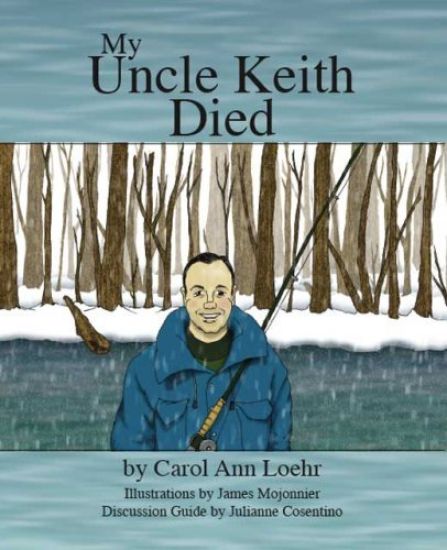
Recommended by The American Foundation for Suicide Prevention In the United States suicide is the third leading cause of death for those between the ages of 10 and 24 and the second leading cause of death for American college students. The children's book, My Uncle Keith Died describes the symptoms of depression. It also helps children understand why a depressed person may not seek help. By reading Cody's questions and his mother's answers about his uncle's death, young readers will learn what to do if someone they know shows signs of depression. Early detection, intervention, and treatment for depression are critical for preventing suicides. My Uncle Keith Ded will answer some of these questions: How should I talk to my children about feelings of grief? How should I explain suicide to my children? What is depression? How does depression often lead to suicide? What is the difference between sadness and depression? What are the signs of depression? At the end of the book there is a discussion guide written by Julianne Cosentino, a licensed clinical social worker. This guide will deal with the type of questions children are likely to ask when their lives have been touched by suicide.
Frank Wedekind: Der Marquis von Keith. Schauspiel in f nf Aufz gen Edition Holzinger. Taschenbuch Berliner Ausgabe, 2018, 4. Auflage Durchgesehener Neusatz mit einer Biographie des Autors bearbeitet und eingerichtet von Michael Holzinger Entstanden 1898/1900, Erstdruck unter dem Titel M nchner Scenen. Nach dem Leben aufgezeichnet in: Die Insel (Berlin), 1. Jg., 1900, Heft 7-9. Urauff hrung am 11.10.1901 in Berlin. Textgrundlage ist die Ausgabe: Frank Wedekind: Werke in drei B nden. Herausgegeben und eingeleitet von Manfred Hahn, Berlin und Weimar: Aufbau, 1969. Herausgeber der Reihe: Michael Holzinger Reihengestaltung: Viktor Harvion Umschlaggestaltung unter Verwendung des Bildes: Frank Wedekind (Fotografie, um 1917) Gesetzt aus der Minion Pro, 10 pt.
Keith Edwards begins each day looking out of his second floor apartment window and across Elm Street into Forest City Park. He is struggling with acute amnesia trying to remember who he is. Keith Edwards is unaware of Six, his diabolical nemesis, who has blackmailed many unwilling participants to carry out a second attempt on his life."Signal to Murder" is a mystery rich in culturally diverse characters. From each character's vantage point, he or she tells of their lives before, during, and after their involvement in the planned murder attempt. As you will note the dialog is not repetitious, but a common situation recounted by various individuals. Each individual reflects their involvement and happenings at the crime scene as though they are preparing themselves to be interrogated by homicide detectives."Signal to Murder," as told by all of the characters, gives a different spin to the facts accompanied by multiple flaws. Flawless memory is not possible. Each character remembers, quite differently, the facts and certain truths before, during and after the premeditated murder attempts on Keith Edward's life. The first attempt on Edwards' life was unsuccessful. He was in a coma for several months. When he woke from the coma, Keith Edwards had total amnesia and two distinct personalities. A second and third attempt to murder Keith are planned and carried out as Keith works at recovering his memory, his life. The murderers meet with opposition from Keith Edward's newly found family which includes his faithful therapy dog, Dillon, his deceptive Grandfather, Francis Rene Sorrell, and his resourceful Grandmother, Marguerite Teller Sorrell.In self-defense, the family utilizes all of their martial arts and weapons training. They are ever vigilant, mentally and physically prepared for unforeseen attacks from dark sinister forces.
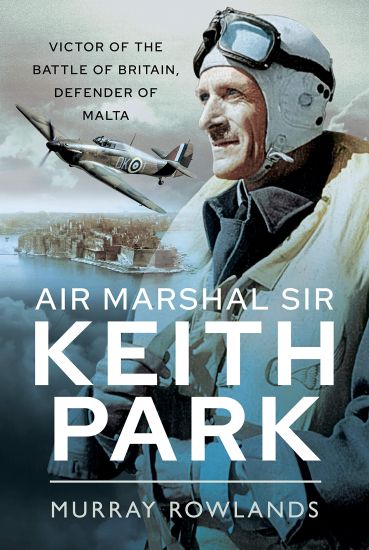
The Battle of Britain from July to September 1940 is one of the finest moments in our Nation's history. While credit rightly goes to 'The Few', victory could never have happened without the inspirational command and leadership of New Zealander Keith Park. He and Air Chief Marshal Sir Hugh Dowding ensured that Fighter Command was prepared for the Nazi onslaught. Promoted to Air Vice Marshal, Park took over No 11 Group, responsible for the defence of London and South East England in April 1940\. A shrewd tactician and hands-on commander, Park carefully husbanded his limited resources and famously wore down Goering's Luftwaffe, thus forcing Hitler to abandon his invasion plans. Shamefully Dowding and Park were dismissed from their commands in the aftermath of victory due to internal RAF politics. Fortunately, Park's career was far from over and his management of the defence of Malta made significant contribution to victory in the Mediterranean. This balanced and well overdue account hopefully ensures that Air Chief Marshal Sir Keith Park receives the credit for victory that he so richly deserves.
This is book 1 in a series of adventures of an over sixty year old detective who has been undercover for five years. After waiting more than fifteen years he finally meets someone who makes his heart flutter. Angela has been married three times and is very jaded about finding love when she is in her late fifties. But a killer running rampant in their town and a matchmaking Tai shop owner make for a change in both of their lives. This is a clean mystery romance that shows that love can happen even to those considered "over the hill".
Popular culture glorified newspapers in the 1970s, creating a kind of mythical community newspaperman--like Keith Blackledge, longtime editor of the North Platte Telegraph. In his editorials and columns, he praised, scolded, cajoled, teased and encouraged readers. He provided a civic connection while also, mostly behind the scenes, working to make the town better. Blackledge's story resonates today because it's also about the evolution of newspapers. The editor's career spanned a time when the industry was hit by a tsunami of change, including shrinking circulations and advertising revenues, as well as new technologies altering forever the way news is produced, delivered and consumed. Author Carol Lomicky chronicles the life of this remarkable newspaperman.
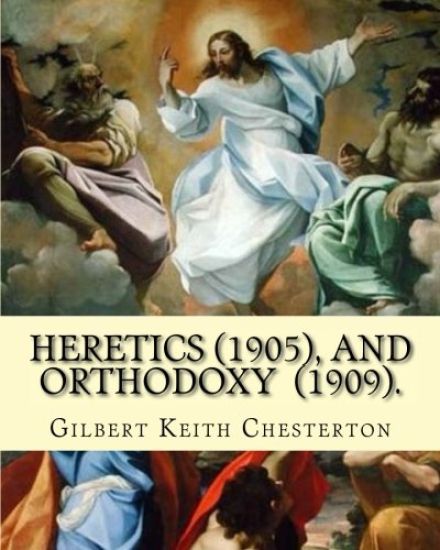
Gilbert Keith Chesterton, KC*SG (29 May 1874 - 14 June 1936), better known as G. K. Chesterton, was an English writer, poet, philosopher, dramatist, journalist, orator, lay theologian, biographer, and literary and art critic. Chesterton is often referred to as the "prince of paradox". Time magazine has observed of his writing style: "Whenever possible Chesterton made his points with popular sayings, proverbs, allegories-first carefully turning them inside out." Chesterton is well known for his fictional priest-detective Father Brown, and for his reasoned apologetics. Even some of those who disagree with him have recognised the wide appeal of such works as Orthodoxy and The Everlasting Man.Chesterton, as a political thinker, cast aspersions on both Progressivism and Conservatism, saying, "The whole modern world has divided itself into Conservatives and Progressives. The business of Progressives is to go on making mistakes. The business of the Conservatives is to prevent the mistakes from being corrected."Chesterton routinely referred to himself as an "orthodox" Christian, and came to identify this position more and more with Catholicism, eventually converting to Catholicism from High Church Anglicanism. George Bernard Shaw, Chesterton's "friendly enemy" according to Time, said of him, "He was a man of colossal genius."Biographers have identified him as a successor to such Victorian authors as Matthew Arnold, Thomas Carlyle, Cardinal John Henry Newman, and John Ruskin.