Kirjojen hintavertailu. Mukana 11 241 044 kirjaa ja 12 kauppaa.

Kirjahaku

Etsi kirjoja tekijän nimen, kirjan nimen tai ISBN:n perusteella.

1000 tulosta hakusanalla Kenneth Graham Duffield

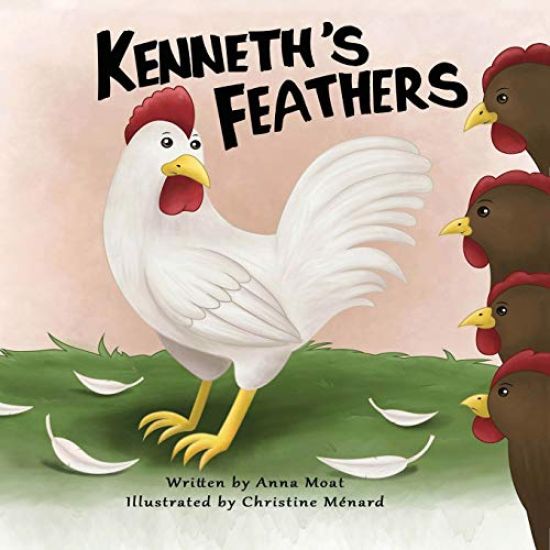
Kenneth's Feathers

Kenneth's Feathers

Anna Moat

TotalRecall Press
2017
pokkari
Kenneth's Feathers by Anna Moat Illustrated by Christine MenardThe Chickens in kenneth's new coop are stealing his lovely white feathers Kenneth does not like it at all. With the help of his friend Gwendolyn, Kenneth tries everhting to save his feathers and make new friends.This illustrated story book is sure to please the read-aloud crowd.
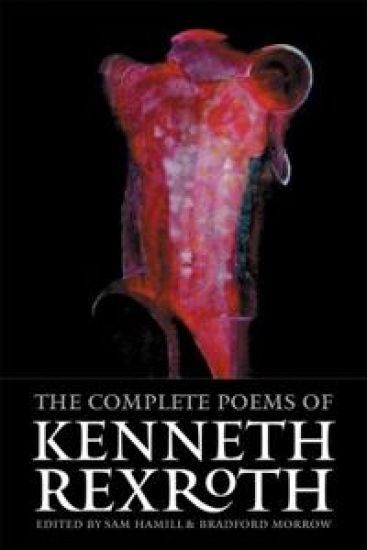
The Complete Poems of Kenneth Rexroth

The Complete Poems of Kenneth Rexroth

Kenneth Rexroth

Copper Canyon Press
2004
pokkari
The Complete Poems of Kenneth Rexroth assembles all of his published longer and shorter poems, and includes a never-before-published selection of his earliest work. Rexroth's poems of nature and protest are remarkable for their erudition and biting social and political commentary; his love poems justly celebrated for their eroticism and depth of feeling.The cloth edition was one of the most widely reviewed poetry titles in 2003: "Scholars and critics who endeavor to discuss mid-20th century American poetry responsibly ignore Rexroth at their peril."--Los Angeles Times Book Review, cover feature and selected as a Book of the Year"Rexroth is probably best known as the 'Father of the Beat Generation.' These poems reveal that great beauty lies beyond that clich ."--NPR's All Things Considered"Rexroth's prodigious breadth of learning, his hungry attention to the natural world, his contempt for warmongering and his profound, occasionally overlapping love of women are all on flourishing display."--The San Francisco Chronicle"Rexroth never mistook his poetry for a product, and he could present ideas and images in an urgent, memorable and eloquent way."--The Nation"Rexroth is one of the most readable and rewarding 20th-century American poets."--BooklistKenneth Rexroth (1905-1982) was one of the world's great literary minds. In addition to being a poet, translator, essayist and teacher, he helped found the San Francisco Poetry Center and influenced generations of readers with his Classics Revisited series.
The Collected Fiction of Kenneth Koch

The Collected Fiction of Kenneth Koch

Kenneth Koch

Coffee House Press
2005
pokkari
“It’s lucky for us all that you’re holding Koch’s collected fiction in your hands right now. Koch’s seasons on our earth were blessed ones and these traces, some of them among his last, are gifts.”—Jonathan Lethem Hilarious and profoundly moving, this volume restores to print all the fiction of the writer John Ashbery called “simply the best we have.” Koch, who once characterized New York School writing as about “the fullness and richness of possibility and excitement and happiness,” imbues his prose with humor, wit, and a beautifully tender exuberance. The Collected Fiction of Kenneth Koch is a must-read for anyone interested in discovering what American literature might still hope to be. Published simultaneously with The Collected Poems of Kenneth Koch (Knopf), Collected Fiction includes Koch’s innocent and rambunctious novel The Red Robins, as well as Hotel Lambosa, his book of semi-autobiographical short pieces inspired equally by Hemingway’s Nick Adams stories and Yasunari Kawabata’s Palm-of-the-Hand Stories. Fans of Koch’s unparalleled gift for comic invention will turn immediately to “The New Orleans Stories,” a cycle about the family of a small-time criminal, published here for the first time along with “The Soviet Room,” a gentle story of requited love at the end of the Cold War. Koch’s previously uncollected work includes a warm-hearted parody of a children’s adventure narrative and a story detailing the mysteries uncovered by an obsessive postcard detective. Together, the work of Kenneth Koch opens up a wonderful world—one where the pursuit of happiness is taken very seriously indeed. Kenneth Koch was born in Cincinnati and served in the South Pacific during World War II. A poet, playwright, novelist, and Columbia University professor, Koch also published several books about teaching and reading poetry, including the groundbreaking Wishes, Lies, and Dreams; Rose, Where Did You Get That Red?; and Making Your Own Days: The Pleasures of Reading and Writing Poetry. He was the recipient of the Bollingen Prize and the Bobbitt Library of Congress Prize, a finalist for the National Book Award, and winner of the Phi Beta Kappa Poetry Award.
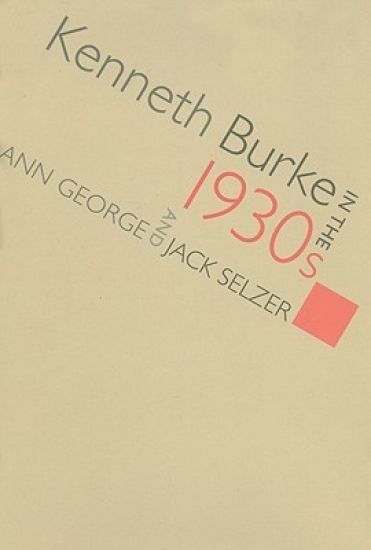
Kenneth Burke in the 1930s

Kenneth Burke in the 1930s

Ann George; Jack Selzer

University of South Carolina Press
2007
sidottu
Kenneth Burke once remarked that he was ""not a joiner of societies."" Yet during the 1930s, he affiliated himself with a range of intellectual communities - including the leftists in the League of American Writers; the activist contributors to ""Partisan Review"", the ""New Masses"", the ""Nation"", and the ""New Republic""; and the southern Agrarians and New Critics, as well as various other poets and pragmatists and thinkers. Ann George and Jack Selzer underscore the importance of these relations to Burke's development and suggest that his major writing projects of the 1930s fundamentally emerged from interactions with members of these various groups, such as writers Robert Penn Warren, Katherine Anne Porter, Allen Tate, and John Crowe Ransom; poets Marianne Moore and William Carlos Williams; cutural commentators Malcolm Cowley, Mike Gold, and Edmund Wilson; and philosophers Sidney Hook and John Dewey. George and Selzer offer a comprehensive account of four Burke texts - ""Auscultation, Creation, and Revision"" (1932), ""Permanence and Change"" (1935), ""Attitudes toward History"" (1937), and ""The Philosophy of Literary Form"" (1941) - and contend that the work from this decade is at least as compelling as his later, more widely known books. The authors examine extensive and largely unexplored archives of Burke's papers, study the magazines in which Burke's works appeared, and, most important, read him carefully in relation to the ideological conversations of the time. Offering a rich context for understanding Burke's writings from one of his most prolific periods, George and Selzer argue that significant Burkean concepts - such as identification and dramatism - found in later texts ought to be understood as rooted in his 1930s commitments.
Kenneth Burke's Permanence and Change

Kenneth Burke's Permanence and Change

Ann George

University of South Carolina Press
2018
sidottu
A guide to and analysis of a seminal book’s key concepts and methodology.Since its publication in 1935, Kenneth Burke’s Permanence and Change, a text that can serve as an introduction to all his theories, has become a landmark of rhetorical theory. Using new archival sources and contextualizing Burke in the past and present, Ann George offers the first sustained exploration of this work and seeks to clarify the challenging book for both amateurs and scholars of rhetoric.This companion to Permanence and Change explains Burke’s theories through analysis of key concepts and methodology, demonstrating how, for Burke, all language and therefore all culture is persuasive by nature. Positioning Burke’s book as a pioneering volume of New Rhetoric, George presents it as an argument against systemic violence, positivism, and moral relativism. Permanence and Change has become the focus of much current rhetorical study, but George introduces Burke’s previously unavailable outlines and notes, as well as four drafts of the volume, to investigate his work more deeply than ever before. Through further illumination of the book’s development, publication, and reception, George reveals Burke as a public intellectual and critical educator, rather than the eccentric, aloof genius earlier scholars imagined him to be.George argues that Burke was not ahead of his time, but rather deeply engaged with societal issues of the era. She redefines Burke’s mission as one of civic engagement, to convey the ethics and rhetorical practices necessary to build communities interested in democracy and human welfare—lessons that George argues are as needed today as they were in the 1930s.
Kenneth D. King's Smart Fitting Solutions
No matter your size or shape, Kenneth D. King will teach you how to make perfect-fitting garments every time. In this comprehensive resource, Kenneth shows the home sewer how to understand her shape and fitting options, as well as how to identify bad fit by reading the wrinkles in the garment. From there, he explains his Smart Fitting methods - net gain (add fabric), net loss (remove fabric), or no net gain or loss (move fabric around) - to make the necessary corrections to the pattern. Along the way, Kenneth draws on his 30+ years of patternmaking and couturier experience to help the sewer understand proportion, wearing ease, and design ease; learn how to measure correctly; learn about fitting and alteration methods; learn how to make a muslin - the gold standard of test garments; and learn how to alter patterns for 35 upper body part issues. The home sewer will also be privy to garment construction tips picked up during Kenneth's years of couture sewing - things that make complex details a breeze. In Kenneth D. King's Fitting Essentials, Kenneth takes an otherwise confusing process and makes it logical and straightforward. AUTHOR: Kenneth D. King is a contributing editor at Threads Magazine, couture fashion designer, author and popular professor at The Fashion Institute of Technology in New York City. He specializes in custom evening wear and his designs appear in the permanent collections of leading museums, including the Victoria and Albert Museum in London, renowned for its art and design collections.
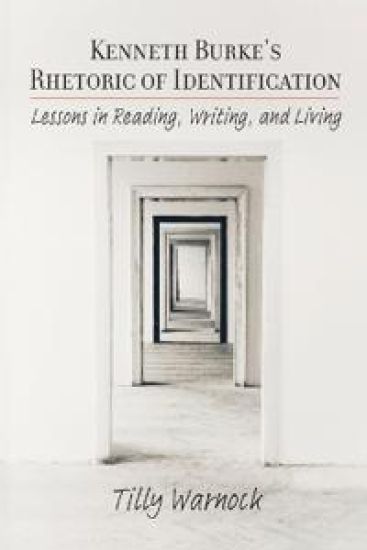
Kenneth Burke's Rhetoric of Identification
"Tilly Warnock's KENNETH BURKE'S RHETORIC OF IDENTIFICATION: LESSONS IN READING, WRITING, AND LIVING is an exceptionally well-researched and thorough book that offers, especially for new scholars, the terms for understanding and tracing Burke's theory of identification. Warnock's book invites scholars to consider Burke's identification as the theoretical extension and expansion of enthymematic and syllogistic proof that can be traced back to Counter-Statement and Permanence and Change. Kenneth Burke's Rhetoric of Identification outlines in the first half and illustrates in the second Burke's emphasis on personal, narrative, and argumentative writing as an available means of persuasion. The text is inventive, dense, challenging, and rewarding as Warnock explains and illustrates; much like medical training that invites students to see, do, teach, Warnock invites scholars to See Burke, Do Burke, Teach Burke. Warnock offers both a theoretical framework and practical application of Burke's theory of identification that, by the end of the book, with its discussion of A Rhetoric of Religion and Language as Symbolic Action, has moved through the corpus of Burke's works." -Rochelle Gregory, University of North TexasTilly Warnock is Professor Emerita at the University of Arizona, where she taught in the graduate program in Rhetoric, Composition, and the Teaching of English and directed the first-year writing program. She received her PhD from the University of Southern California in Rhetoric, Linguistics, and Literature. At the University of Wyoming in the 1970s and 1980s-the early days of the emergence of the academic field of rhetoric and composition-she published articles on James Joyce and directed the writing center and the Wyoming Conference on English. She hosted Kenneth Burke at the Wyoming Conference in 1985. Her textbook, Writing Is Critical Action (Scott, Forseman & Co.), was published in 1989. She lives with her husband, John Warnock, in Tucson.
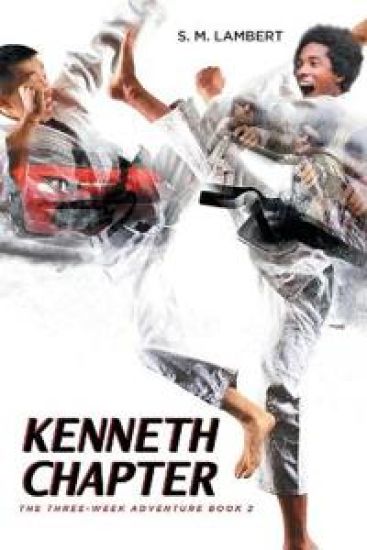
Kenneth Chapter

Kenneth Chapter

S M Lambert

Newman Springs Publishing, Inc.
2019
pokkari
In the quiet, affluent neighborhood of Atherton, California, Charles Gill Jr., a sixteen-year-old teenager lived a comfortable life with his father until his attraction to a beautiful girl from the wrong side of the tracks led to an act of disobedience, which caused his life to spiral out of control.Now, after making one bad decision after another, can his two best friends help to save him from himself, or will his mistakes drag them all down into a set of circumstances that they will all regret for the rest of their lives?
Kenneth Goldsmith's Recent Works on Paper

Kenneth Goldsmith's Recent Works on Paper

Daniel Morris

Fairleigh Dickinson University Press
2019
sidottu
Kenneth Goldsmith's Recent Works on Paper is the first critical book devoted to Kenneth Goldsmith, the acclaimed conceptual poet, pedagogue, and provocateur. The book’s focus is on Capital, Wasting Time on the Internet, Against Translation, and Theory, all published after Goldsmith's controversial reading of a poem based on the Michael Brown autopsy report at Brown University in March 2015. These four books address issues of historiography, translation, pedagogy, authorship, and celebrity culture. Each book serves a retrospective function for an author who is, mid-career, taking stock of his considerable impact on U.S. (and world) poetics at the very moment when critics are challenging the ethics of his aesthetic judgement in the wake of the controversy surrounding “The Body of Michael Brown.” The author focuses on how Goldsmith stages (and, in some cases, transforms) his metamorphic identity as a post-humanist information manager. His performance in these four books contests the current image of him among many critics and fellow poets as one of Hillary Clinton’s “basket of deplorables” who displayed extremely poor judgement while contributing to a culture of racial insensitivity by performing “The Body of Michael Brown."
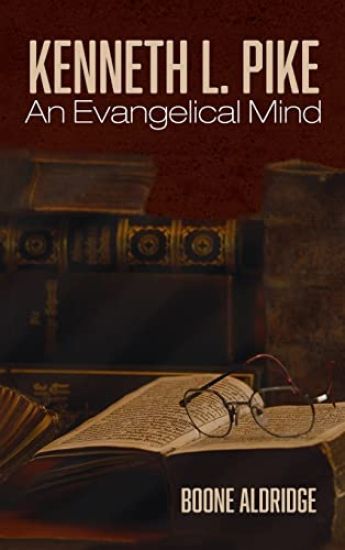
Kenneth L. Pike: An Evangelical Mind

Kenneth L. Pike: An Evangelical Mind

Boone Aldridge

Wipf Stock Publishers
2021
sidottu
This biography examines the life of a most unusual twentieth-century evangelical, Kenneth L. ""Ken"" Pike (1912-2000), who served with the Wycliffe Bible Translators and the Summer Institute of Linguistics. Pike began his missionary career as a Bible translator, but he went on to become a world-class linguist who made his mark on the science of linguistics and the study of indigenous languages around the world. Known among linguists and anthropologists for his theoretical contributions, this volume seeks to bring Pike to a wider audience by illuminating his life as a key evangelical figure, one who often broke with conventional evangelical constraints to pursue the life of the mind as a Christian intellectual and scholar. Here is a story of how one evangelical Christian man served the global church, the scientific community, and the world's indigenous peoples with his entire heart, soul, and mind.
Kenneth L. Pike: An Evangelical Mind

Kenneth L. Pike: An Evangelical Mind

Boone Aldridge

Wipf Stock Publishers
2021
pokkari
This biography examines the life of a most unusual twentieth-century evangelical, Kenneth L. ""Ken"" Pike (1912-2000), who served with the Wycliffe Bible Translators and the Summer Institute of Linguistics. Pike began his missionary career as a Bible translator, but he went on to become a world-class linguist who made his mark on the science of linguistics and the study of indigenous languages around the world. Known among linguists and anthropologists for his theoretical contributions, this volume seeks to bring Pike to a wider audience by illuminating his life as a key evangelical figure, one who often broke with conventional evangelical constraints to pursue the life of the mind as a Christian intellectual and scholar. Here is a story of how one evangelical Christian man served the global church, the scientific community, and the world's indigenous peoples with his entire heart, soul, and mind.
Kenneth O. Morgan

Kenneth O. Morgan

Kenneth Morgan

University of Wales Press
2015
sidottu
This is the story of the life, professional achievements and personal background, challenges and achievements of Wales’s leading historian. During his long career, Kenneth O. Morgan has been a prolific writer and, through his pioneering work, has become a leading authority on Welsh History, British History and Labour History. This autobiography also details Morgan’s often entertaining and unconventional personal experiences, and the eminent people he has met along the way – from his work in television, radio and the press as election commentator and book reviewer, to his involvement in the Labour Party from the late 1950s onwards and the close relations he developed with such Labour leaders as James Callaghan, Michael Foot, Douglas Jay and Neil Kinnock. In addition to being a respected author, Morgan has held the position of University Vice-Chancellor in Wales, is an active Labour peer, and continues to lecture at universities around the world – all achieved while juggling his life as a husband and father. In this revealing memoir, published in the year of his eightieth birthday, Morgan reflects on marriage and bereavement, on re-marriage, parenthood, friendship, religion and morality, his reactions to the historical changes he has witnessed, from attending a village school in rural Wales and wartime air-raids, through school in Hampstead and study in Oxford University and in Wales, down to entry into the House of Lords. Despite past traumas, this memoir still conveys invigoratingly a senior scholar’s idealism, abiding sense of optimism and belief in progress. Contents. List of Illustrations Foreword Chapter 1 A Divided Consciousness Chapter 2 Education, Education, Education Chapter 3 History-Making: A Welsh Historian Chapter 4 History-Making: A British Historian Chapter 5 History-Making; A Labour Historian Chapter 6 History-Making: A Contemporary Historian Chapter 7: History-Making: A Biographer Chapter 8: Experiences: The House of Lords Chapter 9: Experiences: Travelling Chapter 10: Experiences: Old and New Labour Chapter 11 My History