Kirjojen hintavertailu. Mukana 12 016 292 kirjaa ja 12 kauppaa.

Kirjahaku

Etsi kirjoja tekijän nimen, kirjan nimen tai ISBN:n perusteella.

1000 tulosta hakusanalla Kimberly Keyes

Studio Thinking 3

Studio Thinking 3

Kimberly M. Sheridan; Shirley Veenema; Ellen Winner; Lois Hetland; Mario R. Rossero

TEACHERS' COLLEGE PRESS
2022
nidottu
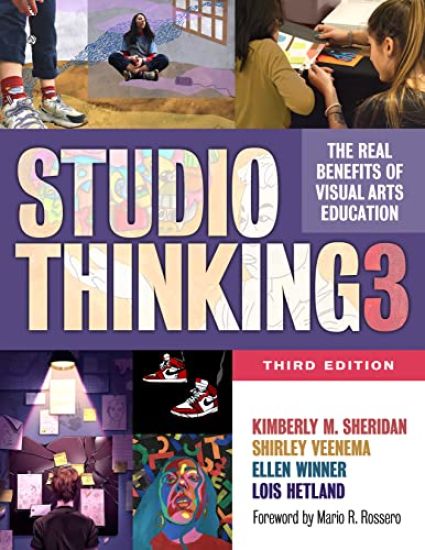
Studio Thinking 3 is a new edition of a now-classic text, a research-based account of teaching and learning in high school studio arts classes. It poses a framework that identifies eight habits of mind taught in visual arts and four studio structures by which they are taught. This edition includes new material about how the framework has been used since the original study, with new perspectives from artist-teachers who currently apply the Studio Thinking Framework in their own practice. It also reviews how contemporary organizations, educators, and researchers outside the arts have utilized the framework, highlighting its flexibility to inform teaching and learning. The authors have added a new chapter on assessment to introduce the practical and thoughtful ways that teachers are using Studio Thinking to assess and evaluate students' work, working processes, and thinking in the arts.The first edition of this bestseller was featured in The New York Times and The Boston Globe for its groundbreaking research on the positive effects of art education on student learning across the curriculum. Studio Thinking 3 will help advocates explain arts education to policymakers, support art teachers in developing and refining their teaching and assessment practices, and assist educators in other disciplines to learn from existing practices in arts education.Book Features:An explanation of "art as thinking" that unpacks and clarifies how teaching art is the process of teaching thinking.An account of what Studio Thinking looks like in diverse contemporary settings.Models of studio arts instruction that illuminate what educators are doing to support students' learning in the arts and why they are doing it that way. A new chapter with rich examples of approaches to assessment.New analyses on how studio art teachers support learner agency. Updated examples from practice showing how artist-teachers are using the Studio Thinking Framework.Full-color images with examples of student art.
Studio Thinking 3

Studio Thinking 3

Kimberly M. Sheridan; Shirley Veenema; Ellen Winner; Lois Hetland; Mario R. Rossero

TEACHERS' COLLEGE PRESS
2022
sidottu
Studio Thinking 3 is a new edition of a now-classic text, a research-based account of teaching and learning in high school studio arts classes. It poses a framework that identifies eight habits of mind taught in visual arts and four studio structures by which they are taught. This edition includes new material about how the framework has been used since the original study, with new perspectives from artist-teachers who currently apply the Studio Thinking Framework in their own practice. It also reviews how contemporary organizations, educators, and researchers outside the arts have utilized the framework, highlighting its flexibility to inform teaching and learning. The authors have added a new chapter on assessment to introduce the practical and thoughtful ways that teachers are using Studio Thinking to assess and evaluate students' work, working processes, and thinking in the arts.The first edition of this bestseller was featured in The New York Times and The Boston Globe for its groundbreaking research on the positive effects of art education on student learning across the curriculum. Studio Thinking 3 will help advocates explain arts education to policymakers, support art teachers in developing and refining their teaching and assessment practices, and assist educators in other disciplines to learn from existing practices in arts education.Book Features:An explanation of "art as thinking" that unpacks and clarifies how teaching art is the process of teaching thinking.An account of what Studio Thinking looks like in diverse contemporary settings.Models of studio arts instruction that illuminate what educators are doing to support students' learning in the arts and why they are doing it that way. A new chapter with rich examples of approaches to assessment.New analyses on how studio art teachers support learner agency. Updated examples from practice showing how artist-teachers are using the Studio Thinking Framework.Full-color images with examples of student art.
The Rhetoric of Rebel Women

The Rhetoric of Rebel Women

Kimberly Harrison

Southern Illinois University Press
2013
nidottu
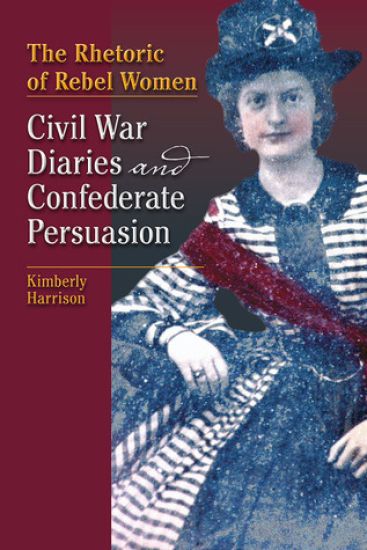
During the American Civil War, southern white women found themselves speaking and acting in unfamiliar and tumultuous circumstances. With the war at their doorstep, women who supported the war effort took part in defining what it meant to be, and to behave as, a Confederate through their verbal and non-verbal rhetorics. Though most did not speak from the podium, they viewed themselves as participants in the war effort, indicating that what they did or did not say could matter. Drawing on the rich evidence in women’s Civil War diaries, The Rhetoric of Rebel Women recognises women’s persuasive activities as contributions to the creation and maintenance of Confederate identity and culture.Informed by more than one hundred diaries, this study provides insight into how women cultivated rhetorical agency, challenging traditional gender expectations while also upholding a cultural status quo. Author Kimberly Harrison analyses the rhetorical choices these women made and valued in wartime and postwar interactions with Union officers and soldiers, slaves and former slaves, local community members, and even their God. In their intimate accounts of everyday war, these diarists discussed rhetorical strategies that could impact their safety, their livelihoods, and those of their families. As they faced Union soldiers in attempts to protect their homes and property, diarists saw their actions as not only having local, immediate impact on their well-being but also as reflecting upon their cause and the character of the southern people as a whole. They instructed themselves through their personal writing, allowing insight into how southern women prepared themselves to speak and act in new and contested contexts.The Rhetoric of Rebel Women highlights the contributions of privileged white southern women in the development of the Confederate national identity, presenting them not as passive observers but as active participants in the war effort.
New Age Capitalism

New Age Capitalism

Kimberly J. Lau

University of Pennsylvania Press
2000
pokkari
The pursuit of health and wellness has become a fundamental and familiar part of everyday life in America. We are surrounded by an enticing world of products, practices, and promotions assuring health and happiness-cereal boxes claim that their contents can reduce the risk of heart disease, bars of aromatherapy soap seek to wash away our stresses, newspapers celebrate the wonders of the latest superfoods and herbal remedies. No longer confined to the domain of Western medicine, suggestions for healthy living often turn to alternatives originating in distant times and places, in cultures very different from our own. Diets from ancient or remote groups are presented as cures for everything from colds to cancer; exercise regimens based on Eastern philosophies are heralded as paths to physical health and spiritual wellbeing. In New Age Capitalism, Kimberly Lau examines the ideological work that has created this billion-dollar business and allowed "Eastern" and other non-Western traditions to be coopted by Western capitalism. Extending the orientalist logic to the business of health and wellness, American companies have created a lucrative and competitive market for their products, encouraging consumers to believe that they are making the right choices for personal as well as planetary health. In reality, alternative health practices have been commodified for an American public longing not only for health and wellness but also for authenticity, tradition, and a connection to the cultures of an imagined Edenic past. Although consumers might prefer to buy into "authentic" non-Western therapies, New Age Capitalism argues that the market economy makes this goal unattainable.
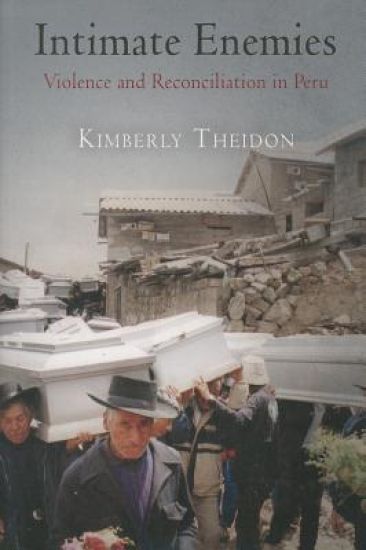
Intimate Enemies

Intimate Enemies

Kimberly Theidon

University of Pennsylvania Press
2014
pokkari
In the aftermath of a civil war, former enemies are left living side by side-and often the enemy is a son-in-law, a godfather, an old schoolmate, or the community that lies just across the valley. Though the internal conflict in Peru at the end of the twentieth century was incited and organized by insurgent Senderistas, the violence and destruction were carried out not only by Peruvian armed forces but also by civilians. In the wake of war, any given Peruvian community may consist of ex-Senderistas, current sympathizers, widows, orphans, army veterans-a volatile social landscape. These survivors, though fully aware of the potential danger posed by their neighbors, must nonetheless endeavor to live and labor alongside their intimate enemies. Drawing on years of research with communities in the highlands of Ayacucho, Kimberly Theidon explores how Peruvians are rebuilding both individual lives and collective existence following twenty years of armed conflict. Intimate Enemies recounts the stories and dialogues of Peruvian peasants and Theidon's own experiences to encompass the broad and varied range of conciliatory practices: customary law before and after the war, the practice of arrepentimiento (publicly confessing one's actions and requesting pardon from one's peers), a differentiation between forgiveness and reconciliation, and the importance of storytelling to make sense of the past and recreate moral order. The micropolitics of reconciliation in these communities present an example of postwar coexistence that deeply complicates the way we understand transitional justice, moral sensibilities, and social life in the aftermath of war. Any effort to understand postconflict reconstruction must be attuned to devastation as well as to human tenacity for life.
Made Flesh

Made Flesh

Kimberly Johnson

University of Pennsylvania Press
2014
sidottu
During the Reformation, the mystery of the Eucharist was the subject of contentious debate and a nexus of concerns over how the material might embody the sublime and how the absent might be made present. For Kimberly Johnson, the question of how exactly Christ can be present in bread and wine is fundamentally an issue of representation, and one that bears directly upon the mechanics of poetry. In Made Flesh, she explores the sacramental conjunction of text with materiality and word with flesh through the peculiar poetic strategies of the seventeenth-century English lyric. Made Flesh examines the ways in which the works of John Donne, George Herbert, Richard Crashaw, Edward Taylor, and other devotional poets explicitly engaged in issues of signification, sacrament, worship, and the ontological value of the material world. Johnson reads the turn toward interpretively obstructive and difficult forms in the seventeenth-century English lyric as a strategy to accomplish what the Eucharist itself cannot: the transubstantiation of absence into perceptual presence by emphasizing the material artifact of the poem. At its core, Johnson demonstrates, the Reformation debate about the Eucharist was an issue of semiotics, a reimagining of the relationship between language and materiality. The self-asserting flourishes of technique that developed in response to sixteenth-century sacramental controversy have far-reaching effects, persisting from the post-Reformation period into literary postmodernity.
American Justice 2017

American Justice 2017

Kimberly Robinson

University of Pennsylvania Press
2017
sidottu
With the death of associate justice Antonin Scalia, the Supreme Court was plunged into crisis. Refusing to hold hearings or confirm the nominee of a Democratic president almost a year away from a presidential election, the Republican-controlled Senate held the court hostage, forcing it to do its work through nearly the entire term ending in June 2017 with just eight justices. In American Justice 2017: The Supreme Court in Crisis, Kimberly Robinson examines the way individual justices and the institution as a whole reacted to this unprecedented, politically fraught situation. In public, the justices put on brave faces, waiting for the confirmation battle to play itself out, while indicating in occasional statements that the court would muddle through just fine. In private, though, things appear to have been more complicated. Narrow decisions, lackluster choice of cases, and odd bedfellows teaming up on the same sides of opinions and dissents give us a hint of the strenuous effort the eight justices made to uphold the integrity of the institution in the face of hurricane-force partisan gales.
Bad Humor

Bad Humor

Kimberly Anne Coles

UNIVERSITY OF PENNSYLVANIA PRESS
2022
sidottu
Race, in the early modern period, is a concept at the crossroads of a set of overlapping concerns of lineage, religion, and nation. In Bad Humor, Kimberly Anne Coles charts how these concerns converged around a pseudoscientific system that confirmed the absolute difference between Protestants and Catholics, guaranteed the noble quality of English blood, and justified English colonial domination. Coles delineates the process whereby religious error, first resident in the body, becomes marked on the skin. Early modern medical theory bound together psyche and soma in mutual influence. By the end of the sixteenth century, there is a general acceptance that the soul's condition, as a consequence of religious belief or its absence, could be manifest in the humoral disposition of the physical body. The history that this book unfolds describes developments in natural philosophy in the early part of the sixteenth century that force a subsequent reconsideration of the interactions of body and soul and that bring medical theory and theological discourse into close, even inextricable, contact. With particular consideration to how these ideas are reflected in texts by Elizabeth Cary, John Donne, Ben Jonson, William Shakespeare, Edmund Spenser, Mary Wroth, and others, Coles reveals how science and religion meet nascent capitalism and colonial endeavor to create a taxonomy of Christians in Black and White.
James Joyce's Fraudstuff

James Joyce's Fraudstuff

Kimberly J. Devlin

University Press of Florida
2002
sidottu
In James Joyce's ""Fraudstuff,"" Kimberly Devlin considers Stephen Hero in illuminating juxtaposition to the developing artistic subject portrayed in Portrait and Ulysses. By tracing the concepts of ""fraudulence"" and ""inauthenticity"" in Joyce, Devlin reveals his increasingly sophisticated exploration of modern identity from Stephen Hero to Finnegans Wake. Devlin examines Joyce's continual rethinking of what it means to have a ""self,"" of the acting that passes as being. She demonstrates how Joyce explored the various ways identity is constructed, sustained, subverted, and dissolved. Whereas Stephen Hero presents a narrator who feels authentic compared to the fraudulence all around him, the Stephen of Portrait becomes aware of how his own identity is a pastiche of borrowed narratives and his actions a series of posturings. Moving deftly from Stephen Hero, to Portrait, to Ulysses and Finnegans Wake, Devlin traces Joyce's increasing interest in and experimentation with the theatrical props that support identity, from his early concern with moments of epiphanic truth and authentic insight to an obsessive celebration of selfhood as imposture and fraud - and as an ultimately unknowable entity. Building on studies of the performative dimension of selfhood, Devlin demonstrates that Joyce grew increasingly skeptical about locating a core of being, and she explores his ""Fraudstuff"" in an array of forms: mimetic identifications, female masquerade, male parade, trans-gender impersonations, verbal mimicry, and police fantasies that induce elaborate posturings. In a refreshingly clear application of Lacanian theory, she also shows how modern identity, for Joyce, is based on the imagined gaze of the ""Other."" Her sophisticated, nonreductive application of contemporary psychoanalytic theory to Joyce's preoccupation with identity will challenge established Joyce scholars and will appeal broadly to scholars and students of literary modernism.
Reconstructing Racial Identity and the African Past in the Dominican Republic
In Latin America and the Caribbean, racial issues are extremely complex and fluid, particularly the nature of 'blackness.' What it means to be called black is still very different for an African American living in the United States than it is for an individual in the Dominican Republic with an African ancestry. Racial categories were far from concrete as the Dominican populace grew, altered, and solidified around the present notions of identity. Kimberly Simmons explores the fascinating socio-cultural shifts in Dominicans' racial categories, concluding that Dominicans are slowly embracing blackness and ideas of African ancestry. Simmons also examines the movement of individuals between the Dominican Republic and the United States, where traditional notions of indio are challenged, debated, and called into question. How and why Dominicans define their racial identities reveal shifting coalitions between Caribbean peoples and African Americans, and proves intrinsic to understanding identities in the African diaspora.
Reconstructing Racial Identity and the African Past in the Dominican Republic
"Documents a seismic shift in Dominican identity over the last two decades which the author argues is the result of contact with the U.S.; that Dominicans have moved away from seeing themselves as indio and increasingly self-identify as Black."--Robin Derby, University of California, Los Angeles In Latin America and the Caribbean, racial issues are extremely complex and fluid, particularly the nature of "blackness." What it means to be called "black" is still very different for an African American living in the United States than it is for an individual in the Dominican Republic with an African ancestry. Racial categories were far from concrete as the Dominican populace grew, altered, and solidified around the present notions of identity. Kimberly Simmons explores the fascinating socio-cultural shifts in Dominicans' racial categories, concluding that Dominicans are slowly embracing blackness and ideas of African ancestry. Simmons also examines the movement of individuals between the Dominican Republic and the United States, where traditional notions of indio are challenged, debated, and called into question. How and why Dominicans define their racial identities reveal shifting coalitions between Caribbean peoples and African Americans, and proves intrinsic to understanding identities in the African diaspora. Kimberly Eison Simmons, president of the Association of Black Anthropologists, is assistant professor of anthropology and African American studies at the University of South Carolina.
Black Art in Brazil

Black Art in Brazil

Kimberly L. Cleveland

University Press of Florida
2013
sidottu
For decades, Afro-Brazilian art was primarily associated with religious themes. However, developments in the national discourse on race, ethnicity, and black art in the latter part of the twentieth century have produced a shift away from sacred symbols to art more representative of the complete Afro-Brazilian experience.Kimberly Cleveland highlights the work of five Brazilian artists from all over the country who work in a wide range of media, including photography, sculpture, and installation art. She shows how each conveys “blackness” through his or her unique visual vocabulary and points out the ways this reflects their lived experiences. By examining how these artists explore their African cultural heritage in their work, Cleveland reveals the myriad ways in which they confront social, economic, political, and historical issues related to race in Brazil. Most important, Black Art in Brazil highlights how the markers of black art and culture in Brazil have continued to diversify.
Star Crossed

Star Crossed

Kimberly C. Moore

University Press of Florida
2020
sidottu
The astronaut crime that shocked the world.Star Crossed transports readers to the moment the news broke that one of America's heroes, an astronaut who had flown aboard the Space Shuttle Discovery just months before, had been arrested for a very bizarre crime. Lisa Nowak had driven 900 miles from Houston to Orlando to intercept and confront her romantic rival in an airport parking lot—allegedly using diapers on the trip so she wouldn't have to stop. Nowak had been dating astronaut William "Billy" Oefelein when she learned that Oefelein was seeing a new girlfriend—U.S. Air Force captain Colleen Shipman. The "astronaut love triangle" scandal quickly made headlines. The world watched as Nowak was dismissed from NASA, pleaded guilty to a felony, and received an "other than honorable" military discharge.An award-winning investigative reporter who covered Nowak's criminal case, Kimberly Moore offers behind-the-scenes insights into Nowak's childhood, her rigorous training, and her mission to space. Moore ventures inside the mind of the detective who studied the actions Nowak took that fateful February night. She includes never-before-told details of Nowak's psychiatric diagnosis, taking a serious look at how someone so accomplished could spiral into mental illness to the point of possible attempted murder.This book spotlights the often-overlooked psychological health of astronauts, exploring how they are cared for by NASA doctors and what changes have been made in recent years to support space travelers on long-term missions. Expertly told, Moore's story is a riveting journey inside the high-pressure world of one of America's most elite agencies and the life of one beleaguered astronaut.
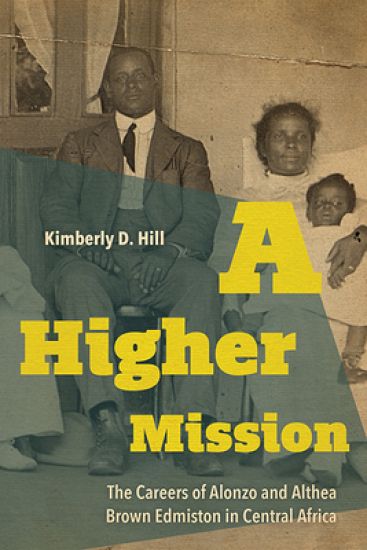
A Higher Mission

A Higher Mission

Kimberly D. Hill

The University Press of Kentucky
2020
sidottu
In this vital transnational study, Kimberly D. Hill critically analyzes the colonial history of central Africa through the perspective of two African American missionaries: Alonzo Edmiston and Althea Brown Edmiston. The pair met and fell in love while working as a part of the American Presbyterian Congo Mission - an operation which aimed to support the people of the Congo Free State suffering forced labor and brutal abuses under Belgian colonial governance. They discovered a unique kinship amid the country's growing human rights movement and used their familiarity with industrial education, popularized by Booker T. Washington's Tuskegee Institute, as a way to promote Christianity and offer valuable services to local people.From 1902 through 1941, the Edmistons designed their mission projects to promote community building, to value local resources, and to incorporate the perspectives of the African participants. They focused on childcare, teaching, translation, construction, and farming - ministries that required constant communication with their Kuba neighbors. Hill concludes with an analysis of how the Edmistons' pedagogy influenced government-sponsored industrial schools in the Belgian Congo through the 1950s. A Higher Education illuminates not only the work of African American missionaries - who are often overlooked and under-studied - but also the transnational implications of black education in the South. Significantly, Hill also addresses the role of black foreign missionaries in the early civil rights movement, an argument that suggests an underexamined connection between earlier nineteenth-century Pan-Africanisms and activism in the interwar era.
Gender/Body/Knowledge

Gender/Body/Knowledge

Kimberly Guinta

Rutgers University Press
1989
nidottu
The essays in this interdisciplinary collection share the conviction that modern western paradigms of knowledge and reality are gender-biased. Some contributors challenge and revise western conceptions of the body as the domain of the biological and 'natural,' the enemy of reason, typically associated with women.
Transatlantic Spectacles of Race

Transatlantic Spectacles of Race

Kimberly Snyder Manganelli

Rutgers University Press
2012
sidottu
The tragic mulatta was a stock figure in nineteenth-century American literature, an attractive mixed-race woman who became a casualty of the color line. The tragic muse was an equally familiar figure in Victorian British culture, an exotic and alluring Jewish actress whose profession placed her alongside the “fallen woman.”In Transatlantic Spectacles of Race, Kimberly Manganelli argues that the tragic mulatta and tragic muse, who have heretofore been read separately, must be understood as two sides of the same phenomenon. In both cases, the eroticized and racialized female body is put on public display, as a highly enticing commodity in the nineteenth-century marketplace. Tracing these figures through American, British, and French literature and culture, Manganelli constructs a host of surprising literary genealogies, from Zelica to Daniel Deronda, from Uncle Tom’s Cabin to Lady Audley’s Secret. Bringing together an impressive array of cultural texts that includes novels, melodramas, travel narratives, diaries, and illustrations, Transatlantic Spectacles of Race reveals the value of transcending literary, national, and racial boundaries.
Transatlantic Spectacles of Race

Transatlantic Spectacles of Race

Kimberly Snyder Manganelli

Rutgers University Press
2012
nidottu
The tragic mulatta was a stock figure in nineteenth-century American literature, an attractive mixed-race woman who became a casualty of the color line. The tragic muse was an equally familiar figure in Victorian British culture, an exotic and alluring Jewish actress whose profession placed her alongside the “fallen woman.”In Transatlantic Spectacles of Race, Kimberly Manganelli argues that the tragic mulatta and tragic muse, who have heretofore been read separately, must be understood as two sides of the same phenomenon. In both cases, the eroticized and racialized female body is put on public display, as a highly enticing commodity in the nineteenth-century marketplace. Tracing these figures through American, British, and French literature and culture, Manganelli constructs a host of surprising literary genealogies, from Zelica to Daniel Deronda, from Uncle Tom’s Cabin to Lady Audley’s Secret. Bringing together an impressive array of cultural texts that includes novels, melodramas, travel narratives, diaries, and illustrations, Transatlantic Spectacles of Race reveals the value of transcending literary, national, and racial boundaries.
Black Dogs and Blue Words

Black Dogs and Blue Words

Kimberly K. Emmons

Rutgers University Press
2014
nidottu
His "black dog"--that was how Winston Churchill referred to his own depression. Today, individuals with feelings of sadness and irritability are encouraged to "talk to your doctor." These have become buzz words in the aggressive promotion of wonder-drug cures since 1997, when the Food and Drug Administration changed its guidelines for the marketing of prescription pharmaceuticals. Black Dogs and Blue Words analyzes the rhetoric surrounding depression. Kimberly K. Emmons maintains that the techniques and language of depression marketing strategies--vague words such as "worry," "irritability," and "loss of interest"--target women and young girls and encourage self-diagnosis and self-medication. Further, depression narratives and other texts encode a series of gendered messages about health and illness. As depression and other forms of mental illness move from the medical-professional sphere into that of the consumer-public, the boundary at which distress becomes disease grows ever more encompassing, the need for remediation and treatment increasingly warranted. Black Dogs and Blue Words demonstrates the need for rhetorical reading strategies as one response to these expanding and gendered illness definitions.
Finfish and Shellfish Bacteriology Manual

Finfish and Shellfish Bacteriology Manual

Kimberly A. Whitman

Iowa State University Press
2004
kierre
Significant advances in the field of microflora of aquatic animals, including fish and invertebrates, demands a practical laboratory text with the current methods for the bacteriological analysis of health and disease in fish and shellfish. Practical rather than theoretical, this manual is useful for individuals working in aquatic, environmental, and veterinary science, and in aquaculture, public health, and aquatic research. Methods are presented for the isolation and identification of bacterial pathogens in fish and shellfish and zoonotic pathogens in shellfish. The step-by-step presentation of procedures guides students in aquatic health and newcomers to the diagnostic laboratory, while providing a refresher course for the more experienced laboratory employee. Numerous tables and illustrations further assist readers. Thorough coverage of basic bacteriological techniques ensures that even the inexperienced aquatic health diagnostician will need no additional resources. The effective, easy-to-follow organization of the Finfish and Shellfish Bacteriology Manual make it the primary sourcebook for any laboratory. Whether it’s used as an occasional quick reference by the experienced fish diagnostician, or as a tool to build diagnostic capabilities from the ground up, this book rises to the challenge.
Adoption Fantasies

Adoption Fantasies

Kimberly D McKee

OHIO STATE UNIVERSITY PRESS
2023
sidottu
In Adoption Fantasies, Kimberly D. McKee explores the ways adopted Asian women and girls are situated at a nexus of objectifications-as adoptees and as Asian American women-and how they negotiate competing expectations based on sensationalist and fictional portrayals of adoption found in US popular culture. McKee traces the life cycle of the adopted Asian woman, from the rendering of infant adoptee bodies in the white US imaginary, to Asian American fantasies of adoption, to encounters with the hypersexualization of Asian and Asian American women and girls in US popular culture. Drawing on adoption studies, Asian American studies, critical ethnic studies, gender studies, and cultural studies, McKee analyzes the mechanisms informing adoptees' interactions with consumers of this media-adoptive parents and families and strangers alike-and how those exchanges and that media influence adoptees' negotiations with the world. From Modern Family to Sex and the City to the notoriety surrounding Soon-Yi Previn and Woody Allen, among many other instances, McKee scrutinizes the fetishization and commodification of women and girls adopted from Asia to understand their racialized experiences.