Kirjahaku
Etsi kirjoja tekijän nimen, kirjan nimen tai ISBN:n perusteella.
1000 tulosta hakusanalla Kimberly Stuart
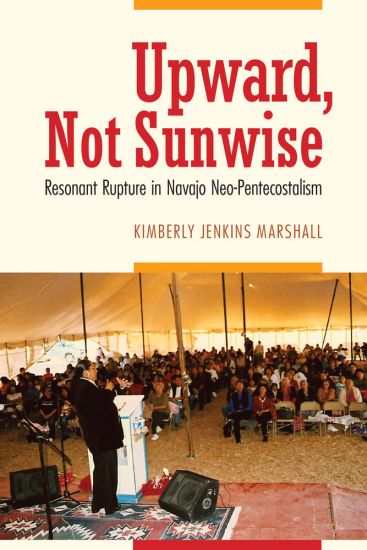
Upward, Not Sunwise explores an influential and growing neo-Pentecostal movement among Native Americans characterized by evangelical Christian theology, charismatic “spirit-filled” worship, and decentralized Native control. As in other global contexts, neo-Pentecostalism is spread by charismatic evangelists practicing faith healing at tent revivals.In North America, this movement has become especially popular among the Diné (Navajo), where the Oodlání (“Believers”) movement now numbers nearly sixty thousand members. Participants in this movement value their Navajo cultural identity yet maintain a profound religious conviction that the beliefs of their ancestors are tools of the devil. Kimberly Jenkins Marshall has been researching the Oodlání movement since 2006 and presents the first book-length study of Navajo neo-Pentecostalism. Key to the popularity of this movement is what the author calls “resonant rupture,” or the way the apparent continuity of expressive forms holds appeal for Navajos, while believers simultaneously deny the continuity of these forms at the level of meaning. Although the music, dance, and poetic language at Oodlání tent revivals is identifiably Navajo, Oodlání carefully re-inscribe their country gospel music, dancing in the spirit, use of the Navajo language, and materials of faith healing as transformationally new and different. Marshall explores these and other nuances of Navajo neo-Pentecostal practices by examining how Oodlání perform their faith under the big white tents scattered across the Navajo Nation.
Remembering World War I in America
Kimberly J. Lamay Licursi
University of Nebraska Press
2018
sidottu
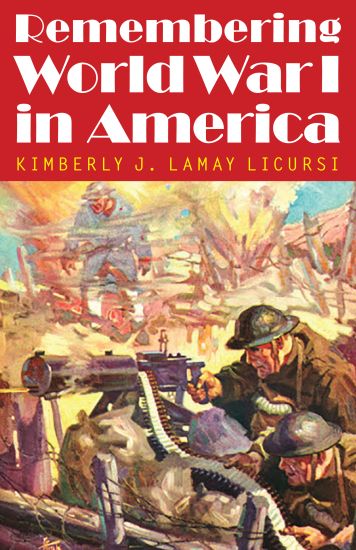
Poised to become a significant player in the new world order, the United States truly came of age during and after World War I. Yet many Americans think of the Great War simply as a precursor to World War II. Americans, including veterans, hastened to put experiences and memories of the war years behind them, reflecting a general apathy about the war that had developed during the 1920s and 1930s and never abated. In Remembering World War I in America Kimberly J. Lamay Licursi explores the American public’s collective memory and common perception of World War I by analyzing the extent to which it was expressed through the production of cultural artifacts related to the war. Through the analysis of four vectors of memory-war histories, memoirs, fiction, and film-Lamay Licursi shows that no consistent image or message about the war ever arose that resonated with a significant segment of the American population. Not many war histories materialized, war memoirs did not capture the public’s attention, and war novels and films presented a fictional war that either bore little resemblance to the doughboys’ experience or offered discordant views about what the war meant. In the end Americans emerged from the interwar years with limited pockets of public memory about the war that never found compromise in a dominant myth.
The War That Saved My Life: (Newbery Honor Award Winner)
Kimberly Brubaker Bradley
Dial Books
2015
sidottu
* Newbery Honor Book* #1 New York Times Bestseller* Winner of the Schneider Family Book Award * Forbes 25 Top Historical Fiction Books Of All Time selection * Wall Street Journal Best Children's Books of the Year selection* New York Public Library's 100 Books for Reading and Sharing selection* A Kirkus Reviews Best Middle Grade Book of the CenturyAn exceptionally moving story of triumph against all odds set during World War II, from the acclaimed author of Fighting Words, and for fans of Fish in a Tree and Number the Stars. Ten-year-old Ada has never left her one-room apartment. Her mother is too humiliated by Ada's twisted foot to let her outside. So when her little brother Jamie is shipped out of London to escape the war, Ada doesn't waste a minute--she sneaks out to join him. So begins a new adventure for Ada, and for Susan Smith, the woman who is forced to take the two kids in. As Ada teaches herself to ride a pony, learns to read, and watches for German spies, she begins to trust Susan--and Susan begins to love Ada and Jamie. But in the end, will their bond be enough to hold them together through wartime? Or will Ada and her brother fall back into the cruel hands of their mother? This masterful work of historical fiction is equal parts adventure and a moving tale of family and identity--a classic in the making. "Achingly lovely...Nuanced and emotionally acute."--The Wall Street Journal"Unforgettable...unflinching."--Common Sense Media "Touching...Emotionally charged." --Forbes★ "Brisk and honest...Cause for celebration." --Kirkus, starred review★ "Poignant."--Publishers Weekly, starred review★ "Powerful."--The Horn Book, starred review"Affecting."--Booklist"Emotionally satisfying... A] page-turner."--BCCB"Exquisitely written...Heart-lifting." --SLJ"Astounding...This book is remarkable."--Karen Cushman, author The Midwife's Apprentice"Beautifully told."--Patricia MacLachlan, author of Sarah, Plain and Tall"I read this novel in two big gulps."--Gary D. Schmidt, author of Okay for Now"I love Ada's bold heart...Her story's riveting."--Sheila Turnage, author of Three Times Lucky
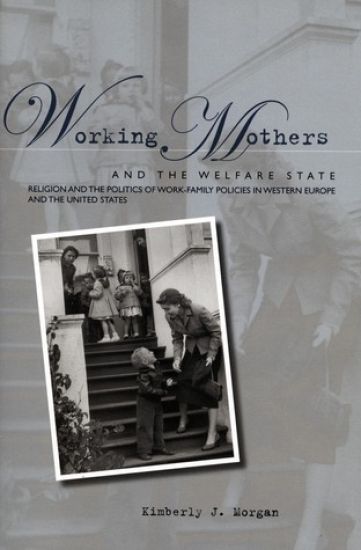
While the extent of female participation in the labor force varies across western countries, most have experienced a substantial change in women's attachment to the world of paid work. Everywhere, this trend has raised two central questions related to the children of working mothers: Should mothers of young children work outside the home at all? And if so, who bears responsibility for assuring the care and well-being of their children? Comparing the various policy choices made across France, the Netherlands, Sweden, and the United States, the book shows that there are differences in the extent to which societies accept both the idea of working mothers and the role of the state in shaping gender roles and children's lives. Morgan employs a comparative historical approach that focuses on three time periods: the late nineteenth century, the era of rapid welfare state expansion from 1945 to 1975, and the period of seeming welfare state stagnation since the mid-1970s. The author shows how, starting in the nineteenth century, religion influenced political development in the four countries the book studies. Historic patterns of church-state relations and conflicts over religion affected ideologies about gender roles and the family, as well as the way religious forces would be incorporated into political life. These forces shaped welfare policy between 1945 and 1975, a critical time for social policy expansion. During this period, socially conservative forces in countries such as the Netherlands and the United States blocked policies that would encourage mothers to work, while the weakness of these forces enabled such policies in both Sweden and France. Morgan concludes that these policy decisions have had an enduring impact, in part because the expansion of the welfare state has been curtailed since the 1970s.
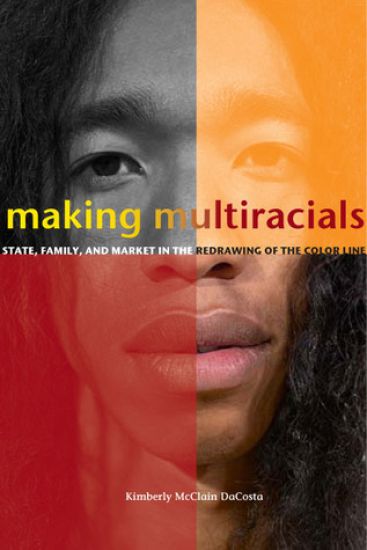
When in 1997 golfer Tiger Woods described his racial identity on Oprah as "cablinasian," it struck many as idiosyncratic. But by 2003, a New York Times article declared the arrival of "Generation E.A."—the ethnically ambiguous. Multiracial had become a recognizable social category for a large group of Americans. Making Multiracials tells the story of the social movement that emerged around mixed race identity in the 1990s. Organizations for interracial families and mixed race people—groups once loosely organized and only partially aware of each other—proliferated. What was once ignored, treated as taboo, or just thought not to exist quickly became part of the cultural mainstream. How did this category of people come together? Why did the movement develop when it did? What is it about "being mixed" that constitutes a compelling basis for activism? Drawing on extensive interviews and fieldwork, the author answers these questions to show how multiracials have been "made" through state policy, family organizations, and market forces.
Turkey's contemporary struggles with Islam are often interpreted as a conflict between religion and secularism played out most obviously in the split between rural and urban populations. The reality, of course, is more complicated than the assumptions. Exploring religious expression in two villages, this book considers rural spiritual practices and describes a living, evolving Sunni Islam, influenced and transformed by local and national sources of religious orthodoxy. Drawing on a decade of research, Kimberly Hart shows how religion is not an abstract set of principles, but a complex set of practices. Sunni Islam structures individual lives through rituals—birth, circumcision, marriage, military service, death—and the expression of these traditions varies between villages. Hart delves into the question of why some choose to keep alive the past, while others want to face a future unburdened by local cultural practices. Her answer speaks to global transformations in Islam, to the push and pull between those who maintain a link to the past, even when these practices challenge orthodoxy, and those who want a purified global religion.
During the course of her fieldwork in Paris, anthropologist Kimberly Arkin heard what she thought was a surprising admission. A French-born, North African Jewish (Sephardi) teenage girl laughingly told Arkin she was a racist. When asked what she meant by that, the girl responded, "It means I hate Arabs." This girl was not unique. She and other Sephardi youth in Paris insisted, again and again, that they were not French, though born in France, and that they could not imagine their Jewish future in France. Fueled by her candid and compelling informants, Arkin's analysis delves into the connections and disjunctures between Jews and Muslims, religion and secular Republicanism, race and national community, and identity and culture in post-colonial France. Rhinestones argues that Sephardi youth, as both "Arabs" and "Jews," fall between categories of class, religion, and culture. Many reacted to this liminality by going beyond religion and culture to categorize their Jewishness as race, distinguishing Sephardi Jews from "Arab" Muslims, regardless of similarities they shared, while linking them to "European" Jews (Ashkenazim), regardless of their differences. But while racializing Jewishness might have made Sephardi Frenchness possible, it produced the opposite result: it re-grounded national community in religion-as-race, thereby making pluri-religious community appear threatening. Rhinestones thus sheds light on the production of race, alienation, and intolerance within marginalized French and European populations.
Turkey's contemporary struggles with Islam are often interpreted as a conflict between religion and secularism played out most obviously in the split between rural and urban populations. The reality, of course, is more complicated than the assumptions. Exploring religious expression in two villages, this book considers rural spiritual practices and describes a living, evolving Sunni Islam, influenced and transformed by local and national sources of religious orthodoxy. Drawing on a decade of research, Kimberly Hart shows how religion is not an abstract set of principles, but a complex set of practices. Sunni Islam structures individual lives through rituals—birth, circumcision, marriage, military service, death—and the expression of these traditions varies between villages. Hart delves into the question of why some choose to keep alive the past, while others want to face a future unburdened by local cultural practices. Her answer speaks to global transformations in Islam, to the push and pull between those who maintain a link to the past, even when these practices challenge orthodoxy, and those who want a purified global religion.
Simple Treatments for Complex Problems
Kimberly A. Driscoll; Kelly C. Cukrowicz; Maureen Lyons Reardon; Thomas E. Joiner Jr.; Thomas E. Joiner
Routledge Member of the Taylor and Francis Group
2004
sidottu
The Cognitive Behavioral Analysis System of Psychotherapy (CBASP) is a set of techniques that has proven to be efficacious in the treatment of chronic depression. This book describes ways in which it can be extended in the treatment of patients with a wide variety of psychological disorders and difficulties, in a wide variety of settings. Vivid case illustrations and session transcripts illuminate the authors' presentation of appropriate modifications and implementations of the basic approach for personality and anxiety disorders, behavior problems in children, couples distress, and anger. The approach is flexible, efficient, and simple to train. One chapter focuses on methods for helping parents to help their own children more effectively. CBASP has been shown to work both for patients with severe psychological symptoms and for those with more common everyday problems; both for those who are psychologically sophisticated and for those who are not.Simple Treatments for Complex Problems offers powerful new tools for the clinical armamentarium of mental health professionals who do psychotherapy, and the conceptual armamentarium of those who train them and study treatment effectiveness.
This book summarizes the research findings from the relatively new domain of study called "organizational perception management" (OPM). While perception management has been studied at the individual level since the 1960's, organization-level perception management was first examined in the 1980's in the context of corporate annual reports that focused on organizational standard and performance. Since then, empirical studies have expanded the domain of organizational perception management to include the management of organizational identities, as well as the strategic management of specialized organizational images for specific audiences.The goals of Organizational Perception Management are to:*summarize and organize this evolving literature to provide a complete and comprehensive definition of OPM events and tactics;*illustrate OPM events and tactics in specific, real-world contexts; and*identify a set of research themes that may stimulate further research on OPM.This text is grounded primarily in empirical research on OPM, including qualitative field research, and uses current research and case studies to illustrate the application and effectiveness of OPM in context. As such, it will appeal to students, scholars, and practitioners of organizational management.
Gerald Vizenor, the most prolific Native American writer of this century, has produced more than twenty-five books in genres as varied as fiction, journalism, haiku, and literary theory. The first book-length study devoted to this important author, Gerald Vizenor: Writing in the Oral Tradition lays the groundwork essential for understanding his complex work.Kimberly M. Blaeser begins with an examination of Vizenor's concept of Native American oral culture and his unique incorporation of oral tradition in the written word. She then explicates Vizenor's method of linking the traditional oral aesthetic with reader-response theories and details Vizenor's efforts to produce a form of writing that resists static meaning, involves the writer in the creation of the literary moment, and invites political action. She also explores the place of Vizenor's work within the larger contexts of contemporary tribal literature, Native American scholarship, and critical theory.Individual chapters examine Vizenor's renditions of the Native American trickster figure in his fiction; analyze his employment of a network of critical, social, and literary subtexts within the larger text; and explain the sometimes difficult ""Vizenorese,"" a complex of terms that characterize people and ideas. Blaeser offers explanations of the origins, meanings, and dialogic purposes of a variety of terms, such as manifest manners, dead voices, word cinemas, terminal creeds, and socioacupuncture.Blaeser's is the first study to reveal the full importance of haiku in Vizenor's work. His poetry, which draws equally from Zen aesthetics and Ojibway dream songs, contains concise, economical descriptions, made up equally of absence and presence-a style characterictic of Vizenor's writing in other genres as well.Based upon scholarship, close reading, and interviews with Vizenor himself, and written by a Native scholar of Vizenor's own tribe, this book explicates Vizenor's ideas, methods, and forms, making even his most sophisticated arguments accessible to the general reader.
For thousands of years, American Indian cultures have recorded their truths in the narratives and metaphors of oral tradition. Stories, languages, and artifacts, such as glyphs and drawings, all carry Indigenous knowledge, directly contributing to American Indian rhetorical structures that have proven resistant - and sometimes antithetical - to Western academic discourse. It is this tradition that Kimberly G. Wieser seeks to restore in Back to the Blanket, as she explores the rich possibilities that Native notions of relatedness offer for understanding American Indian knowledge, arguments, and perspectives.Back to the Blanket analyzes a wide array of American Indian rhetorical traditions, then applies them in close readings of writings, speeches, and other forms of communication by historical and present-day figures. Wieser turns this pathbreaking approach to modes of thinking found in the oratory of eighteenth-century Mohegan and Presbyterian cleric Samson Occom, visual communication in Laguna Pueblo author Leslie Marmon Silko's Almanac of the Dead, patterns of honesty and manipulation in the speeches of former president George W. Bush, and rhetorics and relationships in the communication of Indigenous leaders such as Ada-gal'kala, Tsi'yugûnsi'ni, and Inoli. Exploring the multimodal rhetorics - oral, written, material, visual, embodied, kinesthetic - that create meaning in historical discourse, Wieser argues for the rediscovery and practice of traditional Native modes of communication - a modern-day ""going back to the blanket,"" or returning to Native practices. Her work shows how these Indigenous insights might be applied in models of education for Native American students, in Native American communities more broadly, and in transcultural communication, negotiation, debate, and decision making.
The The Complete Guide to Lineage Societies
Kimberly O Nagy
Genealogical Publishing Company
2024
pokkari
Retired trauma surgeon Dr. Kimberly Nagy wrote this guidebook as an outgrowth of her decades of participation in lineage organizations. She begins with a description of what they have in common, what they aim to do, how to find the right society for yourself, and various eligibility requirements. She then explains the membership and application process, including assembling the genealogical evidence for membership. She also give examples of the social, cultural, and patriotic activities undertaken by lineage societies. Appendix A describes the membership requirements and contact information for many lineage societies. There is also a bibliography of sources.
The Complete Guide to Lineage Societies
Kimberly O Nagy
Genealogical Publishing Company
2024
pokkari
Retired trauma surgeon Dr. Kimberly Ormsby wrote this guidebook as an outgrowth of her decades of participation in lineage organizations. She begins with a description of what they have in common, what they aim to do, how to find the right society for yourself, and the various eligibility requirements. She then explains the membership application process, including assembling the genealogical evidence for membership. She also gives examples of the social, cultural, and patriotic activities undertaken by lineage societies. Appendix A describes the membership requirements and contact information for many lineage societies. There is also a bibliography of sources.
Studio Thinking 3
Kimberly M. Sheridan; Shirley Veenema; Ellen Winner; Lois Hetland; Mario R. Rossero
TEACHERS' COLLEGE PRESS
2022
nidottu
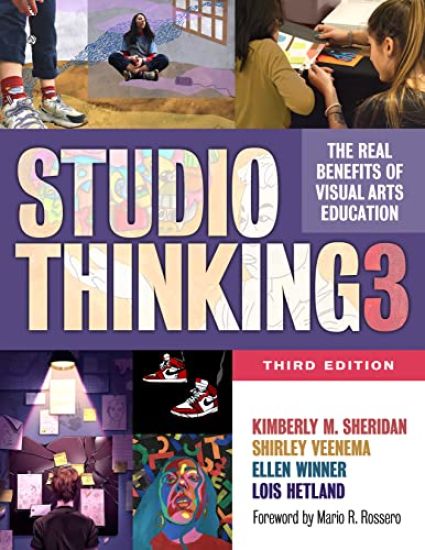
Studio Thinking 3 is a new edition of a now-classic text, a research-based account of teaching and learning in high school studio arts classes. It poses a framework that identifies eight habits of mind taught in visual arts and four studio structures by which they are taught. This edition includes new material about how the framework has been used since the original study, with new perspectives from artist-teachers who currently apply the Studio Thinking Framework in their own practice. It also reviews how contemporary organizations, educators, and researchers outside the arts have utilized the framework, highlighting its flexibility to inform teaching and learning. The authors have added a new chapter on assessment to introduce the practical and thoughtful ways that teachers are using Studio Thinking to assess and evaluate students' work, working processes, and thinking in the arts.The first edition of this bestseller was featured in The New York Times and The Boston Globe for its groundbreaking research on the positive effects of art education on student learning across the curriculum. Studio Thinking 3 will help advocates explain arts education to policymakers, support art teachers in developing and refining their teaching and assessment practices, and assist educators in other disciplines to learn from existing practices in arts education.Book Features:An explanation of "art as thinking" that unpacks and clarifies how teaching art is the process of teaching thinking.An account of what Studio Thinking looks like in diverse contemporary settings.Models of studio arts instruction that illuminate what educators are doing to support students' learning in the arts and why they are doing it that way. A new chapter with rich examples of approaches to assessment.New analyses on how studio art teachers support learner agency. Updated examples from practice showing how artist-teachers are using the Studio Thinking Framework.Full-color images with examples of student art.
Studio Thinking 3
Kimberly M. Sheridan; Shirley Veenema; Ellen Winner; Lois Hetland; Mario R. Rossero
TEACHERS' COLLEGE PRESS
2022
sidottu
Studio Thinking 3 is a new edition of a now-classic text, a research-based account of teaching and learning in high school studio arts classes. It poses a framework that identifies eight habits of mind taught in visual arts and four studio structures by which they are taught. This edition includes new material about how the framework has been used since the original study, with new perspectives from artist-teachers who currently apply the Studio Thinking Framework in their own practice. It also reviews how contemporary organizations, educators, and researchers outside the arts have utilized the framework, highlighting its flexibility to inform teaching and learning. The authors have added a new chapter on assessment to introduce the practical and thoughtful ways that teachers are using Studio Thinking to assess and evaluate students' work, working processes, and thinking in the arts.The first edition of this bestseller was featured in The New York Times and The Boston Globe for its groundbreaking research on the positive effects of art education on student learning across the curriculum. Studio Thinking 3 will help advocates explain arts education to policymakers, support art teachers in developing and refining their teaching and assessment practices, and assist educators in other disciplines to learn from existing practices in arts education.Book Features:An explanation of "art as thinking" that unpacks and clarifies how teaching art is the process of teaching thinking.An account of what Studio Thinking looks like in diverse contemporary settings.Models of studio arts instruction that illuminate what educators are doing to support students' learning in the arts and why they are doing it that way. A new chapter with rich examples of approaches to assessment.New analyses on how studio art teachers support learner agency. Updated examples from practice showing how artist-teachers are using the Studio Thinking Framework.Full-color images with examples of student art.
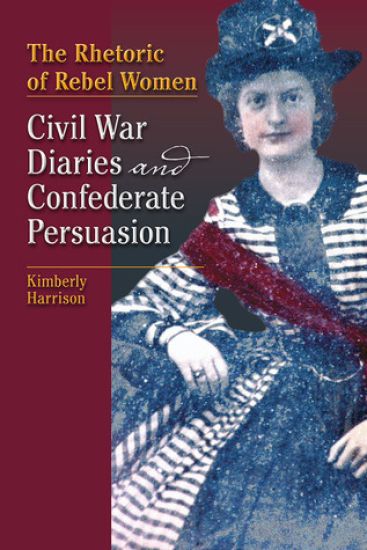
During the American Civil War, southern white women found themselves speaking and acting in unfamiliar and tumultuous circumstances. With the war at their doorstep, women who supported the war effort took part in defining what it meant to be, and to behave as, a Confederate through their verbal and non-verbal rhetorics. Though most did not speak from the podium, they viewed themselves as participants in the war effort, indicating that what they did or did not say could matter. Drawing on the rich evidence in women’s Civil War diaries, The Rhetoric of Rebel Women recognises women’s persuasive activities as contributions to the creation and maintenance of Confederate identity and culture.Informed by more than one hundred diaries, this study provides insight into how women cultivated rhetorical agency, challenging traditional gender expectations while also upholding a cultural status quo. Author Kimberly Harrison analyses the rhetorical choices these women made and valued in wartime and postwar interactions with Union officers and soldiers, slaves and former slaves, local community members, and even their God. In their intimate accounts of everyday war, these diarists discussed rhetorical strategies that could impact their safety, their livelihoods, and those of their families. As they faced Union soldiers in attempts to protect their homes and property, diarists saw their actions as not only having local, immediate impact on their well-being but also as reflecting upon their cause and the character of the southern people as a whole. They instructed themselves through their personal writing, allowing insight into how southern women prepared themselves to speak and act in new and contested contexts.The Rhetoric of Rebel Women highlights the contributions of privileged white southern women in the development of the Confederate national identity, presenting them not as passive observers but as active participants in the war effort.