Kirjojen hintavertailu. Mukana 12 016 292 kirjaa ja 12 kauppaa.

Kirjahaku

Etsi kirjoja tekijän nimen, kirjan nimen tai ISBN:n perusteella.

1000 tulosta hakusanalla Lee Read

Lee's Ferry

Lee's Ferry

P. T. Reilly

Utah State University Press
1999
pokkari
The Colorado River and its deeply entrenched canyons create a lengthy barrier to travel in the interior West. Here and there, ancient Indian foot trails descend canyon walls and find access to the river, but one of the few places between California and Nevada where wheeled vehicles can approach it is at the mouth of the Pahreah River, between Glen Canyon and the river's steep drop toward Grand Canyon. Here, from the mid-19th until well into the 20th century, Lee's Ferry was a primary link between Utah and Arizona. Mormons trying to reach potential Indian converts and new lands for colonisation to the south first developed the site. John D. Lee and parts of his family, seeking an inconspicuous spot after the Mountain Meadows massacre, first took up residence at what they called Lonely Dell. In subsequent decades, many interesting and important western characters passed through this topographical and historical funnel, from John Wesley Powell to Buffalo Bill. As river exploration and adventure increased, the place became as important to those using the river-surveyors, miners, river runners-as to folks crossing it.In recognition of its importance, Lee's Ferry has been partially restored as a historic site in the national park system. P T Reilly, himself a legend on the river as boatman and chronicler, wrote the detailed and colourful history this place demanded, focusing on stories of the hodgepodge of people it attracted. He died before he finished reworking his massive narrative into book form, but Robert H. Webb, author of Grand Canyon: A Century of Change, completed that job and selected rare historical photos from the Reilly collection at Northern Arizona University to illustrate it. An epilogue by Richard Quartaroli provides a biographical sketch of P. T. Reilly.
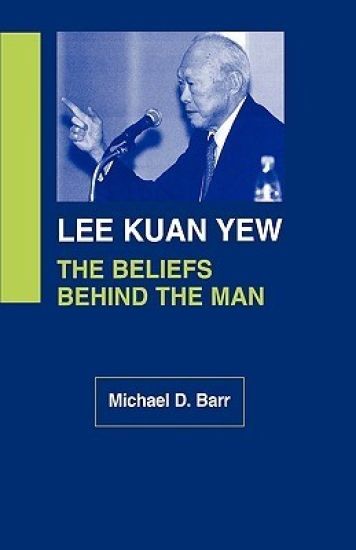
Lee Kuan Yew

Lee Kuan Yew

Michael D. Barr

Georgetown University Press
2000
sidottu
Lee Kuan Yew, Singapore's first prime minister (from 1959 to 1990), has been an international figure not only for establishing Singapore's political and economic stability but also for fostering economic development throughout Asia. He is particularly renowned as a principle architect of the 'Asian values' campaign of the 1990s, which sought to preserve the undemocratic traits of Asian culture while attending to the demands of a capitalist economy operating globally. A critical examination of Lee's life, career, and ideas, this is the first book to analyze the origins and substance of Lee's political thought. Augmenting established primary sources with his own interviews and correspondence with Lee's old associates, Barr shows how Lee has been influenced by British and Chinese racism and elitism, western progressivism, and even the cultural evolutionism of Arnold Toynbee. This reassessment of Lee's achievements and worldview sheds new light on a key figure on the world stage.
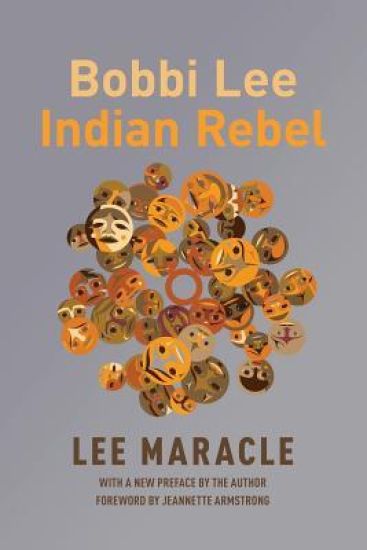
Bobbi Lee Indian Rebel

Bobbi Lee Indian Rebel

Lee Maracle

Canadian Scholars
2017
nidottu
Lee Maracle’s Bobbi Lee Indian Rebel tells the narrative of an Indigenous woman raised in North America who finds her strength despite the forces that challenge and oppress her. Grippingly honest, Lee’s autobiographical exploration of post-colonial tensions in Toronto circa 1960-1980 sheds light on the existing racist and sexist sentiments affecting Indigenous women. Reflective of the struggles Indigenous communities face today, this book continues to hold a place within contemporary Indigenous and women’s studies classrooms.New and updated, this edition features a preface by Lee Maracle.
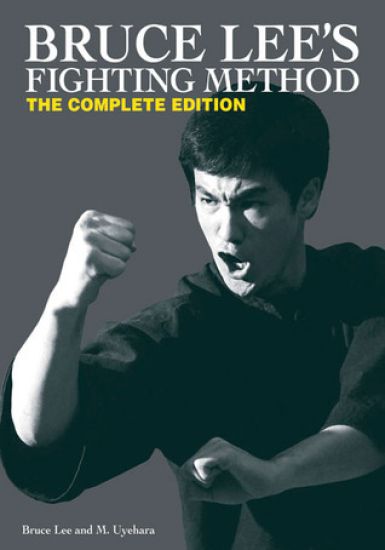
Bruce Lee's Fighting Method Complete Edition

Bruce Lee's Fighting Method Complete Edition

Lee B

Black Belt Communications
2008
sidottu
Vividly illustrating the techniques of a legendary innovator, this definitive examination explains how to survive attacks on the street, increase training awareness, and develop body movements. Originally compiled as a four-volume series, this revised edition breathes new life into a classic work with digitally-enhanced photography of jeet kune do founder Bruce Lee in his prime, a new chapter by former Lee student Ted Wong, and an introduction by Shannon Lee. This renowned compendium once again reclaims its place as an integral part of the Lee canon and a necessary addition for collectors and martial arts enthusiasts alike.
Lee-Enfield Rifle Exploded Drawings and Parts Lists

Lee-Enfield Rifle Exploded Drawings and Parts Lists

Frederic Faust

Middle Coast Publishing, Incorporated
2017
pokkari
Know your Rifle We recommend this book for anyone who has a Lee-Enfield rifle for the way it shows phantom parts drawings, lists each part and gives its Ministry of Defence part number. It is copiously illustrated. More particularly, this book covers the following rifles: Lee-Enfield Rifles No. 1 Mark III (the venerable SMLE)The Enfield No. 3 (Pattern 14)Rifle No. 4 Mark I and Mark I*Use this book to aid in disassembly and re-assembly and learn the proper nomenclature for a particular part.The No. 1 MARK III, affectionately known as the SMLE, was built at Royal Enfield in England and Lithgow in Australia.The Lee-Enfield Rifle Number 4 Mark I was built in England at a number of factories: Namely, the Royal Ordnance Factory, Fazakerley, the Royal Ordnance Factory, Maltby, and finally the Birmingham Small Arms Company an expedient wartime variation, the Lee-Enfield Rifle Number 4 Mark I* was built in Canada at the Long Branch Arsenal and in the United States of America, by Savage at Chicopee Falls, Massachusetts.Many military firearms aficionados consider Rifle No. 4s (all makes and marks) to be the best bolt action rifles fielded during World War II.This guide's diagrams are clear and informative. Copiously illustrated, phantom drawings of the various models of Lee-Enfield SMLE and the Pattern 14 Enfield show in great detail all assemblies and parts. Each part is identified by name and number.Besides the rifles proper, also illustrated are all of the necessary accessories: Bayonets, sling, and issue cleaning components, including the oil bottle, bore pull-through, and wire gauze.This collection of drawings and parts lists is highly recommended for anyone wanting a breakdown of the internal workings of their venerable rifle. It is beneficial for identifying missing parts when rebuilding a sporterized rifle.This book is printed in large format (8 X 10) for easier viewing of the schematic drawings.Click the Buy Now button at the top of this page to add this title to your Lee-Enfield library.Nota bene: This book does not cover the Lee-Enfield 2A rifle (7.62 mm NATO caliber), built at Ishapore, India.
Lee-Enfield Rifle No. 4: Phantom Parts Diagrams and Parts Listing

Lee-Enfield Rifle No. 4: Phantom Parts Diagrams and Parts Listing

Frederic Faust

Middle Coast Publishing, Incorporated
2017
nidottu
Know Your Rifle We recommend this book for anyone who has a Lee-Enfield rifle for the way it shows phantom parts drawings, lists each individual part and gives its Ministry of Defence part number. Copiously illustrated, it is especially helpful for identifying missing parts when rebuilding a sporterized rifle. The Lee-Enfield Rifle Number 4 Mark I* was built in Canada at the Long Branch Arsenal Many military firearms aficionados consider this old warhorse to be the best of all the Lee-Enfield variants fielded during the Second World War. Besides parts identification lists, detailing by illustration, descriptive part name and part number, for all parts of the Rifle, .303 Calibre, Lee -Enfield, No 4, Mark 1 *, this book also lists associated equipment including the bayonet, frog, action cover, wire gauze and pull-through and clearly shows the parts breakdown for each item of kit. Furthermore, parts are listed in top-down breakdown sequence showing major assemblies, sub-assemblies, and component parts. The relationship of each part to the next higher assembly is shown by indentation of the part name in the description column. Restated for emphasis: This book only covers the Canadian and Savage No. 4 Mark I* and not the British manufactured No. 4 Mark I and 2.
Lee Miller. Fashion in Wartime Britain

Lee Miller. Fashion in Wartime Britain

Lee Miller Archives Publishing
2021
sidottu
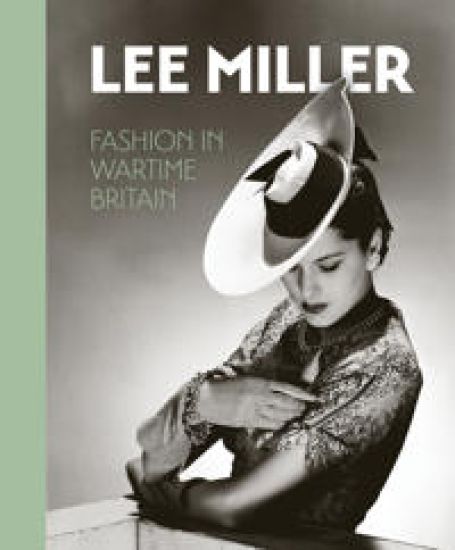
The Vogue Editor Audrey Withers wrote:'she [Lee Miller] has borne the whole weight of our studio production through the most difficult period in Brogue's [British Vogue's] history'.This was written in 1941 to challenge the oversight of the American Vogue 15 June 1941 edition feature on its photographers failing to recognise Lee Miller's contributions. Over 250 Fashion images by Lee appeared in Vogue from 1941 to 1944 and as a shoot can range from 12 to 100 shots the complete collection provides a wealth of material. 2021 is time to publish this beautiful book as the negatives and vintage contacts had remained unarchived until 2020 when the process was completed. Meaning these images have literally not be seen since they were first shot and published in the 1940's. The interest, quality and splendour of the images determined they deserved a high quality publication.
Lee Lawrie's Prairie Deco

Lee Lawrie's Prairie Deco

Gregory Paul Harm

Leelawriedotcom
2018
pokkari
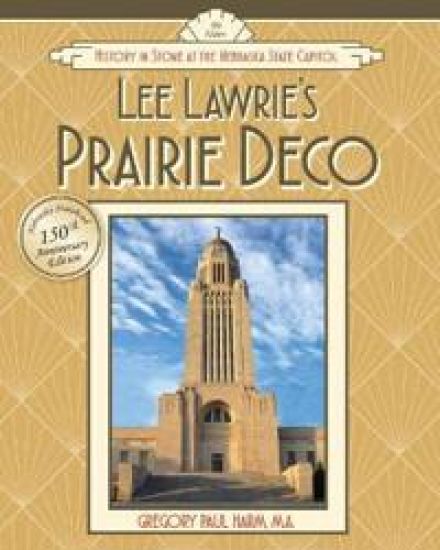
Just as a sculptor chips away each piece of stone to uncover a work of art, author Greg Harm has been chipping away at Lee Lawrie's catalog raisonne for the past two decades, going where no art scholar has gone before. From the Atlas in Rockefeller Center to the WWI Memorial in Pasadena, California, the humble "Dean of American Architectural Sculptors" has created countless unsigned works.This fourth edition, called the Nebraska Statehood's 150th Anniversary edition, of Lee Lawrie's Prairie Deco: History in Stone at the Nebraska State Capitol holds the most recent discoveries of Lawrie's works as well as breathtaking pictures of his largest commission where Art Deco meets the prairie and in which Democracy is illustrated-- the Nebraska State Capitol.
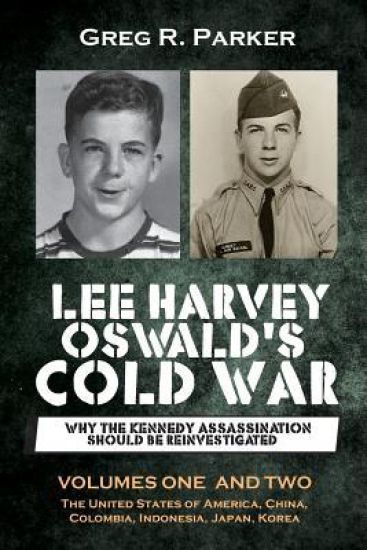
Lee Harvey Oswald's Cold War

Lee Harvey Oswald's Cold War

Greg R Parker

New Disease Press
2015
pokkari
Volume One takes the reader from the Barrios of Bogot through the intrigues of Manchuria and war-torn South-East Asia to the slums and skyscrapers of New York City, the latter as seen through the eyes of the truant, Lee Harvey Oswald. Within a year of formation in 1947, the CIA committed what was probably its first major act. It involved an assassination using a designated patsy. Time and place: Bogot , April 9, 1948 - the victim, the youthful and charismatic presidential front-runner, Jorge Eli cer Gait n. The entire scenario would be replicated 20 years later in Los Angeles with another youthful and charismatic presidential front-runner - right down to a patsy using self-hypnosis and connected to the California cult known as AMORC. And somewhere in between the two slayings was the assassination of JFK and the circuitous path to Dallas taken by patsy-in-the-making, Lee Harvey Oswald - the most intriguingly enigmatic alleged assassin of them all. Volume Two picks up where Volume One left off. Marguerite and young Lee have left New York City and returned to Lee's place of birth, New Orleans. Lee seems more like a "normal" kid than ever before. He gets into scrapes at school, joins clubs and keeps a weather eye on the wide world around him. But dig deeper and he is immersed in memorizing the Marines Manual and Das Kapital under the guidance of Captain Dave whom Lee has met in the Civil Air Patrol (CAP). Moreover, he is playing entrapment games with his friends. Has Captain Dave (David Ferrie) recruited Lee into a cadre of teenage anti-subversive agents in a program first floated by the CAP some seven years earlier? Was this program, which included teaching young recruits how to speak Russian, the seeds of what became the False Defector Program? In 1956, Lee is once again uprooted - this time moving to Forth Worth where he gets caught up in the riots brought about by forced integration pursuant to the Brown v Board of Education decision. Meanwhile, the Hungarian Uprising is waiting to explode in Europe. Also in 1956, Ruth Paine's sister, Sylvia Hoke finished work on a CIA project. The nature of the project is revealed here for the first time. Then in October, on his 17th birthday, Lee joins the Marines. We review his service record and explain some of the anomalies within it. Lastly, we have a look at the very spooky Albert Schweitzer College in Switzerland, which Lee had paid a $25 deposit to attend, but instead had headed to the Soviet Union. The Nazi and doomsday cult connections to the college are exposed, as are US government ties. This edition includes a bonus timeline at Appendix A.
Lee Shore Blues: Sex, Drugs and Bluewater Sailing

Lee Shore Blues: Sex, Drugs and Bluewater Sailing

Peter M. Heiberg

Peter M. Heiberg
2014
nidottu
WHAT THE CRITICS ARE SAYING: "Peter, you're a knucklehead." -Bob Perry, Naval Architect "Peter, doesn't 'peace of mind' mean anything at all to you?" - Dr. Hal Weinberg Ph.D., Psychologist, Professor Emeritus "I could write a song about you, Peter, but let's face it, there's not much to say." -Jimmy Buffett "Captain Heiberg has a penchant for filth." -Dr. Patrick Moore, Ph.D "The only nautical book you'll ever need (if you have trouble sleeping)." -Anon "Don't ever touch me there again " -Numerous Lee Shore Blues is not your average sailing book. Peter Heiberg takes us on an irreverent charge through the highlights of his life at sea, from evading the homosexual advances of a 300-pound steward in mid-Pacific at 19 years of age, to rebuilding and sailing a thirty-ton engineless Bristol Channel pilot cutter from the UK to Canada's west coast. "This is a great read The author writes with a refreshing, open style and recounts his adventures with a delightful mix of wit, sarcasm, and profanity. So much more entertaining and educational (in ways that matter) than most "stuffed shirt" sailing stories, it gives an unvarnished insight into offshore sailing and gives newbie cruisers like me hope that we can overcome the various trials and tribulations that the sea and life present." -Dr. Kirk Patterson Ph.D, Professor Emeritus, former President Temple University Japan Campus, Single Handed Voyager and lecturer After sailing tens of thousands of miles, commercial fishing in the Queen Charlotte Islands, skippering a tug boat on the Inside Passage, and even captaining a cruise ship in the Caribbean with a boatload of topless hookers, Peter Heiberg entertains readers with his ongoing sailing idiocies. Peter raced to Hawaii in the Pacific Cup in 2010. He then entered the Single Handed Transpac in 2012 and again in 2014. In his last race, at age 66, Peter was surprised (and probably thrilled, although he wouldn't admit it) to be awarded the Jack London Trophy for first to finish. Not for those with delicate sensibilities, Lee Shore Blues is an entertaining - and often hilarious - book for lovers of great sailing stories who enjoy hearing it like it really was. From Latitude 38 Magazine, December 2014: "One of the perks of sailing journalism is getting to meet new and interesting people. One of these was Peter Heiberg, who regular readers may remember competed in both the 2012 and 2014 Singlehanded TransPac races from San Francisco to Kauai. One of the lowlights of sailing journalism is that the time constraints of the job don't allow us to get to know new people all that well. So we were at once surprised, delighted and a bit awed by Peter's book, Lee Shore Blues, when it arrived on our doorstep. In a nutshell, we felt as if this guy we'd shared a few laughs with turned out to be the lead singer in some legendary rock band. Heiberg writes - and writes well - of a rollicking lifetime at sea; of boats, women and good times; and of taking his lumps as he (seemingly often) learned things the hard way. His engaging style is reminiscent of several popular cruising writers of the past 25 years - just with an 'R' rating." -JR