In the mid-1950s, when Mary Lee Settle published The Love Eaters and The Kiss of Kin, critics hailed her as a sharp and acidic writer. However, when in subsequent novels the focus of her work shifted from contemporary social realism to historical fiction, the same critics who previously had praised her work lost enthusiasm.In Mary Lee Settle's Beulah Quintet: The Price of Freedom, Brian Rosenberg examines Settle's work, especially Prisons, O Beulah Land, Know Nothing, The Scapegoat, and The Killing Ground, to show the magnitude and artistic merit in a single, continuous fiction, a fiction of major importance.According to Rosenberg, the Beulah quintet is one of the few grandly ambitious works of historical fiction written by an American woman. In the novels, Settle attempts to apply a European tradition of historical re-creation to American experience and, in so doing, to adapt a largely conservative form to the demands of a revolutionary history and ideology. Although the immediate subject is the history of a region in West Virginia, the deeper subject is nothing less than the history of America: the beliefs, conflicts, and illusions that gave rise to, and continue to distinguish, American culture.Rosenberg also treats the reaction to the Beulah quintet among literary critics. He looks at the neglect and misjudgment the novels have suffered by being labeled historical fiction, a genre often though to consist largely of ""romance novels,"" and explains why the quintet should be placed among the canonical works of contemporary American literature.Rosenberg includes in his book the transcript of an interview he conducted with Settle in which she reflects on both her intentions as a writer and the reception of her work. Mary Lee Settle's fiction has for too long been misperceived. Brian Rosenberg's thorough analysis of the Beulah quintet will allow a larger audience to understand the nature and scope of her achievement.
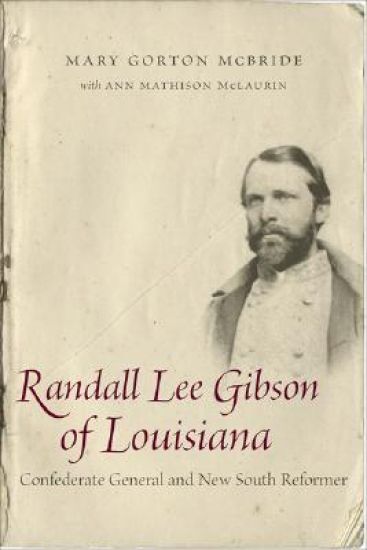
Randall Lee Gibson of Louisiana offers the first biography of one of Louisiana's most intriguing nineteenth-century politicians and a founder of Tulane University. Gibson (1832-1892) grew up on his family's sugar plantation in Terrebonne Parish and was educated at Yale University before studying law at the University of Louisiana in New Orleans. He purchased a sugar plantation in Lafourche Parish in 1858 and became heavily involved in the pro-secession faction of the Democratic Party. Elected colonel of the Thirteenth Louisiana Volunteer Regiment at the start of the Civil War, he commanded a brigade in the Battle of Shiloh and fought in all of the subsequent campaigns of the Army of Tennessee, concluding in 1865 with the Battle of Spanish Fort. As Gibson struggled to establish a law practice in postwar New Orleans, he experienced a profound change in his thinking and came to believe that the elimination of slavery was the one good outcome of the South's defeat. Joining Louisiana's Conservative political faction, he advocated for a postwar unification government that included African Americans. Elected to Congress in 1874, Gibson was directly involved in the creation of the Electoral Commission that resulted in the Compromise of 1877 and peacefully solved the disputed 1876 presidential election. He crafted legislation for the Mississippi River Commission in 1879, which eventually resulted in millions of federal dollars for flood control. Gibson was elected to the U.S. Senate in 1880 and became Louisiana's leading ""minister of reconciliation"" with his northern colleagues and its chief political spokesman during the highly volatile Gilded Age. He deplored the growing gap between the rich and the poor and embraced a reformist agenda that included federal funding for public schools and legislation for levee construction, income taxes, and the direct election of senators. This progressive stance made Gibson one of the last patrician Democrats whose noblesse oblige politics sought common middle ground between the extreme political and social positions of his era. At the request of wealthy New Orleans merchant Paul Tulane, Gibson took charge of Tulane's educational endowment and helped design the university that bears Tulane's name, serving as the founding president of the board of administrators. Highly readable and thoroughly researched, Mary Gorton McBride's absorbing biography illuminates in dramatic fashion the life and times of a unique Louisianan.
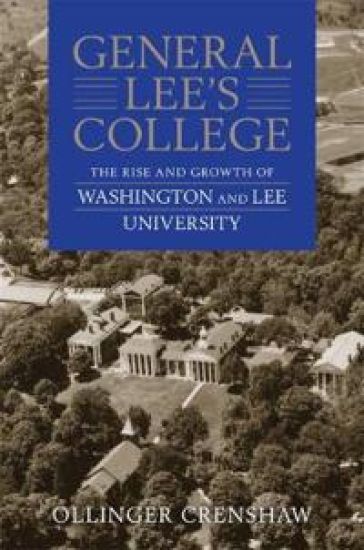
Originally published in 1969 and now available in this new edition, General Lee's College offers the early history of the institution that became Washington and Lee University. Emerging from obscure eighteenth- century origins on the Virginia frontier as Liberty Hall Academy, it struggled for survival against what at times appeared to be overwhelming odds. Receiving a sizeable gift from Virginia native George Washington in 1796, the school soon after assumed the name Washington College and established itself in the mold of the classical colleges of the Old South, as faculty and administrators promoted a provincial outlook and strict adherence to Presbyterian teachings. Secession and civil war had a dramatic impact on the college, as military service called away students, most of whom enlisted with the Confederate army. The Union victory in 1865 prompted college trustees to lay out a new vision for the institution, and they elected Confederate general Robert E. Lee, another native son of Virginia, to lead the college as president through the uncertainty of the postwar years.After Lee's death in 1870, the school's fortunes ebbed and flowed against the backdrop of Reconstruction. Yet the institution- renamed Washington and Lee University- rebounded in the decades after World War I. With an expanded curriculum, a larger faculty, and a more diverse student body, the school began to blaze a path of success that stretches well into the twenty-first century.
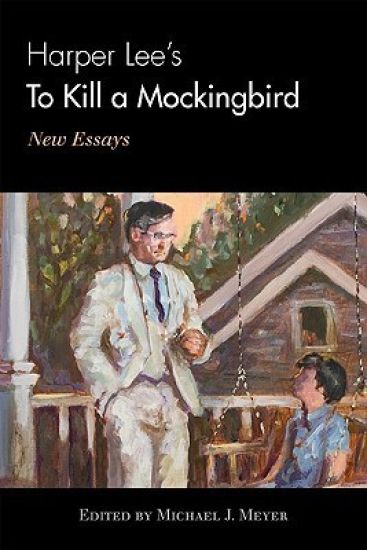
In 1960, To Kill a Mockingbird was published to critical acclaim. To commemorate To Kill a Mockingbird's 50th anniversary, Michael J. Meyer has assembled a collection of new essays that celebrate this enduring work of American literature. These essays approach the novel from educational, legal, social, and thematic perspectives. Harper Lee's only novel won the Pulitzer Prize and was transformed into a beloved film starring Gregory Peck as Atticus Finch. An American classic that frequently appears in middle school and high school curriculums, the novel has been subjected to criticism for its subject matter and language. Still relevant and meaningful, To Kill a Mockingbird has nonetheless been under-appreciated by many critics. There are few books that address Lee's novel's contribution to the American canon and still fewer that offer insights that can be used by teachers and by students. These essays suggest that author Harper Lee deserves more credit for skillfully shaping a masterpiece that not only addresses the problems of the 1930s but also helps its readers see the problems and prejudices the world faces today. Intended for high school and undergraduate usage, as well as for teachers planning to use To Kill a Mockingbird in their classrooms, this collection will be a valuable resource for all teachers of American literature.
Received an Honorable Mention for the American Revolution Round Table of Richmond's 2014 Book Award Dominick Mazzagetti presents an engaging account of the life of Charles Lee, the forgotten man of the American Revolution. History has not been kind to Lee—for good reason. In this compelling biography, Mazzagetti compares Lee’s life and attributes to those of George Washington and offers significant observations omitted from previous Lee biographies, including extensive correspondence with British officers in 1777 that reflects Lee’s abandonment of the Patriots’ cause.Lee, a British officer, a veteran of the French and Indian War, and a critic of King George III, arrived in New York City in 1773 with an ego that knew no bounds and tolerated no rivals. A highly visible and newsworthy personality, he quickly took up the American cause and encouraged rebellion. As a result of this advocacy and his military skills, Lee was granted a commission as a major general in the Continental Army and soon became second-in-command to George Washington. He helped organize the defense of Boston, designed defenses for New York City, and commanded the force that repelled the British attack on Charleston.Upon his return to New York in 1776, Lee was considered by some leaders of the Revolution to be an alternative to George Washington, who was in full retreat from British forces. Lee’s capture by the British in December 1776 put an end to that possibility. Lee’s subsequent release in a prisoner exchange in 1778 and return to an American command led to a dramatic confrontation with Washington on the battlefield at Monmouth, New Jersey, in June 1778. Washington chastised Lee publicly for ordering an unnecessary retreat. Lee suffered the ignominy of a court-martial conviction for this blunder and spent the remaining years to his death in 1782 attacking Washington. Although few doubted Lee’s loyalty at the time, his actions at Monmouth fueled speculation that he switched sides during his imprisonment.A discovery years after his death completed Lee’s tale. In 1862, a researcher discovered “Mr. Lee’s Plan,” a detailed strategy for the defeat of the American rebels delivered to British General William Howe while Lee was held in captivity. This discovery sealed Lee’s historical record and ended all further discussion of his contributions to the American Revolution. Today, few people even realize that Fort Lee, on the New Jersey side of the George Washington Bridge, was named in his honor.
Vernon Lee, born Violet Paget in 1856 to English parents who lived on the continent, bridged two worlds and many cultures. She was a Victorian by birth but lived into the second quarter of the 20th century. Her chosen home was Itay, but she spent most part of every year in England where she published over the years an impressive number of books: novels, short stories, travel essays, studies of Italian art and music, psychological aesthetics and polemics. She was widely recognized as a woman of letters and moved freely in major literary and social circles, meeting and at time having close friendships with a huge number of the major writers and intellectuals of her time. Although she never committed herself to one programme of political activism, she was an advocate for feminism and social reform and during World War I was an ardent pacifist. In her last years she watched with dismay the emergence of fascism. This text recovers the crowded and intellectually eventful life from Vernon Lee's previously unpublished letters and journals, as well as from her books themselves. Vineta Colby also explores Lee's troubled personal life, from her childhood in an eccentric expatriate family to her several unhappy love affairs with women to her frank recognition that her work, brilliant as some of it was, remained unappreciated. Through it all, Vernon Lee clung to her faith in the life of the mind, and through Colby's engaging biographical narrative, she emerges today as a writer worthy of renewed attention and admiration.
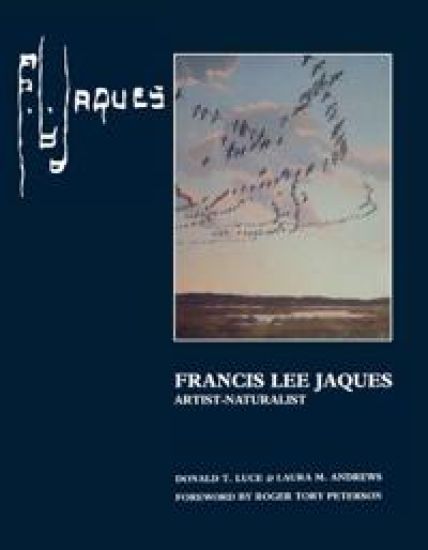
Best known for the distinctive style of his dioramas at the American Museum of Natural History and other museums, Francis Lee Jaques was also a painter and illustrator whose elegant black-and-white drawings appeared in over 30 books about wildlife adn nature. This book, a biographical essay illustrated with his own drawings and paintings, is a lucid examination of his work within the context of American nature painting. In his foreword, Roger Tory Peterson says, “His dioramas and canvases are a sensitive and joyous celebration of the wild world - a record of the way it was in his time.”Published in association with the James Ford Bell Museum of Natural History, University of Minnesota.
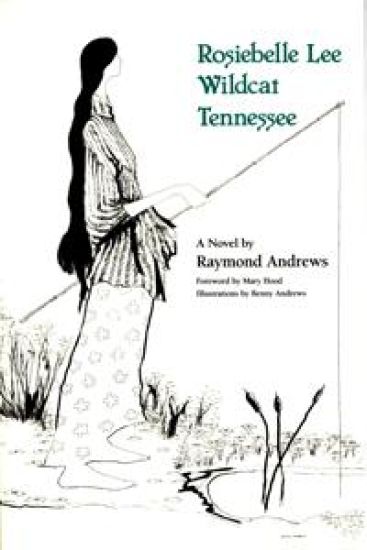
Bawdy and sometimes horrifying, hilarious on the way to being tragic, Raymond Andrews's Muskhogean County novels tell of black life in the Deep South from the end of the First World War to the beginning of the 1960s, from the days of mules and white men with bullwhips to the moment when the pendulum began to swing.This second novel in the trilogy begins in 1906, on the day when a beautiful "acorn-brown" woman arrives in the small North Georgia community of Appalachee asking directions to "the house of the richest white man living in this heah town." Forty years, one hundred acres, four children, numerous grandchildren, and many legends later, Rosiebelle Lee is on her deathbed—and ready to reveal her secrets.
Published in 1972, this biographical study examines Daniel Lee (1802–1890), an agriculturist who is considered to be a forefather to today’s scientific farming. Lee dedicated himself the advancement of farming through the diversification of crops and the use of scientific methods. He was the editor of both the Genesse Farmer and the Southern Cultivator and wrote numerous articles about agricultural chemistry. Lee was appointed the first professor of agriculture at the University of Georgia, which solidified his importance in the agricultural world.
The subject of renewed interest among literary and cultural scholars, Vernon Lee wrote more than forty books, in a broad range of genres, including fiction, history, aesthetics, and travel literature. Early on, Lee established her reputation as a public critic whose unconventional viewpoints stood out among those of her contemporaries. To feminist and cultural critics, she is a fascinating model of the independent female intellectual who, as Desmond MacCarthy once put it, provides a rare combination of intellectual curiosity and imaginative sensibility. A startlingly original critical study, Vernon Lee adds new dimensions to the legacy of this woman of letters whose career spans the transition from the late Victorian to the modernist period. Zorn draws on archival materials to discuss Lee's work in terms of British aestheticism and in the context of the Western European history of ideas. Zorn contends that Lee's fiction and nonfiction represent a literary position that bridges and surpasses both the Victorian sage and the modernist aesthetic critic. Through Professor Zorn's approach, which combines theoretical framings of texts in terms of recent feminist and cultural criticism with passages of close reading, Vernon Lee emerges as an influential figure in late-nineteenth-century British and continental European thinking on history, art, culture, and gender.
This book covers producing concepts and character sketches to laying out the final page of art. From comics icon Stan Lee, creator of the Mighty Marvel Universe and characters such as Spider-Man, Incredible Hulk and the X-Men, comes this ultimate how-to book for aspiring comic book artists. In Stan Lee's "How to Draw Comics", the author sets out to teach everything he knows about writing, drawing and creating comic book characters. The book focuses primarily on action-adventure comics, but will touch upon other genres and styles, such as romance, humour, horror and the widely influential manga style. From producing concepts and character sketches to laying out the final page of art, the man with no peer, Stan Lee, is the ultimate guide to the world of creating comics.
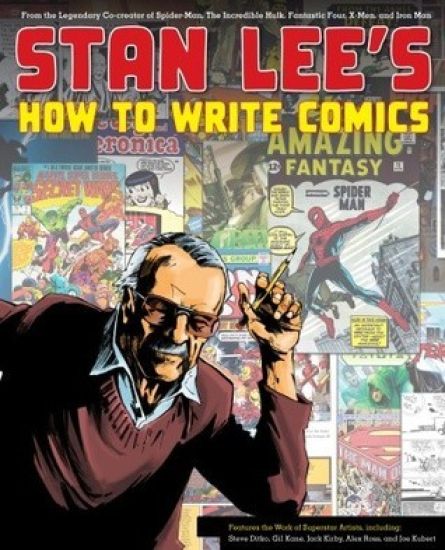
From comics icon Stan Lee, creator of the Mighty Marvel Universe and characters such as Spider-Man, Incredible Hulk and the X-Men, comes the ultimate how-to book for aspiring comic book writers. In these pages, aspiring comics writers will learn everything they need to know about how to write their own comic book stories, complete with easy-to-understand instruction, tips of the trade and invaluable advice for even more advanced writers. From the secrets to creating concepts, plots, to writing the script, the man with no peer, Stan Lee, is your guide to the world of writing and creating comics.
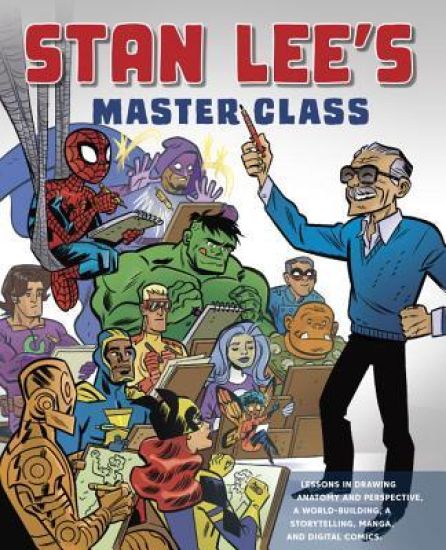
In this book, comics icon Lee provides aspiring comics artists with the modern tools they need to succeed in the world of comic-book creation. Focusing on topics like anatomy, perspective and character design, as well as brand-new topics like manga art styles, digital art and more, this is the next step for those looking to perfect their superhero rendering and create fantastic worlds perfect for today's modern comic-book audience. With examples from his classic collaborations at Marvel Comics and from today's top comics artists, Lee builds on concepts only touched upon in his previous instructional offerings and provides a pathway for aspiring artists to bring their comic-book artwork to professional-quality levels.
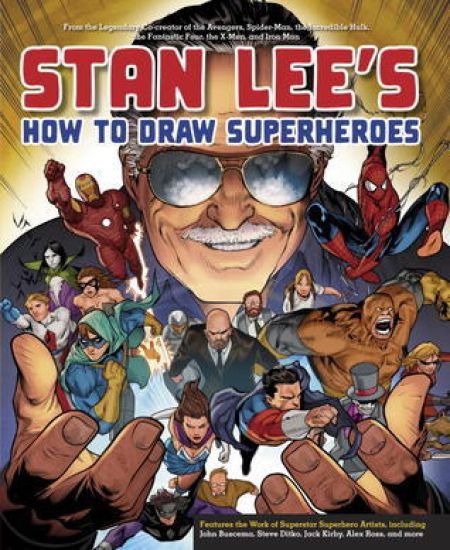
This is the third installment in comics icon Stan Lee's series showing readers how to draw some of the most exciting and dynamic superheroes of all time. Spider-Man, the X-Men, the Fantastic Four, Iron Man, the Incredible Hulk, and the Avengers all share a common trait - these hugely popular Marvel Comics superheroes were co-created by the legendary Stan Lee. Now, Lee shows readers everything they'll need to make their own mighty superheroes, just like his classic creations. Lee exposes his secret tools and techniques for bringing strong, inspiring heroes and heroines to life. He even shows aspiring creators how to expand their super-universes with evil villains, trusty sidekicks, brutes and monsters, super-pets, secret hideouts, and more! These invaluable insights from one of the greatest superhero creators of all time are must-haves for all fans of Lee's legendary superhero comic work.