Kirjojen hintavertailu. Mukana 12 016 292 kirjaa ja 12 kauppaa.

Kirjahaku

Etsi kirjoja tekijän nimen, kirjan nimen tai ISBN:n perusteella.

1000 tulosta hakusanalla Library of Congress

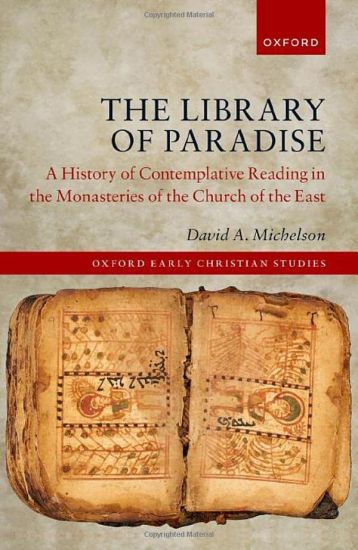
The Library of Paradise

The Library of Paradise

David A. Michelson

Oxford University Press
2022
sidottu
Contemplative reading is a spiritual practice developed by Christian monks in sixth- and seventh-century Mesopotamia. Mystics belonging to the Church of the East pursued a form of contemplation which moved from reading, to meditation, to prayer, to the ecstasy of divine vision. The Library of Paradise tells the story of this Syriac tradition in three phases: its establishment as an ascetic practice, the articulation of its theology, and its maturation and spread. The sixth-century monastic reform of Abraham of Kashkar codified the essential place of reading in East Syrian ascetic life. Once established, the practice of contemplative reading received extensive theological commentary. Abraham's successor Babai the Great drew upon the ascetic system of Evagrius of Pontus to explain the relationship of reading to the monk's pursuit of God. Syriac monastic handbooks of the seventh century built on this Evagrian framework. 'Enanisho' of Adiabene composed an anthology called Paradise that would stand for centuries as essential reading matter for Syriac monks. Dadisho' of Qatar wrote a widely copied commentary on the Paradise. Together, these works circulated as a one-volume library which offered readers a door to "Paradise" through contemplation. The Library of Paradise is the first book-length study of East Syrian contemplative reading. It adapts methodological insights from prior scholarship on reading, including studies on Latin lectio divina. By tracing the origins of East Syrian contemplative reading, this study opens the possibility for future investigation into its legacies, including the tradition's long reception history in Sogdian, Arabic, and Ethiopic monastic libraries.
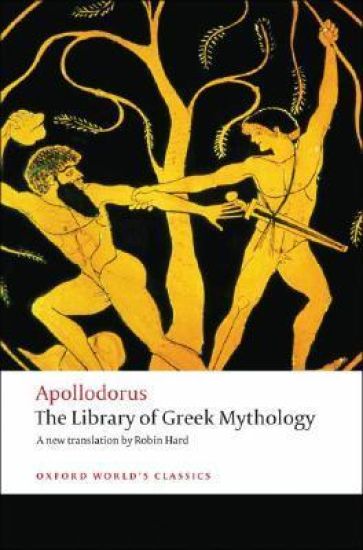
The Library of Greek Mythology

The Library of Greek Mythology

Apollodorus

Oxford University Press
2008
nidottu
The only work of its kind to survive from classical antiquity, the Library of Apollodorus is a unique guide to Greek mythology, from the origins of the universe to the Trojan War. Apollodorus' Library has been used as a source book by classicists from the time of its compilation in the 1st-2nd century BC to the present, influencing writers from antiquity to Robert Graves. It provides a complete history of Greek myth, telling the story of each of the great families of heroic mythology, and the various adventures associated with the main heroes and heroines, from Jason and Perseus to Heracles and Helen of Troy. As a primary source for Greek myth, as a reference work, and as an indication of how the Greeks themselves viewed their mythical traditions, the Library is indispensable to anyone who has an interest in classical mythology. Robin Hard's accessible and fluent translation is supplemented by comprehensive notes, a map and full genealogical tables. The introduction gives a detailed account of the Library's sources and situates it within the fascinating narrative traditions of Greek mythology. ABOUT THE SERIES: For over 100 years Oxford World's Classics has made available the widest range of literature from around the globe. Each affordable volume reflects Oxford's commitment to scholarship, providing the most accurate text plus a wealth of other valuable features, including expert introductions by leading authorities, helpful notes to clarify the text, up-to-date bibliographies for further study, and much more.
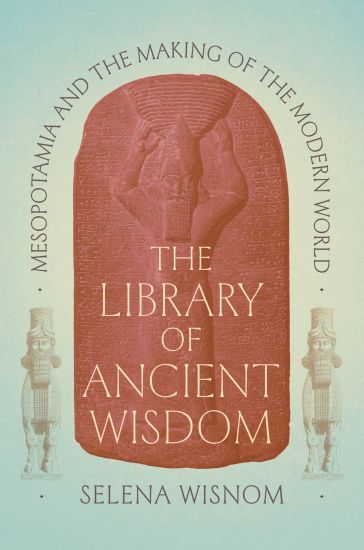
The Library of Ancient Wisdom: Mesopotamia and the Making of the Modern World
A tour of an ancient library transports us to Mesopotamia, introducing us to its people, their ideas, and their humanity. The library of Ashurbanipal, Assyria's last great king, held an astonishing collection at the forefront of knowledge in its day, from ancient traditions in religion and literature to the latest developments in magic and medicine. When the Assyrian empire fell, the library burned to the ground, and its contents, clay tablets inscribed with cuneiform writing, lay buried for thousands of years until a team of Victorian archaeologists discovered the remnants in modern-day Iraq. The clay had baked and hardened; the very fire that consumed the library had helped its texts to survive for millennia. In The Library of Ancient Wisdom, scholar Selena Wisnom, one of only a few hundred experts able to read cuneiform script today, guides us inside this important collection and, through its contents, brings ancient Mesopotamia and its people to life. Introducing us to Ashurbanipal and his family, scribes, astrologers, physicians, and more, Wisnom explores the library's tablets and the details they divulge about how these ancient people thought about the world. Like us, they had concerns about job security, jealous rivalries, and profound friendships, and questions about the meaning of life. Wisnom ushers us into a world where magic was commonplace, where the gods spoke to you in dreams, and where the secrets of the universe were revealed through puns--taking us to the heart of what it means to be human. Offering a close look at a major historical landmark as well as a readable account of the world's earliest civilizations, The Library of Ancient Wisdom lays bare the ideas, hopes, fears, and desires that survive on humble clay.
Routledge Library of British Political History
Reissuing the epic undertaking of Dr S. Maccoby, these volumes cover the story of English Radicalism from its origins right through to its questionable end. By combining new sources with the old and often long forgotten, the volumes provide an impressive history of radicalism and shed light on the course of English political development. The six volumes are arranged chronologically from 1762 through to the perceived end of British Radicalism in the mid-twentieth century.
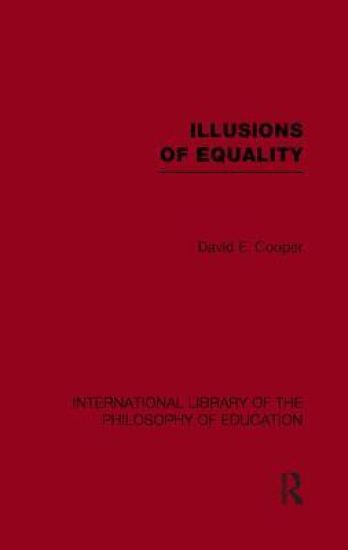
Illusions of Equality (International Library of the Philosophy of Education Volume 7)
Educational policy and discussion, in Britain and the USA, are increasingly dominated by the confused ideology of egalitarianism. David E. Cooper begins by identifying the principles hidden among the confusions, and argues that these necessarily conflict with the ideal of educational excellence - in which conflict it is this ideal that must be preserved. He goes on to criticize the use of education as a tool for promoting wider social equality, focussing especially on the muddles surrounding 'equal opportunities', 'social mix' and 'reverse discrimination'. Further chapters criticize the 'new egalitarianism' favoured, on epistemological grounds, by various sociologists of knowledge in recent years and 'cultural egalitarianism' according to which standard criteria of educational value merely reflect parochial and economic interests.
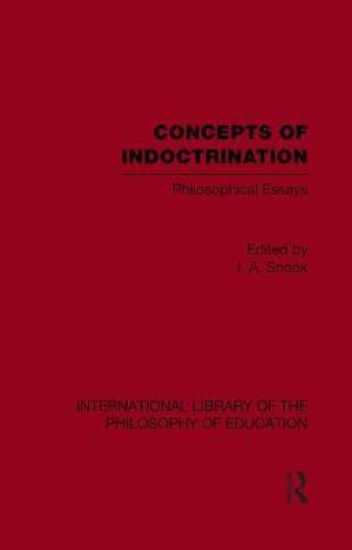
Concepts of Indoctrination (International Library of the Philosophy of Education Volume 20)
Indoctrination is an important concept in educational philosophy. It bears on many areas of study, including ethics, epistemology and philosophy of science, and opens up new paths of investigation into such questions as classroom method and the rights of parents and their children. This book brings together a number of key articles which discuss indoctrination in relation to aspects of religion and morals, dotrines and moral responsibility. This volume combines both American and English interpretations of a crucial idea in the philosophy of education and helps bridge the gap between the teaching of the subject in the USA and the UK.
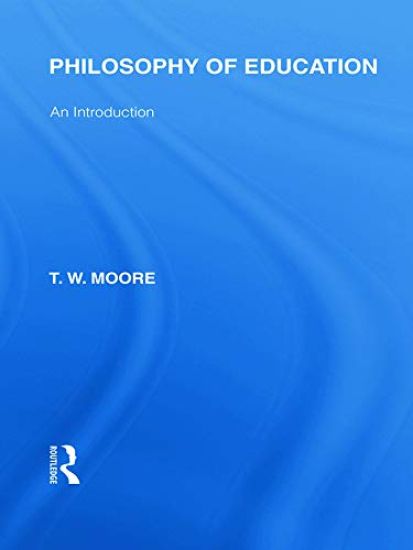
Philosophy of Education (International Library of the Philosophy of Education Volume 14)
This volume provides an introduction to the philosophy of education, which will enable students meeting the subject for the first time to find their way among the many specialized volumes. It deals in a non-technical way with the more important issues raised in a philosophical approach to education, and gives a clear idea of the scope of the subject. After discussing different theories of the aims of education, whether mechanistic or organic, the author addresses practical issues - for example, about the curriculum, the distinction between education and indoctrination, the role of authority and discipline, and the place of religious and moral teaching. Finally he deals with some important aspects of education and the influence of different political structures on the philosophy of education.
International Library of the Philosophy of Education (24 volume set)
International Library of the Philosophy of Education reprints twenty-four distinguished texts published in this field over the last half-century and includes works by authors such as Reginald D. Archambault, Charles Bailey, Robin Barrow, Norman J. Bull, D. E. Cooper, R. F. Dearden, Kieran Egan, D. W. Hamlyn, Paul H. Hirst, Glenn Langford, D. J. O'Connor, T. W. Moore, D. A. Nyberg, R. W. K. Paterson, R. S. Peters, Kenneth A Strike, I. A. Snook, John and Patricia White, and John Wilson. Themes discussed include: Liberal education, moral education, the aims of education, the education of teachers, adult & continuing education and the philosophical analysis of education. Available now at a special introductory price. This price is applicable until 3 months after publication. For more information, please contact us ([email protected]).
Concepts of Indoctrination (International Library of the Philosophy of Education Volume 20)
Indoctrination is an important concept in educational philosophy. It bears on many areas of study, including ethics, epistemology and philosophy of science, and opens up new paths of investigation into such questions as classroom method and the rights of parents and their children. This book brings together a number of key articles which discuss indoctrination in relation to aspects of religion and morals, dotrines and moral responsibility. This volume combines both American and English interpretations of a crucial idea in the philosophy of education and helps bridge the gap between the teaching of the subject in the USA and the UK.
Philosophy of Education (International Library of the Philosophy of Education Volume 14)
This volume provides an introduction to the philosophy of education, which will enable students meeting the subject for the first time to find their way among the many specialized volumes. It deals in a non-technical way with the more important issues raised in a philosophical approach to education, and gives a clear idea of the scope of the subject. After discussing different theories of the aims of education, whether mechanistic or organic, the author addresses practical issues - for example, about the curriculum, the distinction between education and indoctrination, the role of authority and discipline, and the place of religious and moral teaching. Finally he deals with some important aspects of education and the influence of different political structures on the philosophy of education.
Illusions of Equality (International Library of the Philosophy of Education Volume 7)
Educational policy and discussion, in Britain and the USA, are increasingly dominated by the confused ideology of egalitarianism. David E. Cooper begins by identifying the principles hidden among the confusions, and argues that these necessarily conflict with the ideal of educational excellence - in which conflict it is this ideal that must be preserved. He goes on to criticize the use of education as a tool for promoting wider social equality, focussing especially on the muddles surrounding 'equal opportunities', 'social mix' and 'reverse discrimination'. Further chapters criticize the 'new egalitarianism' favoured, on epistemological grounds, by various sociologists of knowledge in recent years and 'cultural egalitarianism' according to which standard criteria of educational value merely reflect parochial and economic interests.
The Library of Trinity College Dublin

The Library of Trinity College Dublin

Harry Cory Wright

Thames Hudson Ltd
2018
nidottu
The Library at Trinity College Dublin dates back to the establishment of the college by Queen Elizabeth I in 1592. The library is the largest in Ireland, containing more than 6.2 million volumes and an extensive collection of early manuscripts, including the internationally famous Book of Kells, which attracts around 1 million visitors annually from around the world. A visit to the Book of Kells includes a visit to the Long Room, the main chamber of the Old Library, and one of the most beautiful and impressive libraries and architectural spaces in the world. In this, the first of a new series called Pocket Photo Books, photographer Harry Cory Wright explores the richness of the architecture and collections of the Long Room, resulting in a book that brings the reader close to the sense of being there. With a brief introduction by Trinity’s Librarian and College Archivist, Helen Shenton, about her own experience of the Long Room, this beautifully designed book of exquisite photographs will appeal to all visitors to Trinity College Dublin, and to anyone keen to explore in detail one of the most awe-inspiring libraries and architectural spaces in the world.
Catalogue of the Wren Library of Lincoln Cathedral
There was certainly a collection of books at Lincoln Cathedral in the twelfth century, and its origins were perhaps earlier still; but little interest seems to have been taken in building up the library until the second half of the seventeenth century, with the appointment in 1660 of the bibliophile Michael Honywood, a Fellow of Christ's College, Cambridge, as Dean. The present Wren Library's collection of some 8,000 printed books is based largely on his private library, bequeathed to the Dean and Chapter of Lincoln on his death in 1681. Much of Honywood's library was put together during seventeen years of voluntary exile in the Low Countries from 1643. It is consequently rich in sixteenth- and seventeenth-century continental literature, including rare Italian plays, European pamphlets and broadsides interpreting the English political situation, a collection of Dutch ballads, and many religious books and tracts. The splendid English collection includes 1600 STC items, and 2,650 printed between 1641 and 1700, over 100 of which are not recorded in Wing. In addition there are some 100 incunables. This complete catalogue of books printed before 1801 is the first since 1859, and offers the detail and precision required by modern scholars, bibliographers and libraries. Titles are given at some length to indicate subject coverage, and format, pagination, and details of illustrations are recorded. The catalogue notes which books belonged to Honywood, whose importance as a collector is thus established. A set of concordances keyed to the main entries covers STC, Wing, Adams, and Goff.
The Library of Emmanuel College, Cambridge, 1584–1637
This book provides a detailed record of the early history of the library at Emmanuel College, Cambridge, from the foundation of the College in 1584 to the completion of the seventh major inventory of the library's contents in 1637. This half-century formed a dynamic period in the religious and political as well as the educational life of the nation. The influence of Emmanuel, a notoriously Puritan college from its founding, was felt especially in the striking prominence of its alumni among New World settlers (among them John Harvard) and, during the English Civil War, in the placement of Emmanuel men in many key positions, including the Masterships of numerous Cambridge colleges. While these men were being educated Emmanuel's library expanded dramatically, and the seven increasingly large inventories of library books recorded there during the period give an indication of their concerns and their scholarship. Now, for the first time, the intellectual resources - by no means narrowly 'Puritan' - of this major institutional library are available for the study of all who are interested in the history of the period.
The Library of Isaac Newton

The Library of Isaac Newton

John Harrison

Cambridge University Press
2008
pokkari
When Newton died in 1727 he left a library of some 2,100 volumes. This was largely a collection of books regarded by him as a set of working tools – several of the well-thumbed surviving items are evidence of this. The books Newton owned are of considerable interest and importance principally to Newtonian scholars and to historians of science, as well as to booksellers, librarians and book-collectors. The library was kept virtually intact until 1920 when more than half the volumes were auctioned and subsequently dispersed. Scholars have hitherto had to rely on the unpublished Huggins List (1727) and Musgrave Catalogue (c. 1766), or on their less than satisfactory transcription issued in 1931. John Harrison has now remedied this deficiency by compiling a complete and comprehensive catalogue of Newton's library.