Kirjojen hintavertailu. Mukana 12 080 869 kirjaa ja 12 kauppaa.

Kirjahaku

Etsi kirjoja tekijän nimen, kirjan nimen tai ISBN:n perusteella.

1000 tulosta hakusanalla Maral Atmaca

Moral Imperialism

Moral Imperialism

New York University Press
2002
sidottu
In the controversy over female genital mutilation, Congress was quick to condemn practices throughout Africa and the Middle East and to take action criminalizing the practice domestically. Yet at the same time, it bluntly dismissed Amnesty International and Human Rights Watch when they pointed out human rights violations closer to home in the form of the disproportionately high rate of the imposition of capital punishment on black men, and the disempowerment of poor women under new draconian welfare rules. The irony of the United States' international condemnation of types of activities in which it engages within its own borders is not lost on Third World critics. Moral Imperialism sets out to bring an international human rights framework to the analysis of current international and domestic legal, political, and cultural crises. It explores the United States' moral supremacy during a time of clear domestic shortcomings and asks whether insisting that other nations adhere to norms that derive from dominant U.S. culture and history may harm societies?both within and outside of the U.S.?with radically different cultures and histories. Contributors include Beverly Greene, Kevin Johnson, M. Patricia Fernandez Kelly, Holly Maguigan, Boaventura De Sousa Santos, Saskia Sassen, and Eric Yamamoto.
Moral Imperialism

Moral Imperialism

New York University Press
2002
pokkari
In the controversy over female genital mutilation, Congress was quick to condemn practices throughout Africa and the Middle East and to take action criminalizing the practice domestically. Yet at the same time, it bluntly dismissed Amnesty International and Human Rights Watch when they pointed out human rights violations closer to home in the form of the disproportionately high rate of the imposition of capital punishment on black men, and the disempowerment of poor women under new draconian welfare rules. The irony of the United States' international condemnation of types of activities in which it engages within its own borders is not lost on Third World critics. Moral Imperialism sets out to bring an international human rights framework to the analysis of current international and domestic legal, political, and cultural crises. It explores the United States' moral supremacy during a time of clear domestic shortcomings and asks whether insisting that other nations adhere to norms that derive from dominant U.S. culture and history may harm societies?both within and outside of the U.S.?with radically different cultures and histories. Contributors include Beverly Greene, Kevin Johnson, M. Patricia Fernandez Kelly, Holly Maguigan, Boaventura De Sousa Santos, Saskia Sassen, and Eric Yamamoto.
Moral Panics, Sex Panics

Moral Panics, Sex Panics

New York University Press
2009
sidottu
Finalist for 2010 LGBT Anthology Award from the Lambda Literary Awards Unwed teen mothers, abortion, masturbation, pornography, gay marriage, sex trafficking, homosexuality, and HIV are just a few in a long line of issues that have erupted into panics. These sexual panics spark moral crusades and campaigns, defining and shaping how we think about sexual and reproductive rights. The essays in Moral Panics, Sex Panics focus on case studies ranging from sex education to AIDS to race and the "down low," to illustrate how sexuality is at the heart of many political controversies. The contributors also reveal how moral and sexual panics have become a mainstay of certain kinds of conservative efforts to win elections and gain power in moral, social, and political arenas. Moral Panics, Sex Panics provides new and important insights into the role that key moral panics have played in social processes, arguing forcefully against the political abuse of sex panics and for the need to defend full sexual and reproductive rights. Contributors: Cathy J. Cohen, Diane DiMauro, Gary W. Dowsett, Janice M. Irvine, Carole Joffe, and Saskia Eleonora Wieringa.
Moral Panics, Sex Panics

Moral Panics, Sex Panics

New York University Press
2009
pokkari
Finalist for 2010 LGBT Anthology Award from the Lambda Literary Awards Unwed teen mothers, abortion, masturbation, pornography, gay marriage, sex trafficking, homosexuality, and HIV are just a few in a long line of issues that have erupted into panics. These sexual panics spark moral crusades and campaigns, defining and shaping how we think about sexual and reproductive rights. The essays in Moral Panics, Sex Panics focus on case studies ranging from sex education to AIDS to race and the "down low," to illustrate how sexuality is at the heart of many political controversies. The contributors also reveal how moral and sexual panics have become a mainstay of certain kinds of conservative efforts to win elections and gain power in moral, social, and political arenas. Moral Panics, Sex Panics provides new and important insights into the role that key moral panics have played in social processes, arguing forcefully against the political abuse of sex panics and for the need to defend full sexual and reproductive rights. Contributors: Cathy J. Cohen, Diane DiMauro, Gary W. Dowsett, Janice M. Irvine, Carole Joffe, and Saskia Eleonora Wieringa.
Moral Self-Regard

Moral Self-Regard

Lara Denis

CRC Press Inc
2001
sidottu
Moral Self-Regard draws on the work of Marcia Baron, Joseph Butler and Allen Wood, among others in this first extensive study of the nature, foundation and significance of duties to oneself in Kant's moral theory.
Mara

Mara

Tova Reich

Syracuse University Press
2001
nidottu
This is the story of Mara, a Jewish girl from Riverside Drive, and a hippie from Israel whom everyone distrusts, and the Orthodox wedding that unites them.
Moral Ecology of a Forest

Moral Ecology of a Forest

José E. Martínez-Reyes

University of Arizona Press
2016
sidottu
Forests are alive, filled with rich, biologically complex life forms and the interrelationships of multiple species and materials. Vulnerable to a host of changing conditions in this global era, forests are in peril as never before. New markets in carbon and environmental services attract speculators. In the name of conservation, such speculators attempt to undermine local land control in these desirable areas.Moral Ecology of a Forest provides an ethnographic account of conservation politics, particularly the conflict between Western conservation and Mayan ontological ecology. The difficult interactions of the Maya of central Quintana Roo, Mexico, for example, or the Mayan communities of the Sain Ka’an Biosphere, demonstrate the clashing interests with Western biodiversity conservation initiatives. The conflicts within the forest of Quintana Roo represent the outcome of nature in this global era, where the forces of land grabbing, conservation promotion and organizations, and capitalism vie for control of forests and land.Forests pose living questions. In addition to the ever-thrilling biology of interdependent species, forests raise questions in the sphere of political economy, and thus raise cultural and moral questions. The economic aspects focus on the power dynamics and ideological perspectives over who controls, uses, exploits, or preserves those life forms and landscapes. The cultural and moral issues focus on the symbolic meanings, forms of knowledge, and obligations that people of different backgrounds, ethnicities, and classes have constructed in relation to their lands. The Maya Forest of Quintana Roo is a historically disputed place in which these three questions come together.
Moral Reasoning and Statecraft

Moral Reasoning and Statecraft

Reed M. Davis

University Press of America
1988
nidottu
Composed by nine of his former students on the occasion of the Miller Center's tenth anniversary, these essays commemorate Dr. Kenneth W. Thompson's educational leadership and support. It is fitting that the contributors to this volume have chosen to present Dr. Thompson with a collection of essays devoted to moral reasoning and statecraft. As teacher and scholar, Dr. Thompson returns time and time again to explore the moral resources of statecraft and to probe the normative foundations of political choice. Contributors to this volume are Reed Davis, Alberto R. Coll, Farhang Rajaee, W. David Clinton, Daniel G. Lang, Nicolai N. Petro, Robert A. Strong, Ian Graig, Gale A. Mattox and Brian E. Klunk. Includes a complete bibliography of Dr. Thompson's writings. Co-published with the Miller Center of Public Affairs.
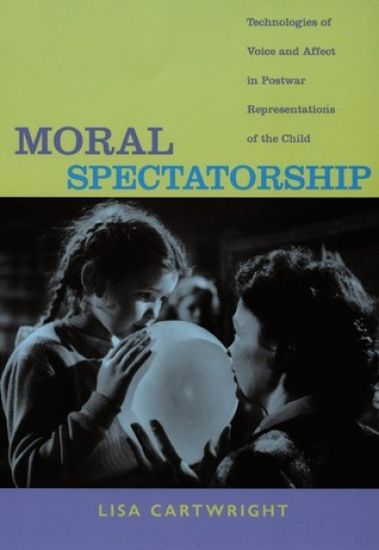
Moral Spectatorship

Moral Spectatorship

Lisa Cartwright

Duke University Press
2008
sidottu
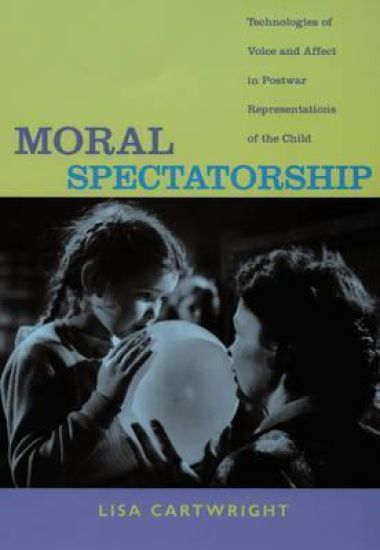
Why were theories of affect, intersubjectivity, and object relations bypassed in favor of a Lacanian linguistically oriented psychoanalysis in feminist film theory in the 1980s and 1990s? In Moral Spectatorship, Lisa Cartwright rethinks the politics of spectatorship in film studies. Returning to impasses reached in late-twentieth-century psychoanalytic film theory, she focuses attention on theories of affect and object relations seldom addressed during that period. Cartwright offers a new theory of spectatorship and the human subject that takes into account intersubjective and affective relationships and technologies facilitating human agency. Seeking to expand concepts of representation beyond the visual, she develops her theory through interpretations of two contexts in which adult caregivers help bring children to voice. She considers several social-problem melodramas about deaf and nonverbal girls and young women, including Johnny Belinda, The Miracle Worker, and Children of a Lesser God. Cartwright also analyzes the controversies surrounding facilitated communication, a technological practice in which caregivers help children with communication disorders achieve “voice” through writing facilitated by computers. This practice has inspired contempt among professionals and lay people who charge that the facilitator can manipulate the child’s speech.For more than two decades, film theory has been dominated by a model of identification tacitly based on the idea of feeling what the other feels or of imagining oneself to be the other. Building on the theories of affect and identification developed by André Green, Melanie Klein, Donald W. Winnicott, and Silvan Tomkins, Cartwright develops a model of spectatorship that takes into account and provides a way of critically analyzing the dynamics of a different kind of identification, one that is empathetic and highly intersubjective.
Moral Spectatorship

Moral Spectatorship

Lisa Cartwright

Duke University Press
2008
pokkari
Why were theories of affect, intersubjectivity, and object relations bypassed in favor of a Lacanian linguistically oriented psychoanalysis in feminist film theory in the 1980s and 1990s? In Moral Spectatorship, Lisa Cartwright rethinks the politics of spectatorship in film studies. Returning to impasses reached in late-twentieth-century psychoanalytic film theory, she focuses attention on theories of affect and object relations seldom addressed during that period. Cartwright offers a new theory of spectatorship and the human subject that takes into account intersubjective and affective relationships and technologies facilitating human agency. Seeking to expand concepts of representation beyond the visual, she develops her theory through interpretations of two contexts in which adult caregivers help bring children to voice. She considers several social-problem melodramas about deaf and nonverbal girls and young women, including Johnny Belinda, The Miracle Worker, and Children of a Lesser God. Cartwright also analyzes the controversies surrounding facilitated communication, a technological practice in which caregivers help children with communication disorders achieve “voice” through writing facilitated by computers. This practice has inspired contempt among professionals and lay people who charge that the facilitator can manipulate the child’s speech.For more than two decades, film theory has been dominated by a model of identification tacitly based on the idea of feeling what the other feels or of imagining oneself to be the other. Building on the theories of affect and identification developed by André Green, Melanie Klein, Donald W. Winnicott, and Silvan Tomkins, Cartwright develops a model of spectatorship that takes into account and provides a way of critically analyzing the dynamics of a different kind of identification, one that is empathetic and highly intersubjective.
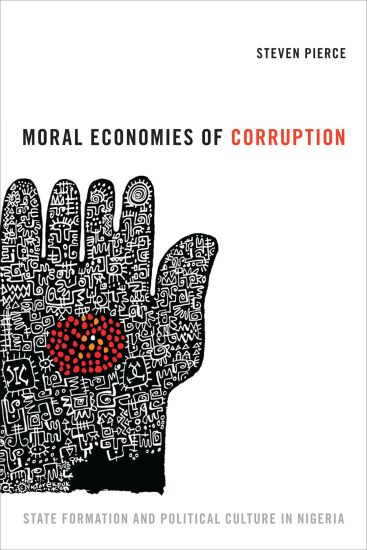
Moral Economies of Corruption

Moral Economies of Corruption

Steven Pierce

Duke University Press
2016
sidottu
Nigeria is famous for "419" e-mails asking recipients for bank account information and for scandals involving the disappearance of billions of dollars from government coffers. Corruption permeates even minor official interactions, from traffic control to university admissions. In Moral Economies of Corruption Steven Pierce provides a cultural history of the last 150 years of corruption in Nigeria as a case study for considering how corruption plays an important role in the processes of political change in all states. He suggests that corruption is best understood in Nigeria, as well as in all other nations, as a culturally contingent set of political discourses and historically embedded practices. The best solution to combatting Nigerian government corruption, Pierce contends, is not through attempts to prevent officials from diverting public revenue to self-interested ends, but to ask how public ends can be served by accommodating Nigeria's history of patronage as a fundamental political principle.
Moral Economies of Corruption

Moral Economies of Corruption

Steven Pierce

Duke University Press
2016
pokkari
Nigeria is famous for "419" e-mails asking recipients for bank account information and for scandals involving the disappearance of billions of dollars from government coffers. Corruption permeates even minor official interactions, from traffic control to university admissions. In Moral Economies of Corruption Steven Pierce provides a cultural history of the last 150 years of corruption in Nigeria as a case study for considering how corruption plays an important role in the processes of political change in all states. He suggests that corruption is best understood in Nigeria, as well as in all other nations, as a culturally contingent set of political discourses and historically embedded practices. The best solution to combatting Nigerian government corruption, Pierce contends, is not through attempts to prevent officials from diverting public revenue to self-interested ends, but to ask how public ends can be served by accommodating Nigeria's history of patronage as a fundamental political principle.
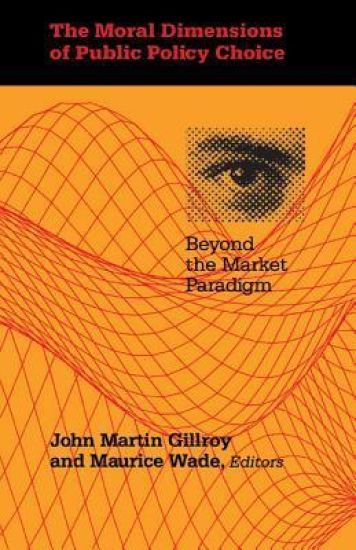
Moral Dimensions of Public Policy Choice, The
Combining philosophy with practical politics, an expanding area of policy studies applies moral precepts, critical principles, and conventional values to collective decisions. This evolving new approach to policy analysis asserts that the same variety of ethical principles available to the individual are also available to make collective decisions in the public interest and should be used.Although policy analysis has long been dominated by assumptions originally developed for the examination of markets, such as efficiency, these essays by leading scholars - the best work done in the field over the past three decades - explore alternatives to the \u201cmarket paradigm\u201d and show how moral discrimination and choice can extend beyond the individual to encompass public decisions.Chapters by John Martin Gillroy and Maurice Wade review the political philosophies of Immanuel Kant and David Hume as backgrounds for the development of modern concepts of public policy choice. They present this anthology as a first step in codifying options, arguments, and methods within this important developing area of policy studies.
Moral Foods

Moral Foods

University of Hawai'i Press
2019
sidottu
Moral Foods: The Construction of Nutrition and Health in Modern Asia investigates how foods came to be established as moral entities, how moral food regimes reveal emerging systems of knowledge and enforcement, and how these developments have contributed to new Asian nutritional knowledge regimes. The collection’s focus on cross-cultural and transhistorical comparisons across Asia brings into view a broad spectrum of modern Asia that extends from East Asia, Southeast Asia, to South Asia, as well as into global communities of Western knowledge, practice, and power outside Asia.The first section, “Good Foods,” focuses on how food norms and rules have been established in modern Asia. Ideas about good foods and good bodies shift at different moments, in some cases privileging local foods and knowledge systems, and in other cases privileging foreign foods and knowledge systems. The second section, “Bad Foods,” focuses on what makes foods bad and even dangerous. Bad foods are not simply unpleasant or undesirable for aesthetic or sensory reasons, but they can hinder the stability and development of persons and societies. Bad foods are symbolically polluting, as in the case of foreign foods that threaten not only traditional foods, but also the stability and strength of the nation and its people. The third section, “Moral Foods,” focuses on how themes of good versus bad are embedded in projects to make modern persons, subjects, and states, with specific attention to the ambiguities and malleability of foods and health. The malleability of moral foods provides unique opportunities for understanding Asian societies’ dynamic position within larger global flows, connections, and disconnections.Collectively, the chapters raise intriguing questions about how foods and the bodies that consume them have been valued politically, economically, culturally, and morally, and about how those values originated and evolved. Consumers in modern Asia are not simply eating to satisfy personal desires or physiological needs, but they are also conscripted into national and global statemaking projects through acts of ingestion. Eating, then, has become about fortifying both the person and the nation.