Maria do Mar hist ria de uma paix o imposs vel entre um pescador da Nazar e a sua amada, a quem foi ocultado um terr vel segredo. "As fisionomias par dicas, o requintado decorativismo dos cen rios dom sticos e o dramatismo oper tico das cenas exteriores acentuam a mise en sc ne do texto, que sem o assumir, uma pe a de teatro, caminhando irremediavelmente para um desenlace fatal, onde o Mar, personagem maior da trama, reclamar cruel tributo."
This biography of the Polish British anthropologist Maria Czaplicka (1884–1921) is also a cultural study of the dynamics of the anthropological collective presented from a researcher-centric perspective. Czaplicka, together with Bronislaw Malinowski, studied anthropology in London and later at Oxford, then she headed the Yenisei Expedition to Siberia (1914–15) and was the first female lecturer of anthropology at Oxford. She was an engaged feminist and an expert on political issues in Northern Asia and Eastern Europe. But this remarkable woman’s career was cut short by suicide. Like many women anthropologists of the time, Czaplicka journeyed through various academic institutions, and her legacy has been dispersed and her field materials lost. Grazyna Kubica covers the major events in Czaplicka’s life and provides contextual knowledge about the intellectual formation in which Czaplicka grew up, including the Warsaw radical intelligentsia and the contemporary anthropology of which she became a part. Kubica also presents a critical analysis of Czaplicka’s scientific and literary works, related to the issues of gender, shamanism, and race. Kubica shows how Czaplicka’s sense of agency and subjectivity enriched and shaped the practice of anthropology and sheds light on how scientific knowledge arises and is produced.
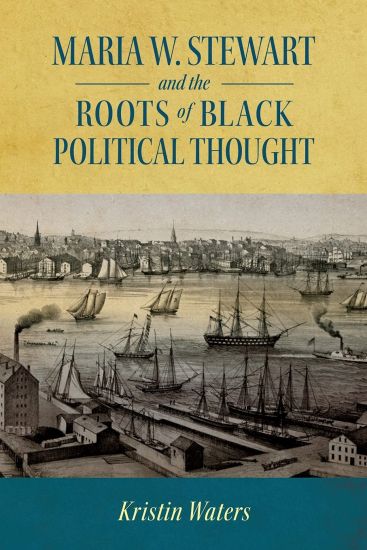
Maria W. Stewart and the Roots of Black Political Thought tells a crucial, almost-forgotten story of African Americans of early nineteenth-century America. In 1833, Maria Stewart (1803–1879) told a gathering at the African Masonic Hall on Boston’s Beacon Hill: "African rights and liberty is a subject that ought to fire the breast of every free man of color in these United States." She exhorted her audience to embrace the idea that the founding principles of the nation must extend to people of color. Otherwise, those truths are merely the hypocritical expression of an ungodly white power, a travesty of original democratic ideals. Like her mentor, David Walker, Stewart illustrated the practical inconsistencies of classical liberalism as enacted in the US and delivered a call to action for ending racism and addressing gender discrimination. Between 1831 and 1833, Stewart’s intellectual productions, as she called them, ranged across topics from true emancipation for African Americans, the Black convention movement, the hypocrisy of white Christianity, Black liberation theology, and gender inequity. Along with Walker’s Appeal to the Coloured Citizens of the World, her body of work constitutes a significant foundation for a moral and political theory that is finding new resonance today—insurrectionist ethics.In this work of recovery, author Kristin Waters examines the roots of Black political activism in the petition movement; Prince Hall and the creation of the first Black masonic lodges; the Black Baptist movement spearheaded by the brothers Thomas, Benjamin, and Nathaniel Paul; writings; sermons; and the practices of festival days, through the story of this remarkable but largely unheralded woman and pioneering public intellectual.
Maria W. Stewart and the Roots of Black Political Thought tells a crucial, almost-forgotten story of African Americans of early nineteenth-century America. In 1833, Maria Stewart (1803–1879) told a gathering at the African Masonic Hall on Boston’s Beacon Hill: "African rights and liberty is a subject that ought to fire the breast of every free man of color in these United States." She exhorted her audience to embrace the idea that the founding principles of the nation must extend to people of color. Otherwise, those truths are merely the hypocritical expression of an ungodly white power, a travesty of original democratic ideals. Like her mentor, David Walker, Stewart illustrated the practical inconsistencies of classical liberalism as enacted in the US and delivered a call to action for ending racism and addressing gender discrimination. Between 1831 and 1833, Stewart’s intellectual productions, as she called them, ranged across topics from true emancipation for African Americans, the Black convention movement, the hypocrisy of white Christianity, Black liberation theology, and gender inequity. Along with Walker’s Appeal to the Coloured Citizens of the World, her body of work constitutes a significant foundation for a moral and political theory that is finding new resonance today—insurrectionist ethics.In this work of recovery, author Kristin Waters examines the roots of Black political activism in the petition movement; Prince Hall and the creation of the first Black masonic lodges; the Black Baptist movement spearheaded by the brothers Thomas, Benjamin, and Nathaniel Paul; writings; sermons; and the practices of festival days, through the story of this remarkable but largely unheralded woman and pioneering public intellectual.
This biography of Queen María de Molina thematically explores her life and demonstrates her collective exercise of power and authority as queen. Throughout her public life, María de Molina’s resilient determination, as queen and later as regent, enabled her to not only work tirelessly to establish an effective governing partnership with her husband King Sancho IV, which never occurred, but also to establish the legitimacy of her children and their heirs and their right to rule. Such legitimacy enabled Queen María de Molina’s son and grandson, under her tutelage, to fend off other monarchs and belligerent nobles. The author demonstrates the queen’s ability to govern the Kingdom of Castile-León as a partner with her husband King Sancho IV, a partnership that can be described as an official union. A major theme of this study is María de Molina’s role as dowager queen and regent as she continued to exercise her queenly power and authority to protect the throne of her son Fernando IV and, later, of her grandson Alfonso XI, and to provide peace and stability for the Kingdom of Castile-León.
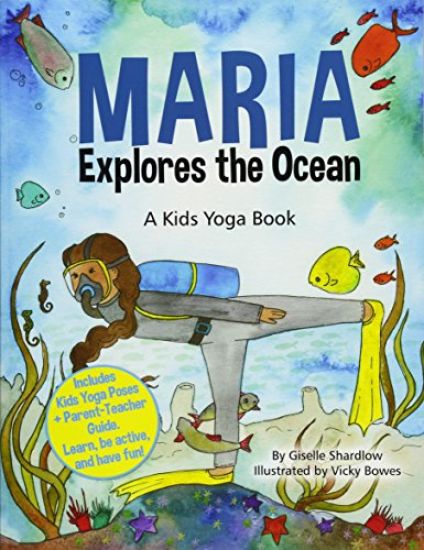
Dive in to learn about Pacific Ocean animals through ocean yoga poses for kids with this interactive ocean kids book, Maria Explores the Ocean Join Maria as she explores the ocean with her granddad. Glide like a manta ray, float like a jellyfish, and cruise like a parrotfish-perfect beginner yoga poses. Learn what's under the water, act out ocean animals, and practice colors This beautifully illustrated children's ocean life yoga book includes a list of kids yoga poses and a parent-teacher guide. This child yoga book can be added to your preschool learning activities, mindful moments, play therapy story time, calm down corner, collection of ocean books for kids, as an anxiety relief tool, part of your movement breaks in the classroom, circle time, counseling sessions, social emotional learning activities, emotional regulation strategies, mommy me yoga, preschool yoga exercises, or kindergarten yoga breaks. Kids Yoga Stories introduce you to engaging yoga kid characters who will get your child laughing, moving, and creating. Reading is good for the mind AND body This kids yoga book links several yoga poses for kids in a specific sequence to create a coherent and meaningful yoga sequence for young children (toddlers, preschoolers, PreK, and kindergarten). Yoga for kids is suitable for children of all abilities, including children with autism, ADHD, anxiety, depression, or other special needs. Maria Explores the Ocean also makes for a lovely gift if you are looking for something unique and active, while incorporating literacy. Parents and caregivers can also read this kid ocean book at home during transition times, after school, or at bedtime. This mindfulness and yoga book for toddlers and preschoolers (ages 2 to 5) is more than a beginner yoga book, but it's also a unique experience for children. Help children to calm and focus, while moving their bodies and learning to read with this creative and engaging book about ocean animals
More than 40 years after her death, the legend of Maria Callas, “La Divina Assoluta,” remains unsurpassed. Much has been written about her sensational opera career and fraught private life, from her definitive mastery of iconic opera roles to her love affairs and tantrums. The prototype for the 20th century celebrity diva, Callas emblematizes the cliche of tormented talent – genius in the ring with catastrophe. Her extraordinary voice, in particular, has become an object of cult-like adoration and cultural significance almost with a life of its own: as fetish object, as sophisticated sonic signifier, and most recently, as the lifeblood for a Callas hologram. Such adoration is not without consequences. When Callas is transformed into a vessel for such transcendent magic, it overshadows what is perhaps her most superhuman ability – the masterful technique she deployed to shape and craft her astounding instrument. Singing bodies are working bodies, enacting an intimate and complex form of artistic labor and cultural signification. Using one of Callas’s first recital recordings from 1954, this book envisions each aria as a lens to examine various aspects of vocalization and cultural reception of the feminized voice in both classical and pop culture, from Homer’s Sirens to Star Trek. With references to works by Marina Abramovic, Charles Baudelaire, Michel Chion, Wayne Koestenbaum, Greil Marcus, and Farah Jasmine Griffin, as well as films by Pier Paolo Pasolini, Jonathan Demme, and Rainer Werner Fassbinder, each chapter explores phenomena unique to the singing voice, including the operatic screaming point, the politics of listening, and the singing simulacrum.
Maria, eine katholische Religionslehrerin, und Joseph, ein evangelischer Pastor, f hlten sich wohl in ihrem neuen Heim. Im Fr hjahr waren sie eingezogen, in jenes kleine H uschen, das am Rande des Ortes lag. Die B ume des angrenzenden Waldes wuchsen so nahe heran, dass man nicht genau zu sagen vermochte wo der Garten aufh rte und der Wald begann. W hrend er das Haus reparierte und wohnlich machte, legte sie einen Gem segarten an, so dass im Herbst alles f r den Einzug bereit war. Er trat seinen Dienst an als Pastor und sie als Religionslehrerin im hiesigen Gymnasium. Der Ort war gro genug um zwei christliche Religionsgemeinschaften zu beherbergen, gro genug, dass nicht jeder Zuzug eines Fremden argw hnisch beobachtet wurde, aber immer noch klein genug, dass Menschen, die ein wenig anders lebten, zumindest interessiert beobachtet wurden. "Die haben kein Auto", wurde gemunkelt. "Ja, und auch keinen Fernseher", wussten andere zu berichten. "Aber Sektierer k nnen sie nicht sein. Schlie lich ist er evangelisch und sie katholisch", berlegten andere. "Sind wir nicht alle Christen?", sinnierte einer der ans ssigen Stammtischbr der, der f r sein au erordentlich gest hltes Sitzfleisch bekannt war, bevor er wieder einschlief, denn das Sinnieren macht doch schon sehr m de. "Aber gegen Technik haben sie nichts. Sie haben eine Photovoltaik-Anlage auf dem Dach", wurde weiters erz hlt. "Dann sind das wohl so Alternative, so Gr ne", reimte sich eine andere Dorfbewohnerin zusammen, "Meine Kinder sollen sie in Religion bekommen, habe ich geh rt. Ich glaube, ich muss da mal genau aufpassen was die ihnen so erz hlt. Nicht, dass sie denen so ko-Ideen in den Kopf setzt. Die sollen ja auch alle Joints rauchen." "Ach was, das war doch schon viel fr her, die Hippies. Und nach freier Liebe, nein, danach sehen sie mir nicht aus, aber wer kann schon in einen anderen hineinsehen", meinte eine andere Frau und ging achselzuckend weiter Dies wurde weitererz hlt, im Caf , im Wirtshaus, im Lebensmittelgesch ft, auf der Bank und beim Spaziergang, wo immer es sich eben gerade traf. Und noch bevor der Herr Pastor nur einen Schritt in die Kirche respektive seine Frau in die Schule gesetzt hatten, fanden sie sich bereits unter strenger Beobachtung. "Man wei ja nie, was das f r welche sind", pflegte die Dorftratsche all ihre Gespr che ber Neue im Dorf zu beenden. "Ja, Christus h tte bei Ihnen keine gro en Chancen gehabt", entgegnete der Herr B rgermeister, als auch er mit den Ger chten behelligt wurde, doch er biss sich sofort auf die Zunge, denn schlie lich wollte er im n chsten Jahr wieder gew hlt werden, doch die entsprechende Dame war schon weitergegangen. Sie hatte es wohl nicht einmal geh rt, zu sehr musste sie sich darauf konzentrieren die Neuigkeiten weiterzutragen, und sie trug schwer daran. Im H uschen am Rande des Ortes bekam man davon nicht viel mit. Bald schon konnten sie die Ger chte vollends zerstreuen, denn sowohl der Herr Pastor bei den Gemeindemitgliedern, als auch die Frau Professor bei den Schulkindern waren sehr beliebt, und sehr zur Beruhigung mancher zeigte sich, dass es sich weder um Aktivisten noch um briggebliebene Hippies handelte. "Sie haben wirklich kein Auto und keinen Fernseher", best tigte einer ihrer Sch ler, "Aber ansonsten sind sie ganz normal." So sprach es sich herum, so wurden sie akzeptiert. Mittlerweile war es Advent geworden und in wenigen Wochen sollte das Kind zur Welt kommen. Und sie hie en Maria und Joseph.
Das Leben der Maria Stuart, einer der tragischen Gestalten der Weltgeschichte, der vom Schicksal fr h alles an irdischer Macht so m helos in die H nde gegeben wurde, ohne da sie es zu halten verstand, hat schon bald nach ihrem Tod sehr unterschiedliche Darstellungen erfahren: vom Hymnus, der sie wie eine Heilige verteidigte, bis zum genauen Gegenteil. Sie war - soviel ist gewi - eine anziehende, leidenschaftliche, kluge und stolze Frau, aber wohl weniger eine K nigin, als die sie sich dennoch f hlte. Wie war das eigentlich mit Maria Stuart? War sie wirklich am Mord ihres zweiten Gatten beteiligt, war sie es nicht? Der Fall begann Stefan Zweig zu interessieren, als er im Britischen Museum zu London einen handschriftlichen Bericht ber ihre Hinrichtung las. Ich fragte nach einem wirklich verl lichen Buch. Niemand konnte mir eines nennen, und so suchend und mich erkundigend geriet ich unwillk rlich hinein ins Vergleichen und hatte, ohne es recht zu wissen, ein Buch ber Maria Stuart begonnen ... So entstand diese bewundernswert intuitive und zugleich doch weitgehend objektive romanhafte Biographie.