Kirjojen hintavertailu. Mukana 12 016 292 kirjaa ja 12 kauppaa.

Kirjahaku

Etsi kirjoja tekijän nimen, kirjan nimen tai ISBN:n perusteella.

1000 tulosta hakusanalla Marianne Stringer

Parents Guide to Food Allergies

Parents Guide to Food Allergies

Marianne Barber; Hugh A Sampson

St Martin's Press
2001
pokkari
The most comprehensive book on dealing with childhood food allergies, a problem that affects more than four million children in the United States.Each year thousands of children in this country are diagnosed with one or more food allergies. For them -- and their parents and caregivers -- the ordinary patterns of life are profoundly disrupted. As families struggle with a serious condition that can at any moment become life-threatening, the stress is often overwhelming. Now this invaluable reference provides the practical help and reassurance parents have been waiting for.To write this book, Marianne Barber, whose son has serious food allergies, teamed up with a pediatric allergy specialist and a psychologist who treats many people with severe allergies. The Parent's Guide to Food Allergies addresses in detail the practical, physical, and emotional issues kids and their families face, including vital information on: --handling emergencies --stocking a kitchen with safe, appealing foods--helping a child adjust easily in school --dealing with the stress that having a food-allergic child puts on family relationships--eating in restaurants and travelingComprehensive and authoritative, this book is certain to become the bible for anyone with a food-allergic child.
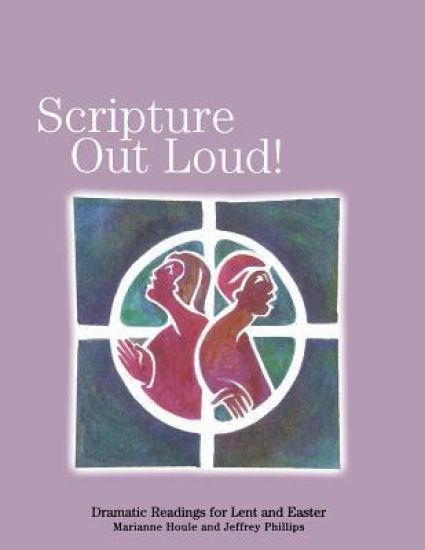
Scripture Out Loud

Scripture Out Loud

Marianne Houle; Jeffrey Phillips

Augsburg Fortress
1999
nidottu
Looking for new ways to open up the readings for your congregation? Try this collection of twelve dramatic readings of Revised Common Lectionary texts that fall between Ash Wednesday and Pentecost and are included in all three lectionary cycles or easily adapted for use in any cycle. Great for Bible study and youth programs, too. Reproducible.
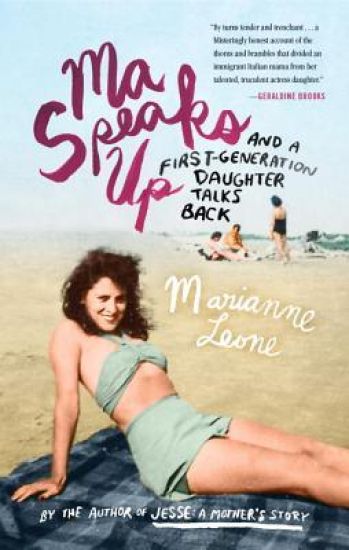
Ma Speaks Up

Ma Speaks Up

Marianne Leone

Beacon Press
2018
nidottu
The acclaimed actress and author of Jesse: A Mother's Story tells the entertaining and moving story of her outspoken, frequently outrageous Italian immigrant mother (Tom Perrotta) Marianne Leone's Ma is in many senses a larger-than-life character, one who might be capable, even from the afterlife, of shattering expectations. Born on a farm in Italy, Linda finds her way to the United States under dark circumstances, having escaped a forced marriage to a much older man, and marries a good Italian boy. She never has full command of English--especially when questioned by authorities--and when she is suddenly widowed with three young children, she has few options. To her daughter's horror and misery, she becomes the school lunch lady. Ma Speaks Up is a record of growing up on the wrong side of the tracks, with the wrong family, in the wrong religion. Though Marianne's girlhood is flooded with shame, it's equally packed with adventure, love, great cooking, and, above all, humor. The extremely premature birth of Marianne's beloved son, Jesse, bonds mother and daughter in ways she couldn't have imagined. The stories she tells will speak to anyone who has struggled with outsider status in any form and, of course, to mothers and their blemished, cherished girls.
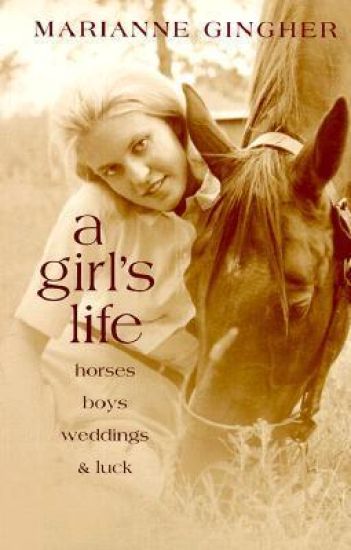
A Girl's Life

A Girl's Life

Marianne Gingher

Louisiana State University Press
2001
sidottu
In pleasant contrast to the recent flood of haunted childhood memoirs, A Girl's Life is about growing up in a functional family, about nurture, serenity, wonderment, and the stabilizing contributions an unencumbered heart makes in the life of an observant child. Marianne Gingher makes the events of a ""normal"" girlhood not only engaging but distinctly illuminating and explores rites of passage that are as persuasive in shaping an artist's sensibilities as are privations.A meditation on the comforts of homeplace and family, A Girl's Life celebrates the last era in America, the 1950s and 1960s, when it was still possible to enjoy a cynicism-free girlhood- when ""it was still safe for children to take gifts from strangers and not yet unwise for them to leave the doors of their hearts unlocked."" As Eudora Welty wrote in her autobiographical memoir One Writer's Beginnings, ""A sheltered life can be a daring life as well. For all serious daring starts from within."" The seventeen personal narratives collected here corroborate Welty's conviction.Arranged in a loose chronology, the tales document a southern white girl's middle-class initiation into the adult world. The first section, ""Sanctuary,"" recalls Gingher's earliest impressions of family dynamics and shelter, a child's yearnings and resourcefulness. ""Truths and Grit,"" the second section, deals with the tempering of bliss, a young girl's first encounters with corruption and mortality. In the final group of essays, ""Metaphors and Pies,"" Gingher explores the contributions her recollections of childhood make in her ongoing trials as a parent and a writer. That her own childhood still permeates and inspires her present life is perhaps its greatest legacy.Did the way Marianne Gingher grow up compel her toward the writing life? Certainly the impact of that distant time, specific people and events, sensory-steeped moments, and the privilege of being allowed to dream as well as do enriched and fostered the writer's imagination. By turns funny, provocative, jubilant, and tender, A Girl's Life is perhaps most notable for both exalting and justifying the place of happiness in a writer's development.
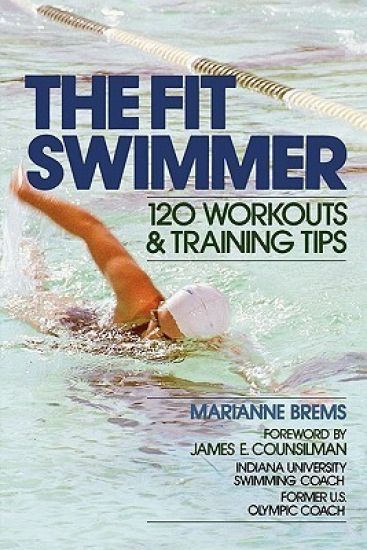
The Fit Swimmer

The Fit Swimmer

Marianne Brems

Contemporary Books Inc
1984
nidottu
This book puts an end to the drudgery of merely counting laps by showing you how to create your own individual fitness program--and have fun doing it! Learn how to: Determine your own fitness level Choose an appropriate training program and build upon that program with a variety of innovative workouts Use a timing clock and interval training to increase your speed and endurance Use various training equipment, such as kick boards, hand paddles, and swimming fins to strengthen stroke technique Improve your cardiovascular fitness, muscle tone, and flexibility Included for quick reference are tips for streamlining strokes, checklists for proper stroke execution, and a helpful glossary of training terms as well as a section on the joys and challenges of open water swimming. "I am constantly looking for new approaches which will do at least one of the following, and possibly all three: give me a change from normal routine make me a faster swimmer challenge me to work harder The Fit Swimmer addresses all these in an informative and entertaining way, making this book a valuable resource for all swimmers." -- James E. Counsilman Swimming Coach Indiana University Marianne Brems is a Masters swimmer, coach of the San Mateo Master Marlins, author of Swim for Fitness and 101 Favorite Workouts, and a regular columnist for Swim Swim magazine.
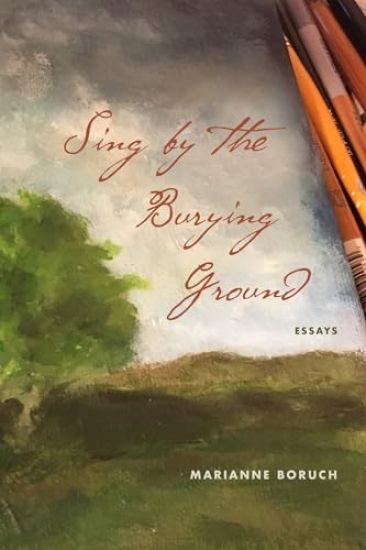
Sing by the Burying Ground

Sing by the Burying Ground

Marianne Boruch

NORTHWESTERN UNIVERSITY PRESS
2024
nidottu
Meditations on life, literature, and curiosity amid the shadows In her fourth essay collection, award-winning author Marianne Boruch explores the possibilities of hope even in darkness. Through poetry, the silence of Trappist monks, the pandemic moment, the Wright brothers’ quirky stab at flight, treasured knickknacks, and more, this book celebrates the weird, the mundane, the overlooked, and the promise of a future. Though each essay is distinct, foraging fresh ways into Louise GlÜck, W. H. Auden, Elizabeth Bishop, Robert Frost, Marianne Moore, Sylvia Plath, John Berryman, Langston Hughes, and more, they are all connected through the thread of Emily Dickinson’s comment that her fate was to “sing, as a Boy does by the Burying Ground . . .” Even in times filled with horror, we find beauty. Maybe we can sing in the blackest of nights. Thoughtful and expressive, this collection provides solace and humor for readers in a world where both are often in short supply.
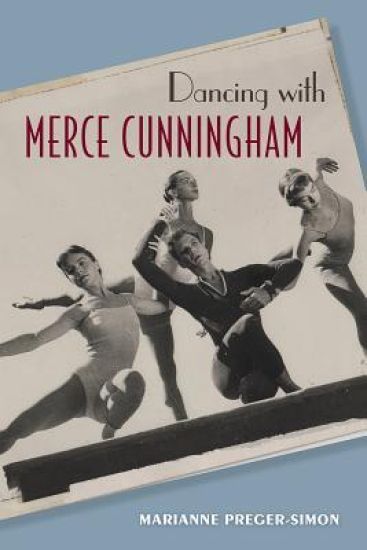
Dancing with Merce Cunningham

Dancing with Merce Cunningham

Marianne Preger-Simon

University Press of Florida
2019
nidottu
Dancing with Merce Cunningham is a buoyant, captivating memoir of a talented dancer’s lifelong friendship with one of the choreographic geniuses of our time.Marianne Preger-Simon’s story begins amid the explosion of artistic creativity that followed World War II. While immersed in the vibrant arts scene of postwar Paris during a college year abroad, Preger-Simon was so struck by the unconventional dance style of choreographer Merce Cunningham that she joined his classes in New York. She soon became an important member of his brand new dance troupe - and a constant friend.Through her experiences in the Merce Cunningham Dance Company, Preger-Simon offers a rare account of exactly how Cunningham taught and interacted with his students. She describes the puzzled reactions of audiences to the novel non-narrative choreography of the company’s debut performances. She also portrays the relationships among the company’s dancers, designers, and musicians, many of whom - including John Cage, David Tudor, and Carolyn Brown - would become integral to the avant-garde arts movement, telling tales of their adventures and conversations touring in a VW Microbus across the United States.Finally, reflecting on her connection with Cunningham throughout the latter part of his career, Preger-Simon recalls warm moments that continued to characterize their enduring friendship. Her memoir is an intimate look at the early years of one of the most influential companies in modern American dance and the brilliance of its visionary leader.
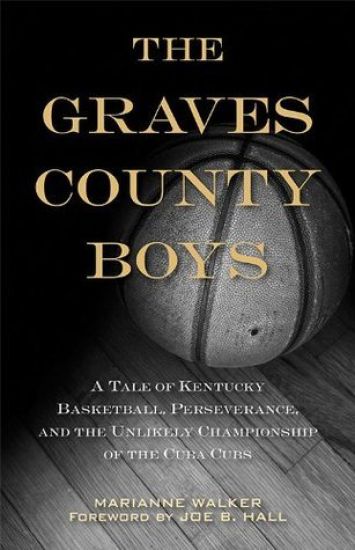
The Graves County Boys

The Graves County Boys

Marianne Walker; Joe B. Hall

The University Press of Kentucky
2013
nidottu
In 1952, just one year after Coach Adolph Rupp's University of Kentucky Wildcats won their third national championship in four years, an unlikely high school basketball team from rural Graves County, Kentucky, stole the spotlight and the media's attention. Inspired by young coach Jack Story and by the Harlem Globetrotters, the Cuba Cubs grabbed headlines when they rose from relative obscurity to defeat the big-city favorite and win the state championship.A classic underdog tale, The Graves County Boys chronicles how five boys from a tiny high school in southwestern Kentucky captured the hearts of basketball fans nationwide. Marianne Walker weaves together details about the players, their coach, and their relationships in a page-turning account of triumph over adversity. This inspiring David and Goliath story takes the reader on a journey from the team's heartbreaking defeat in the 1951 state championship to their triumphant victory over Louisville Manual the next year.More than just a basketball narrative, the book explores a period in American life when indoor plumbing and electricity were still luxuries in some areas of the country and when hardship was a way of life. With no funded school programs or bus system, the Cubs's success was a testament to the sacrifices of family and neighbors who believed in their team. Featuring new photographs, a foreword by University of Kentucky coach Joe B. Hall, and a new epilogue detailing where the players are now, The Graves County Boys is an unforgettable story of how a community pulled together to make a dream come true.
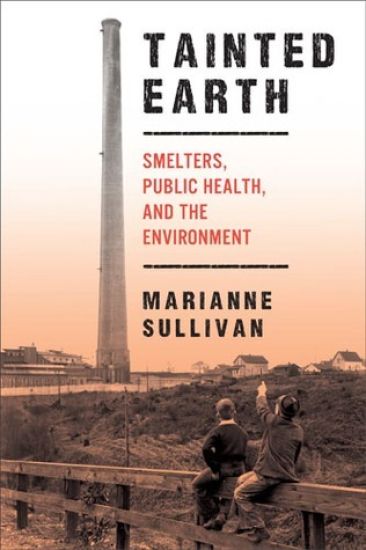
Tainted Earth

Tainted Earth

Marianne Sullivan

Rutgers University Press
2014
nidottu
Smelting is an industrial process involving the extraction of metal from ore. During this process, impurities in ore—including arsenic, lead, and cadmium—may be released from smoke stacks, contaminating air, water, and soil with toxic-heavy metals. The problem of public health harm from smelter emissions received little official attention for much for the twentieth century. Though people living near smelters periodically complained that their health was impaired by both sulfur dioxide and heavy metals, for much of the century there was strong deference to industry claims that smelter operations were a nuisance and not a serious threat to health. It was only when the majority of children living near the El Paso, Texas, smelter were discovered to be lead-exposed in the early 1970s that systematic, independent investigation of exposure to heavy metals in smelting communities began. Following El Paso, an even more serious led poisoning epidemic was discovered around the Bunker Hill smelter in northern Idaho. In Tacoma, Washington, a copper smelter exposed children to arsenic—a carcinogenic threat.Thoroughly grounded in extensive archival research, Tainted Earth traces the rise of public health concerns about nonferrous smelting in the western United States, focusing on three major facilities: Tacoma, Washington; El Paso, Texas; and Bunker Hill, Idaho. Marianne Sullivan documents the response from community residents, public health scientists, the industry, and the government to pollution from smelters as well as the long road to protecting public health and the environment. Placing the environmental and public health aspects of smelting in historical context, the book connects local incidents to national stories on the regulation of airborne toxic metals.The nonferrous smelting industry has left a toxic legacy in the United States and around the world. Unless these toxic metals are cleaned up, they will persist in the environment and may sicken people—children in particular—for generations to come. The twentieth-century struggle to control smelter pollution shares many similarities with public health battles with such industries as tobacco and asbestos where industry supported science created doubt about harm, and reluctant government regulators did not take decisive action to protect the public’s health.
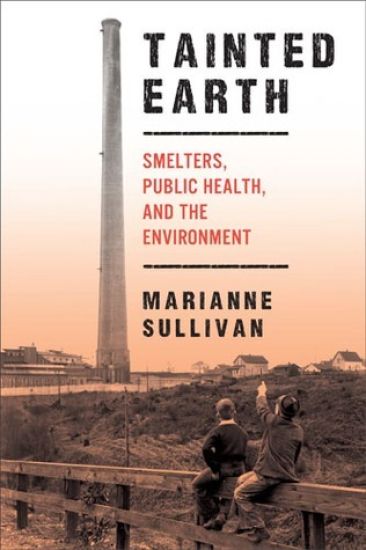
Tainted Earth

Tainted Earth

Marianne Sullivan

Rutgers University Press
2014
sidottu
Smelting is an industrial process involving the extraction of metal from ore. During this process, impurities in ore—including arsenic, lead, and cadmium—may be released from smoke stacks, contaminating air, water, and soil with toxic-heavy metals. The problem of public health harm from smelter emissions received little official attention for much for the twentieth century. Though people living near smelters periodically complained that their health was impaired by both sulfur dioxide and heavy metals, for much of the century there was strong deference to industry claims that smelter operations were a nuisance and not a serious threat to health. It was only when the majority of children living near the El Paso, Texas, smelter were discovered to be lead-exposed in the early 1970s that systematic, independent investigation of exposure to heavy metals in smelting communities began. Following El Paso, an even more serious led poisoning epidemic was discovered around the Bunker Hill smelter in northern Idaho. In Tacoma, Washington, a copper smelter exposed children to arsenic—a carcinogenic threat.Thoroughly grounded in extensive archival research, Tainted Earth traces the rise of public health concerns about nonferrous smelting in the western United States, focusing on three major facilities: Tacoma, Washington; El Paso, Texas; and Bunker Hill, Idaho. Marianne Sullivan documents the response from community residents, public health scientists, the industry, and the government to pollution from smelters as well as the long road to protecting public health and the environment. Placing the environmental and public health aspects of smelting in historical context, the book connects local incidents to national stories on the regulation of airborne toxic metals.The nonferrous smelting industry has left a toxic legacy in the United States and around the world. Unless these toxic metals are cleaned up, they will persist in the environment and may sicken people—children in particular—for generations to come. The twentieth-century struggle to control smelter pollution shares many similarities with public health battles with such industries as tobacco and asbestos where industry supported science created doubt about harm, and reluctant government regulators did not take decisive action to protect the public’s health.
Race Among Friends

Race Among Friends

Marianne Modica

Rutgers University Press
2015
nidottu
Many saw the 2008 election of Barack Obama as a sign that America had moved past the issue of race, that a colorblind society was finally within reach. But as Marianne Modica reveals in Race Among Friends, attempts to be colorblind do not end racism—in fact, ignoring race increases the likelihood that racism will occur in our schools and in society.This intriguing volume focuses on a “racially friendly” suburban charter school called Excellence Academy, highlighting the ways that students and teachers think about race and act out racial identity. Modica finds that even in an environment where students of all racial backgrounds work and play together harmoniously, race affects the daily experiences of students and teachers in profound but unexamined ways. Some teachers, she notes, feared that talking about race in the classroom would open them to charges of racism, so they avoided the topic. And rather than generate honest and constructive conversations about race, student friendships opened the door for insensitive racial comments by whites, resentment and silence by blacks, and racially biased administrative practices. In the end, the school’s friendly environment did not promote—and may have hindered—serious discussion of race and racial inequity.The desire to ignore race in favor of a “colorblind society,” Modica writes, has become an entrenched part of American culture. But as Race Among Friends shows, when race becomes a taboo subject, it has serious ramifications for students and teachers of all ethnic origins.
Race Among Friends

Race Among Friends

Marianne Modica

Rutgers University Press
2015
sidottu
Many saw the 2008 election of Barack Obama as a sign that America had moved past the issue of race, that a colorblind society was finally within reach. But as Marianne Modica reveals in Race Among Friends, attempts to be colorblind do not end racism—in fact, ignoring race increases the likelihood that racism will occur in our schools and in society.This intriguing volume focuses on a “racially friendly” suburban charter school called Excellence Academy, highlighting the ways that students and teachers think about race and act out racial identity. Modica finds that even in an environment where students of all racial backgrounds work and play together harmoniously, race affects the daily experiences of students and teachers in profound but unexamined ways. Some teachers, she notes, feared that talking about race in the classroom would open them to charges of racism, so they avoided the topic. And rather than generate honest and constructive conversations about race, student friendships opened the door for insensitive racial comments by whites, resentment and silence by blacks, and racially biased administrative practices. In the end, the school’s friendly environment did not promote—and may have hindered—serious discussion of race and racial inequity.The desire to ignore race in favor of a “colorblind society,” Modica writes, has become an entrenched part of American culture. But as Race Among Friends shows, when race becomes a taboo subject, it has serious ramifications for students and teachers of all ethnic origins.
Colonialism Is Crime

Colonialism Is Crime

Marianne Nielsen; Linda M. Robyn

Rutgers University Press
2019
nidottu
There is powerful evidence that the colonization of Indigenous people was and is a crime, and that that crime is on-going. Achieving historical colonial goals often meant committing acts that were criminal even at the time. The consequences of this oppression and criminal victimization is perhaps the critical factor explaining why Indigenous people today are overrepresented as victims and offenders in the settler colonist criminal justice systems. This book presents an analysis of the relationship between these colonial crimes and their continuing criminal and social consequences that exist today. The authors focus primarily on countries colonized by Britain, especially the United States. Social harm theory, human rights covenants, and law are used to explain the criminal aspects of the historical laws and their continued effects. The final chapter looks at the responsibilities of settler-colonists in ameliorating these harms and the actions currently being taken by Indigenous people themselves.
Colonialism Is Crime

Colonialism Is Crime

Marianne Nielsen; Linda M. Robyn

Rutgers University Press
2019
sidottu
There is powerful evidence that the colonization of Indigenous people was and is a crime, and that that crime is on-going. Achieving historical colonial goals often meant committing acts that were criminal even at the time. The consequences of this oppression and criminal victimization is perhaps the critical factor explaining why Indigenous people today are overrepresented as victims and offenders in the settler colonist criminal justice systems. This book presents an analysis of the relationship between these colonial crimes and their continuing criminal and social consequences that exist today. The authors focus primarily on countries colonized by Britain, especially the United States. Social harm theory, human rights covenants, and law are used to explain the criminal aspects of the historical laws and their continued effects. The final chapter looks at the responsibilities of settler-colonists in ameliorating these harms and the actions currently being taken by Indigenous people themselves.
Going Greek

Going Greek

Marianne R. Sanua

Wayne State University Press
2018
nidottu
Going Greek offers an unprecedented look at the relationship between American Jewish students and fraternity life during its heyday in the first half of the twentieth century. More than secret social clubs, fraternities and sororities profoundly shaped the lives of members long after they left college-often dictating choices in marriage as well as business alliances. Widely viewed as a key to success, membership in these self-governing, sectarian organizations was desirable but not easily accessible, especially to non-Protestants and nonwhites. In Going Greek Marianne Sanua examines the founding of Jewish fraternities in light of such topics as antisemitism, the unique challenges faced by Jewish students on campuses across the United States, responses to World War II, and questions pertaining to assimilation and/or identity reinforcement.
A Business Tale

A Business Tale

Marianne M. JENNINGS

Amacom
2018
nidottu
Much needed in these times when confidence in corporations has eroded, A Business Tale offers you the inspiration to make ethical choices even when it isn’t easy or immediately rewarding.Wouldn’t it be nice if all executives had a magical rabbit?like the one in the movie Harvey -- following them around reminding them to be ethical? In this charming fable, Aristotle (Ari, for short) is a pooka -- a mythical, invisible creature with a penchant for advising against dishonesty.Our hero, Edgar P. Benchley, has been able to see and hear Ari since childhood, and as he journeys through his professional life, constantly faced with challenging questions of good conduct, Ari helps remind him that nice guys can succeed…even in the world of business.Following the story, inside this book you’ll find:real-life examples of ethical situations a 10-step action plan for ethical behavior in the workplace story formatting to impart basics of ethics in the business world A Business Tale is an easy-to-read, unforgettable "spoonful of sugar" to help companies and individuals digest the sometimes tart lessons of practical morality in the workplace.
A Death at Crooked Creek

A Death at Crooked Creek

Marianne Wesson

New York University Press
2013
sidottu
"This is an extraordinary and ground-breaking book, a wonderfully creative mix of fact and theory, imagination and drama. Anyone with an interest in law, history, or, for that matter, great storytelling will fall in love with A Death at Crooked Creek. The startling origin of the complex 'intention exception' to the hearsay evidence rule becomes canvas on which a grand and marvelously detailed tale is told. This is modern narrative at its best: a marriage of spectacular writing and hard, documented truth presented by a brilliant author who doubles as a gifted and fastidious legal scholar and historian." —Andrew Popper, American University One winter night in 1879, at a lonely Kansas campsite near Crooked Creek, a man was shot to death. The dead man's traveling companion identified him as John Hillmon, a cowboy from Lawrence who had been attempting to carve out a life on the blustery prairie. The case might have been soon forgotten and the apparent widow, Sallie Hillmon, left to mourn—except for the $25,000 life insurance policies Hillmon had taken out shortly before his departure. The insurance companies refused to pay on the policies, claiming that the dead man was not John Hillmon, and Sallie was forced to take them to court in a case that would reach the Supreme Court twice. The companies' case rested on a crucial piece of evidence: a faded love letter written by a disappeared cigarmaker, declaring his intent to travel westward with a "man named Hillmon." In A Death at Crooked Creek, Marianne Wesson re-examines the long-neglected evidence in the case of the Kansas cowboy and his wife, recreating the court scenes that led to a significant Supreme Court ruling on the admissibility of hearsay evidence. Wesson employs modern forensic methods to examine the body of the dead man, attempting to determine his true identity and finally put this fascinating mystery to rest. This engaging and vividly imagined work combines the drama, intrigue, and emotion of excellent storytelling with cutting-edge forensic investigation techniques and legal theory. Wesson's superbly imagined A Death at Crooked Creek will have general readers, history buffs, and legal scholars alike wondering whether history, and the Justices, may have misunderstood altogether the events at that bleak winter campsite.
Did You Hear About the Girl Who . . . ?

Did You Hear About the Girl Who . . . ?

Marianne H. Whatley; Elissa R. Henken

New York University Press
2001
sidottu
Ever hear the one about the man who wakes up after a chance sexual encounter to discover he's been involuntarily relieved of one of his kidneys? Or the tiny gift-wrapped box from a recently departed lover that reveals a horrible secret? Everyone knows contemporary legends, those barely believable, often lurid, cautionary tales, always told as though they happened to the friend of a friend. Sometimes we pass them on to others unsure of their truthfulness, usually we dismiss them as mere myth. But these far-fetched legends tell us quite a bit about our deepest fears and fantasies. In fact, a large part of what we know about our bodies we have learned informally, from kids on the playground or colleagues at work, from piecing together the information contained in folk beliefs, jokes and legends. Sexual folklore goes beyond classroom lessons of mechanics to answer many questions about what people actually do and how they do it. Mariamne H. Whatley and Elissa R. Henken have collected hundreds of sexually-themed stories and jokes from college students in order to tell us what they reveal about our sexual attitudes and show us how they have changed over time. They confront myths and stereotypes about sexual behavior and use folklore as a tool to educate students about sexual health and gender relations. Whether analyzing popular rumors about celebrity emergency room visits or the latest schoolyard jokes, Did You Hear About The Girl Who . . . ? presents these tales in a way that is intriguing and educational.
The Slave Metaphor and Gendered Enslavement in Early Christian Discourse
The Slave Metaphor and Gendered Enslavement in Early Christian Discourse adds new knowledge to the ongoing discussion of slavery in early Christian discourse. Kartzow argues that the complex tension between metaphor and social reality in early Christian discourse is undertheorized. A metaphor can be so much more than an innocent thought figure; it involves bodies, relationships, life stories, and memory in complex ways. The slavery metaphor is troubling since it makes theology of a social institution that is profoundly troubling. This study rethinks the potential meaning of the slavery metaphor in early Christian discourse by use of a variety of texts, read with a whole set of theoretical tools taken from metaphor theory and intersectional gender studies, in particular. It also takes seriously the contemporary context of modern slavery, where slavery has re-appeared as a term to name trafficking, gendered violence, and inhuman power systems.