Kirjojen hintavertailu. Mukana 12 595 353 kirjaa ja 12 kauppaa.

Kirjahaku

Etsi kirjoja tekijän nimen, kirjan nimen tai ISBN:n perusteella.

1000 tulosta hakusanalla Mary Yoder Burkhard

Mary, Mother of God's Word Made Flesh

Mary, Mother of God's Word Made Flesh

Dylan Schrader

THE CATHOLIC UNIVERSITY OF AMERICA PRESS
2026
pokkari
Mary, Mother of God Made Flesh overviews Catholic teaching on Mary, with a special focus on the "four Marian dogmas" and other major doctrines, such as Mary’s cooperation in the work of salvation and the distribution of graces. The book takes the relationship of Mary to Jesus as its starting point, while also drawing on insights from ecclesiotypical and Christotypical approaches to Mariology. This book emphasizes that Marian doctrine must be grounded in the revealed Word of God. Thus, it does not rely on private revelations but instead draws on scriptural, magisterial, patristic, and liturgical sources. At the same time, Mary, Mother of God Made Flesh is systematic and not merely historical. It strives to show how Catholic teachings on Mary fit together and explores precisely what they mean. In this task, Mary, Mother of God Made Flesh draws in a special way on St. Thomas Aquinas and the Thomistic school, while also incorporating insights from other approaches. Thus, it also engages with some speculative questions that have not received as much attention in other recent works of Mariology but that remain important for the correct understanding and elaboration of magisterial teachings. For example, it deals with the issue of the debitum peccati ("debt of sin"), which touches on how to connect the Immaculate Conception with the notion of redemption, and the question of precisely how Mary is involved in the conferral of graces. The most important parts of this book are the chapters on the dogmas of the divine maternity, the immaculate conception, the perpetual virginity of Mary, and her assumption intoheaven. There are also chapters on Mary’s holiness of life, her participation in Christ’s saving work, and Marian devotion in the life of the Church. The first appendix overviews the problem of what St. Thomas Aquinas taught about the Immaculate Conception, while the second discusses the magisterium’s current approach to private revelations and extraordinary phenomena.

Mary Pickford

Mary Pickford

Kathleen A. Feeley

Westview Press Inc
2016
nidottu
On screen and off, movie star Mary Pickford personified the 'New Woman' of the early 1900s, a moniker given to women who began to demand more autonomy inside and outside the home. Well educated and career-minded, these women also embraced the new mass culture in which consumption and leisure were seen to play a pivotal role in securing happiness. Mary Pickford: Hollywood and the New Woman examines Pickford's role in the rise of industrial capitalism and consumer culture, and uses her life and unprecedented career as a wildly popular actress and savvy film mogul to illustrate the opportunities and obstacles faced by American women during this time.Following Pickford's life from her childhood on stage to her rise as a powerful studio executive, this book gives an overview of her enduring contribution to American film and mass culture. It also explores her struggles to surpass her confining public film persona as 'America's Sweetheart' with her creative and business achievements, mirroring how women, both then and today, must reconcile domestic life with professional aspirations and work.About the Lives of American Women series: Selected and edited by renowned women's historian Carol Berkin, these brief biographies are designed for use in undergraduate courses. Rather than a comprehensive approach, each biography focuses instead on a particular aspect of a woman's life that is emblematic of her time, or which made her a pivotal figure in the era. The emphasis is on a 'good read' featuring accessible writing and compelling narratives, without sacrificing sound scholarship and academic integrity. Primary sources at the end of each biography reveal the subject's perspective in her own words. Study questions and an annotated bibliography support the student reader.
Mary Austin's Regionalism

Mary Austin's Regionalism

Heike Schaefer

University of Virginia Press
2004
sidottu
Best known for The Land of Little Rain, a collection of natural-history essays about the California deserts, the Western writer Mary Austin (1868-1934) was a prolific literary figure in the first few decades of the twentieth century. In addition to her essays and short stories, Austin produced novels, poems, and cultural criticism, and was well known as a feminist, political writer, and mystic. Over the past decade a number of Austin's books have been reissued and her work has been the subject of increasing critical attention. Heike Schaefer's study complements that renewed interest with a fresh, broad appreciation of the complexity of Austin's work. Considering unpublished materials and the full range of Austin's literary and theoretical writing, Mary Austin's Regionalism presents Austin as a significant early twentieth-century author who reworked the traditions of nature writing and women's regionalism to envision a sustainable and democratic American culture. Austin brought an environmental awareness to the exploration of the race, gender, and class dynamics informing the European American colonization of the West.
Mary, Mirror of the Church

Mary, Mirror of the Church

Raniero Cantalamessa

Liturgical Press
1992
pokkari
Mary is a great gift and example to all Christians because in her God's Word was written and by her it was accepted and its grace manifested. In this she is, as the title indicates, a mirror of the Church, the people of God. She reflects what we are called to be.While this work cannot help but discuss aspects of Mariology, it is not so much a study as it is a pilgrimage. Reflecting on and following Mary's example, as Father Cantalamessa presents it here, we enter into a pilgrimage of listening and obedience to God's Word.
Mary Magdalene

Mary Magdalene

Ingrid Maisch

Liturgical Press
1998
pokkari
No other female image has been so strongly influenced by the culture and history of past European centuries as Mary Magdalene. From ancient times to the present, Mary Magdalene has been a summary image of the feminine in each era. Despised as a sinner, revered as a saint, admired as a model disciple, Mary Magdalene became the symbol of all women whose fate she shared throughout history: honored, defamed, pushed to the margins, elevated to unreality, and degraded.Ingrid Maisch examines Mary Magdalene's life from the perspectives of the biblical witnesses through Christian Gnosticism, the early Church interpreters, the Middle Ages to the present. She shows that while the biblical Mary Magdalene still had a leading role in the Jesus movement, in the Middle Ages she gradually became a saint held up to console sin-conscious Christians. In the Reformation and the baroque era, she was seen primarily as a penitent, then as an image of melancholy and resignation. Bourgeois modernity adopted the secularized figure of the Magdalene as a tool for social criticism, especially regarding the treatment of women. In recent decades critical exegesis of the biblical texts and feminist theology revealed another image of Mary Magdalene: the first witness of the Resurrection.Mary Magdalene is one of the great women of the Bible, yet attitudes toward her in the Church and in art, history, and society have wavered between veneration of her as a saint and curiosity about her sinful" past. In Mary Magdalene Ingrid Maisch stresses that reflecting on Mary Magdalene means not only looking behind the history of the influence of the woman from Magdala but also inquiring about women in general, for the image of Mary Magdalene in every era is an indicator of the image borne by women at the time.Chapters are "Mary Magdalene in the New Testament," "The Heiress of the Empire of Light: The Gnostic Mary Magdalene," "Mary Magdalene as Interpreted by the Medieval Mystics," "Mary Magdalene as Saint: The Middle Ages," "The Penitent Magdalene: A Symbol of the Baroque Era," "Mary Magdalene Between Religion and Aesthetics," "A Pearl More Precious than All Others: Magdalene in Brentano's Jesus-Novel," "The Fallen Woman, the Noble Courtesan," "The Woman at Jesus' Feet: Mary Magdalene in Modern Spiritual Poetry," "The 'sinful Magdalene from Bethany': The Confused Image Today," and "Freed from Sins, Demons, and Subjection." Includes eight pages of full color images of Mary Magdalene from earliest to most recent times.
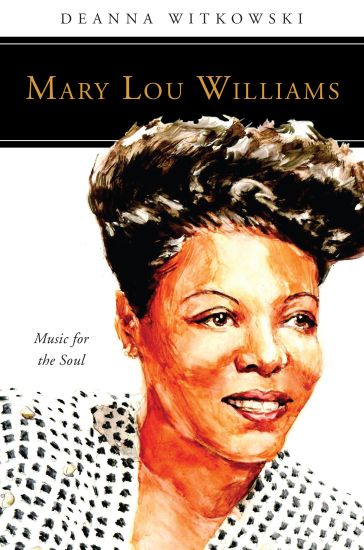
Mary Lou Williams

Mary Lou Williams

Deanna Witkowski

Liturgical Press
2021
pokkari
Winner of the ASCAP Foundation Deems Taylor/Virgil Thomson Book Award in Pop Music 2022 Catholic Media Association honorable mention in biography2022 Association of Catholic Publishers second place award for BiographyWinner of the 2022 Jazz Journalists Association Award for Biography/Autobiography of the YearIn Mary Lou Williams: Music for the Soul, Deanna Witkowski brings a fresh perspective to the life and music of the legendary jazz pianist-composer Mary Lou Williams (1910-81). As a fellow jazz pianist-composer, adult convert to Catholicism, and liturgical composer, Witkowski offers unique insight gleaned from a twenty-year journey with Williams as her chosen musical and spiritual mentor. Viewing Williams’s musical and corporal acts of mercy as part of a singular effort to create community no matter the context, Witkowski examines how Williams created networks of support and friendship through her decades long letter correspondence with various women religious, her charitable work, and her tireless efforts to perform jazz in churches, community centers, concert halls, and schools. Throughout this fascinating story told with equal amounts of deep love and scholarly research, Witkowski illumines Williams’s passionate mantra that “jazz is healing to the soul.”
Mary Maria Matilda

Mary Maria Matilda

Mary Wollstonecraft Shelley; Janet (EDT) Todd

New York University Press
1992
sidottu
"Brings together the pwerful works of a mother/daughter combination...These novels will prove a foundation for any college-level course on literature and feminism." --The Bookwatch "A gripping tale of incestuous desire...vitalized by the powerful evocation of nature and the bolder passions of full-blown Romanticism." --Belles Lettres This volume for the first time brings together three extraordinary works of fiction by Mary Wollstonecraft, generally recognized as the mother of the feminist movement, and Mary Shelley.
Mary Hays (1759-1843)

Mary Hays (1759-1843)

Gina Luria Walker

CRC Press Inc
2017
sidottu
Mary Hays, reformist, novelist, and innovative thinker, has been waiting two hundred years to be judged in a fair, scholarly, and comprehensive way. During her lifetime and long after, her role in the ongoing reformist debates in England at the end of the eighteenth century, intensified by the French Revolution, served as a lightening rod for opponents who attacked her controversial stance on women's intellectual competence and human rights. The author's intellectual history of Hays finally makes the case for her importance as an innovator. She was a feminist thinker who advanced notions of tolerance that included women, an educator who broke new ground for female autodidacts, a philosophical commentator who translated Enlightenment ideas for a burgeoning female audience, a Dissenting historiographer who reinvented 'female biography,' and a writer of deliberately experimental fiction, including the roman à clef Memoirs of Emma Courtney. The author approaches Hays from several disciplinary perspectives-historical, biographical, literary, critical, theological, and political-to elucidate the multiple ways in which Hays contributed and responded to, and influenced and was influenced by, the most significant issues and figures of her time.
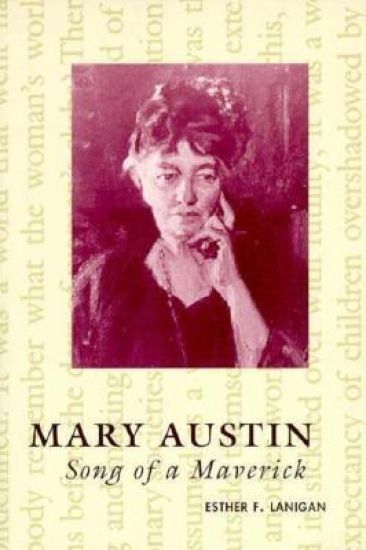
Mary Austin

Mary Austin

University of Arizona Press
1997
nidottu
"This book seamlessly combines biography and criticism. [Lanigan] adeptly analyzes Austin's life...and also offers insightful analyses of Austin's writing. Like other females of her period, she received too little recognition for her original prose style and social critiques. Thanks to Song of a Maverick, we hear Mary Austin's voice more clearly and appreciatively." Carol J. Singley in American Literature "[Lanigan] provides illuminating sociological background and lucidly marshals the existing biolgraphical data." Choice "Mary Hunter Austin was a well-known and respected author and activitst in her lifetime but is little known in ours. In this excellent biography...[Lanigan] chose to focus on a few central relationships in Austin's life, to explore in some depth a few central texts, and to understand the interior life of her subject. She has done a splendid job." Ann J. Lane in the Journal of American History
Mary McCarthy - American Writers 72

Mary McCarthy - American Writers 72

Stock Irvin

UNIVERSITY OF MINNESOTA PRESS
1968
nidottu
Mary McCarthy - American Writers 72 was first published in 1968. Minnesota Archive Editions uses digital technology to make long-unavailable books once again accessible, and are published unaltered from the original University of Minnesota Press editions.
Mary Mother of Jesus (Bb)

Mary Mother of Jesus (Bb)

Marlyn Monge

Pauline Books Media
2018
sidottu
This charming, simple, and captivating board book introduces children ages 0 to 4 to Mary and illustrates her love for Jesus. . The straightforward language and sweet illustrations ensure that toddlers will pick up this board book again and again. The story teaches them that Mary is a caring mother, a loving servant of God, and someone we can turn to in prayer and faith. This book is sure to become a family favorite and will become a foundation for Catholic learning.
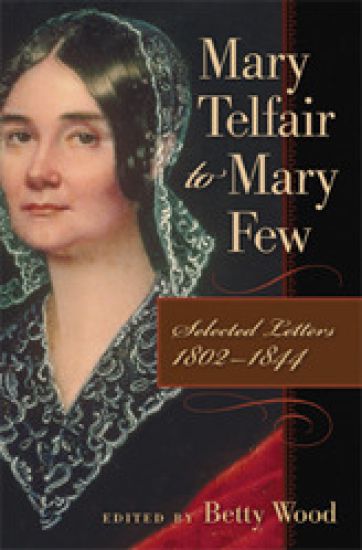
Mary Telfair to Mary Few

Mary Telfair to Mary Few

Mary Telfair

University of Georgia Press
2007
sidottu
This volume gathers nearly half of some 300 letters written by Mary Telfair of Savannah to her best friend, Mary Few of New York. Telfair was born in 1790 to a wealthy, prominent, slaveholding Savannah family. Few, born in 1790 into equally affluent circumstances, moved with her family from Savannah to New York in 1799. Self-exiled because of their strong antislavery views, the Fews never returned to Georgia, yet they remained close to the Telfairs.The close friendship between Telfair and Few ended only with their deaths in the 1870s. Regular travelers, they met on many occasions. Chiefly, however, they kept in touch through frequent correspondence (Few's letters to Telfair remain undiscovered, and may not have not survived). Wherever Telfair happened to be—in Savannah, the northern states, or Europe—she wrote to her friend at least two or three times a month.Telfair's letters offer unique insights into the daily life of her family and the changes wrought by the deaths of so many of its members. The letters also reveal the shared interests and imperatives at the base of her various relationships with elite women, but especially with Mary Few, whom Telfair memorably described as her "Siamese Twin." The two women, neither of whom ever wed, nonetheless discussed the rights and obligations of marriage as well as their own state of "single blessedness." They also conversed about shared intellectual interests—literature, lecture topics, women's education—as well as the foibles of common acquaintances. Here is a fascinating, unfamiliar world as revealed in what editor Betty Wood calls "one of the most remarkable literary exchanges between women of high social rank in the early national and antebellum United States."
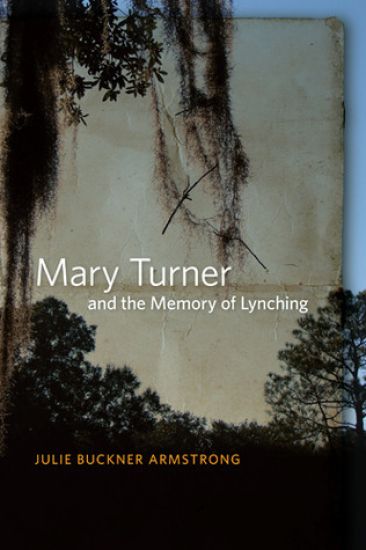
Mary Turner and the Memory of Lynching

Mary Turner and the Memory of Lynching

Julie Buckner Armstrong

University of Georgia Press
2011
sidottu
Mary Turner and the Memory of Lynching traces the reaction of activists, artists, writers, and local residents to the brutal lynching of a pregnant woman near Valdosta, Georgia. In 1918, the murder of a white farmer led to a week of mob violence that claimed the lives of at least eleven African Americans, including Hayes Turner. When his wife Mary vowed to press charges against the killers, she too fell victim to the mob.Mary’s lynching was particularly brutal and involved the grisly death of her eight-month-old fetus. It led to both an entrenched local silence and a widespread national response in newspaper and magazine accounts, visual art, film, literature, and public memorials. Turner’s story became a centerpiece of the Anti-Lynching Crusaders campaign for the 1922 Dyer Bill, which sought to make lynching a federal crime. Julie Buckner Armstrong explores the complex and contradictory ways this horrific event was remembered in works such as Walter White’s report in the NAACP’s newspaper the Crisis, the “Kabnis” section of Jean Toomer’s Cane, Angelina Weld Grimké’s short story “Goldie,” and Meta Fuller’s sculpture Mary Turner: A Silent Protest against Mob Violence.Like those of Emmett Till and Leo Frank, Turner’s story continues to resonate on multiple levels. Armstrong’s work provides insight into the different roles black women played in the history of lynching: as victims, as loved ones left behind, and as those who fought back. The crime continues to defy conventional forms of representation, illustrating what can, and cannot, be said about lynching and revealing the difficulty and necessity of confronting this nation’s legacy of racial violence.
Mary Turner and the Memory of Lynching

Mary Turner and the Memory of Lynching

Julie Buckner Armstrong

University of Georgia Press
2011
pokkari
Mary Turner and the Memory of Lynching traces the reaction of activists, artists, writers, and local residents to the brutal lynching of a pregnant woman near Valdosta, Georgia. In 1918, the murder of a white farmer led to a week of mob violence that claimed the lives of at least eleven African Americans, including Hayes Turner. When his wife Mary vowed to press charges against the killers, she too fell victim to the mob.Mary’s lynching was particularly brutal and involved the grisly death of her eight-month-old fetus. It led to both an entrenched local silence and a widespread national response in newspaper and magazine accounts, visual art, film, literature, and public memorials. Turner’s story became a centerpiece of the Anti-Lynching Crusaders campaign for the 1922 Dyer Bill, which sought to make lynching a federal crime. Julie Buckner Armstrong explores the complex and contradictory ways this horrific event was remembered in works such as Walter White’s report in the NAACP’s newspaper the Crisis, the “Kabnis” section of Jean Toomer’s Cane, Angelina Weld Grimké’s short story “Goldie,” and Meta Fuller’s sculpture Mary Turner: A Silent Protest against Mob Violence.Like those of Emmett Till and Leo Frank, Turner’s story continues to resonate on multiple levels. Armstrong’s work provides insight into the different roles black women played in the history of lynching: as victims, as loved ones left behind, and as those who fought back. The crime continues to defy conventional forms of representation, illustrating what can, and cannot, be said about lynching and revealing the difficulty and necessity of confronting this nation’s legacy of racial violence.
Mary McCarthy

Mary McCarthy

Sabrina Fuchs Abrams

Peter Lang Publishing Inc
2004
sidottu
Mary McCarthy: Gender, Politics, and the Postwar Intellectual is the first book to fully examine Mary McCarthy as a fiction writer and a cultural critic. With her sharp wit and critical eye, McCarthy offers a valuable perspective on the continuing debate over liberal values and the responsibility of the intellectual. As a Catholic woman from the Northwest, McCarthy stands on the periphery of the largely Jewish, male-dominated New York intellectual scene. This marginalized identity shapes her satiric vision of postwar American culture and makes her a consummate critic of liberalism from within. Drawing on unpublished materials from the Mary McCarthy archives, Mary McCarthy: Gender, Politics, and the Postwar Intellectual makes a valuable contribution to our understanding of one of America's leading women intellectuals.
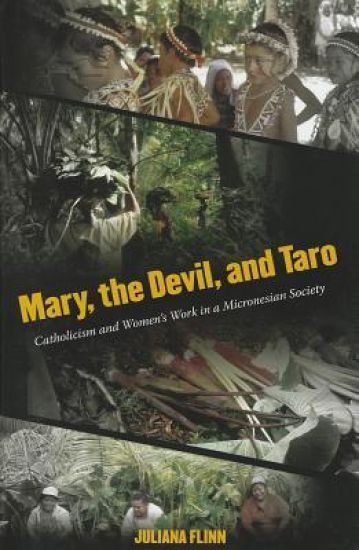
Mary, the Devil, and Taro

Mary, the Devil, and Taro

Juliana Flinn

University of Hawai'i Press
2010
sidottu
Catholicism, like most world religions, is patriarchal, and its official hierarchies and sacred works too often neglect the lived experiences of women. Looking beyond these texts, Juliana Flinn reveals how women practice, interpret, and shape their own Catholicism on Pollap Atoll, part of Chuuk State in the Federated States of Micronesia. She focuses in particular on how the Pollapese shaping of Mary places value on indigenous notions of mothering that connote strength, active participation in food production, and the ability to provide for one's family. Flinn begins with an overview of the Feast of the Immaculate Conception on Pollap and an introduction to Mary, who is celebrated by islanders not as a biologized mother but as a productive one, resulting in an image of strength rather than meekness: for Pollapese women Mary is a vanquisher of Satan, a provider for her children, and a producer of critical resources, namely taro. The Feast of the Immaculate Conception validates and celebrates local notions of motherhood in ways that highlight productive activities. The role of women as producers in the community is extolled, but the event also provides and sanctions new opportunities for women, allowing them to speak publicly, exhibit creativity, and influence the behavior of others. A chapter devoted to the imagery of Mary and its connections to Pollapese notions of motherhood is followed by a conclusion that examines the implications of these for women's ongoing productive roles, especially in comparison with Western notions and contexts in which women have been removed or excluded from production. ""Mary, the Devil, and Taro"" contributes significantly to the study of women's religion and the appropriation of Christianity in local contexts. It will be welcomed by not only anthropologists and other scholars concerned with religion in the Pacific, but also those who study change in gender roles and Marian devotions in cross-cultural perspectives.
Mary Sia's Chinese Cookbook

Mary Sia's Chinese Cookbook

Mary Sia

University of Hawai'i Press
2012
nidottu
Mary Sia’s Chinese Cookbook has been a classic of Chinese cookery since it was first published in 1956. This fourth edition features all 300 of the original recipes, ranging from simple, everyday fare to more elaborate dishes for entertaining, as well as essays by Mary Sia. An all-new food glossary provides up-to-date names for ingredients along with advice on appropriate substitutions and sources for 21st-century cooks. The work also includes an introduction by Rachel Laudan, renowned food historian and author of The Food of Paradise: Exploring Hawai‘i’s Culinary Heritage.
Mary McLeod Bethune and Black Women's Political Activism

Mary McLeod Bethune and Black Women's Political Activism

Joyce A. Hanson

University of Missouri Press
2018
nidottu
Mary McLeod Bethune was a significant figure in American political history. She devoted her life to advancing equal social, economic, and political rights for blacks. She distinguished herself by creating lasting institutions that trained black women for visible and expanding public leadership roles. Few have been as effective in the development of women’s leadership for group advancement. Despite her accomplishments, the means, techniques, and actions Bethune employed in fighting for equality have been widely misinterpreted.Mary McLeod Bethune and Black Women’s Political Activism seeks to remedy the misconceptions surrounding this important political figure. Joyce A. Hanson shows that the choices Bethune made often appear contradictory, unless one understands that she was a transitional figure with one foot in the nineteenth century and the other in the twentieth. Bethune, who lived from 1875 to 1955, struggled to reconcile her nineteenth-century notions of women’s moral superiority with the changing political realities of the twentieth century. She used two conceptually distinct levels of activism—one nonconfrontational and designed to slowly undermine systemic racism, the other openly confrontational and designed to challenge the most overt discrimination—in her efforts to achieve equality.Hanson uses a wide range of never- or little-used primary sources and adds a significant dimension to the historical discussion of black women’s organizations by such scholars as Elsa Barkley Brown, Sharon Harley, and Rosalyn Terborg-Penn. The book extends the current debate about black women’s political activism in recent work by Stephanie Shaw, Evelyn Brooks-Higginbotham, and Glenda Elizabeth Gilmore. Examining the historical evolution of African American women’s activism in the critical period between 1920 and 1950, a time previously characterized as “doldrums” for both feminist and civil rights activity, Mary McLeod Bethune and Black Women’s Political Activism is important for understanding the centrality of black women to the political fight for social, economic, and racial justice.
Mary Magdalene Understood

Mary Magdalene Understood

Jane Schaberg

Continuum International Publishing Group Ltd.
2006
sidottu
The book begins with a visit to the long-neglected site of ancient Magdala on the western shore of the Sea of Galilee. Unexcavated and slipping into the sea, Migdal stands as a reminder of the lost history of Mary Magdalene, and of ancient women. From Migdal, the reader moves back in history, looking through Mary's legends to her fame and notoriety. Mary's medieval and modern legends are contrasted sharply with her depiction in the Gnostic and apocryphal materials of Tomas and Philip. The scrolls of Nag Hammadi are discussed, and Mary's role as visionary and leader are looked at - all giving a portrait of Mary's prominence in the early centuries of Christianity. Mary's story is part of an overall egalitarian and mystical movement that interpreted the absence of Jesus' body as a powerful and prophetic sign of God's vindication of the world's suffering. The conclusion takes us back to the contemporary world. A reconstruction of Mary Magdalene and a Magdalene Christianity might be a source for social transformation. An epilogue, completely new to this book, looks at the phenomenon of "The Da Vinci Code".