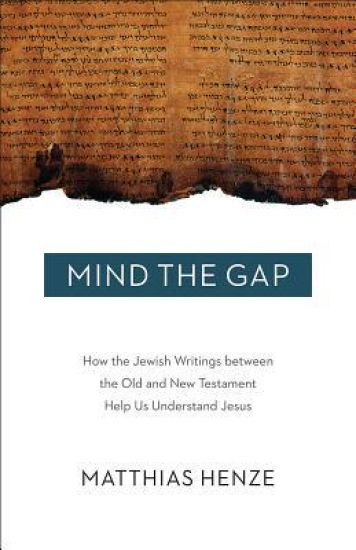
Do you want to understand Jesus of Nazareth, his apostles, and the rise of early Christianity? Reading the Old Testament is not enough, writes Matthias Henze in this slender volume aimed at the student of the Bible. To understand the Jews of the Second Temple period, it's essential to read what they wrote-and what Jesus and his followers might have read-beyond the Hebrew scriptures. Henze introduces the four-century gap between the Old and New Testaments and some of the writings produced during this period (different Old Testaments, the Apocrypha and Pseudepigrapha, the Dead Sea Scrolls); discusses how these texts have been read from the Reformation to the present, emphasizing the importance of the discovery of Qumran; guides the student's encounter with select texts from each collection; and then introduces key ideas found in specific New Testament texts that simply can't be understood without these early Jewish "intertestamental" writings-the Messiah, angels and demons, the law, and the resurrection of the dead. Finally, he discusses the role of these writings in the "parting of the ways" between Judaism and Christianity.Mind the Gap broadens curious students' perspectives on early Judaism and early Christianity and welcomes them to deeper study.
This book offers an introduction to API security with OAuth 2.0 and OpenID Connect. In less than 80 pages you will gain an overview of the capabilities of OAuth. You will learn the core concepts of OAuth. You will get to know all four OAuth flows that are used in cloud solutions and mobile apps.If you have tried to read the official OAuth specification, you may get the impression that OAuth is complex. This book explains OAuth in simple terms. The different OAuth flows are visualized graphically using sequence diagrams. The diagrams allow you to see the big picture of the various OAuth interactions. This high-level overview is complemented with rich set of example requests and responses and an explanation of the technical details.In the book the challenges and benefits of OAuth are presented, followed by an explanation of the technical concepts of OAuth. The technical concepts include the actors, endpoints, tokens and the four OAuth flows. Each flow is described in detail, including the use cases for each flow. Extensions of OAuth are presented, such as OpenID Connect and the SAML2 Bearer Profile. Who should read this book? You do not have the time to read long books?This book provides an overview, the core concepts, without getting lost in the small-small details. This book provides all the necessary information to get started with OAuth in less than 80 pages. You believe OAuth is complicated? OAuth may seem complex with flows and redirects going back and forth. This book will give you clarity by introducing the seemingly complicated material by many illustrations. These illustrations clearly show all the involved interaction parties and the messages they exchange. You want to learn the OAuth concepts efficiently? This book uses many illustrations and sequence diagrams. A good diagram says more than 1000 words. You want to learn the difference between OAuth and OpenID Connect? You wonder when the two concepts are used, what they have in common and what is different between them. This book will help you answer this question. You want to use OAuth in your mobile app?If you want to access resources that are protected by OAuth, you need to get a token first, before you can access the resource. For this, you need to understand the OAuth flows and the dependencies between the steps of the flows. You want to use OAuth to protect your APIs? OAuth is perfectly suited to protect your APIs. You can learn which OAuth endpoints need to be provided and which checks need to be made within the protected APIs.
Looking for the big picture of building APIs? This book is for you Building APIs that consumers love should certainly be the goal of any API initiative. However, it is easier said than done. It requires getting the architecture for your APIs right. This book equips you with both foundations and best practices for API architecture. This book is for you if you want to understand the big picture of API design and development, you want to define an API architecture, establish a platform for APIs or simply want to build APIs your consumers love. This book is NOT for you, if you are looking for a step-by step guide for building APIs, focusing on every detail of the correct application of REST principles. In this case I recommend the book "API Design" of the API-University Series. What is API architecture? Architecture spans the bigger picture of APIs and can be seen from several perspectives: API architecture may refer to the architecture of the complete solution consisting not only of the API itself, but also of an API client such as a mobile app and several other components. API solution architecture explains the components and their relations within the software solution.API architecture may refer to the technical architecture of the API platform. When building, running and exposing not only one, but several APIs, it becomes clear that certain building blocks of the API, runtime functionality and management functionality for the API need to be used over and over again. An API platform provides an infrastructure for developing, running and managing APIs.API architecture may refer to the architecture of the API portfolio. The API portfolio contains all APIs of the enterprise and needs to be managed like a product. API portfolio architecture analyzes the functionality of the API and organizes, manages and reuses the APIs.API architecture may refer to the design decisions for a particular API proxy. To document the design decisions, API description languages are used. We explain the use of API description languages (RAML and Swagger) on many examples.This book covers all of the above perspectives on API architecture. However, to become useful, the architecture needs to be put into practice. This is why this book covers an API methodology for design and development. An API methodology provides practical guidelines for putting API architecture into practice. It explains how to develop an API architecture into an API that consumers love. A lot of the information on APIs is available on the web. Most of it is published by vendors of API products. I am always a bit suspicious of technical information pushed by product vendors. This book is different. In this book, a product-independent view on API architecture is presented. The API-University Series is a modular series of books on API-related topics. Each book focuses on a particular API topic, so you can select the topics within APIs, which are relevant for you.
Enter an advanced period in time where humanity has reached outside its own solar system with colonization. Leap into the experience of a small group of engineers set out to re-establish communication with a distant planet that has seemingly disappeared. Under the control of a small group of corrupt government officials our main character Isaac will be subject to a very important experiment.
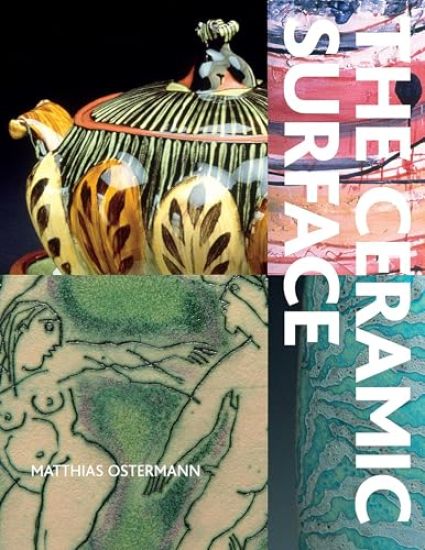
An exploration of contemporary techniques in ceramic surface decoration, both conventional and unconventional A remarkable diversity of techniques are used to treat the ceramic surface. Matthias Ostermann presents an exploration of the ceramic surface--focusing on the vessel and platter--that includes the nonfunctional, the metaphoric, the narrative, and even the sculptural. Through an examination of the works of 200 ceramicists from around the world, he provides a broad overview of contemporary techniques and approaches. Ostermann covers a wide variety of techniques for making, decorating, and firing, as well as the full spectrum of clays and firing temperatures. Each image is accompanied by technical information, as well as a statement of the artist's inspiration and motivation that offers insight into the concept of the piece. The Ceramic Surface provides inspiration to ceramicists, educators, and historians, while also celebrating the ingenuity and diversity of talent found in contemporary ceramics.
Looking for Best Practices for RESTful APIs?This book is for you Why? Because this book is packed with practical experience on what works best for RESTful API Design. You want to design APIs like a Pro? Use API description languages to both design APIs and develop APIs efficiently. The book introduces the two most common API description languages RAML, OpenAPI, and Swagger. Your company cares about its customers? Learn API product management with a customer-centric design and development approach for APIs. Learn how to manage APIs as a product and how to follow an API-first approach. Build APIs your customers love You want to manage the complete API lifecycle? An API development methodology is proposed to guide you through the lifecycle: API inception, API design, API development, API publication, API evolution, and maintenance. You want to build APIs right? This book shows best practices for REST design, such as the correct use of resources, URIs, representations, content types, data formats, parameters, HTTP status codes, and HTTP methods. Your APIs connect to legacy systems? The book shows best practices for connecting APIs to existing backend systems. Your APIs connect to a mesh of microservices? The book shows the principles for designing APIs for scalable, autonomous microservices. You expect lots of traffic on your API? The book shows you how to achieve high performance, availability and maintainability. You want to build APIs that last for decades? We study API versioning, API evolution, backward- and forward-compatibility and show API design patterns for versioning. The API-University Series is a modular series of books on API-related topics. Each book focuses on a particular API topic, so you can select the topics within APIs, which are relevant for you.
So bucht man das aber nicht Diesen Satz musste sich der Unternehmer Matthias Hanft in den letzten drei ig Jahren oft genug anh ren, als er seine Gesch ftsbuchungen beim Steuerberater ablieferte. Nicht etwa, weil seine Buchungen fachlich falsch gewesen w ren, sondern weil gewisse Dinge im echten Leben eben doch anders funktionieren als es in den zahlreichen knochentrockenen Theorie-B chern mit Buchf hrung und Bilanz im Titel gelehrt wird. Ein Buch, nicht nur f r Selfmade-Unternehmer, in dem umgangssprachlich und aus Unternehmersicht die T cken von doppelter Buchf hrung, Jahresabschluss, Umsatzsteuer, eBilanz und anderen Widrigkeiten beschrieben werden - und wie man sinnvoll mit ihnen umgeht. Ein Ratgeber und Nachschlagewerk f r Anf nger und E R-Umsteiger.
Having Problems Organizing your Recipes? We have the solution for You. Our new and easy to use Books "Fill in Your own Recipes" Sort Your Recipes by Category like Beef, Chicken, Lamb, Pizza, Ice Cream, Baby Food, Tapas, Cocktails, Turkey & many more... You can write up to 12 Recipes Per Book and start your Own Collection and some Day maybe even Print your Own Cook Book.
Having Problems Organizing your Recipes? We have the solution for You. Our new and easy to use Books "Fill in Your own Recipes" Sort Your Recipes by Category like Beef, Chicken, Lamb, Pizza, Ice Cream, Baby Food, Tapas, Cocktails, Turkey & many more... You can write up to 12 Recipes Per Book and start your Own Collection and some Day maybe even Print your Own Cook Book.
Having Problems Organizing your Recipes? We have the solution for You. Our new and easy to use Books "Fill in Your own Recipes" Sort Your Recipes by Category like Beef, Chicken, Lamb, Pizza, Ice Cream, Baby Food, Tapas, Cocktails, Turkey & many more... You can write up to 12 Recipes Per Book and start your Own Collection and some Day maybe even Print your Own Cook Book.
Having Problems Organizing your Recipes? We have the solution for You. Our new and easy to use Books "Fill in Your own Recipes" Sort Your Recipes by Category like Beef, Chicken, Lamb, Pizza, Ice Cream, Baby Food, Tapas, Cocktails, Turkey & many more... You can write up to 12 Recipes Per Book and start your Own Collection and some Day maybe even Print your Own Cook Book.