

Kirjahaku
Etsi kirjoja tekijän nimen, kirjan nimen tai ISBN:n perusteella.
1000 tulosta hakusanalla Max Pece
Max Reinhardt and His Theater
Oliver Martin (EDT) Sayler; Mariele S. (TRN) Gudernatsch
Kessinger Pub
2006
pokkari



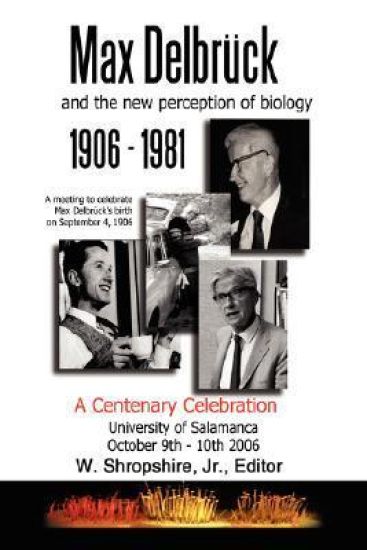
Max Delbruck and the New Perception of Biology 1906-1981
AuthorHouse
2007
pokkari
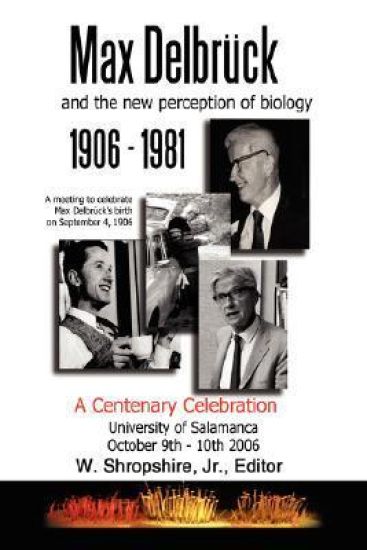
Max Delbruck and the New Perception of Biology 1906-1981
AuthorHouse
2007
sidottu




Max-Plus Linear Stochastic Systems and Perturbation Analysis
Bernd Heidergott
Springer-Verlag New York Inc.
2010
nidottu
During the last decade, the area of stochastic max-plus linear systems has witnessed a rapid development, which created a growing interest in this area. This book provides a thorough treatment of the theory of stochastic max-plus linear systems. Max-plus algebra is an algebraic approach to discrete event systems (DES), like queuing networks that are prone to synchronization. Perturbation analysis studies the sensitivity of the performance of DES with respect to changes in a particular system parameter. The first part of the book addresses modeling issues and stability theory for stochastic max-plus systems. The second part of the book treats perturbation analysis of max-plus systems: a calculus for differentiation of max-plus systems is developed. This calculus leads to numerical evaluations of performance indices of max-plus linear stochastic systems, such as the Lyapunov exponent or waiting times.
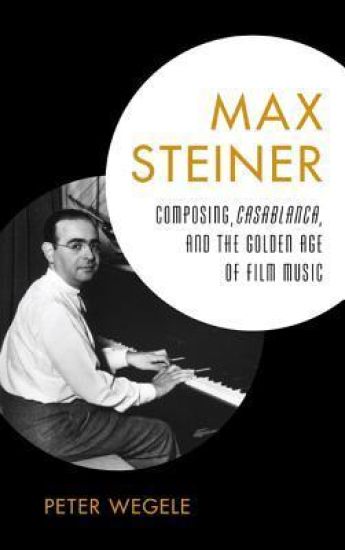
Max Steiner is one of the greatest—not to mention most prolific—composers of the Golden Age of Hollywood. The winner of three Academy Awards, Steiner’s credits include King Kong, The Informer, Gone with the Wind, Now, Voyager, Since You Went Away, Johnny Belinda, and The Caine Mutiny. Though known for timeless melodies that symbolize the glamor of Hollywood’s Golden Age, Steiner has also been hailed as a film scoring pioneer. In Max Steiner: Composing, Casablanca, and the Golden Age of Film Music, Peter Wegele unveils the man behind dozens of memorable scores, offering a portrait of the composer from a personal and professional point of view. Beginning with background on the history and techniques of film music, Wegele then examines Steiner’s musical innovations, some of which are still used today. This is followed by a thorough analysis of one of Steiner’s legendary scores—the music to Casablanca. More than eighty transcribed musical examples demonstrate how efficient, musically clever, and tremendously skilled the composer was when he wrote this score. Drawing on quotes, notes from production files, and excerpts from the original script for Casablanca, Wegele provides insight not only into the production history of the film, but also into the workings of Hollywood during the Golden Age. Including an appendix that compares Steiner with four other composers of his age—Erich Wolfgang Korngold, Alfred Newman, Franz Waxman, and Hugo Friedhofer—and a complete filmography of Steiner’s work, this book is an invaluable examination of the composer’s life and career. Film music composers, music scholars and students, directors, and anyone interested in film and music history will enjoy this detailed portrait of a musical genius.

In the 1920s and 30s, anti-Semitism was rife in the United States and Europe. Jews needed symbols of strength and demonstrations of courage against their enemies, and they found both in two champions of boxing: Max Baer and Barney Ross. Baer was the only Jewish heavyweight champion in the twentieth century, while Ross was considered one of the greatest welterweight and lightweight champions of the era. Although their careers never crossed paths, their boxing triumphs played a common role in lifting the spirits of persecuted Jews. In Max Baer and Barney Ross: Jewish Heroes of Boxing, Jeffrey Sussman chronicles the lives of two men whose successful bouts inside the ring served as inspiration for Jewish fans across the country and around the world. Though they came from very different backgrounds—Baer grew up on his family’s ranch in California, while Ross roamed the tough streets of Chicago and was a runner for Al Capone—both would bask in the limelight as boxing champions. Their stories include legendary encounters with such opponents as Jimmy McLarnin (known as the Jew Killer), Max Schmeling (Hitler’s favorite athlete), and Primo Carnera (a sad giant controlled and mistreated by gangsters). While recounting the exploits of these two men, the author also paints an evocative picture of boxing and the crucial role it played in an era of anti-Semitism. A vivid and engaging look at these two heroes and the difficult era in which they lived, Max Baer and Barney Ross will appeal to boxing fans, sports historians, and anyone interested in Jewish history.