

Kirjahaku
Etsi kirjoja tekijän nimen, kirjan nimen tai ISBN:n perusteella.
1000 tulosta hakusanalla Michael Andrew Cook

Sea Kayaking Maryland's Chesapeake Bay
Michael Savario; Andrea Nolan
Countryman Press Inc.
2004
nidottu
The Chesapeake Bay watershed covers 64,000 square miles and drains parts of six states and Washington, DC. Along with its 400-plus rivers and creeks, the Chesapeake boasts 4,600 miles of tidal shoreline suitable for kayaking. Sea kayaking is booming in the Chesapeake region, and the state of Maryland is fully supporting paddlers in finding access and creating routes and safe places to explore. This new guide will describe dozens of trips along the Eastern and Western shores, in the Bay proper, and in its tributaries. Trip descriptions will include important information on put-ins and take-outs, winds, and currents, equipment, paddling techniques, and safety issues. The authors enliven their instruction with informative sidebars on topics such as salt marsh ecology, wildlife, and social and maritime history. They also touch on low-impact paddling techniques, hypo/hyperthermia awareness, and many other paddling-related topics.

In this book you will find 13 tantalising stories that will make you think, laugh, or maybe shed a tear. It begins with a story about a young lady who was born and raised on the moon and who must now pack up to leave for Earth with her fianc . The next tells a tale of a nomad family whose two young children find several objects that will tell us the mystery of their past. Another story is about an older man who can buy tomorrow's newspaper and how it affects his life and the people around him. Another consists of a poor couple who wake up one day to a completely new life. There are nine other similar stories.
The Growth and Manuscriptsd of Heaven Clouds and Fog, the Childs Sore Prayers at Extremity and Originality, Dreams and Discovery, No Vapour Vs Water Vapour, Christening
Michael Taylor; Andrea Ichrista
Lulu.com
2012
pokkari
A CHRISTIANIZED BOOK OF CHRISTIANITY VS SCIENCES AT MY CHRISTIANITY, RESULTANT ALL TAKEN LEFT WITH RESULTANT OF ETERNITY, HEAVEN HARMONIOUSELY AVERSES ETERNITY AMEN CHRISTENING? COMPLICATED? HESITANT?

The book provides a systematic and profound account of scientific challenges in fuel cell research. The introductory chapters bring readers up to date on the urgency and implications of the global energy challenge, the prospects of electrochemical energy conversion technologies, and the thermodynamic and electrochemical principles underlying the operation of polymer electrolyte fuel cells. The book then presents the scientific challenges in fuel cell research as a systematic account of distinct components, length scales, physicochemical processes, and scientific disciplines. The main part of the book focuses on theory and modeling. Theoretical tools and approaches, applied to fuel cell research, are presented in a self-contained manner. Chapters are arranged by different fuel cell materials and components, and sections advance through the hierarchy of scales, starting from molecular-level processes in proton-conducting media or electrocatalytic systems and ending with performance issues at the device level, including electrochemical performance, water management, durability, and analysis of failure mechanisms. Throughout, the book gives numerous examples of formidable scientific challenges as well as of tools to facilitate materials design and development of diagnostic methods. It reveals reserves for performance improvements and uncovers misapprehensions in scientific understanding that have misled or may continue to mislead technological development. An indispensable resource for scientifically minded and practically oriented researchers, this book helps industry leaders to appreciate the contributions of fundamental research, and leaders of fundamental research to appreciate the needs of industry.

The Politics and Aesthetics of Hunger and Disgust
Michel Delville; Andrew Norris
Routledge
2017
sidottu
This study examines how hunger narratives and performances contribute to a reconsideration of neglected or prohibited domains of thinking which only a full confrontation with the body’s heterogeneity and plasticity can reveal. From literary motif or psychosomatic symptom to revolutionary gesture or existential malady, the double crux of hunger and disgust is a powerful force which can define the experience of embodiment. Kafka’s fable of the "Hunger Artist" offers a matrix for the fast, while its surprising last-page revelation introduces disgust as a correlative of abstinence, conscious or otherwise. Grounded in Kristeva’s theory of abjection, the figure of the fraught body lurking at the heart of the negative grotesque gathers precision throughout this study, where it is employed in a widening series of contexts: suicide through overeating, starvation as self-performance or political resistance, the teratological versus the totalitarian, the anorexic harboring of death. In the process, writers and artists as diverse as Herman Melville, Percy Bysshe Shelley, Christina Rossetti, George Orwell, Knut Hamsun, J.M. Coetzee, Cindy Sherman, Pieter Breughel, Marina Abramovic, David Nebreda, Paul McCarthy, and others are brought into the discussion. By looking at the different acts of visceral, affective, and ideological resistance performed by the starving body, this book intensifies the relationship between hunger and disgust studies while offering insight into the modalities of the "dark grotesque" which inform the aesthetics and politics of hunger. It will be of value to anyone interested in the culture, politics, and subjectivity of embodiment, and scholars working within the fields of disgust studies, food studies, literary studies, cultural theory, and media studies.

A Minimalist Ontology of the Natural World
Michael Esfeld; Dirk-Andre Deckert
Routledge
2017
sidottu
This book seeks to work out which commitments are minimally sufficient to obtain an ontology of the natural world that matches all of today’s well-established physical theories. We propose an ontology of the natural world that is defined only by two axioms: (1) There are distance relations that individuate simple objects, namely matter points. (2) The matter points are permanent, with the distances between them changing. Everything else comes in as a means to represent the change in the distance relations in a manner that is both as simple and as informative as possible. The book works this minimalist ontology out in philosophical as well as mathematical terms and shows how one can understand classical mechanics, quantum field theory and relativistic physics on the basis of this ontology. Along the way, we seek to achieve four subsidiary aims: (a) to make a case for a holistic individuation of the basic objects (ontic structural realism); (b) to work out a new version of Humeanism, dubbed Super-Humeanism, that does without natural properties; (c) to set out an ontology of quantum physics that is an alternative to quantum state realism and that avoids any ontological dualism of particles and fields; (d) to vindicate a relationalist ontology based on point objects also in the domain of relativistic physics.

The Republic of Venice is remembered chiefly as a maritime state, yet from the early fifteenth century it began to exert direct control over a substantial hinterland stretching from the borders of Milan in the west, to the fringes of Germans and Slavic lands to the north and east. For a century it retained this dominant position, before the combined forces of the league of Cambrai forever changed the balance of power with victory over Venice at the battle of Agnadello in 1509 - what had seemed a politically solid and economically prosperous mainland dominion suddenly dissolved, and indeed looked set to disappear permanently. Yet, as this volume clearly demonstrates, this defeat by no means signalled the end of Venice's territorial ambitions. For almost three-hundred years, until it fell under Austrian domination in 1797, the Republic sought to regain a position of influence within the Italian peninsula, and diverted much attention to the retention and expansion of its mainland dominion. Divided into two sections - 'Politics, Institutions and Society' and 'Demography, economy and society' - the book addresses a broad sweep of social, cultural, civic, economic and strategic themes. These are investigated and compared, allowing for revealing conclusion to be drawn that ultimately limit the grounds for comparison between Venice's territorial state and those of the main European monarchies. It argues that whereas the larger states gradually gained in cohesion, centralization and unity, Venice substantially maintained a model of territorial government rooted in the practice of medieval city-states - a model that survived because the Republic's practice of government was flexible enough to adapt to changing national and international circumstances. By building upon, and expanding, recent research investigating the nature of relations between Venice and its territories, this study offers a fascinating perspective upon the extent to which the Republic tried and succeeded in endowing a heterogeneous territorial conglomeration with cohesion and unity.

Aims to rethink ethics and transcendence in light of the phenomenology of empathy and social ontology.One (Un)Like the Other responds to the question, "What are the conditions of possibility that make genuine knowledge of other persons-and, therefore, love-possible?" By providing an original interpretive framework for exploring ethics in relation to empathy and transcendence from multiple perspectives in continental philosophy, empathy is described as a trace of what remains essentially and irreducibly "other" in every act of givenness. The use of the phenomenological method places "Einfühlung theory" in its rich historical context, beginning with Husserl and the early phenomenologists and extending to contemporary issues that explore "otherness" in light of consciousness, gender, embodiment, community, intentionality, emotions, intersubjectivity, values, language, and apophatic discourse. The implications of recasting "empathy" in an interpretive and dialogical model of reciprocity envision new paradigms of understanding ethics as an infinite playing field. No longer subservient to metaphysics and ontology, empathy is described as an act of infinite concern, a "hermeneutics of suspicion" that transcends epistemological theory and ethical command. Drawing on Husserl, Scheler, Stein, Heidegger, Levinas, Derrida, and others, this study presents an examination and expansion of empathy as an encounter with otherness in its most radical and transcendent forms.
Aims to rethink ethics and transcendence in light of the phenomenology of empathy and social ontology.One (Un)Like the Other responds to the question, "What are the conditions of possibility that make genuine knowledge of other persons-and, therefore, love-possible?" By providing an original interpretive framework for exploring ethics in relation to empathy and transcendence from multiple perspectives in continental philosophy, empathy is described as a trace of what remains essentially and irreducibly "other" in every act of givenness. The use of the phenomenological method places "Einfühlung theory" in its rich historical context, beginning with Husserl and the early phenomenologists and extending to contemporary issues that explore "otherness" in light of consciousness, gender, embodiment, community, intentionality, emotions, intersubjectivity, values, language, and apophatic discourse. The implications of recasting "empathy" in an interpretive and dialogical model of reciprocity envision new paradigms of understanding ethics as an infinite playing field. No longer subservient to metaphysics and ontology, empathy is described as an act of infinite concern, a "hermeneutics of suspicion" that transcends epistemological theory and ethical command. Drawing on Husserl, Scheler, Stein, Heidegger, Levinas, Derrida, and others, this study presents an examination and expansion of empathy as an encounter with otherness in its most radical and transcendent forms.

Providing a pragmatic approach to changing Internet protocols, this book introduces the SOCKS standard (Simple Solutions to Complex Problems). The SOCKS standard was originally developed as a generic proxy protocol, making it possible for network administrators to simply limit access to the Internet. The authors describe how to use an existing solution to problems within the Internet that would reduce rather than increase the complexity of an already complex system. The authors describe how to build a SOCKS-based solution as well as the tradeoffs with other approaches, such as IPv6.

The book provides a systematic and profound account of scientific challenges in fuel cell research. The introductory chapters bring readers up to date on the urgency and implications of the global energy challenge, the prospects of electrochemical energy conversion technologies, and the thermodynamic and electrochemical principles underlying the operation of polymer electrolyte fuel cells. The book then presents the scientific challenges in fuel cell research as a systematic account of distinct components, length scales, physicochemical processes, and scientific disciplines. The main part of the book focuses on theory and modeling. Theoretical tools and approaches, applied to fuel cell research, are presented in a self-contained manner. Chapters are arranged by different fuel cell materials and components, and sections advance through the hierarchy of scales, starting from molecular-level processes in proton-conducting media or electrocatalytic systems and ending with performance issues at the device level, including electrochemical performance, water management, durability, and analysis of failure mechanisms. Throughout, the book gives numerous examples of formidable scientific challenges as well as of tools to facilitate materials design and development of diagnostic methods. It reveals reserves for performance improvements and uncovers misapprehensions in scientific understanding that have misled or may continue to mislead technological development. An indispensable resource for scientifically minded and practically oriented researchers, this book helps industry leaders to appreciate the contributions of fundamental research, and leaders of fundamental research to appreciate the needs of industry.
Adiabatic Evolution and Shape Resonances
Michael (EDT) Hitrik; Andrea (EDT) Mantile; Johannes (EDT) Sjöstrand
Amer Mathematical Society
2022
pokkari

Medical Device Use Error: Root Cause Analysis offers practical guidance on how to methodically discover and explain the root cause of a use error—a mistake—that occurs when someone uses a medical device. Covering medical devices used in the home and those used in clinical environments, the book presents informative case studies about the use errors (mistakes) that people make when using a medical device, the potential consequences, and design-based preventions. Using clear illustrations and simple narrative explanations, the text: Covers the fundamentals and language of root cause analysis and regulators’ expectations regarding the thorough analysis of use errorsDescribes how to identify use errors, interview users about use errors, and fix user interface design flaws that could induce use errorsReinforces the application of best practices in human factors engineering, including conducting both formative and summative usability testsMedical Device Use Error: Root Cause Analysis delineates a systematic method of analyzing medical device use errors. The book provides a valuable reference to human factors specialists, product development professionals, and others committed to making medical devices as safe and effective as possible.

The Modern Professional Investigator: From Don't Ask Don't Tell to Corporate America A Gay Professional Investigator's Journey
Michael P. Andrews
Createspace Independent Publishing Platform
2014
nidottu

The Influential Christian
Michael W. Andrews; Shakeema North
Rowman Littlefield Publishers
2021
sidottu
As Christians, each of us is called to bring people together through the Spirit of God. By developing our inner character—our heart—we can have a greater role in other people’s lives, and others can have more significance in our own growth as leaders. Genuine influence is a deep summons to our most authentic selves—an exciting exploration that is often missing in our culture of quick fixes and easy advice.In The Influential Christian, Michael Andrews reveals how engaging in spiritual practices that exercise empathy allows us to cultivate influence in our personal, professional, and spiritual lives. Drawing upon God’s spiritual resources as we interact with other people, we build the integrity necessary to be empathic leaders. As readers will discover, building character is much more than completing a checklist of self-improvement initiatives—it’s a pilgrimage into the full meaning of being human and being Christian.

The Influential Christian
Michael W. Andrews; Shakeema North
Rowman Littlefield Publishers
2021
nidottu
As Christians, each of us is called to bring people together through the Spirit of God. By developing our inner character—our heart—we can have a greater role in other people’s lives, and others can have more significance in our own growth as leaders. Genuine influence is a deep summons to our most authentic selves—an exciting exploration that is often missing in our culture of quick fixes and easy advice.In The Influential Christian, Michael Andrews reveals how engaging in spiritual practices that exercise empathy allows us to cultivate influence in our personal, professional, and spiritual lives. Drawing upon God’s spiritual resources as we interact with other people, we build the integrity necessary to be empathic leaders. As readers will discover, building character is much more than completing a checklist of self-improvement initiatives—it’s a pilgrimage into the full meaning of being human and being Christian.

The Road Not Taken takes a new perspective on the course of social welfare policy in the twentieth century. This examination looks at the evolution of social work in the United States as a dynamic process not just driven by mainstream organizations and politics, but strongly influenced by the ideas and experiences of radical individuals and marginalized groups as well.
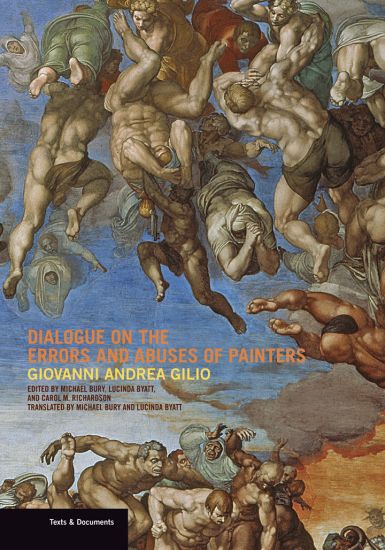
Dialogue on the Errors and Abuses of Painters
Givanni Andrea Gilio; Michael Bury; Lucinda Byatt; Carol M. Richardson
Getty Publications
2018
nidottu
Giovanni Andrea Gilio's "Dialogue on the Errors and Abuses of Painters" (1564) is one of the first treatises on art published in the post-Tridentine period. It remains a key primary source for the discussion of the reform of art as it unfolded at the time of the Council of Trent and the Catholic Reformation. Relatively little is known about Gilio himself, a cleric from Fabriano, Italy, although he was evidently familiar with Cardinal Alessandro Farnese's lively court circle in Rome as he dedicated his book to the cardinal. His text-available in English in full for the first time-takes the form of a spirited dialogue among six protagonists, using the voices of each to present different points of view. Through their dialogue Gilio grapples with a host of issues, from the relationship between poetry and painting, to the function of religious images, to the effects such images have on viewers. The primary focus is the proper representation of history, and Michelangelo's Last Judgment fresco in the Sistine Chapel is the exemplary case. Indeed, Michelangelo's painting is both praised and condemned as an example of the possibilities and limits of art. Although Gilio's dialogue is often quoted by art historians to point out the more controlling view of art and artists by the Roman Catholic Church, the unabridged text reveals the nuanced and provisional debates, happening during this critical era.