
Kirjahaku
Etsi kirjoja tekijän nimen, kirjan nimen tai ISBN:n perusteella.
1000 tulosta hakusanalla Michael J. Perry
Dispatches: Stories from War Zones, Police States and Other Hellholes
Michael J. Totten
Belmont Estate Books
2016
nidottu
The ADF Dedicant Path Through the Wheel of the Year
Michael J. Dangler
Garanus Publishing
2016
nidottu
One of the most well-developed programs of study in modern Druidry has just gotten a little bit better r nDra ocht F in: A Druid Fellowship (ADF) introduced training along the Dedicant Path in 1997. "The Dedicant Path Through the Wheel of the Year" (now in its fifth edition) is a guide to the ADF Dedicant Path, with homework, rituals, and additional suggested readings to help the Dedicant work through the material. This book is designed to supplement "Our Own Druidry," the guide to ADF Druidry, which comes with an ADF membership. You can find more information about ADF (and join) at http: //www.adf.org/
What to Do When the Wheels Come Off: Strange Observations and Reckless Advice about Life and Disability
Michael J. Giusti
Novel Approach Media
2016
nidottu
The challenging, funny, penetrating words in this little text offer a hopeful guarantee. Even as the wheels come off, the ride remains uplifting The author's playful use of words and serious desire to share his experiences present a truly stimulating tour into the mind of a disabled person just trying to find his way. It is both an unusual spiritual adventure as well as a thoughtful self-reflection.The markers along this road take the form of short observational proverbs that combine equal parts reverence and irreverence. So if you wish to learn what to do when the wheels come off in life, or you just want to better slide your way through, take a look inside. You are sure to enjoy the journey.
Who Created God?: A Teacher's Guidebook for Answering Children's Tough Questions about God
Michael J. Ruszala
Vox Clamans Publications
2016
nidottu

Think Like a Hacker: A Sysadmin's Guide to Cybersecurity
Michael J. Melone
Bitlatch Books
2017
nidottu
5 Paragraph Business Plan: The Action Oriented Business Management Tool For Leaders
Michael J. Penney
5 Paragraph Business Plan V.1
2017
nidottu
The "5 Paragraph Business Plan" is based on the United States military's 240 year old operational planning concepts, which have been refined through actions on the battlefield. The VALUE of the "5 Paragraph Business Plan" is in it's simplicity. It is an action-oriented and situationally-flexible approach to conducting business management between executive leadership, operational leadership, and key leaders in the field. The "5 Paragraph Business Plan" keeps your whole organization operating on the same page. Each section of the book has a corresponding tutorial episode at Tutorials.5Paragraph.com Simply follow along in the book. In association with 5paragraph.com
A Field Guide to Advanced Spiritual Warfare: Deliverance, Exorcism, and Healing the Effects of Ritual Abuse
Michael J. Norton
Michael J Norton Press
2017
nidottu
Are you a counselor or a pastor with a spiritual warfare case that has you baffled? You are not alone Somewhere in your soul liberating ministry you will run into a case like Mark 9:29, where "This kind cannot come out by anything but prayer." When you have arrived at this juncture in ministry, how do you know you are casting out a demon, or you are dealing with a fractured human soul? Do you know the difference between demonic deliverance ministry and exorcism? This field guide: Advanced Spiritual Warfare comprehensively describes biblical approaches to victory for your intense battles with the forces of darkness. Learn how to stand in your victory against those evil spirits that are only expelled through prayer. Learn: - the scriptural differences between deliverance ministry and exorcism;- protocols for dealing with occult attacks and dark angels in the heavenly realms;- how to distinguish between demonic oppression and dissociative identity disorder;- how to pray for those who have survived satanic ritual abuse; and- how to minister to different types of spiritual manifestations.No matter how dark the battle, this powerful guide will help you stand in your victory at the cross.
Purposeful Leadership for a Total Engagement Culture
Michael J Pearsall
Michael Pearsall
2017
sidottu
All leaders and organizations want employee engagement. You want your people to be mentally and emotionally invested in their work and your mission. You know that the key to a successful company is to inspire excited, passionate, motivated employees who truly care about their work - but how do you do it? How do you lead to succeed?In Purposeful Leadership for a Total Engagement Culture, Michael J. Pearsall presents the latest research on the psychology and brain science of human motivation, then distills it into six simple leadership habits you can start practicing immediately. Specially designed for busy managers and executives who need to see results fast, this book will help you become a better leader in under an hour a day.
It is the world's best-known national park, with a controversy that no amount of snow can bury. Rosy-cheeked snowmobilers extol the glories of riding through a winter wonderland, while environmentalists decry the noise, the air pollution, and the harm to wildlife. There seems to be no room for compromise. In this first book-length study of winter use in any national park, Michael Yochim examines the long standing conflict between the National Park Service and groups who favor or object to snowmobiles in Yellowstone. By illuminating the fundamental drivers of the controversy - American values, community identity, industry influence, and political tampering with policy - he doesn't merely document the debate but shows how increasingly politicized battles have taken a toll on the autonomy of the NPS and its ability to protect the park. The debate itself, Yochim observes, is not over whether one mode of transportation is more appropriate than another, but whether it is more important to embrace nature's sacredness or one's personal liberties. With motorized snow travel sanctioned for forty years, snowmobilers see their sport as an expression of freedom and rugged individualism, and attempts to curtail their activity as un-American. Conversely, environmentalists see parks as sacred space, so snowmobiles to them are inappropriate in what they regard as a temple. Yochim discusses the political and legal intricacies of arguments on both sides in a balanced presentation - one that does not spare the NPS from close scrutiny - and he examines influence on the Park Service from both political parties. Along the way, he teases out the role of science as a policy guide, the place of values in the controversy, and the influence of strident personalities in the debate. In tracing the history of motorized winter recreational use of the park from the earliest days of winter visitation in the 1930s to the present, Yochim shows that what is at stake is more than recreation in one park but the very mission of the NPS - and whether political machinations will keep it from protecting the park and accomplishing that mission. ""Yellowstone and the Snowmobile"" allows readers to better understand this controversy, one that is unlikely to go away any time soon.
What would an Anti-Federalist Constitution look like? Because we view the Constitution through the lens of the Federalists who came to control the narrative, we tend to forget those who opposed its ratification. And yet the Anti-Federalist arguments, so critical to an understanding of the Constitution's origins and meaning, resonate throughout American history. By reconstructing these arguments and tracing their development through the ratification debates, Michael J. Faber presents an alternative perspective on constitutional history. Telling, in a sense, the other side of the story of the Constitution, his book offers key insights into the ideas that helped to form the nation's founding document and that continue to inform American politics and public life.Faber identifies three distinct strands of political thought that eventually came together in a clear and coherent Anti-Federalism position: (1) the individual and the potential for governmental tyranny; (2) power, specifically the states as defenders of the people; and (3) democratic principles and popular sovereignty. After clarifying and elaborating these separate strands of thought and analyzing a well-known proponent of each, Faber goes on to tell the story of the resistance to the Constitution, focusing on ideas but also following and explaining events and strategies. Finally, he produces a “counterfactual” Anti-Federalist Constitution, summing up the Anti-Federalist position as it might have emerged had the opposition drafted the document.How would such a constitution have worked in practice? A close consideration reveals the legacy of the Anti-Federalists in early American history, in the US Constitution and its role in the nation's political life.
What would an Anti-Federalist Constitution look like? Because we view the Constitution through the lens of the Federalists who came to control the narrative, we tend to forget those who opposed its ratification. And yet the Anti-Federalist arguments, so critical to an understanding of the Constitution's origins and meaning, resonate throughout American history. By reconstructing these arguments and tracing their development through the ratification debates, Michael J. Faber presents an alternative perspective on constitutional history. Telling, in a sense, the other side of the story of the Constitution, his book offers key insights into the ideas that helped to form the nation’s founding document and that continue to inform American politics and public life.Faber identifies three distinct strands of political thought that eventually came together in a clear and coherent Anti-Federalism position: (1) the individual and the potential for governmental tyranny; (2) power, specifically the states as defenders of the people; and (3) democratic principles and popular sovereignty. After clarifying and elaborating these separate strands of thought and analyzing a well-known proponent of each, Faber goes on to tell the story of the resistance to the Constitution, focusing on ideas but also following and explaining events and strategies. Finally, he produces a “counterfactual” Anti-Federalist Constitution, summing up the Anti-Federalist position as it might have emerged had the opposition drafted the document.How would such a constitution have worked in practice? A close consideration reveals the legacy of the Anti-Federalists in early American history, in the US Constitution and its role in the nation’s political life.
The Cost of Voting in the American States
Michael J. Pomante; Scot Schraufnagel; Quan Li
UNIVERSITY PRESS OF KANSAS
2023
sidottu
In the wake of Shelby County v. Holder and the January 6 Capitol insurrection, changes to election laws, policies, and especially access to voting have become a key political battleground. A central point of contention is whether new restrictive voting laws intentionally discriminate against Black and Hispanic subpopulations in the United States. Conversely, do policies that expand voting access favor Democrats and increase the possibility of election fraud?In The Cost of Voting in the American States, Michael J. Pomante II, Scot Schraufnagel, and Quan Li test these questions. The authors look specifically for systematic outcomes produced by distinctive election policies in the American states. First, they establish a competent measure of voting restrictions to begin this unraveling. The authors create a Cost of Voting Index (COVI) for the fifty states, which uses a statistical procedure to extract an underlying dimension and to determine significance from state laws based on how restrictive the polices are. The authors call the underlying dimension extracted the “cost of voting.” With this measure in place, they evaluate which states have a higher cost of voting, how this cost impacts who votes, and whether there is a correlation between the cost of voting and minority populations.Using Racial Threat Theory arguments, the authors demonstrate that states with larger or growing Black and Hispanic populations have more restricted voting, and that these restrictive voting laws disproportionately demobilize these populations in predictable ways. States with a higher cost of voting also show lower minority electoral success as well as a larger gap in Black and female representation, and the authors reveal that decreasing the cost of voting does not lead to fraud or favor one party over another. The Cost of Voting in the American States makes a case for a new preclearance formula, and the COVI provides a viable approach for future election law.
The Cost of Voting in the American States
Michael J. Pomante; Scot Schraufnagel; Quan Li
UNIVERSITY PRESS OF KANSAS
2023
nidottu
In the wake of Shelby County v. Holder and the January 6 Capitol insurrection, changes to election laws, policies, and especially access to voting have become a key political battleground. A central point of contention is whether new restrictive voting laws intentionally discriminate against Black and Hispanic subpopulations in the United States. Conversely, do policies that expand voting access favor Democrats and increase the possibility of election fraud?In The Cost of Voting in the American States, Michael J. Pomante II, Scot Schraufnagel, and Quan Li test these questions. The authors look specifically for systematic outcomes produced by distinctive election policies in the American states. First, they establish a competent measure of voting restrictions to begin this unraveling. The authors create a Cost of Voting Index (COVI) for the fifty states, which uses a statistical procedure to extract an underlying dimension and to determine significance from state laws based on how restrictive the polices are. The authors call the underlying dimension extracted the “cost of voting.” With this measure in place, they evaluate which states have a higher cost of voting, how this cost impacts who votes, and whether there is a correlation between the cost of voting and minority populations.Using Racial Threat Theory arguments, the authors demonstrate that states with larger or growing Black and Hispanic populations have more restricted voting, and that these restrictive voting laws disproportionately demobilize these populations in predictable ways. States with a higher cost of voting also show lower minority electoral success as well as a larger gap in Black and female representation, and the authors reveal that decreasing the cost of voting does not lead to fraud or favor one party over another. The Cost of Voting in the American States makes a case for a new preclearance formula, and the COVI provides a viable approach for future election law.
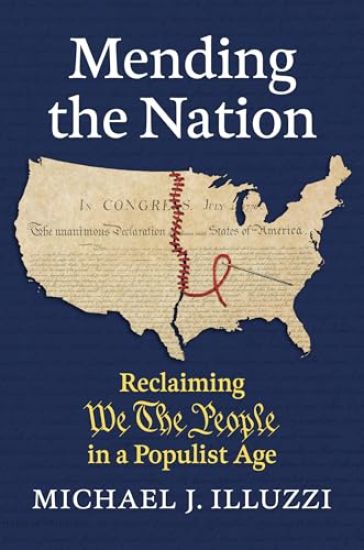
A bold message of political hope in a time of cynicism and despair, Mending the Nation uses lessons from the past to chart a new way forward. The United States is as divided as ever, torn apart by deeply held stories that separate a righteous “us” from an evil and corrupt “them”—often along partisan, religious, and racial lines. Many point to populist rhetoric as a major source of the current animosity. For Michael J. Illuzzi, however, an alternative, optimistic version of populism can be the solution; a populist narrative that seeks to mend division and bring people together across political and social lines. These “mending stories,” he argues, offer a way to restore and reclaim the promise contained in the words: “We the People.” In response to Trumpism, many scholars have drawn on political theories of democracy and cosmopolitanism to provide the intellectual basis for left-wing responses to the political right. But Illuzzi argues that people who reject MAGA do not need a new theory of opposition so much as a better story of what binds people together. To tell this story, Illuzzi turns to heroes of political healing, activism, and organizing in US history: Abraham Lincoln, social gospel mayor Samuel Jones, Franklin Delano Roosevelt, Dr. Martin Luther King, Jr., Fred Hampton’s Rainbow Coalition, Black Lives Matter and the Movement for Black Lives, and the new Poor People’s Campaign under Rev. Dr. Liz Theoharis and Rev. Dr. William Barber II. This tradition uses “mending stories of prophetic peoplehood” to bring people together, highlighting the way religious rhetoric often serves as a binding force for social reform. In a period of declining trust in our political institutions, charismatic authoritarian leaders use stories of their despised enemies to enrage people and convince them to accept increasingly violent and illegal exercises of power. The question is whether mending stories that refuse the superiority of the “we” and the dehumanization of the “them” can offer an attractive alternative capable of changing our political future. Mending the Nation shows that such stories have worked in the past—and maybe they can work again.
This collection of articles analyzes the underlying motivation, strategy and interests which lay behind "Great Power" (British and post-World War II American) involvement in Palestine and the Middle East, from 1917 to 1948.
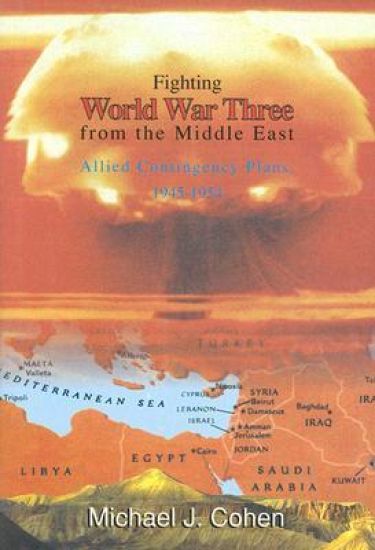
This description of Allied contingency plans for military operations in the Middle East - in the event of conflict with the Soviet Union - argues that diplomatic events and crises in the Middle East in 1945-55 are understandable only in the context of assets sought by the Allies in that region.