Kirjojen hintavertailu. Mukana 12 016 292 kirjaa ja 12 kauppaa.

Kirjahaku

Etsi kirjoja tekijän nimen, kirjan nimen tai ISBN:n perusteella.

890 tulosta hakusanalla Michaelangelo Rodriguez

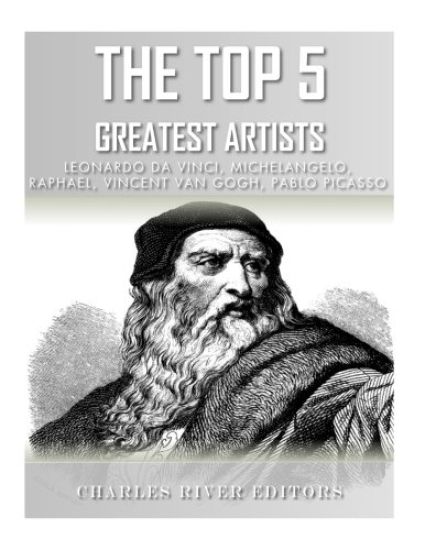
The Top 5 Greatest Artists: Leonardo, Michelangelo, Raphael, Vincent Van Gogh, and Pablo Picasso
*Includes pictures of important people and places, as well as the artists' most famous works. *Discusses the relationships between the artists. *Includes a Bibliography on each artist for further reading. It would be hard to determine which field Leonardo had the greatest influence in. His "Mona Lisa" and "The Last Supper" are among the most famous paintings of all time, standing up against even Michelangelo's work. But even if he was not the age's greatest artist, Leonardo may have conducted his most influential work was done in other fields. His emphasis on the importance of Nature would influence Enlightened philosophers centuries later, and he sketched speculative designs for gadgets like helicopters that would take another 4 centuries to create. It's possible that Michelangelo is the most famous artist in history, but it's also possible that he's an underrated artist. The vast influence of his career is reflected by the fact that he is not only known for his own art but has also come to embody an entire epoch of Western art. Along with Leonardo da Vinci, there are no other artists who so fully capture the spirit of scientific and artistic discovery that characterized art during the late 15th and early 16th centuries. Moreover, Michelangelo's career is distinguished from that of his peers through his seamless ability to work within different art forms, receiving acclaim regardless of the medium. After first rising to fame as a sculptor, he also painted and served as an architect, and since his death, Michelangelo has also become decorated for his prolific output as a poet. The diversity and high standard of his work, no matter the medium, make it difficult to even arrive at a most famous work. Raffaello Sanzio da Urbino, known across the world simply by the name Raphael, stands as one of the main pillars of the High Renaissance, an iconic example of the balance between spirituality and Humanistic inquiry that characterized the time period. Although he lived just 37 years, his career produced an amazingly rich output, and he completed more works than many artists do over careers spanning twice the length. At the same time, Raphael's art combined central tropes associated with the Renaissance while remaining remarkably original. Vincent van Gogh is undoubtedly one of the most famous artists of all time, and though the critical establishment may not consider him the greatest artist who ever lived, there may be no artist with whom the public has a greater familiarity. Unfortunately, a great deal of that familiarity comes from the circumstances leading up to his death, and the manner in which they have been linked to his painting career. In 1882, Vincent would hauntingly and somewhat prophetically write to his brother Theo, "What am I in the eyes of most people - a nonentity, an eccentric, or an unpleasant person - somebody who has no position in society and will never have; in short, the lowest of the low. All right, then - even if that were absolutely true, then I should one day like to show by my work what such an eccentric, such a nobody, has in his heart." In their biography of Pablo Picasso, Hans Ludwig and Chris Jaffe note that "for him, art was always adventure: 'To find is the thing.'" Indeed, there is perhaps no artist who produced more art than Picasso, whose enormous oeuvre (which spanned most of his 91-year life) contained a countless number of paintings and drawings. Picasso also worked in other mediums as well, notably sculpture and lithography, and his constant experimentation with form makes him a useful case study through which to chart the growth of Modernism as an artistic movement and many of the artistic trends that would dominate the 20th century.
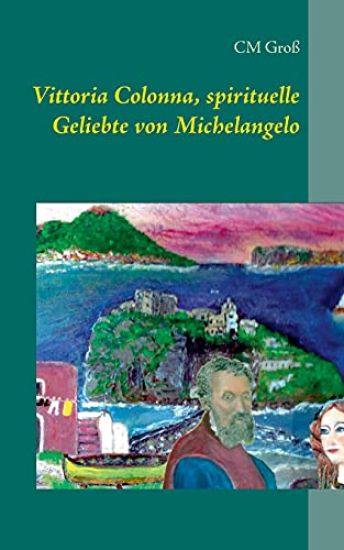
Vittoria Colonna, spirituelle Geliebte von Michelangelo
Vittoria Colonna, aus einer der m chtigsten Familien Italiens, muss sich, kaum 5 Jahre alt mit dem 6-j hrigem Ferrante Francesco de Avalos von Neapel, dem Marchese di Pescara verloben. Die 11-j hrige Vittoria kommt auf das Castello Aragonese nach Ischia und wird gemeinsam mit Francesco von der Herzogin Costanza, der Schwester des verstorbenen K nigs von Neapel erzogen. Mit 19 Jahren werden sie auf Ischia verm hlt, ihre Ehe bleibt kinderlos. Francesco zieht nach der Eheschlie ung im Dienst des Kaisers Maximilian in den Krieg. Er stirbt nach 16 Jahren Trennung an Gift. Vittorias Wunsch, ins Kloster zu gehen, vereitelt Papst Clemens. Als Erste Dame Roms, einzigartige Dichterin und bedeutendste Frau Italiens, widmet sie ihre Kraft und Verm gen den Armen. Mit 40 Jahren findet sie zu dem 60-j hrigem Michelangelo Buonarroti eine tiefe spirituelle Zuneigung. Ihm widmet sie zahllose Schriften. In seinem Beisein stirbt Vittoria Colonna mit 57 Jahren.
Proust, Cole Porter, Michelangelo, Marc Almond and Me

Proust, Cole Porter, Michelangelo, Marc Almond and Me

National Lesbian & Gay Survey

Routledge
2017
sidottu
Drawn from years of archive material, this collection, first published in 1993, portrays the voices and experience of over sixty gay men from all walks of life. Here are presented the difficulties of coming out, but also the diverse nature of gay relationships and the impact of HIV and AIDS. Sometimes raw, often humorous, frequently angry, the book gives an honest impression of what it was like to live as a homosexual man in the twentieth century.
Proust, Cole Porter, Michelangelo, Marc Almond and Me

Proust, Cole Porter, Michelangelo, Marc Almond and Me

National Lesbian & Gay Survey

Routledge
2018
nidottu
Drawn from years of archive material, this collection, first published in 1993, portrays the voices and experience of over sixty gay men from all walks of life. Here are presented the difficulties of coming out, but also the diverse nature of gay relationships and the impact of HIV and AIDS. Sometimes raw, often humorous, frequently angry, the book gives an honest impression of what it was like to live as a homosexual man in the twentieth century.
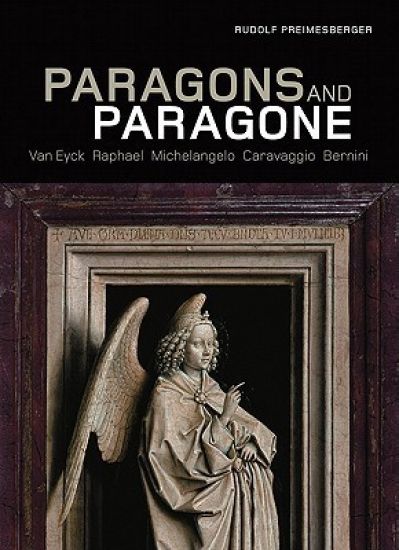
Paragons and Paragone – Van Eyck, Raphael, Michelangelo, Caravaggio, Bernini
This title provides an intelligent and illuminating exploration of the rivalry that existed between the artists of the Renaissance & Baroque eras. The paragon - the notion of competition and rivalry among the arts - has been a topic of debate for centuries. It erupted with great force in the Renaissance: sculptors vying with painters for superiority, modern artists competing with the ancients, and painting challenging poetry. If the traces of this lively conversation are most evident in the literature, the remarkable scholarship presented here demonstrates how the paragone was rendered visible also in works of art. The essays on Renaissance and Baroque art reveal the paragone to be a crucial motive and key to the interpretation of some of the most celebrated works of art such as Van Eyck's Ghent Altarpiece and Michelangelo's Pieta in St. Peter's Basilica.
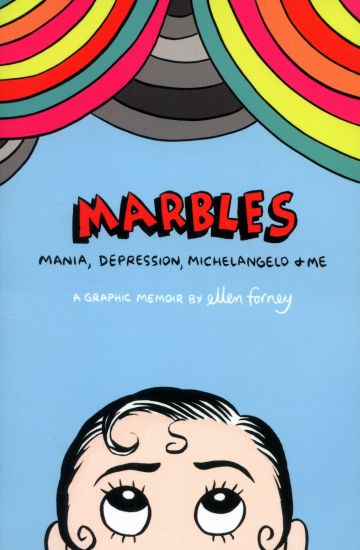
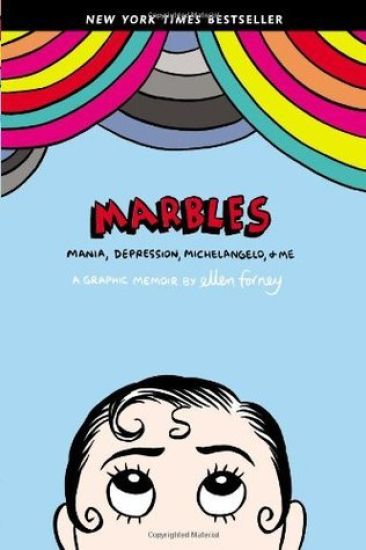
Marbles: Mania, Depression, Michelangelo, and Me: A Graphic Memoir
Cartoonist Ellen Forney explores the relationship between "crazy" and "creative" in this graphic memoir of her bipolar disorder, woven with stories of famous bipolar artists and writers. Shortly before her thirtieth birthday, Forney was diagnosed with bipolar disorder. Flagrantly manic and terrified that medications would cause her to lose creativity, she began a years-long struggle to find mental stability while retaining her passions and creativity. Searching to make sense of the popular concept of the crazy artist, she finds inspiration from the lives and work of other artists and writers who suffered from mood disorders, including Vincent van Gogh, Georgia O'Keeffe, William Styron, and Sylvia Plath. She also researches the clinical aspects of bipolar disorder, including the strengths and limitations of various treatments and medications, and what studies tell us about the conundrum of attempting to "cure" an otherwise brilliant mind. Darkly funny and intensely personal, Forney's memoir provides a visceral glimpse into the effects of a mood disorder on an artist's work, as she shares her own story through bold black-and-white images and evocative prose.
Raffaele Riario, Jacopo Galli, and Michelangelo's Bacchus, 1471-1572
On Michelangelo's first day in Rome, in June 1496, Cardinal Raffaele Riario asked him if he could create 'something beautiful' in competition with the antique. The twenty-one-year old sculptor responded to this unique challenge with the statue of Bacchus now in the Bargello museum. This statue, as well as the Sleeping Cupid which first brought Michelangelo to Riario's attention, have long been shrouded in mystery, and the Bacchus as well as its patron have long suffered from critical censure. Through a comprehensive analysis of overlooked and previously-unpublished sources, this study sheds new light on the Sleeping Cupid, the Bacchus, and a fascinating period in the history of Renaissance Rome when the careers of Riario, Galli, and Michelangelo were closely intertwined. It considers the rise of the Riario dynasty starting with the election of Pope Sixtus IV in 1471, Riario's partnership with Jacopo Galli in the reconstruction of the palace now known as the Palazzo della Cancelleria, the attempted sale of Michelangelo's Sleeping Cupid in Rome as an antiquity, Riario's patronage of the Bacchus, and the Bacchus's display in the house of the Galli up until its sale to the Medici in 1572. Taking a broad, interdisciplinary perspective, it offers a fundamental reassessment of Cardinal Riario's career as a patron, of Jacopo Galli's role as an intermediary for both Riario and Michelangelo, and of Michelangelo's collaboration with Riario and Galli.