Kirjojen hintavertailu. Mukana 12 159 808 kirjaa ja 12 kauppaa.

Kirjahaku

Etsi kirjoja tekijän nimen, kirjan nimen tai ISBN:n perusteella.

1000 tulosta hakusanalla Naemi Fast

Syrian Intervention in Lebanon

Syrian Intervention in Lebanon

Naomi Joy Weinberger

Oxford University Press Inc
1987
sidottu
Conflict and intervention in the Middle East are not uncommon occurrences. Yet when civil strife erupted in Lebanon in 1975, the events that followed were unusual indeed. Unlike most patterns of intervention, Syria displayed remarkable tactical flexibility by first intervening on behalf of the rebels, its traditional allies, then shifting its allegiance mid-war to the Lebanese incumbents. Also, whereas most intervention scenarios end with a process of decommitment, Syria eventually occupied parts of Lebanon to become an enduring military entity there. Delving into primary Syrian and Lebanese sources, Weinberger unravels the history, competing factions, religion, politics, and culture of the region and presents an intriguing and complex portrait of intervention by a regional power.
Jews in Christian America

Jews in Christian America

Naomi W. Cohen

Oxford University Press Inc
1992
sidottu
This book examines how American Jews from colonial times to the present have contended with living in a fundamentally Christian state. Separation of church and state has become a veritable creed in the American Jewish community, and the focus of the work is the way in which Jewish actions have contributed to the development of this separation in the US.
Alexander Graham Bell

Alexander Graham Bell

Naomi Pasachoff

Oxford University Press Inc
2013
sidottu
Alexander Graham Bell forever changed the world. The telephone and his many other landmark inventions rank among the most transforming and enduring of the modern era. But it was his work with the deaf, teaching as well as inventing tools to ease communication, that he considered his life's work. The son of a speech therapist father and hearing impaired mother, his stellar achievements in sound reproduction and aviation give proof that he fit his own definition of an inventor. He said, "An inventor a man who looks upon the world and is not contented with things as they are. He wants to improve whatever he sees, he wants to benefit the world." This is a compelling biography of a true scientific visionary. Oxford Portraits in Science is an on-going series of scientific biographies for young adults. Written by top scholars and writers, each biography examines the personality of its subject as well as the thought process leading to his or her discoveries. These illustrated biographies combine accessible technical information with compelling personal stories to portray the scientists whose work has shaped our understanding of the natural world.
The Rejection of Continental Drift

The Rejection of Continental Drift

Naomi Oreskes

Oxford University Press Inc
1999
nidottu
In the early 20th century, American earth scientists vociferously opposed the new, and highly radical, notion of continental drift. Yet 50 years later the same idea was heralded as a major scientific breakthrough, and today continental drift is accepted as a scientific fact. Why did American geologists reject so adamantly an idea that is now considered a cornerstone of the discipline? And why did they react so much more negatively than their European counterparts? This book, based primarily on archival resources, provides answers to these questions. It complements existing work on continental drift and the emergence of the theory of plate tectonics by providing the first detailed historical account of the American geological community in the 1920s. It also challenges previous historical work on this episode, much of which ascribes the rejection of continental drift to the lack of an adequate causal mechanism. Instead, the author shows that the rejection was largely based on the view that continental drift challenged the basic methodological principles and standards of practice in American earth science. In uncovering the historical roots of this debate, the author seeks to clarify the relationship between scientific practice and theory while also providing a test case for related philosophical questions.
Marie Curie

Marie Curie

Naomi Pasachoff

Oxford University Press Inc
2008
nidottu
Marie Curie discovered radium and went on to lead the scientific community in studying the theory behind and the uses of radioactivity. She left a vast legacy to future scientists through her research, her teaching, and her contributions to the welfare of humankind. She was the first person to win two Nobel Prizes, yet upon her death in 1934, Albert Einstein was moved to say, "Marie Curie is, of all celebrated beings, the only one whom fame has not corrupted." She was a physicist, a wife and mother, and a groundbreaking professional woman. This biography is an inspirational and exciting story of scientific discovery and personal commitment.
Always On

Always On

Naomi Baron

Oxford University Press Inc
2008
sidottu
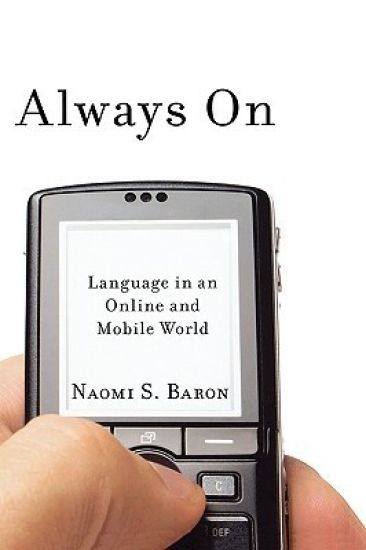
In Always On, Naomi S. Baron reveals that online and mobile technologies - including instant messaging, cell phones, multitasking, Facebooks, blogs, and wikis - are profoundly influencing how we read and write, speak and listen, but not in the ways we might suppose. Baron draws on a decade of research to provide an eye-opening look at language in an online and mobile world. She reveals for instance that email, IM, and text messaging have had surprisingly little impact on student writing. Electronic media has magnified the laid-back "whatever" attitude toward formal writing that young people everywhere have embraced, but it is not a cause of it. A more troubling trend, according to Baron, is the myriad ways in which we block incoming IMs, camouflage ourselves on Facebook, and use ring tones or caller ID to screen incoming calls on our mobile phones. Our ability to decide who to talk to, she argues, is likely to be among the most lasting influences that information technology has upon the ways we communicate with one another. Moreover, as more and more people are "always on" one technology or another - whether communicating, working, or just surfing the web or playing games - we have to ask what kind of people do we become, as individuals and as family members or friends, if the relationships we form must increasingly compete for our attention with digital media? Our 300-year-old written culture is on the verge of redefinition, Baron notes. It's up to us to determine how and when we use language technologies, and to weigh the personal and social benefits - and costs - of being "always on." This engaging and lucidly-crafted book gives us the tools for taking on these challenges.
Red Families v. Blue Families

Red Families v. Blue Families

Naomi Cahn; June Carbone

Oxford University Press Inc
2010
sidottu
Red Families v. Blue Families identifies a new family model geared for the post-industrial economy. Rooted in the urban middle class, the coasts and the "blue states" in the last three presidential elections, the Blue Family Paradigm emphasizes the importance of women's as well as men's workforce participation, egalitarian gender roles, and the delay of family formation until both parents are emotionally and financially ready. By contrast, the Red Family Paradigm--associated with the Bible Belt, the mountain west, and rural America--rejects these new family norms, viewing the change in moral and sexual values as a crisis. In this world, the prospect of teen childbirth is the necessary deterrent to premarital sex, marriage is a sacred undertaking between a man and a woman, and divorce is society's greatest moral challenge. Yet, the changing economy is rapidly eliminating the stable, blue collar jobs that have historically supported young families, and early marriage and childbearing derail the education needed to prosper. The result is that the areas of the country most committed to traditional values have the highest divorce and teen pregnancy rates, fueling greater calls to reinstill traditional values. Featuring the groundbreaking research first hailed in The New Yorker, this penetrating book will transform our understanding of contemporary American culture and law. The authors show how the Red-Blue divide goes much deeper than this value system conflict--the Red States have increasingly said "no" to Blue State legal norms, and, as a result, family law has been rent in two. The authors close with a consideration of where these different family systems still overlap, and suggest solutions that permit rebuilding support for both types of families in changing economic circumstances. Incorporating results from the 2008 election, Red Families v. Blue Families will reshape the debate surrounding the culture wars and the emergence of red and blue America.
Polio Wars

Polio Wars

Naomi Rogers

Oxford University Press Inc
2013
sidottu
During World War II, polio epidemics in the United States were viewed as the country's "other war at home": they could be neither predicted nor contained, and paralyzed patients faced disability in a world unfriendly to the disabled. These realities were exacerbated by the medical community's enforced orthodoxy in treating the disease, treatments that generally consisted of ineffective therapies. Polio Wars is the story of Sister Elizabeth Kenny -- "Sister" being a reference to her status as a senior nurse, not a religious designation -- who arrived in the US from Australia in 1940 espousing an unorthodox approach to the treatment of polio. Kenny approached the disease as a non-neurological affliction, championing such novel therapies as hot packs and muscle exercises in place of splinting, surgery, and immobilization. Her care embodied a different style of clinical practice, one of optimistic, patient-centered treatments that gave hope to desperate patients and families. The Kenny method, initially dismissed by the US medical establishment, gained overwhelming support over the ensuing decade, including the endorsement of the National Foundation for Infantile Paralysis (today's March of Dimes), America's largest disease philanthropy. By 1952, a Gallup Poll identified Sister Kenny as most admired woman in America, and she went on to serve as an expert witness at Congressional hearings on scientific research, a foundation director, and the subject of a Hollywood film. Kenny breached professional and social mores, crafting a public persona that blended Florence Nightingale and Marie Curie. By the 1980s, following the discovery of the Salk and Sabin vaccines and the March of Dimes' withdrawal from polio research, most Americans had forgotten polio, its therapies, and Sister Kenny. In examining this historical arc and the public's process of forgetting, Naomi Rogers presents Kenny as someone worth remembering. Sister Kenny recalls both the passion and the practices of clinical care and explores them in their own terms.
Shifting Ground

Shifting Ground

Naomi Scheman

Oxford University Press Inc
2011
nidottu
This volume of essays by Naomi Scheman brings together her views on epistemic and socio-political issues, views that draw on a critical reading of Wittgenstein as well as on liberatory movements and theories, all in the service of a fundamental reorientation of epistemology. For some theorists, epistemology is an essentially foundationalist and hence discredited enterprise; for others-particularly analytic epistemologists--it remains rigorously segregated from political concerns. Scheman makes a compelling case for the necessity of thinking epistemologically in fundamentally altered ways. Arguing that it is an illusion of privilege to think that we can do without usable articulations of concepts such as truth, reality, and objectivity, she maintains (as in the title of one of her essays) that epistemology needs to be "resuscitated" as an explicitly political endeavor, with trustworthiness at its heart. While each essay contributes to a specific conversation, taken together they argue for addressing theoretical questions as they arise concretely. Truth, reality, objectivity, and other concepts that problematically rest on shifting ground are more than philosophical toys, and the ground-shifting these essays enact is a move away from abstruse theorizing-analytic and post-structuralist alike. Following Wittgenstein's injunctions to just look, to attend to the "rough ground" of everyday practices, Scheman argues for finding philosophical insight in such acts of attention and in the difficulties that beset them. These essays are an attempt to grasp something in particular, to get a handle on a set of problems, and collectively they represent a fresh model of passionate philosophical engagement.
Shifting Ground

Shifting Ground

Naomi Scheman

Oxford University Press Inc
2011
sidottu
This volume of essays by Naomi Scheman brings together her views on epistemic and socio-political issues, views that draw on a critical reading of Wittgenstein as well as on liberatory movements and theories, all in the service of a fundamental reorientation of epistemology. For some theorists, epistemology is an essentially foundationalist and hence discredited enterprise; for others-particularly analytic epistemologists--it remains rigorously segregated from political concerns. Scheman makes a compelling case for the necessity of thinking epistemologically in fundamentally altered ways. Arguing that it is an illusion of privilege to think that we can do without usable articulations of concepts such as truth, reality, and objectivity, she maintains (as in the title of one of her essays) that epistemology needs to be "resuscitated" as an explicitly political endeavor, with trustworthiness at its heart. While each essay contributes to a specific conversation, taken together they argue for addressing theoretical questions as they arise concretely. Truth, reality, objectivity, and other concepts that problematically rest on shifting ground are more than philosophical toys, and the ground-shifting these essays enact is a move away from abstruse theorizing-analytic and post-structuralist alike. Following Wittgenstein's injunctions to just look, to attend to the "rough ground" of everyday practices, Scheman argues for finding philosophical insight in such acts of attention and in the difficulties that beset them. These essays are an attempt to grasp something in particular, to get a handle on a set of problems, and collectively they represent a fresh model of passionate philosophical engagement.
Juvenile Justice Anger Management (JJAM) Treatment for Girls

Juvenile Justice Anger Management (JJAM) Treatment for Girls

Naomi E. Goldstein; Jennifer Serico; Emily Haney-Caron; Christy Giallella; Rachel Kalbeitzer; Amanda D. Zelechoski; Christina L. Riggs Romaine; Kathleen Kemp

OXFORD UNIVERSITY PRESS INC
2023
nidottu
The Juvenile Justice Anger Management (JJAM) Treatment for Girls is a manualized anger management and aggression reduction treatment designed for adolescent girls and young women placed in residential juvenile justice facilities. This gender-specific treatment is an 8-week, cognitive-behavioral group intervention that consists of 16 90-minute sessions. The JJAM Facilitator Manual includes a user-friendly, session-by-session guide, along with the accompanying workbook materials for youth participants. JJAM addresses the unique gender- and developmental-needs of girls and young women in juvenile justice system, such as the link between relational and physical aggression, the importance of strengthening and repairing damaged relationships, and the need to transfer skills learned in a facility to day-to-day life in the community following discharge. Session activities elicit real-life examples from participants so that activities and content can be tailored to the characteristics, needs, and interests of the specific girls and young women in each group. JJAM was developed through a rigorous research process and is identified as an empirically based program and empirically supported treatment. Studies have shown that JJAM significantly reduced anger and aggression among girls in residential juvenile justice facilities, making it an essential resource for any clinician working on anger management treatment.
How We Read Now

How We Read Now

Naomi Baron

OXFORD UNIVERSITY PRESS INC
2022
nidottu
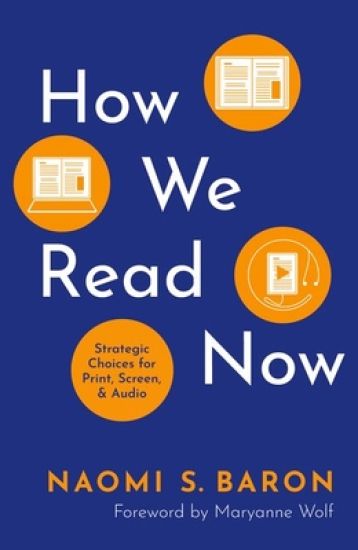
An engaging and authoritative guide to the impact of reading medium on learning, from a foremost expert in the field We face constant choices about how we read. Educators must select classroom materials. College students weigh their textbook options. Parents make decisions for their children. The digital revolution has transformed reading, and with the recent turn to remote learning, onscreen reading may seem like the only viable option. Yet selecting digital is often based on cost or convenience, not on educational evidence. Now more than ever it is imperative to understand how reading medium actually impacts learning--and what strategies we need in order to read effectively in all formats. In How We Read Now, Naomi Baron draws on a wealth of knowledge and research to explain important differences in the way we concentrate, understand, and remember across multiple formats. Mobilizing work from international scholarship along with findings from her own studies of reading practices, Baron addresses key challenges--from student complaints that print is boring to the hazards of digital reading for critical thinking. Rather than arguing for one format over another, she explains how we read and learn in different settings, shedding new light on the current state of reading. The book then crucially connects research insights to concrete applications, offering practical approaches for maximizing learning with print, digital text, audio, and video. Since screens and audio are now entrenched--and invaluable-platforms for reading, we need to rethink ways of helping readers at all stages use them more wisely. How We Read Now shows us how to do that.
Intersectionality

Intersectionality

Naomi Zack

OXFORD UNIVERSITY PRESS INC
2024
sidottu
In Intersectionality, philosopher Naomi Zack presents a novel philosophical account of intersectionality - the process by which people already oppressed, experience more oppression because of their intersecting identities. Examples include women who experience racism or poor people who are under-served. Identifying such intersections allows for more precise analysis of oppression, as well as newly recognized identities, such as blackwomen or homeless people of colour. Zack here explores the meaning of intersectionality through analysis of current events and controversies including the #MeToo movement, the COVID-19 pandemic, and class opportunities for minorities in higher education. Her analysis develops a robust definition of intersectionality in terms of inclusion, recognition, and diversity; works out ontological issues about the relationship between persons, labels, and identity; explores the distinction between abstract philosophical thinking and activism; and discusses how intersectionality can be an effective basis for empowerment, as well as understanding. Zack's distinctively philosophical account explains how intersectionality, considered as a method of analysis, works and can be employed in many areas of progressive thought across varying disciplines. She concludes that identifying and challenging the injustice of oppressions logically requires a broad humanistic framework, that intersectionality cannot be reduced to mere talk of diversity and inclusion, and that intersectionality itself is a progressive method of analysis worthy of philosophical attention.
Schelling's Mystical Platonism

Schelling's Mystical Platonism

Naomi Fisher

OXFORD UNIVERSITY PRESS INC
2024
sidottu
Schelling came of age during the pivotal and exciting years at the end of the eighteenth century, as Kant's philosophy was being incorporated into the German academic world. At this time, in addition to delving into the new Kantian philosophy, Schelling engaged in an intense study of Plato's dialogues and was immersed in a Neoplatonic intellectual culture. Attention to these aspects of Schelling's early philosophical development illuminates his fundamental commitments. Throughout the first decade of his adult life, from 1792-1802, Schelling was a mystical Platonist. Naomi Fisher argues that Schelling is committed to two overarching theses, which together comprise his mystical Platonism. First, Schelling considers the absolute to be ineffable: It cannot be described in conceptual terms. For this reason, it remains inferentially external to any given philosophical system and is only intimated to us in certain analogical formulations, in works of art, or in nature as a whole. Second, Schelling is committed to a kind of priority monism: All things are grounded in the absolute, but finite things possess an integral unity all their own, and so have a distinct and relatively independent existence. Highlighting these commitments resolves an interpretive dispute, according to which Schelling is a Fichtean idealist or a Spinozist, or he vacillates between these positions. Interpreting Schelling as advancing a mystical Platonism provides an alternative way of interpreting these early texts, such that they are by and large consistent. Fisher presents Schelling's early philosophy as a unique and compelling fusion of the old and new: Schelling fulfills the characteristic aims of post-Kantian philosophy in a way distinctive among his contemporaries, by drawing on and appropriating various strands of Platonism.
André Gide

André Gide

Naomi Segal

Clarendon Press
1998
sidottu
This book makes a powerful and somtimes contentious contribution to current debates in gender, feminist, and queer theory. Tracing the hydraulic image in a range of theoretical texts on pedagogy, pederasty, reproductive fantasy, and the anthropology of body fluids, Naomi Segal goes on to examine this imagery in the writings of André Gide. Gide's sexuality was explicitly central to everything he wrote, but it was complex and diverse, motivated as much by undesire as by curiosity and the chase. The ventriloquism of the female voice, versions of triangularity, the potentially endless male chain, the desire of sun on skin, a sideways genealogy, and the gratuity of crime, education, virtue, or playthese mobile patterns are found throughout his fiction and non-fiction. In Gide's polemic, it is always better to be loved by an uncle than an aunt; but all love is motivated by the fluidity of the swerve.
The Aid Lab

The Aid Lab

Naomi Hossain

Oxford University Press
2017
sidottu
From an unpromising start as 'the basket-case' to present day plaudits for its human development achievements, Bangladesh plays an ideological role in the contemporary world order, offering proof that the neo-liberal development model works under the most testing conditions. How were such rapid gains possible in a context of chronically weak governance? The Aid Lab subjects this so-called 'Bangladesh paradox' to close scrutiny, evaluating public policies and their outcomes for poverty and development since Bangladesh's independence in 1971. Countering received wisdom that its gains owe to an early shift to market-oriented economic reform, it argues that a binding political settlement, a social contract to protect against the crises of subsistence and survival, united the elite, the masses, and their aid donors in the wake of the devastating famine of 1974. This laid resilient foundations for human development, fostering a focus on the poorest and most precarious, and in particular on the concerns of women. In chapters examining the environmental, political and socioeconomic crisis of the 1970s, the book shows how the lessons of the famine led to a robustly pro-poor growth and social policy agenda, empowering the Bangladeshi state and its non-governmental organizations to protect and enable its population to thrive in its engagements in the global economy. Now a middle-income country, Bangladesh's role as the world's laboratory for aided development has generated lessons well beyond its borders, and Bangladesh continues to carve a pioneering pathway through the risks of global economic integration and climate change.
Psychology of Mental Health

Psychology of Mental Health

Naomi Fisher

Oxford University Press
2024
nidottu
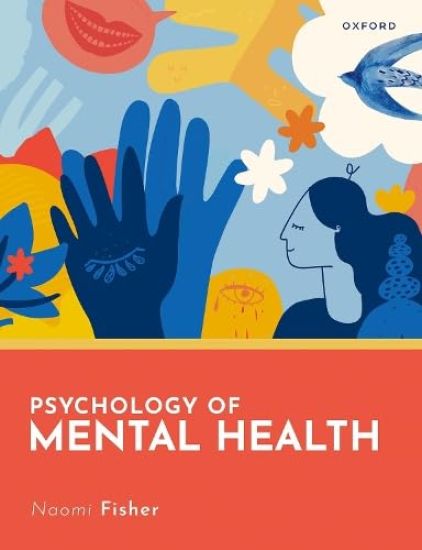
A clear and engaging introduction to the psychology of mental health, which takes account of a range of perspectives and illustrates how psychologists work in the field today. Psychology of Mental Health will place our current understanding of mental health in context, both historically and culturally. It will discuss various models for understanding mental health, research on causes of mental health problems, and will introduce recent psychology-led alternatives to diagnosis. This edition is available for students and institutions to purchase in a variety of formats. The e-book offers a mobile experience and convenient access along with functionality tools, navigation features, and links that offer extra learning support: www.oxfordtextbooks.co.uk/ebooks.
Macromolecular Crystallization and Crystal Perfection

Macromolecular Crystallization and Crystal Perfection

Naomi E Chayen; John R Helliwell; Edward H Snell

Oxford University Press
2010
sidottu
The crystallization of proteins and nucleic acids and/or their complexes has become more highly automated but is still often a trial and error based approach. In parallel, a number of X-ray diffraction based techniques have been developed which explain the physical reasons limiting the resulting crystallographic data and thus show how that data may be improved. Crystal growth is also pivotal in neutron crystallography, which establishes the hydrogen and hydration aspects. Thus this book is aimed at addressing the science behind obtaining the best and most complete structural data possible for biological macromolecules, so that the detailed structural biology and chemistry of these important molecules emerge. Crystal imperfections such as twinning and lattice disorders, as well as multiple crystal situations, and their possible remedies, are also described. The small crystal frontier in micro-crystal crystallography, crystallites in powders and finally down to the proposed single molecule structure determination of X-ray lasers are covered. Overall this interdisciplinary book will interest crystal growers, X-ray and neutron physicists and the biological crystallographers, including graduate students.
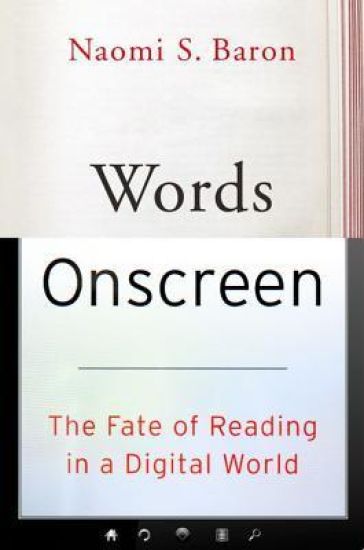
Words Onscreen

Words Onscreen

Naomi S. Baron

Oxford University Press Inc
2015
sidottu
People have been reading on computer screens for several decades now, predating popularization of personal computers and widespread use of the internet. But it was the rise of eReaders and tablets that caused digital reading to explode. In 2007, Amazon introduced its first Kindle. Three years later, Apple debuted the iPad. Meanwhile, as mobile phone technology improved and smartphones proliferated, the phone became another vital reading platform. In Words Onscreen, Naomi Baron, an expert on language and technology, explores how technology is reshaping our understanding of what it means to read. Digital reading is increasingly popular. Reading onscreen has many virtues, including convenience, potential cost-savings, and the opportunity to bring free access to books and other written materials to people around the world. Yet, Baron argues, the virtues of eReading are matched with drawbacks. Users are easily distracted by other temptations on their devices, multitasking is rampant, and screens coax us to skim rather than read in-depth. What is more, if the way we read is changing, so is the way we write. In response to changing reading habits, many authors and publishers are producing shorter works and ones that don't require reflection or close reading. In her tour through the new world of eReading, Baron weights the value of reading physical print versus online text, including the question of what long-standing benefits of reading might be lost if we go overwhelmingly digital. She also probes how the internet is shifting reading from being a solitary experience to a social one, and the reasons why eReading has taken off in some countries, especially the United States and United Kingdom, but not others, like France and Japan. Reaching past the hype on both sides of the discussion, Baron draws upon her own cross-cultural studies to offer a clear-eyed and balanced analysis of the ways technology is affecting the ways we read today--and what the future might bring.
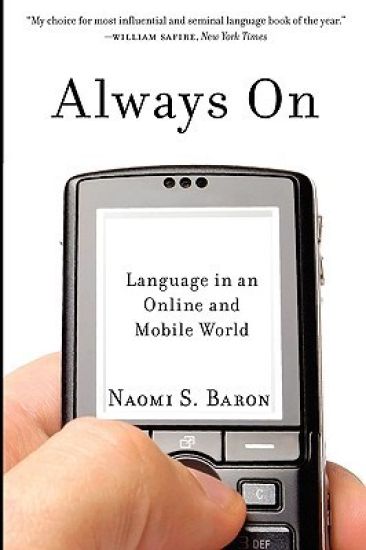
Always On

Always On

Naomi Baron

Oxford University Press Inc
2010
nidottu
In Always On, Naomi S. Baron reveals that online and mobile technologies-including instant messaging, cell phones, multitasking, Facebooks, blogs, and wikis - are profoundly influencing how we read and write, speak and listen, but not in the ways we might suppose. Baron draws on a decade of research to provide an eye-opening look at language in an online and mobile world. She reveals for instance that email, IM, and text messaging have had surprisingly little impact on student writing. Electronic media has magnified the laid-back ¨whatever¨ attitude toward formal writing that young people everywhere have embraced, but it is not a cause of it. A more troubling trend, according to Baron, is the myriad ways in which we block incoming IMs, camouflage ourselves on Facebook, and use ring tones or caller ID to screen incoming calls on our mobile phones. Our ability to decide who to talk to, she argues, is likely to be among the most lasting influences that information technology has upon the ways we communicate with one another. Moreover, as more and more people are älways on¨ one technology or another-whether communicating, working, or just surfing the web or playing games-we have to ask what kind of people do we become, as individuals and as family members or friends, if the relationships we form must increasingly compete for our attention with digital media? Our 300-year-old written culture is on the verge of redefinition, Baron notes. It's up to us to determine how and when we use language technologies, and to weigh the personal and social benefits-and costs-of being älways on.¨ This engaging and lucidly-crafted book gives us the tools for taking on these challenges.