This book is concerned with a quantitative analysis of dynamic behavior of various enzymatic reaction systems by computer simulation. The authors and coworkers have been engaged in cooperative research since 1975, seeking to clarify the catalytic and regulatory characteristics of enzymatic reactions in vivo and control mechanisms suitable for enzyme technology. Rather than "enzyme kinetics" generally known in enzymol· ogy, this research has employed an approach called "enzyme dynamics" which concentrates on the exact schematic representation of an actual reac tion mechanism, derivation of rate equation on the basis of the scheme, and computer simulation of its dynamic behavior (numerical solution of the rate equation and explanation of kinetic and regulatory properties of the enzymatic reaction). A rate equation representing the behavior of enzymatic reactions is gen erally expressed by a set of nonlinear differential equations. The analytic solution of rate equations is therefore impossible in general, making it necessary to introduce some approximations in order to analyze the exper· imental data in enzyme kinetics. For example, under an assumption of excess substrate against enzyme in a closed system, we commonly use the linear approximation for the early period of reaction, the quasi-steady state approximation based on putative maintenance of steady state in en zyme species, and the rapid-equilibrium approximation assuming instantane ous equilibration in complex formation and between complexes. The kinetic characteristics obtained by these approximations do not always reflect the dynamic behavior of actual enzymatic reactions.
Dans un contexte de rivalit sino-am ricaine croissante, la RDC se trouve un tournant d cisif. Les projets d'infrastructures, qu'ils soient ferroviaires ou routiers, offrent une opportunit unique de transformer les richesses mini res en levier de d veloppement durable. Toutefois, la r ussite d pendra de la capacit du gouvernement congolais n gocier des accords quilibr s, renforcer ses institutions, et s'aligner sur les grandes transformations mondiales. La RDC a ainsi une chance historique de se positionner comme un acteur cl dans la nouvelle conomie mondiale.
Una f bula ilustrada sobre el poder y la magia infinita de los libros. Este superventas en Jap n llega a nuestro pa s para conquistar a los amantes de la lectura de todas las edades. Un rey anciano, vido lector, casi ciego, env a a dos de sus s bditos a dar la vuelta al mundo en busca de historias extra as y maravillosas. Los dos hombres emprenden el viaje y a su regreso, a lo largo de trece noches, cada uno le cuenta al rey sobre los libros que ha encontrado: est el libro que nadie puede leer porque va demasiado r pido, el libro que se busca por todo el pa s con la polic a pis ndole los talones, el libro abandonado en la estanter a de una librer a de segunda mano (feliz, a pesar de las p ginas gastadas, porque ha acompa ado a una persona que lo ha le do mil veces a lo largo de su vida), el libro que solo ni os muy peque os pueden leer, el diario que comparten dos ni os y que contiene secretos muy dolorosos ... y muchos otros m s. A trav s de esta obra ilustrada nica, nos embarcamos en un viaje cautivador y reconfortante que nos ense a la fuerza de la palabra escrita, el poder y la importancia que tienen los libros en nuestras vidas, y las diversas maneras en las que interactuamos con ellos. ENGLISH DESCRIPTION An illustrated fable about the power and infinite magic of books. The Japanese bestseller that has captivated readers of all ages. An elderly king, an avid reader but almost blind, sends two of his subjects to search the world for strange and marvelous stories. Upon their return, over the course of thirteen nights, the men tell the king about the books they found: the one no one can read because it goes too fast; another that is on the run, with the police hot on its tail; the volume abandoned on the shelf of a second-hand bookstore (content, despite its worn pages, because it was owned by a person who read it countless times throughout their life); the story that only young children can read; the diary shared by two children that contains painful secrets... and many more. This unique illustrated tale leads us on an enchanting and heartwarming adventure that reaffirms the power of the written word, the important place books hold in our lives, and the multiple ways we interact with them.
This book introduces vibronic coupling density and vibronic coupling constant analyses as a way to understand molecular structure and chemical reactions. After quantum study, the behavior of electrons circulating around nuclei led to the principal concept that underlies all explanations in chemistry. Many textbooks have given plausible explanations to clarify molecular structure—for example, the bond elongation of ethylene under anionization and the nonplanar structure of ammonia. Frontier molecular orbital concepts were proposed to visualize the path of chemical reactions, and conventional explanations gave students a familiarity with molecular structures in terms of the electronic state. By contrast, this book offers a more rational and more convincing path to understanding. It starts from the ab initio molecular Hamiltonian and provides systematic, rational approaches to comprehend chemical phenomena. In this way, the book leads the reader to a grasp of the quantitative evaluation of the force applied under the molecular deformation process. As well, guidelines are offered for integrating the traditional “hand-waving” approach of chemistry with more rational and general VCD and VCC alternatives along with the outlook for newly functionalized chemical systems.
This book presents recent breakthroughs in the field of Learning-from-Observation (LfO) resulting from advancement in large language models (LLM) and reinforcement learning (RL) and positions it in the context of historical developments in the area. LfO involves observing human behaviors and generating robot actions that mimic these behaviors. While LfO may appear similar, on the surface, to Imitation Learning (IL) in the machine learning community and Programing-by-Demonstration (PbD) in the robotics community, a significant difference lies in the fact that these methods directly imitate human hand movements, whereas LfO encodes human behaviors into the abstract representations and then maps these representations onto the currently available hardware (individual body) of the robot, thus indirectly mimicking them. This indirect imitation allows for absorbing changes in the surrounding environment and differences in robot hardware. Additionally, by passing through this abstract representation, filtering can occur, distinguishing between important and less important aspects of human behavior, enabling imitation with fewer demonstrations and less demanding demonstrations. The authors have been researching the LfO paradigm for the past decade or so. Previously, the focus was primarily on designing necessary and sufficient task representations to define specific task domains such as assembly of machine parts, knot-tying, and human dance movements. Recent advancements in Generative Pre-trained Transformers (GPT) and RL have led to groundbreaking developments in methods to obtain and map these abstract representations. By utilizing GPT, the authors can automatically generate abstract representations from videos, and by employing RL-trained agent libraries, implementing robot actions becomes more feasible.
Welding Deformation and Residual Stress Prevention, Second Edition provides readers with both fundamental theoretical knowledge about welding deformation and stress as well as unique computational approaches for predicting and mitigating the effects of deformation and residual stress on materials. This second edition has been updated to include new techniques and applications, outlining advanced finite element methods such as implicit scheme, explicit scheme, and hybrid scheme, and coupling analysis among thermal-metallurgy-mechanics. Non-destructive measurement methods for residual stresses are introduced, such as X-ray diffraction, the indentation technique, the neutron diffraction method, and various synchrotron X-ray diffraction techniques. Destructive measurement techniques are covered as well, such as block cutting for releasing residual stress, blind hole drilling, deep hole drilling, the slit cutting method, sectional contour method, and general inherent strain method. Various industrial applications of the material behavior and computational approaches are featured throughout.
Nitride Phosphors and Solid-State Lighting provides an in-depth introduction to the crystal chemistry, synthesis, luminescence, and applications of phosphor materials for solid-state lighting, mainly focusing on new nitride phosphors. Drawing on their extensive experimental work, the authors offer a multidisciplinary study of phosphor materials that encompasses materials science, inorganic chemistry, solid-state chemistry, solid-state physics, optical spectroscopy, crystal field theory, and computational materials science.The book begins with an introduction to the principles, semiconductor/phosphor materials, and characterizations of solid-state lighting and white light-emitting diodes (LEDs). It then discusses the optical and luminescence processes occurring in optically active centers of solid materials and presents the photoluminescence properties of traditional phosphors for white LEDs, including garnets, aluminates, silicates, sulfides, oxysulfides, phosphates, and scheelites.The remainder of the text focuses on newly developed nitride phosphors. The authors describe the crystal chemistry of general nitride compounds, the crystal structure and photoluminescence properties of new nitride phosphors, and synthetic methods for preparing nitride phosphors. They detail the structural analysis of nitride phosphors and present experimental and computational results of typical nitride phosphors. The authors also examine key issues, such as excitation and emission spectra, thermal quenching, and quantum efficiency. The final chapter explores applications of nitride phosphors in white LEDs for general lighting and LCD backlight purposes.Covering novel luminescent materials, this book brings you up to date on the evolving field of solid-state lighting. It illustrates the fundamentals, synthesis, properties, and applications of the latest nitride phosphor materials.
Approximately four million years of human history has passed. We have been using materials to make a variety of tools. The first materials used were naturally occurring materials such as animal bones, stones, wood etc.; and some of these familiar materials are porous. Porous materials are so familiar that they are sometimes forgotten or ignored. The taste experience of ice cream is created not only by adjusting ingre dients, but also by including air as an ingredient, i.e. pores that give the smooth texture of ice cream. This book is designed to describe and explain about pores, the synthesis of materials with pores (porous materials), and applications of porous materi als. This book is intended for engineers and scientists of different disciplines and specialities, and is expected to be useful in the design and synthesis of porous materials for existing as well as potential new applications. Let us rediscover pores. K. Ishizaki, S. Komameni and M. Nanko January 1998 1 Introduction 1.1 WHAT ARE POROUS MATERIALS? Porous materials are dermed as solids containing pores. Figure 1.1 shows different porous materials. Generally speaking, porous materials have a porosity of 0.2-0.95. The porosity means the fraction of pore volume to the total volume. Porous materials have been used in various applications from daily necessities, such as purifying drinking water by activated carbon or porous ceramics, to uses in modern industries, for example removing dusts from high purity process gases for semiconductor production.
A systematic and comprehensive introduction to electromagnetic transient in cable systems, written by the internationally renowned pioneer in this field Presents a systematic and comprehensive introduction to electromagnetic transient in cable systemsWritten by the internationally renowned pioneer in the fieldThorough coverage of the state of the art on the topic, presented in a well-organized, logical style, from fundamentals and practical applicationsA companion website is available
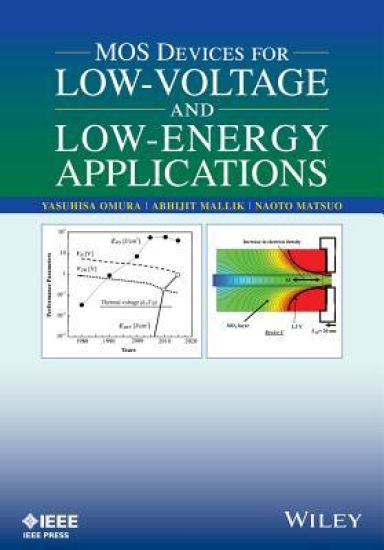
Helps readers understand the physics behind MOS devices for low-voltage and low-energy applications Based on timely published and unpublished work written by expert authorsDiscusses various promising MOS devices applicable to low-energy environmental and biomedical usesDescribes the physical effects (quantum, tunneling) of MOS devicesDemonstrates the performance of devices, helping readers to choose right devices applicable to an industrial or consumer environmentAddresses some Ge-based devices and other compound-material-based devices for high-frequency applications and future development of high performance devices. "Seemingly innocuous everyday devices such as smartphones, tablets and services such as on-line gaming or internet keyword searches consume vast amounts of energy. Even when in standby mode, all these devices consume energy. The upcoming 'Internet of Things' (IoT) is expected to deploy 60 billion electronic devices spread out in our homes, cars and cities. Britain is already consuming up to 16 per cent of all its power through internet use and this rate is doubling every four years. According to The UK's Daily Mail May (2015), if usage rates continue, all of Britain's power supply could be consumed by internet use in just 20 years. In 2013, U.S. data centers consumed an estimated 91 billion kilowatt-hours of electricity, corresponding to the power generated by seventeen 1000-megawatt nuclear power plants. Data center electricity consumption is projected to increase to roughly 140 billion kilowatt-hours annually by 2020, the equivalent annual output of 50 nuclear power plants."—Natural Resources Defense Council, USA, Feb. 2015 All these examples stress the urgent need for developing electronic devices that consume as little energy as possible. The book “MOS Devices for Low-Voltage and Low-Energy Applications” explores the different transistor options that can be utilized to achieve that goal. It describes in detail the physics and performance of transistors that can be operated at low voltage and consume little power, such as subthreshold operation in bulk transistors, fully depleted SOI devices, tunnel FETs, multigate and gate-all-around MOSFETs. Examples of low-energy circuits making use of these devices are given as well. "The book MOS Devices for Low-Voltage and Low-Energy Applications is a good reference for graduate students, researchers, semiconductor and electrical engineers who will design the electronic systems of tomorrow."—Dr. Jean-Pierre Colinge, Taiwan Semiconductor Manufacturing Company (TSMC) "The authors present a creative way to show how different MOS devices can be used for low-voltage and low-power applications. They start with Bulk MOSFET, following with SOI MOSFET, FinFET, gate-all-around MOSFET, Tunnel-FET and others. It is presented the physics behind the devices, models, simulations, experimental results and applications. This book is interesting for researchers, graduate and undergraduate students. The low-energy field is an important topic for integrated circuits in the future and none can stay out of this."—Prof. Joao A. Martino, University of Sao Paulo, Brazil
Nitride Phosphors and Solid-State Lighting provides an in-depth introduction to the crystal chemistry, synthesis, luminescence, and applications of phosphor materials for solid-state lighting, mainly focusing on new nitride phosphors. Drawing on their extensive experimental work, the authors offer a multidisciplinary study of phosphor materials that encompasses materials science, inorganic chemistry, solid-state chemistry, solid-state physics, optical spectroscopy, crystal field theory, and computational materials science.The book begins with an introduction to the principles, semiconductor/phosphor materials, and characterizations of solid-state lighting and white light-emitting diodes (LEDs). It then discusses the optical and luminescence processes occurring in optically active centers of solid materials and presents the photoluminescence properties of traditional phosphors for white LEDs, including garnets, aluminates, silicates, sulfides, oxysulfides, phosphates, and scheelites.The remainder of the text focuses on newly developed nitride phosphors. The authors describe the crystal chemistry of general nitride compounds, the crystal structure and photoluminescence properties of new nitride phosphors, and synthetic methods for preparing nitride phosphors. They detail the structural analysis of nitride phosphors and present experimental and computational results of typical nitride phosphors. The authors also examine key issues, such as excitation and emission spectra, thermal quenching, and quantum efficiency. The final chapter explores applications of nitride phosphors in white LEDs for general lighting and LCD backlight purposes.Covering novel luminescent materials, this book brings you up to date on the evolving field of solid-state lighting. It illustrates the fundamentals, synthesis, properties, and applications of the latest nitride phosphor materials.
Approximately four million years of human history has passed. We have been using materials to make a variety of tools. The first materials used were naturally occurring materials such as animal bones, stones, wood etc.; and some of these familiar materials are porous. Porous materials are so familiar that they are sometimes forgotten or ignored. The taste experience of ice cream is created not only by adjusting ingre dients, but also by including air as an ingredient, i.e. pores that give the smooth texture of ice cream. This book is designed to describe and explain about pores, the synthesis of materials with pores (porous materials), and applications of porous materi als. This book is intended for engineers and scientists of different disciplines and specialities, and is expected to be useful in the design and synthesis of porous materials for existing as well as potential new applications. Let us rediscover pores. K. Ishizaki, S. Komameni and M. Nanko January 1998 1 Introduction 1.1 WHAT ARE POROUS MATERIALS? Porous materials are dermed as solids containing pores. Figure 1.1 shows different porous materials. Generally speaking, porous materials have a porosity of 0.2-0.95. The porosity means the fraction of pore volume to the total volume. Porous materials have been used in various applications from daily necessities, such as purifying drinking water by activated carbon or porous ceramics, to uses in modern industries, for example removing dusts from high purity process gases for semiconductor production.
Converging technologies promise a new era of delivering education, health, and social services to millions of digitally excluded. Hard hit by the COVID-19 pandemic and beset with low human development outcomes, how can South Asia bring these benefits to vulnerable groups, adapt technologies, and build trust and protection against risks?