Kirjojen hintavertailu. Mukana 11 244 527 kirjaa ja 12 kauppaa.

Kirjahaku

Etsi kirjoja tekijän nimen, kirjan nimen tai ISBN:n perusteella.

1000 tulosta hakusanalla Octavia Butler

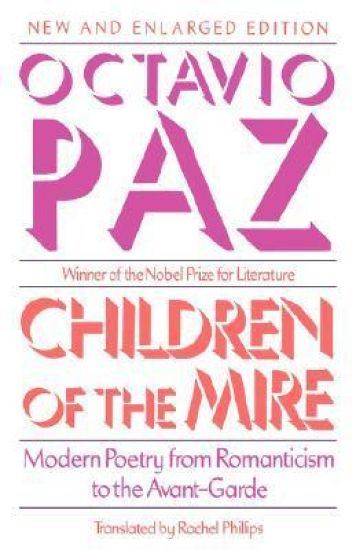
Children of the Mire

Children of the Mire

Octavio Paz

Harvard University Press
1991
nidottu
Octavio Paz launches a far-ranging excursion into the “incestuous and tempestuous” relations between modern poetry and the modern epoch. From the perspective of a Latin American poet, he explores the opposite meanings that the word “modern” has held for poets and philosophers, artists, and scientists. Tracing the beginnings of the modern poetry movement to the pre-Romantics, Paz outlines its course as a contradictory dialogue between the poetry of the Romance and Germanic languages. He discusses at length the unique character of Anglo-American “modernism” within the avant-garde movement, and especially vis-à-vis French and Spanish poetry. Finally he offers a critique of our era’s attitude toward the concept of time, affirming that we are at the “twilight of the idea of the future.” He proposes that we are living at the end of the avant-garde, the end of that vision of the world and of art born with the first Romantics.
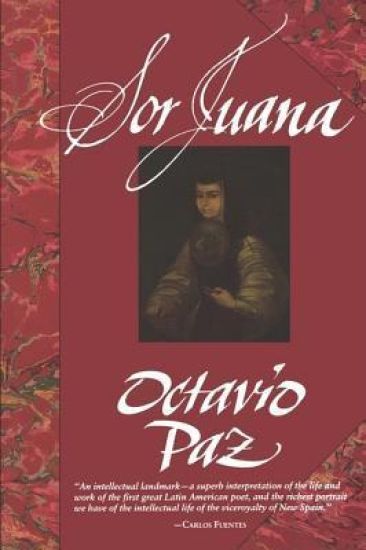
Sor Juana

Sor Juana

Octavio Paz

The Belknap Press
1990
nidottu
Mexico’s leading poet, essayist, and cultural critic writes of a Mexican poet of another time and another world, the world of seventeenth-century New Spain. His subject is Sor Juana Inés de la Cruz, the most striking figure in all of Spanish-American colonial literature and one of the great poets of her age.Her life reads like a novel. A spirited and precocious girl, one of six illegitimate children, is sent to live with relatives in the capital city. She becomes known for her beauty, wit, and amazing erudition, and is taken into the court as the Vicereine’s protégée. For five years she enjoys the pleasures of life at court—then abruptly, at twenty, enters a convent for life. Yet, no recluse, she transforms the convent locutory into a literary and intellectual salon; she amasses an impressive library and collects scientific instruments, reads insatiably, composes poems, and corresponds with literati in Spain. To the consternation of the prelates of the Church, she persists in circulating her poems, redolent more of the court than the cloister. Her plays are performed, volumes of her poetry are published abroad, and her genius begins to be recognized throughout the Hispanic world. Suddenly she surrenders her books, forswears all literary pursuits, and signs in blood a renunciation of secular learning. The rest is silence. She dies two years later, at forty-six.Octavio Paz has long been intrigued by the enigmas of Sor Juana’s personality and career. Why did she become a nun? How could she renounce her lifelong passion for writing and learning? Such questions can be answered only in the context of the world in which she lived. Paz gives a masterly portrayal of the life and culture of New Spain and the political and ideological forces at work in that autocratic, theocratic, male-dominated society, in which the subjugation of women was absolute.Just as Paz illuminates Sor Juana’s life by placing it in its historical setting, so he situates her work in relation to the traditions that nurtured it. With critical authority he singles out the qualities that distinguish her work and mark her uniqueness as a poet. To Paz her writings, like her life, epitomize the struggle of the individual, and in particular the individual woman, for creative fulfillment and self-expression.
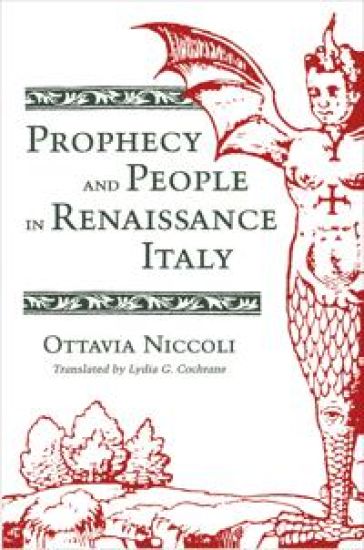
Prophecy and People in Renaissance Italy

Prophecy and People in Renaissance Italy

Ottavia Niccoli

Princeton University Press
1990
pokkari
In the midst of the religious ferment, foreign invasions, and internal political strife that beset Italy before the full effects of the Counter-Reformation, the powerful and humble alike turned to popular prophecy for guidance and solace. Ottavia Niccoli examines here the forms of these prophecies--including interpretations of natural disasters, abnormal births, floods, and planetary conjunctions--and gives examples of how they were transmitted from the lower classes to the elite through street singers, apocalyptic preachers, astrologers, and printers. By tracing the ongoing revision of the prophecies, Niccoli reveals them as an indication of how various levels of society viewed events of the time, as a form of propaganda for such causes as anti-Lutheranism, and as a reflection of the interaction between "high" and "low" culture. Based on popular leaflets, diaries, civic chronicles, and iconographic sources, this book explores the expression of a culture in which nature, religion, and politics formed a unified system with a uniform code of interpretation. It connects the decline of prophecy in Italy with the end of the Italian wars and the beginning of the Counter-Reformation, when popular preaching was banned and charismatic religion discouraged.
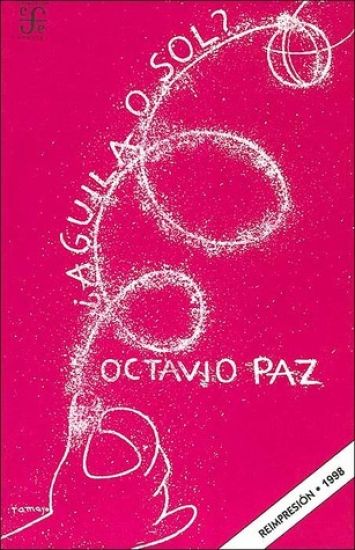
Eagle or Sun?: Poems

Eagle or Sun?: Poems

Octavio Paz

NEW DIRECTIONS PUBLISHING CORPORATION
1976
nidottu
The first major book of short prose poetry in Spanish, Eagle or Sun? (Aguila o Sol?) exerted an enormous influence on modern Latin American writing. Written in 1949-50 by Nobel Laureate Octavio Paz, Eagle or Sun? has as its mythopoeic "place" Mexico--a country caught up in its pre-Columbian past, the world of modern imperialism, and an apocalyptic future foretold by the Aztec calendar. Indeed, three personae of the book--the goddess Itzapaplotl, the prophet clerk, the poet--are manifestations of the threefold aspects of the land. Paz himself explains: "Eagle or Sun? is an exploration of Mexico, yes, but at the same time, and above all, it is an exploration of the relations between language and the poet, reality and language, the poet and history."
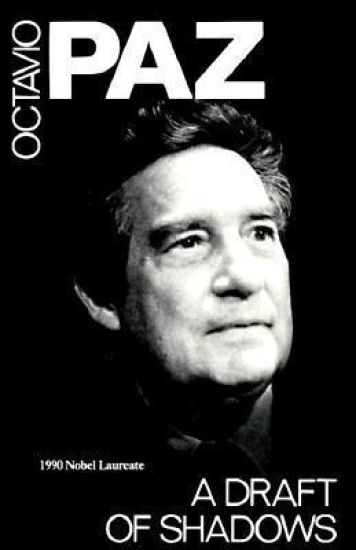
A Draft of Shadows and Other Poems

A Draft of Shadows and Other Poems

Octavio Paz

NEW DIRECTIONS PUBLISHING CORPORATION
1980
nidottu
A Draft of Shadows and Other Poems is the most recent collection of the work of Mexico's leading poet and essayist, Octavio Paz. The first section of poems, from Ladera este (East Slope, 1969), reflects some of Paz's experiences as his country's ambassador to India (1962-68). Following stays in England, France, and the United States, he returned to Mexico in 1971, reacting to the urban sprawl and violence of Mexico City with the four long poems of disaster and rage that, together with shorter poems more familiar in tone, make up Vuelta ("Return," 1976). A long meditation on the poet's childhood and adolescence, Pasado en claro ("A Draft of Shadows," 1975) forms the third section of this volume and represents a further departure from the self-contained surreal images many associate with Paz. This bilingual selection concludes with a sampling of his most recent lyrics, and the promise of further experimentation. Paz, winner in 1981 of both the Neustadt Prize and the Cervantes Award, stated in a recent interview: "When I am writing a poem, it is to make something, an object or organism that will be whole and living, something that will have a life independent of me," and throughout this book the poet's abiding concern for language as a living force is revealed. For Paz, poetry is a way of reinventing the self, and appropriately, the reflective. "A Draft of Shadows" concludes: "I am the shadow my words cast."
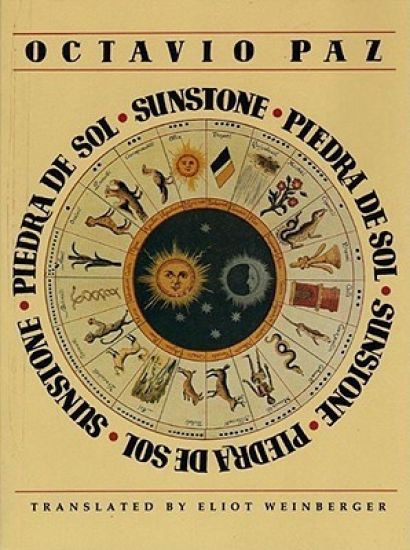
Piedra de Sol = Sunstone

Piedra de Sol = Sunstone

Octavio Paz

NEW DIRECTIONS PUBLISHING CORPORATION
1991
nidottu
Presented in Eliot Weinberger's excellent new translation with the Spanish texts en face, this is the 1957 poem "that definitively established Paz as a major international figure" (Sagetrieb). Written as a single cyclical sentence (at the end of the poem the first six lines are written again), Sunstone is a tour de force of momentum. It takes as its structural basis the circular Aztec calendar, which measured the synodic period of the planet Venus (584 days--the number of lines of Sunstone). But, as The New Republic noted, "this esoteric correlative design...does not circumscribe its subject. It is] a lyrically discursive exploration of time and memory, of erotic love, or art and writing."
A Tale of Two Gardens

A Tale of Two Gardens

Octavio Paz

New Directions Publishing Corporation
1997
nidottu
Despite having written many acclaimed non-fiction books on the region, he has always considered those writings to be footnotes to the poems. From the long work "Mutra," written in 1952 and accompanied here by a new commentary by the author, to the celebrated poems of East Slope, and his recent adaptations from the classical Sanskrit, Paz scripts his India with a mixture of deft sensualism and hands-on politics.
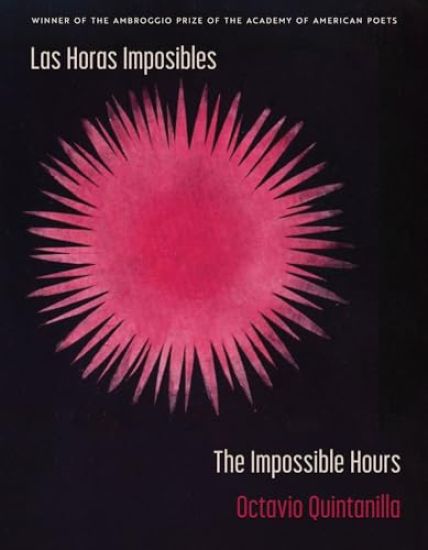
Las Horas Imposibles / The Impossible Hours

Las Horas Imposibles / The Impossible Hours

Octavio Quintanilla

University of Arizona Press
2025
nidottu
In Las Horas Imposibles / The Impossible Hours, Octavio Quintanilla takes us on a profound journey to witness what it means to erase those boundaries devised by genre and politics intent on stifling memory, imagination, and creativity. Presented in Spanish with English translations, this poetry collection comprises lyric and concrete poems- or frontextos- that explore intimacy and different shades of violence as a means to reconcile the speaker's sense of belonging in the world. From the opening poem to the last in the first section, Quintanilla captures the perilous journeys that migrants undertake crossing borders as well as the paths that lovers forge to meet their endless longing. These themes are skillfully woven by Quintanilla, guiding us back and forth across the Rio Grande to encounter the apparitions of the disappeared and to witness the willingness of many to risk life and limb for a better life. The second half of the collection is one long poem, a letter addressed to a lost lover who will never get to read the speaker's secret thoughts. Haunted by loss - of parents, of children, of the self - the speaker reaches an inevitable epiphany: " [A]nd sometimes it's hard to know / on which side of the river I stand." Stylistically, these poems destabilize our notions and expectations of genre and lyricism. Las Horas Imposibles / The Impossible Hours is more than just an exercise in poetic virtuosity it is an excavation into the complexities of what it means to be a human being in our contemporary world.
Retablos

Retablos

Octavio Solis

City Lights Books
2018
pokkari
Recommended by the New York Times and NBC News, and called one of the Best Books of the Year by Buzzfeed! The New York Times directs readers to Retablos if you want to know "what's life really like on the Mexican border." "Solis grew up just a mile from the Rio Grande in El Paso, Texas, and he tells stories about his childhood and coming of age, including his parents migration to the United States from Mexico, his first encounter with racism and finding a Mexican migrant girl hiding in the cotton fields."—Concepción de León, New York Times Seminal moments, rites of passage, crystalline vignettes—a memoir about growing up brown at the U.S./Mexico border. More praise for Octavio Solis's Retablos: "This is American and Mexican literature a stone's throw from the always hustling El Paso border."—Gary Soto, author of The Elements of San Joaquin "We inhabit a border world rich in characters, lush with details, playful and poignant, a border that refutes the stereotypes and divisions smaller minds create. Solis reminds us that sometimes the most profound truths are best told with crafted fictions--and he is a master at it."—Julia Alvarez, author of How the García Girls Lost Their Accents " … it's hard not to consider the border itself as a representation of a 'terrible rift,' a split between homes, communities, identities, generations. While reading this generous and eye-opening account, it's easy to see how, for the country at large, the rift has only deepened.”—Arianna Rebolini, Buzzfeed Best Books of Fall 2018 "Landing somewhere between Neil Gaiman and Juan Rulfo, Solis secularizes the mythological by turning men and women into saintly figures—like their criada [maid], Consuelo, and a white priest who shows his family empathy—and monsters: border agents who take his friends away and school bullies."—Michael Adam Carroll, The Millions "There has never been a border book like Retablos, a collection of smoldering epiphanies suffering the baptizing waters of recall. . . ."—Roberto Ontiveros, San Antonio Current "The book is rendered in tight, stand-alone recollections rich with poetry and honesty. . . . If retablos are offerings, then Solis' book is a gift of memory, not always pleasant, but always true."—Beatriz Terrazas, Dallas Morning News "The experience of reading his tightly contained memories in succession is a bit like drawing old coins up from a wishing well. Filtered through veils of distance and time, these scenes and reflections are wonderful and weird flashes of childhood, adolescence and early adulthood in the life of this particular Mexican American boy."-- Sophie Haigney, San Francisco Chronicle "Octavio Solis' Retablos recounts a 'beautiful, messy' youth on the border. Though its title evokes Mexican folk art, Retablos is closer in effect to that of French pointillism. Its small dabs of vivid color produce a brilliant cumulative effect."—Steven G. Kellman, The Texas Observer "In this debut memoir, playwright Solis delivers top-notch vignettes of his youth with riveting imagery and empathy, recounting--and embellishing, he says--memories of growing up brown in El Paso, Tex. . . . These brilliantly told stories of missteps and redemption are a treat."--Publishers Weekly ". . .what struck me most about each chapter was Solis's ability to plant a specific image in your mind. With every retablo, you can see in ferocious detail exactly what the author wants you to see, like a special kind of telepathy. I found myself wanting to paint them."—Caitlyn Reynolds, The Los Angeles Review of Books "In all, a beautiful, evocative, and timely expression of border culture for every collection."--Sara Martinez, Booklist "In this coming-of-age memoir, a playwright illuminates the culture of the El Paso border as he perceived it when he was young. . . . An intriguing work that transcends category, drawing from facts but reading like fiction."--Kirkus Reviews
Manuel Sanguily. Historia de Un Ciudadano Cubano

Manuel Sanguily. Historia de Un Ciudadano Cubano

Octavio R Costa

EDICIONES UNIVERSAL
2023
pokkari
Octavio R. Costa (1915-2005) fue, sin dudas, uno de los intelectuales, periodista e historiadorcubano, m s importante de la poca republicana de Cuba y del exilio cubano. Entre sus obrasresaltan, Imagen y Trayectoria del Cubano en la Historia, en dos vol menes, las biograf as deMaceo y Juan Gualberto G mez y Cubanos de Acci n y Pensamiento, con las biograf as de 65protagonistas de la historia de Cuba.Manuel Antonio Sanguily Garritte (1848-1925) fue un patriota cubano que luch en la Guerra de los Diez A os, llegando a alcanzar el grado de coronel. Particip activamente en la pol tica durante los primeros a os de la Rep blica, siendo reconocido siempre por su honesto y brillantes servicios diplom ticos. Delegado a la Asamblea Constituyente de 1901, se opuso a la Enmienda Platt y a la tentativa de intervenci n militar de Estados Unidos de 1912. Fue el primer presidente del Senado de 1902. Conocer la historia de los fundadores de la Naci n cubana es importante para consturir un futuro feliz para Cuba.***Octavio R. Costa (1915-2005) was, without a doubt, one of the most important Cuban intellectuals, journalists and historians of the Republican era of Cuba and the Cuban exile. Among his works are: Imagen y Trayectoria del Cubano en la Historia, in two volumes, the biographies of Maceo and Juan Gualberto G mez and Cubanos de Acci n y Pensamiento, with the biographies of 65 protagonists in the history of Cuba.Manuel Antonio Sanguily Garritte (1848-1925) was a Cuban patriot who fought in the Ten Years' War, reaching the rank of colonel. He actively participated in politics during the first years of the Republic, always being recognized for his honest and brilliant diplomatic services. Delegate to the Constituent Assembly of 1901, he opposed the Platt Amendment and the attempted militaryintervention of the United States in 1912. He was the first president of the Senate in 1902. Knowing the history of the founders of the Cuban Nation is important to build a happy future for Cuba.
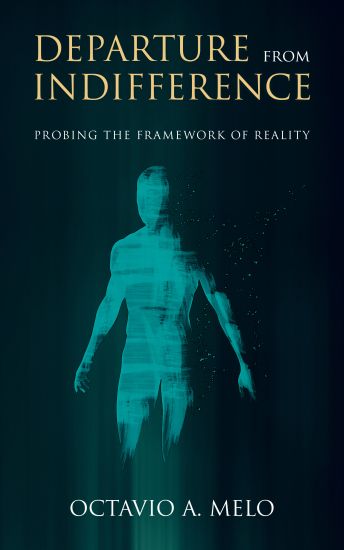
Departure From Indifference: Probing the Framework of Reality
We don't get to choose the reality we want-no matter how badly we want it. We can, at best, use our powers of observation and perception to try to understand the one we have. And if we are to be true to this process, then we must neither add nor detract from that which can be perceived when we provide an account of our observations. But the questions that we must address in this pursuit are not insignificant. Within the mechanical aspects of a material universe, questions of meaning and purpose seem illusory, even out of place, but their weight and significance cry out not to be ignored... we yearn to understand, to have a sense of the purpose of our being.Inevitably, it must all come together at some point, even if that point lies outside our current level of understanding. This work, which owes so much to the efforts of countless others, is but a simple attempt to point in that direction.