

Kirjahaku
Etsi kirjoja tekijän nimen, kirjan nimen tai ISBN:n perusteella.
1000 tulosta hakusanalla Olga Pattern


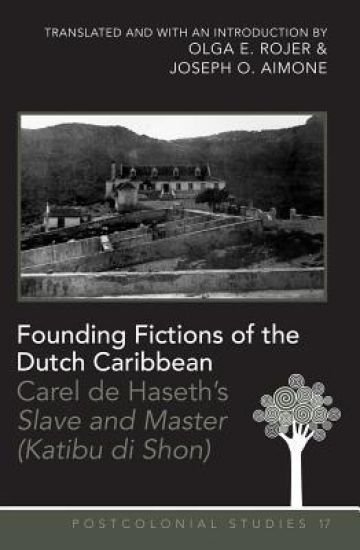
Founding Fictions of the Dutch Caribbean
Olga E. Rojer; Joseph O. Aimone
Peter Lang Publishing Inc
2011
nidottu
Carel de Haseth’s novella Slave and Master (Katibu di Shon), written in the Creole language Papiamentu, dramatizes the August 17, 1795 slave revolt on the Dutch Caribbean island of Curaçao. The story is told through an alternating series of dramatic monologues by two key characters: Luis, a slave, and a leader of the revolt; and Shon Welmu, his childhood friend and white heir to the slave plantation. The exposition begins shortly after the revolt has been crushed, as Luis awaits his brutal execution, and it ends with his preemptive suicide. The theme is the acceptance of the inevitablity of emancipation. Founding Fictions of the Dutch Caribbean: Carel de Haseth’s Slave and Master (Katibu di Shon) is suitable for courses on Caribbean literature and postcolonial literature, and will be of great interest to readers of fiction in general.
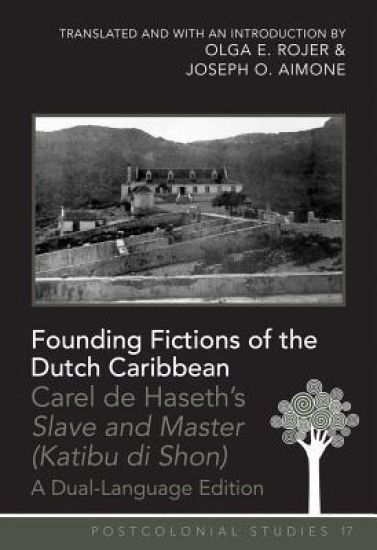
Founding Fictions of the Dutch Caribbean
Olga E. Rojer; Joseph O. Aimone
Peter Lang Publishing Inc
2012
sidottu
Carel de Haseth’s novella Slave and Master (Katibu di Shon), written in the Creole language Papiamentu, dramatizes the August 17, 1795 slave revolt on the Dutch Caribbean island of Curaçao. The story is told through an alternating series of dramatic monologues by two key characters: Luis, a slave, and a leader of the revolt; and Shon Welmu, his childhood friend and white heir to the slave plantation. The exposition begins shortly after the revolt has been crushed, as Luis awaits his brutal execution, and it ends with his preemptive suicide. The theme is the acceptance of the inevitablity of emancipation. Founding Fictions of the Dutch Caribbean: Carel de Haseth’s Slave and Master (Katibu di Shon) is suitable for courses on Caribbean literature and postcolonial literature, and will be of great interest to readers of fiction in general.

Africa’s Last Romantic: The Films, Books and Expeditions of John L. Brom captures the drama and excitement of John L. Brom’s film expeditions from 1949 to 1962 through sub-Saharan Africa. Brom was the only explorer to follow the footsteps of Henry Morton Stanley and in a documentary interviewed the two last survivors of Stanley’s expeditions from 1874 to 1890. In 1955 he also interviewed the famous nineteenth-century East African slave trader Tippu Tip’s grandson, who defended his grandfather’s trade. Brom’s expedition was the basis for his bestseller 20,000 Miles in the African Jungle, which was translated into eleven languages. Brom managed to interview and film the rulers and tribes he encountered before they were decimated in the civil wars of the Congo after independence, and his historic films are now preserved in the Human Studies Film Archives of the Smithsonian Institution. Over 500 articles were published on Brom’s work on both sides of the Atlantic during his lifetime. Africa’s Last Romantic is a useful addition to college courses in Third World cinema, cinema studies, and African history.
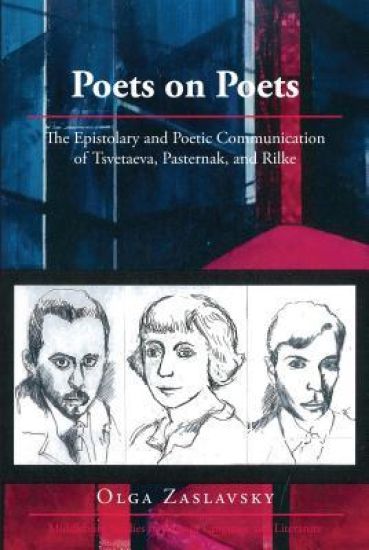
This book provides a thorough examination of how both Marina Tsvetaeva and Boris Pasternak perceived Rainer Maria Rilke’s poetic persona and oeuvre in similar ways, and how, in their perception of Rilke’s role as that of the paradigmatic poet, they had drawn on the specifically Russian poetic paradigm, i.e., the image of Pushkin in the context of Russian literature of the Silver Age. At the same time, both poets’ scrutiny of the sublime, the mundane, and the tragic side of practicing poetic craft in the Soviet Union, as in the case of Pasternak, and in exile, as in Tsvetaeva’s case, generates the discourse of "empathic attunement." By applying "empathic" discourse towards Rilke, both poets’ anxieties about their future, and that of Russian poetry in general, come to the fore.
Founding Fictions of the Dutch Caribbean
Olga E. Rojer; Joseph O. Aimone
PETER LANG PUBLISHING INC
2022
sidottu
This satirical novel is set in the heady atmosphere of carnival on the tropical Dutch Caribbean island of Curaçao, where the contradictions of postcolonial existence come to a boil that is furious, often bitingly funny, and sometimes almost intolerably tragic. And through it all, the story manages by way of a genuinely African derived rhythm to offer a message of hope. The heroine of the novel is Bir, a woman in her late sixties, the mama grandi with her ancient wisdom, a solid root of the community, dispensing medicinal herbs, advice, and motherly love. The flavor of the island is unmistakable: it is an authentic Curaçaoan story by noted Curaçaoan author Diana Lebacs. Not only is it Curaçaoan in its subject matter but in the way the story is told. It is serious but full of humor, from gentle irony to slapstick, with a lot of social satire in between. Founding Fictions of the Dutch Caribbean: Diana Lebacs’ The Longest Month (De Langste Maand), originally written in Dutch, is suitable for courses on Caribbean and postcolonial literature, women’s writing, and for readers of fiction in general.

Deliberate Practice in Interpersonal Psychotherapy
Olga Belik; Jessica M. Schultz; Scott Fairhurst; Scott Stuart; Alexandre Vaz; Tony Rousmaniere
AMERICAN PSYCHOLOGICAL ASSOCIATION
2025
pokkari
Deliberate practice exercises provide trainees and students an opportunity to build competence in essential interpersonal therapy skills while developing their own personal therapeutic style. These exercises present role-playing scenarios in which two trainees act as a client and a clinician, switching back and forth under the guidance of a supervisor. The clinician improvises appropriate and authentic responses to client statements organized into three difficulty levels-beginner, intermediate, and advanced-that reflect common client questions and concerns. Each of the first exercises focuses on a single skill, including developing an interpersonal inventory of patients' relationships, building social skills, and helping patients connect with their own thoughts and emotions and empathize with others. Two comprehensive exercises follow in which trainees integrate these essential skills into a single session. Step-by-step instructions guide participants through the exercises, identify criteria for mastering each skill, and explain how to monitor and adjust difficulty. Guidelines to help trainers and trainees get the most out of training are also provided.


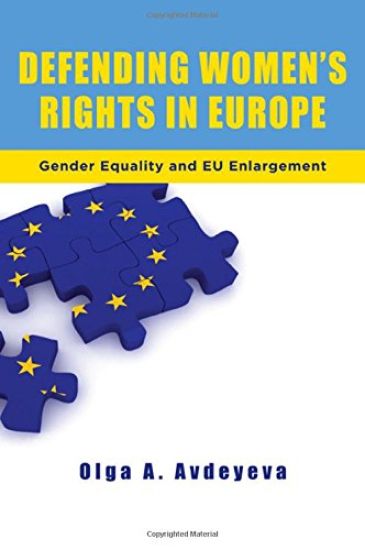
Comparative analysis of gender equality reforms enacted in ten post-communist states who became members of the European Union.Between 2004 and 2007, ten post-communist Eastern European states became members of the European Union (EU). To do so, these nations had to meet certain EU accession requirements, including antidiscrimination reforms. While attaining EU membership was an incredible achievement, many scholars and experts doubted the sustainability of accession-linked reforms. Would these nations comply with EU directives on gender equality? To explore this question, Defending Women's Rights in Europe presents a unique analysis of detailed original comparative data on state compliance with EU gender equality requirements. It features a comprehensive quantitative analysis combined with rigorous insightful case studies of reforms in Poland, the Czech Republic, and Lithuania. Olga A. Avdeyeva reveals that policy and institutional reforms developed furthest in those states where women's advocacy NGOs managed to form coalitions with governing political parties. After becoming members of the EU, the governments did not abolish these policies and institutions despite the costs and lack of popular support. Reputational concerns prevented state elites from policy dismantling, but gender equality policies and institutions became marginalized on the state agenda after accession.This book is freely available in an open access edition thanks to Knowledge Unlatched-an initiative that provides libraries and institutions with a centralized platform to support OA collections and from leading publishing houses and OA initiatives. Learn more at the Knowledge Unlatched website at: https://www.knowledgeunlatched.org/, and access the book online at the SUNY Open Access Repository at https://soar.suny.edu/handle/20.500.12648/1710.

Comparative analysis of gender equality reforms enacted in ten post-communist states who became members of the European Union.Between 2004 and 2007, ten post-communist Eastern European states became members of the European Union (EU). To do so, these nations had to meet certain EU accession requirements, including antidiscrimination reforms. While attaining EU membership was an incredible achievement, many scholars and experts doubted the sustainability of accession-linked reforms. Would these nations comply with EU directives on gender equality? To explore this question, Defending Women's Rights in Europe presents a unique analysis of detailed original comparative data on state compliance with EU gender equality requirements. It features a comprehensive quantitative analysis combined with rigorous insightful case studies of reforms in Poland, the Czech Republic, and Lithuania. Olga A. Avdeyeva reveals that policy and institutional reforms developed furthest in those states where women's advocacy NGOs managed to form coalitions with governing political parties. After becoming members of the EU, the governments did not abolish these policies and institutions despite the costs and lack of popular support. Reputational concerns prevented state elites from policy dismantling, but gender equality policies and institutions became marginalized on the state agenda after accession.This book is freely available in an open access edition thanks to Knowledge Unlatched-an initiative that provides libraries and institutions with a centralized platform to support OA collections and from leading publishing houses and OA initiatives. Learn more at the Knowledge Unlatched website at: https://www.knowledgeunlatched.org/, and access the book online at the SUNY Open Access Repository at https://soar.suny.edu/handle/20.500.12648/1710.
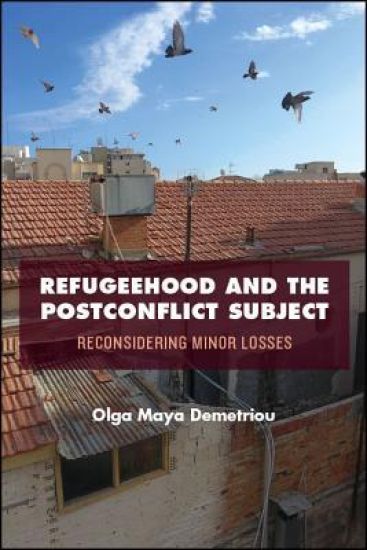
Refugeehood and the Postconflict Subject
Olga Maya Demetriou
State University of New York Press
2018
sidottu
Examines the effects of culturally specific interpretations of refugeehood with an ethnographic focus on CyprusBeing a "refugee" is not simply a matter of law, determination procedures, or the act of flight. It is an ontological condition, structured by the politics of law, affect, and territory. Refugeehood and the Postconflict Subject explores the variable facets of refugeehood, their interconnections, and their intended and unintended consequences. Grounded on more than a decade of research on the island of Cyprus, Olga Maya Demetriou considers how different groups of "refugees" coexist and how this coexistence invites reinterpretations of the law and its politics. The long-standing political conflict in Cyprus produced not only the paradigmatic, formally recognized "refugee" but also other groups of displaced persons not so categorized. By examining the people and circumstances, Demetriou reveals the tensions and contestations within the international refugee regimes and argues that any reinterpretation that accounts for these tensions also needs to recognize that these "minor" losses are not incidental to refugeehood but an intrinsic part of the wider issues.
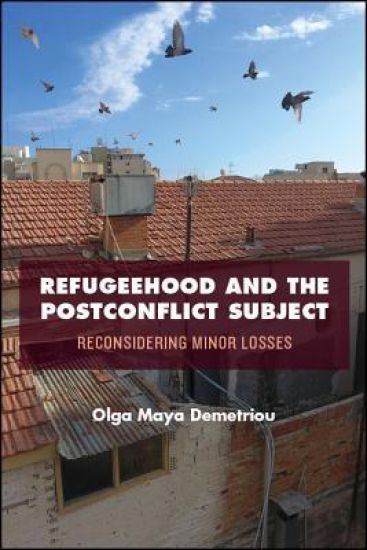
Refugeehood and the Postconflict Subject
Olga Maya Demetriou
State University of New York Press
2019
pokkari
Examines the effects of culturally specific interpretations of refugeehood with an ethnographic focus on CyprusBeing a "refugee" is not simply a matter of law, determination procedures, or the act of flight. It is an ontological condition, structured by the politics of law, affect, and territory. Refugeehood and the Postconflict Subject explores the variable facets of refugeehood, their interconnections, and their intended and unintended consequences. Grounded on more than a decade of research on the island of Cyprus, Olga Maya Demetriou considers how different groups of "refugees" coexist and how this coexistence invites reinterpretations of the law and its politics. The long-standing political conflict in Cyprus produced not only the paradigmatic, formally recognized "refugee" but also other groups of displaced persons not so categorized. By examining the people and circumstances, Demetriou reveals the tensions and contestations within the international refugee regimes and argues that any reinterpretation that accounts for these tensions also needs to recognize that these "minor" losses are not incidental to refugeehood but an intrinsic part of the wider issues.
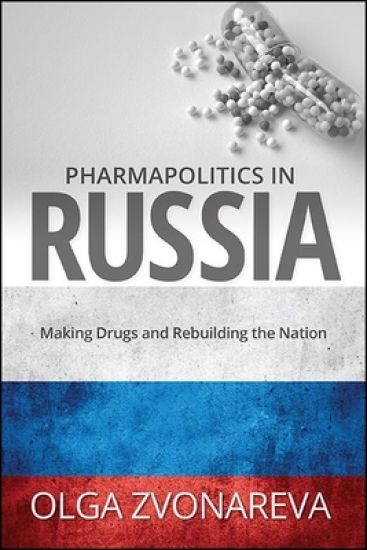
Documents the surprising role pharmaceutical science and technology has played in Russia's search for national identity over a century of political turbulence.Over the last one hundred years, the Russian pharmaceutical industry has undergone multiple dramatic transformations, which have taken place alongside tectonic political shifts in society associated with the rise and fall of the Soviet Union and the emergence of a post-Soviet order. Pharmapolitics in Russia argues that different versions of the Russian pharmaceutical industry took shape in a co-productive process, equally involving political ideologies and agendas, and technoscientific developments and constraints. Drawing on interviews, documents, literature, and media sources, Olga Zvonareva examines critical points in the history of the pharmaceutical industry in Russia. This includes the emergence of Soviet drug research and development, the short-lived neoliberal turn of the 1990s, and the ongoing efforts of the Russian government to boost local pharmaceutical innovation, which in turn produced a now widely shared vision of an independent and self-sufficient nation. The resulting industrial organizations and practices, she argues, came to embed and transmit particular imaginaries of the nation and its future.
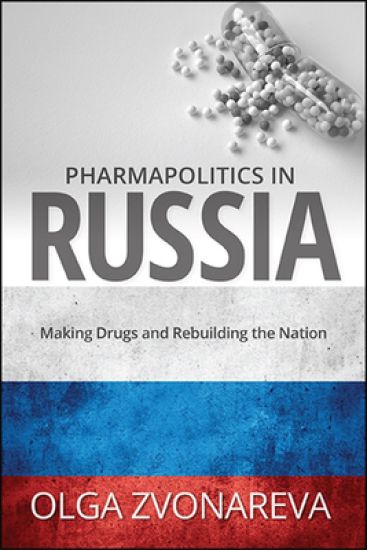
Documents the surprising role pharmaceutical science and technology has played in Russia's search for national identity over a century of political turbulence.Over the last one hundred years, the Russian pharmaceutical industry has undergone multiple dramatic transformations, which have taken place alongside tectonic political shifts in society associated with the rise and fall of the Soviet Union and the emergence of a post-Soviet order. Pharmapolitics in Russia argues that different versions of the Russian pharmaceutical industry took shape in a co-productive process, equally involving political ideologies and agendas, and technoscientific developments and constraints. Drawing on interviews, documents, literature, and media sources, Olga Zvonareva examines critical points in the history of the pharmaceutical industry in Russia. This includes the emergence of Soviet drug research and development, the short-lived neoliberal turn of the 1990s, and the ongoing efforts of the Russian government to boost local pharmaceutical innovation, which in turn produced a now widely shared vision of an independent and self-sufficient nation. The resulting industrial organizations and practices, she argues, came to embed and transmit particular imaginaries of the nation and its future.