Kirjojen hintavertailu. Mukana 11 717 486 kirjaa ja 12 kauppaa.

Kirjahaku

Etsi kirjoja tekijän nimen, kirjan nimen tai ISBN:n perusteella.

1000 tulosta hakusanalla Peter J. Perry

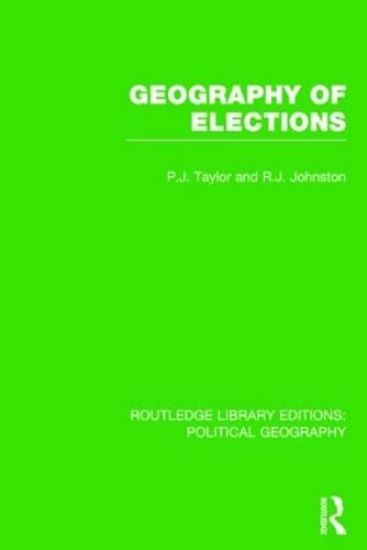
Geography of Elections

Geography of Elections

Peter J. Taylor; Ron Johnston

Routledge
2016
nidottu
Within an international framework, this work provides a fully comprehensive approach to the geographical coverage of elections. Numerous applications of ides and concepts from human geography are incorporated into a new political context, illustrating the manner in which electoral patterns reflect and help produce the overall geography of a region or state. Discussions of various topics are well supported by numerous maps and diagrams which help clarify arguemnts and serve to define elections within their basic geographical context.
Why Perestroika Failed

Why Perestroika Failed

Peter J Boettke

Routledge
2015
nidottu
Perestroika was acclaimed in the west but brought empty shelves in the east. Why Perestroika Failed argues that this was inevitable because it was not based on a sound understanding of market and political processes. Even if the perestroika programme had been carried out to the full it would have failed to bring about the structural changes necessary to transform what was the Soviet economy.
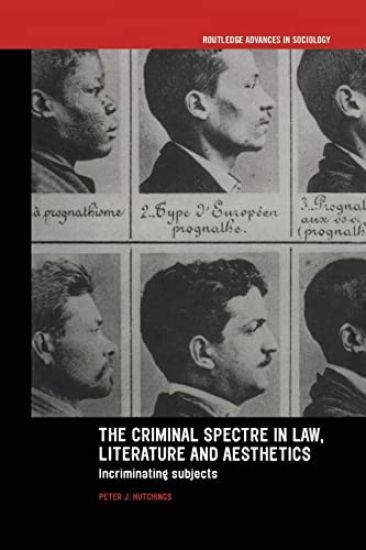
The Criminal Spectre in Law, Literature and Aesthetics
This book analyses the legal and aesthetic discourses that combine to shape the image of the criminal, and that image's contemporary endurance. The author traces the roots of contemporary ideas about criminality back to legal, philosophical and aesthetic concepts originating in the nineteenth century. Building on the ideas of Foucault and Walter Benjamin, Hutchings argues that the criminal, as constructed in places such as popular crime stories or the law of insanity, became an obsession which haunted nineteenth century thought.
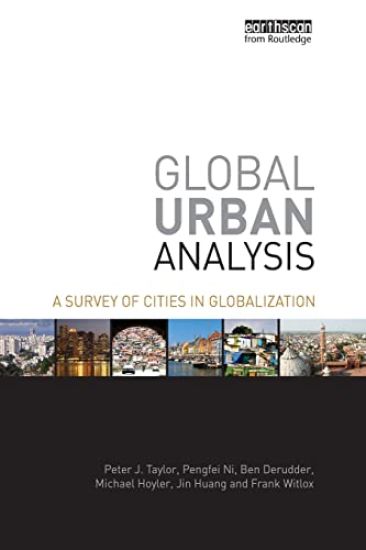
Global Urban Analysis

Global Urban Analysis

Peter J Taylor; Pengfei Ni; Ben Derudder; Michael Hoyler; Jin Huang; Frank Witlox

Routledge
2015
nidottu
Global Urban Analysis provides a unique insight into the contemporary world economy through a focus on cities. It is based upon a large-scale customised data collection on how leading businesses use cities across the world: as headquarter locations, for finance, for professional and creative services, for media. These data - involving up to 2000 firms and over 500 cities - provide evidence for both how the leading cities, sometimes called global cities, are coming to dominate the world economy, and how hundreds of other cities are faring in this brave new urban world. Thus can the likes of London, New York and Hong Kong be tracked as well as Manchester, Cleveland and Guangzhou, and even Plymouth, Chattanooga and Xi'an. Cities are assessed and ranked in terms of their importance for various functions such as for financial services, legal services and advertising, plus novel findings are reported for the geographical orientations of their connections. This is truly a comprehensive survey of cities in globalization covering global, world-regional, and national scales of analysis: - 4 key chapters outline the global structure of the world economy featuring the leading cities; - 9 regional chapters covering the whole world also feature the level of services provided by 'medium' cities; - 22 chapters on selected countries and sub-regions indicate global-ness and local-ness and feature an even wider range of cities. Written in an easy to understand style, this book is a must read for anybody interested in their own city in the world and how it relates to other cities.
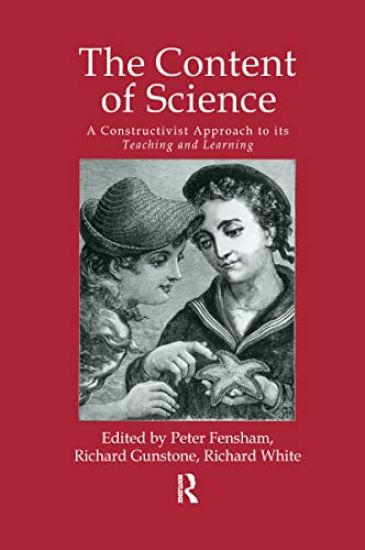
The Content Of Science: A Constructive Approach To Its Teaching And Learning

The Content Of Science: A Constructive Approach To Its Teaching And Learning

Peter J. Fensham; Richard F. Gunstone; Richard T. White

Routledge
2016
nidottu
A group of science educators with experience of being involoved in curriculum development, and in conducting extensive research on many aspects of teaching and learning science, have combined their findings in this volume.; Each author has conducted research into his or her own area of science education and presents the implications of this research for a specific area of science teaching. The experiences of members of the Monash Children's Science Group; specifically three primary teachers and one biology teacher, have also been included so as to present the voices of teachers for whom writing a personal account of their teaching is often an unappealing task.
Edmund Burke and the Natural Law

Edmund Burke and the Natural Law

Peter J. Stanlis; Russell Kirk

Literary Licensing, LLC
2011
sidottu
Edmund Burke and the Natural Law is a book written by Peter J. Stanlis that explores the political philosophy of Edmund Burke, a prominent 18th-century British statesman and philosopher. The book delves into Burke's views on natural law, which is the idea that there are certain moral principles that are inherent in nature and can be discovered through reason. Stanlis argues that Burke's political thought was deeply rooted in his belief in natural law, and that this belief informed his opposition to the French Revolution and his defense of traditional institutions, such as the monarchy and the Church. The book also examines Burke's views on the role of government, the importance of tradition and custom, and his critique of rationalism and abstract theories of politics. Overall, Edmund Burke and the Natural Law provides a comprehensive analysis of Burke's political philosophy and its relevance to contemporary debates about the nature of government, the role of tradition, and the importance of moral principles in public life.This scarce antiquarian book is a facsimile reprint of the old original and may contain some imperfections such as library marks and notations. Because we believe this work is culturally important, we have made it available as part of our commitment for protecting, preserving, and promoting the world's literature in affordable, high quality, modern editions, that are true to their original work.
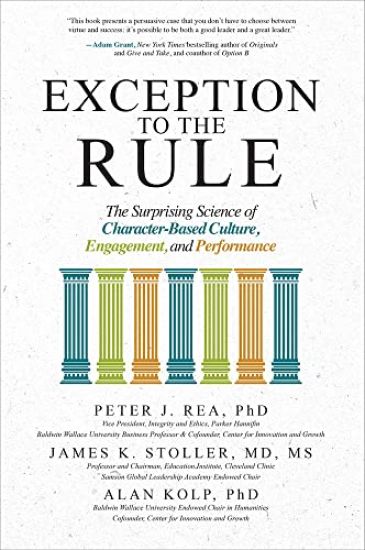
Exception to the Rule (PB)

Exception to the Rule (PB)

Peter J. Rea

McGraw-Hill Education
2023
nidottu
The antidote to navigating turbulent times isn’t more rules. It is timeless virtue that creates sustainable value. Thoughtful leaders are keenly aware of the enormous challenge they face to drive high performance in a world that continues to ratchet up pressure and uncertainty. Some leaders respond by getting tough and establishing strict rules. They get people in line, but they don’t inspire excellence. Wise leaders, on the other hand, help their people practice character to navigate their way through the turbulence—without lowering performance expectations. As a result, their people are more reliable under pressure. Exception to the Rule links ancient wisdom with contemporary science on high performance, teamwork, and engagement. Building an organizational culture based on classical virtues-of trust, compassion, courage, justice, wisdom, temperance and hope-is both strategically smart and a better way to live. Exception to the Rule walks you through the steps of helping everyone in your organization focus on character defined by virtue. The word virtue means excellence, which is why each one is essential to help people perform at a high level despite uncertainty and pressure. Under character-based leadership, teams work better together, creativity flourishes and engagement increases. The most powerful idea of Exception to the Rule is this: character defined by virtue is not based on birthright; it can be learned and practiced. Everyone can develop habits to become better than they were. While character cannot be legislated, character can be cultivated. As virtue proves its value, the culture you have can evolve into the culture you need.