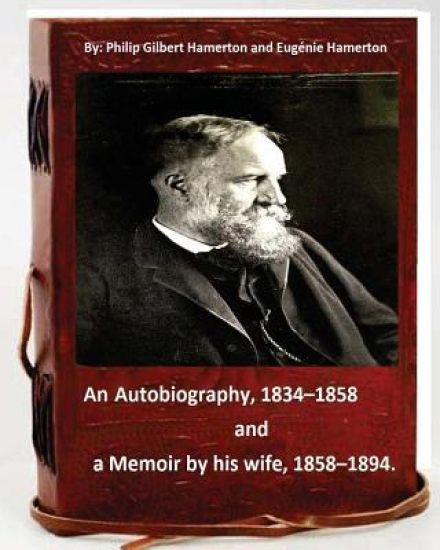
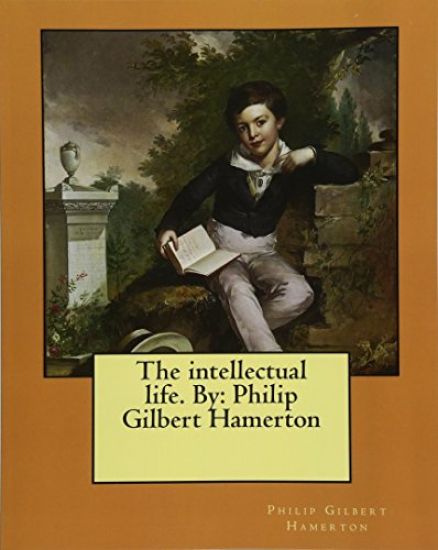
Philip Gilbert Hamerton (10 September 1834 - 4 November 1894), was an English artist, art critic and author.Philip Hamerton was born at Laneside, a hamlet near Shaw and Crompton, Lancashire, England. His mother died giving birth to him, and his father died ten years later. When he was about five, he was sent to live with his two aunts at an estate called the Hollins on the edge of Burnley, where he attended Burnley Grammar School.Hamerton's first literary attempt, a volume of poems, was unsuccessful, leading him to devote himself for a time entirely to landscape painting; he camped out in the Scottish Highlands, where he eventually rented the former island of Inistrynich in Loch Awe, upon which he settled with his wife Eug nie Gindriez, the daughter of a French republican magistrate, in 1858. Discovering after a time that he was more suited to art criticism than painting, he moved to his wife's native area in France, where?] where he produced his Painter's Camp in the Highlands (1863), which was very successful and prepared the way for his standard work on Etching and Etchers (1866). In the following year he published Contemporary French Painters, and in 1868 a continuation, Painting in France after the Decline of Classicism. He had by now become art critic to the Saturday Review, which necessitated frequent visits to England, forcing him to give it up. He proceeded (1870) to establish an art journal of his own, The Portfolio, a monthly periodical, each number of which consisted of a monograph upon some artist or group of artists, frequently written and always edited by him. The discontinuation of his painting gave him time for writing, and he successively produced The Intellectual Life (1873), perhaps the best known and most valuable of his writings; Round my House (1876), notes on French society by a resident; and Modern Frenchmen (1879), admirable short biographies. He also wrote two novels, Wenderholme (1870) and Marmorne (1878). In 1884 Human Intercourse, another volume of essays, was published, and shortly afterwards Hamerton began his autobiography, which he brought down to 1858. In 1882 he issued a finely illustrated work on the technique of the great masters of various arts, under the title of The Graphic Arts, and three years later another splendidly illustrated volume, Landscape, which traces the influence of landscape upon the mind of man. His last books were: Portfolio Papers (1889) and French and English (1889). In 1891 he removed to the neighbourhood of Paris, where he died suddenly in Boulogne-sur-Mer, occupied to the last with his labours on The Portfolio and other writings on art.
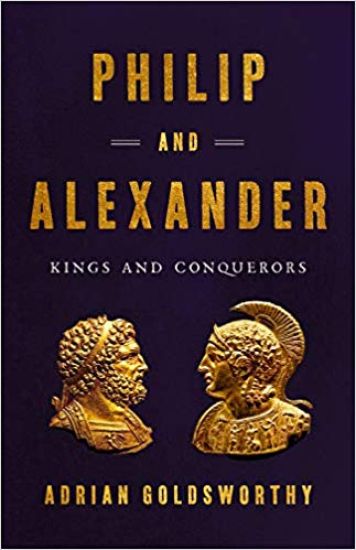
In this definitive biography of father and son, an eminent historian "brings to life the full drama of ancient history" (Wall Street Journal)Alexander the Great's conquests staggered the world. He led his army across thousands of miles, overthrowing the greatest empires of his time and building a new one in its place. He claimed to be the son of a god, but he was actually the son of Philip II of Macedon.Philip inherited a minor kingdom that was on the verge of dismemberment, but despite his youth and inexperience, he made Macedonia dominant throughout Greece. It was Philip who created the armies that Alexander led into war against Persia. In Philip and Alexander, classical historian Adrian Goldsworthy shows that without the work and influence of his father, Alexander could not have achieved so much. This is the groundbreaking biography of two men who together conquered the world.
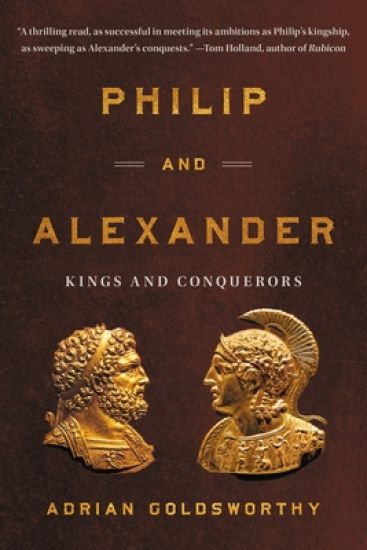
This definitive biography of one of history's most influential father-son duos tells the story of two rulers who gripped the world -- and their rise and fall from power.Alexander the Great's conquests staggered the world. He led his army across thousands of miles, overthrowing the greatest empires of his time and building a new one in their place. He claimed to be the son of a god, but he was actually the son of Philip II of Macedon.Philip inherited a minor kingdom that was on the verge of dismemberment, but despite his youth and inexperience, he made Macedonia dominant throughout Greece. It was Philip who created the armies that Alexander led into war against Persia. In Philip and Alexander, classical historian Adrian Goldsworthy shows that without the work and influence of his father, Alexander could not have achieved so much. This is the groundbreaking biography of two men who together conquered the world.
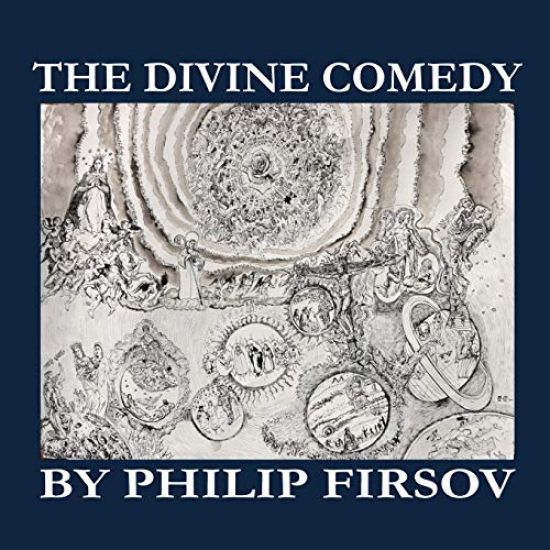
Philip Firsov's set of complete illustrations to all three books of The Divine Comedy by Dante: Inferno, Purgatory & Paradise in 3 indian ink drawings as well as 3 egravings (size A1) is the part of a Family project "La Divina Commedia", the cycle of three String Quartets commissioned by the University of Liverpool in association with the Rodewald Concerts Society for the Dante Quartet, as part of the musical programme of Liverpool as European Capital of Culture 2008: I. Inferno. Composed by Dmitri N. Smirnov. II. Purgatorio. Composed by Elena Firsova III. Paradiso. Composed by Alissa Firsova.
Philip Hamerton was born at Laneside, a hamlet near Shaw and Crompton, Lancashire, England. His mother died giving birth to him, and his father died ten years later. When he was about five, he was sent to live with his two aunts at an estate called the Hollins on the edge of Burnley, where he attended Burnley Grammar School.Hamerton's first literary attempt, a volume of poems, was unsuccessful, leading him to devote himself for a time entirely to landscape painting; he camped out in the Scottish Highlands, where he eventually rented the former island of Inistrynich in Loch Awe, upon which he settled with his wife Eug nie Gindriez, the daughter of a French republican magistrate, in 1858. Discovering after a time that he was more suited to art criticism than painting, he moved to his wife's native area in France, where?] where he produced his Painter's Camp in the Highlands (1863), which was very successful and prepared the way for his standard work on Etching and Etchers (1866). In the following year he published Contemporary French Painters, and in 1868 a continuation, Painting in France after the Decline of Classicism.
This work has special significance in the history of Protestant theology in that it was the first work written by a Protestant theologian on doctrinal theology. Hill's work seeks to bring Melanchthon out into the open where he may be seen as a constructive thinker, scholar, and systematizer of a theological worldview of his own.
Philip Roth Studies, a peer-reviewed semiannual journal published by Purdue University Press in cooperation with the Philip Roth Society, welcomes all writing pertaining entirely or in part to Philip Roth, his fiction, and his literary and cultural significance.
Philip Nolan is Chuck Pfarrer's captivating adaptation of ""The Man Without a Country,"" the short story originally published in The Atlantic in 1863. Masterfully blending history and fiction, Pfarrer transforms an allegory promoting the Union cause into the story of a young artillery officer, Philip Nolan, who becomes embroiled in Aaron Burr's 1807 conspiracy to invade the territories acquired in the Louisiana Purchase. Insinuating that his plot has official approval, Burr convinces Nolan to carry a coded message into the Orleans Territory. Nolan has no idea that the former vice-president intends to set himself up as a dictator-and Burr has no idea that his scheme has been discovered. Soon both Burr and Nolan are in military custody, and Nolan is an accessory to treason.The nation holds its breath as Burr is put on trial for attempting to dismember the union. The charges against Burr seem ironclad, but his lawyers are clever, and Burr is acquitted. An embarrassed prosecution looks for a scapegoat, and they expand the charges against Nolan to include desertion and treason. Learning that his own court martial will proceed, even though Burr has walked free, Nolan denounces his accusers, damns his country, and tells the court he wishes never again to hear the words ""United States"" as long as he lives. Nolan's fateful words stun the court. The judges return with an ominous verdict: the prisoner's wish will be granted. Nolan is exiled, sentenced to life aboard a series of U.S. warships, never to hear news from or be allowed to speak of his country again.After years of being shuttled from ship to America's first secret prisoner ship realizes he is a stateless person, estranged from his keepers and forgotten by his country. Decades after his trial, Nolan is passed aboard an American frigate in the Mediterranean. There, he comes into the custody of a newly commissioned lieutenant, Frank Curran. When Barbary pirates capture an American whale ship, the pair finds themselves drawn into a complex web of international deceit and mortal danger. As a desperate rescue mission is launched, Nolan teaches the young officer a poignant lesson about duty, loyalty and the meaning of patriotism.Philip Nolan is equal parts adventure, naval history and morality tale. Brilliantly evoking the age of sail, Pfarrer brings alive convincing details of that courageous and sometimes brutal world. More than broadsides and small boat actions, Philip Nolan is a clear-eyed examination of the human condition. Philip Nolan is beautifully crafted, and it deserves a place among the classics of the genre.