Kirjojen hintavertailu. Mukana 11 717 486 kirjaa ja 12 kauppaa.

Kirjahaku

Etsi kirjoja tekijän nimen, kirjan nimen tai ISBN:n perusteella.

1000 tulosta hakusanalla Randy Adamson

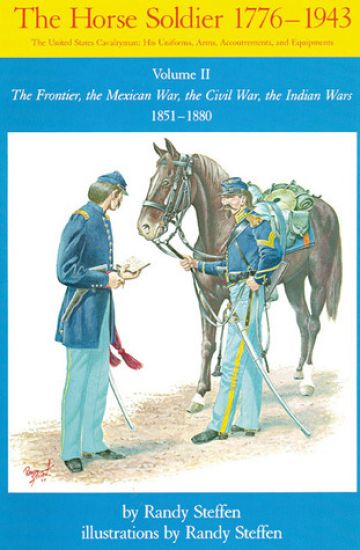
Horse Soldier, 1851-1880

Horse Soldier, 1851-1880

Randy Steffen

University of Oklahoma Press
1992
nidottu
This is the second volume of a projected four-volume work. In Volume I the author delineated the uniforms, arms, accouterments, and equipment of the period from 1776 to 1850. In this volume he addresses himself to the eventful, bloody tragic mid-nineteenth century. Here he describes the dress and equipment of the horse soldier of the early frontier, the Mexican War, the Civil War, and the wars with the Indians. The uniforms, insignia, decorations, arms, and horse gear are described and profusely illustrated in three color plates and 126 black-and-white drawings. For his models the author used actual uniforms and equipment, supported by official government documents.Among the subjects covered in this volume are the dress and equipment manufactured to meet the needs of cavalrymen at the early outposts east of the Missouri and in the brief War with Mexico that was a testing ground for the Civil War to come. (Ironically, much of the equipment and arms used by the United States Cavalry was designed by officers and government employees who later joined the Confederates.)After the war came a new duty for the horse soldier - pacification of the hostile Indians of the West. As the needs of this harsh and demanding duty became clear, radical modifications were made to meet them. All these changes are described and minutely illustrated in this, the second volume of an indispensable reference work for American historians.
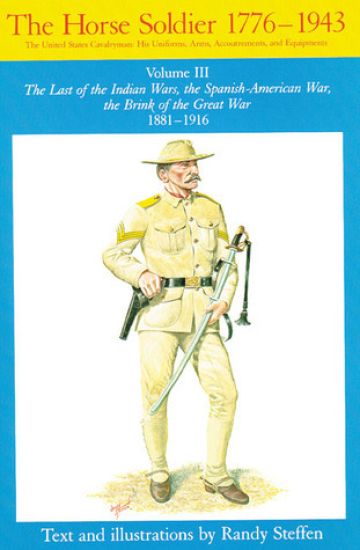
Horse Soldier, 1881-1916

Horse Soldier, 1881-1916

Randy Steffen

University of Oklahoma Press
1992
nidottu
This is the third volume of a projected four-volume work delineating, in text and voluminous illustrations, every aspect of the uniforms and equipment of that most colorful of all United States military forces - the cavalry.In Volumes I and II the author described and pictured the uniforms, arms, and equipment of the cavalry from Revolutionary days to the outbreak of the Indian Wars. In this volume the author addresses the period of the cavalry's decisive conquest of the Indians and the securing of the western frontier, the Spanish-American War and the glory of ""Teddy Roosevelt's boys,"" and the years when the thunder of the Great War in Europe was echoing ominously across the Atlantic to America.Each era made its demands upon the horse soldier and his mount, and the author shows how the government dressed, armed, and supplied them to meet those demands. Volume III, like the earlier volumes, is lavishly illustrated with two color plates and 168 black-and-white drawing, meticulously detailed.This book and the two earlier volumes in the series are indispensable reference works for researchers and historians of America's military past.
Tulsa, 1921

Tulsa, 1921

Randy Krehbiel; Karlos K. Hill

University of Oklahoma Press
2019
sidottu
In 1921 Tulsa's Greenwood District, known then as the nation's "Black Wall Street", was one of the most prosperous African American communities in the United States. But on May 31 of that year, a white mob, inflamed by rumors that a young black man had attempted to rape a white teenage girl, invaded Greenwood. By the end of the following day, thousands of homes and businesses lay in ashes, and perhaps as many as three hundred people were dead.Tulsa, 1921 shines new light into the shadows that have long been cast over this extraordinary instance of racial violence. With the clarity and descriptive power of a veteran journalist, author Randy Krehbiel digs deep into the events and their aftermath and investigates decades-old questions about the local culture at the root of what one writer has called a white-led pogrom.Krehbiel analyzes local newspaper accounts in an unprecedented effort to gain insight into the minds of contemporary Tulsans. In the process he considers how the Tulsa World, the Tulsa Tribune, and other publications contributed to the circumstances that led to the disaster and helped solidify enduring white justifications for it. Some historians have dismissed local newspapers as too biased to be of value for an honest account, but by contextualizing their reports, Krehbiel renders Tulsa's papers an invaluable resource, highlighting the influence of news media on our actions in the present and our memories of the past.The Tulsa Massacre was a result of racial animosity and mistrust within a culture of political and economic corruption. In its wake, black Tulsans were denied redress and even the right to rebuild on their own property, yet they ultimately prevailed and even prospered despite systemic racism and the rise during the 1920s of the second Ku Klux Klan. As Krehbiel considers the context and consequences of the violence and devastation, he asks, Has the city - indeed, the nation - exorcised the prejudices that led to this tragedy?
Tulsa, 1921

Tulsa, 1921

Randy Krehbiel; Karlos K. Hill

University of Oklahoma Press
2021
nidottu
In 1921 Tulsa's Greenwood District, known then as the nation's 'Black Wall Street,' was one of the most prosperous African American communities in the United States. But on May 31 of that year, a white mob, inflamed by rumors that a young Black man had attempted to rape a white teenage girl, invaded Greenwood. By the end of the following day, thousands of homes and businesses lay in ashes, and perhaps as many as three hundred people were dead.Tulsa, 1921 shines new light into the shadows that have long been cast over this extraordinary instance of racial violence. With the clarity and descriptive power of a veteran journalist, author Randy Krehbiel digs deep into the events and their aftermath and investigates decades-old questions about the local culture at the root of what one writer has called a white-led pogrom. Krehbiel analyzes local newspaper accounts in an unprecedented effort to gain insight into the minds of contemporary Tulsans. In the process he considers how the Tulsa World, the Tulsa Tribune, and other publications contributed to the circumstances that led to the disaster and helped solidify enduring white justifications for it. Some historians have dismissed local newspapers as too biased to be of value for an honest account, but by contextualizing their reports, Krehbiel renders Tulsa's papers an invaluable resource, highlighting the influence of news media on our actions in the present and our memories of the past. The Tulsa Massacre was a result of racial animosity and mistrust within a culture of political and economic corruption. In its wake, Black Tulsans were denied redress and even the right to rebuild on their own property, yet they ultimately prevailed and even prospered despite systemic racism and the rise during the 1920s of the second Ku Klux Klan. As Krehbiel considers the context and consequences of the violence and devastation, he asks, Has the city - indeed, the nation - exorcised the prejudices that led to this tragedy?
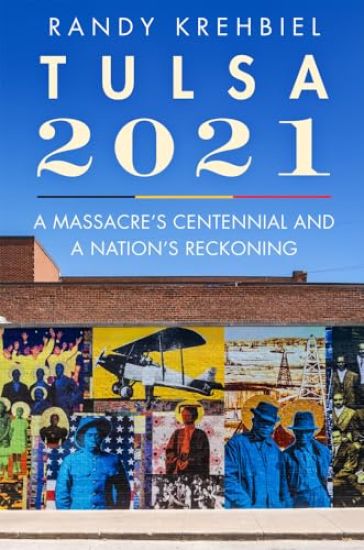
Tulsa, 2021

Tulsa, 2021

Randy Krehbiel

UNIVERSITY OF OKLAHOMA PRESS
2025
sidottu
2021: As the centennial of one of the nation’s worst race massacres approached, citizens of Tulsa faced the prospect with hope and dread. Hope that the anniversary would show Tulsa had changed since that day in 1921, when a white mob left the city’s thriving African American Greenwood neighborhood a smoldering ruin. Dread that Tulsa’s faults would be exposed as never before, its racism reinforced rather than mitigated. The anniversary—in the wake of COVID-19, a combustible presidential visit, and a nationwide explosion of racial tension—was even more fraught than expected. An extraordinary account of a city under inordinate pressure, Tulsa, 2021 offers a deeply informed, behind-the-scenes view of how Tulsans and Americans met that moment of crisis, and what the experience can tell us about racial politics today. Following up on his book Tulsa, 1921, Randy Krehbiel brings a seasoned reporter’s keen eye and an insider’s understanding to the story of a city contending with racial and urban stresses that are both unique to Oklahoma and indicative of larger trends. The conflicts he uncovers were not split entirely along racial lines, but often revolved around the power of political messaging to shape public opinion. His detailed picture of Tulsa in 2021 reveals how politics, unacknowledged racism, and fear destroyed or damaged promising relationships between white Republican leaders and Black, mostly Democratic Tulsans. In 1921, factions of whites and Blacks fought to control the narrative of the Tulsa Race Massacre. As Tulsa, 2021 dramatically demonstrates, the struggle continues to this day.
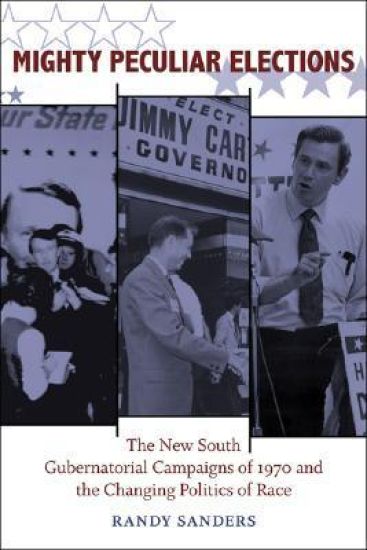
Mighty Peculiar Elections

Mighty Peculiar Elections

Randy Sanders

Louisiana State University Press
2007
nidottu
In 1970, four racially moderate Democrats won governors' seats in the American South -- Dale Bumpers in Arkansas, Reubin Askew in Florida, John West in South Carolina, and Jimmy Carter in Georgia. In Mighty Peculiar Elections, Randy Sanders explores these campaigns and shows that while each reflected aspects of its state's unique history and political idiosyncrasies, taken together, they signaled changes in attitudes and the politics of race in the South as well as the nation as a whole. Most southerners by 1970 had come to realize the futility of overt opposition to federal civil rights policies and no longer wanted to hear political candidates singing the refrains of white supremacy. Bumpers won Arkansas's Democratic primary over former Governor Orval Faubus, who had symbolized southern intransigence since 1957, when he ordered the state militia to prevent school integration at Central High School in Little Rock. Askew defeated Florida's Republican incumbent governor, Claude Kirk, who seized a school district during the campaign in order to thwart a court-ordered school desegregation plan. Similarly, West ran against Republican Albert Watson, who spewed fiery anti-integration rhetoric, and Carter succeeded Lester Maddox, who had established and maintained his hard-line segregationist reputation by autographing ax handles, mementos of the weapon he used years earlier to prevent blacks from entering his restaurant. None of the victors in 1970 talked much about civil rights during their campaigns; they all downplayed, evaded, or finessed racial issues when those topics arose. Sanders describes how the successful candidates carefully shaped their campaigns, rejecting the rhetoric of resistance without uttering strong words in favor of desegregation. A shared campaign strategy of ""new populism"" emerged among these candidates -- a strategy that promoted the interests of common folk, but relied primarily on image and style rather than issues to attract support. The candidates also perceived the diminishing power of party loyalty, political machines, and power brokers that controlled large groups of voters, and began to appeal directly to the electorate through television, employing effective strategies that emphasized their best qualities. The cool images of reasoned calm played well on television and prevailed over the hot pictures of frenzied defiance. Using archival materials, media records, personal papers, and interviews, Sanders shows that although these elections did not mark a total transformation of southern politics, they did suggest a subtle shift in the balance of power away from those who continued to roar the rhetoric of racism and resistance towards those who espoused a more moderate position. By focusing on one moment in a period of great political change, Mighty Peculiar Elections shines a spotlight on the evolving racial attitudes of the New South.
New Roads and Old Rivers

New Roads and Old Rivers

Randy Harelson

Louisiana State University Press
2012
sidottu
New Roads and Old Rivers captures the natural and cultural vitality of Pointe Coupee Parish, Louisiana, as seen in the stunning photographs of Richard Sexton, with text by Randy Harelson and Brian Costello. Pointe Coupee is one of the oldest settlements in the Mississippi Valley, dating to the 1720s. French for ""a place cut off,"" the name refers to the area's three oxbow lakes, separated from the Mississippi over centuries. Edged by the Mississippi and Atchafalaya rivers, Pointe Coupee remains a land rich in Creole heritage, distinct in geographical beauty, and abounding in historic homes and farms. In 200 color images, Sexton artistically portrays the region's sights: Native American mounds, bayous and lakes, productive agricultural fields and industries, slave cabins and plantation homes, small towns, and family and civic celebrations. Photographs include most of Pointe Coupee's seventy surviving antebellum structures, along with some of its sixty-two massive trees listed on the Live Oak Society register. A timeline of key events situates the parish's history within the wider world. From the Pointe Coupee Coast -- where in the early 1700s explorers, soldiers, missionaries, colonists, and enslaved and free people of color began settling the banks of the Mississippi River- to the Acadiana Trail- US-190, the only four-lane highway in the parish- New Roads and Old Rivers illuminates the history and cultural foundations of the entire state. This arresting portrait of Old Louisiana honors Pointe Coupee generations, past and present.
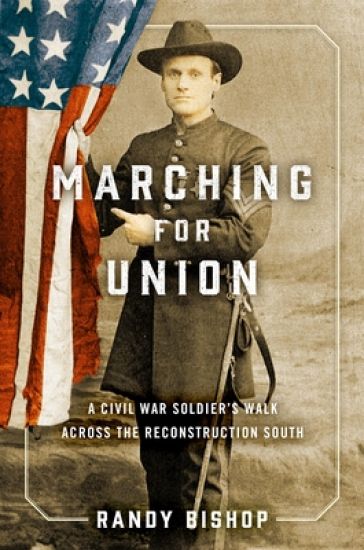
Marching for Union

Marching for Union

Randy Bishop

Stackpole Books
2021
sidottu
In January 1868, a Union veteran named Gilbert Bates set out from his Wisconsin farm for Vicksburg, Mississippi, to prove a point and win a bet: that he could safely walk across the post–Civil War South—alone, unarmed, with no money—while carrying the flag of the United States. The effort quickly riveted the attention of Americans everywhere, who weren’t yet sure the country could meaningfully reunite after their fratricidal war. Mark Twain believed Bates would be abused, attacked, possibly even scalped, during this time when the U.S. Army still occupied the South, resentment ran high, and groups like the KKK were spreading terror.Starting from Vicksburg, Bates walked 1,400 miles through Mississippi, Alabama, Georgia, South Carolina, North Carolina, and Virginia, through places where Grant shattered Confederate arms and Sherman’s men razed the land. He was never harmed—and almost always greeted with hospitality, generosity, and celebration. En route, Bates sold photos of himself with the Stars and Stripes to raise money for widows and orphans and eventually called off the bet, which he would’ve lost on a technicality: even though he successfully traveled the South unharmed and reached Washington, DC, in the agreed-upon timeframe, he was not allowed to raise his flag above the U.S. Capitol and had to settle for the unfinished Washington Monument.This is a deeply researched book that taps into big- and small-town newspaper coverage that described Bates’s journey across the American South and his reception. It recounts the courage of a former soldier who believed strongly in the bonds of Union and Lincoln’s “mystic chords of memory” and underscores the missed opportunities for a more perfect union.
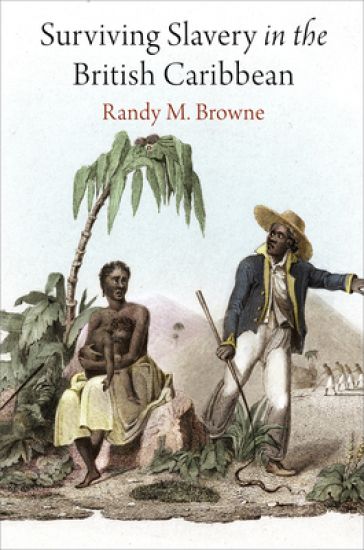
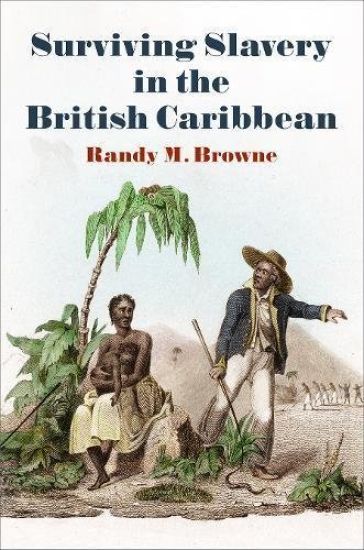
Surviving Slavery in the British Caribbean

Surviving Slavery in the British Caribbean

Randy M. Browne

University of Pennsylvania Press
2020
pokkari
A groundbreaking study of slavery and power in the British Caribbean that foregrounds the struggle for survival Atlantic slave societies were notorious deathtraps. In Surviving Slavery in the British Caribbean, Randy M. Browne looks past the familiar numbers of life and death and into a human drama in which enslaved Africans and their descendants struggled to survive against their enslavers, their environment, and sometimes one another. Grounded in the nineteenth-century British colony of Berbice, one of the Atlantic world's best-documented slave societies and the last frontier of slavery in the British Caribbean, Browne argues that the central problem for most enslaved people was not how to resist or escape slavery but simply how to stay alive. Guided by the voices of hundreds of enslaved people preserved in an extraordinary set of legal records, Browne reveals a world of Caribbean slavery that is both brutal and breathtakingly intimate. Field laborers invoked abolitionist-inspired legal reforms to protest brutal floggings, spiritual healers conducted secretive nighttime rituals, anxious drivers weighed the competing pressures of managers and the condition of their fellow slaves in the fields, and women fought back against abusive masters and husbands. Browne shows that at the core of enslaved people's complicated relationships with their enslavers and one another was the struggle to live in a world of death. Provocative and unflinching, Surviving Slavery in the British Caribbean reorients the study of Atlantic slavery by revealing how differently enslaved people's social relationships, cultural practices, and political strategies appear when seen in the light of their unrelenting struggle to survive.
Surviving Slavery in the British Caribbean

Surviving Slavery in the British Caribbean

Randy M. Browne

University of Pennsylvania Press
2017
sidottu
A groundbreaking study of slavery and power in the British Caribbean that foregrounds the struggle for survival Atlantic slave societies were notorious deathtraps. In Surviving Slavery in the British Caribbean, Randy M. Browne looks past the familiar numbers of life and death and into a human drama in which enslaved Africans and their descendants struggled to survive against their enslavers, their environment, and sometimes one another. Grounded in the nineteenth-century British colony of Berbice, one of the Atlantic world's best-documented slave societies and the last frontier of slavery in the British Caribbean, Browne argues that the central problem for most enslaved people was not how to resist or escape slavery but simply how to stay alive. Guided by the voices of hundreds of enslaved people preserved in an extraordinary set of legal records, Browne reveals a world of Caribbean slavery that is both brutal and breathtakingly intimate. Field laborers invoked abolitionist-inspired legal reforms to protest brutal floggings, spiritual healers conducted secretive nighttime rituals, anxious drivers weighed the competing pressures of managers and the condition of their fellow slaves in the fields, and women fought back against abusive masters and husbands. Browne shows that at the core of enslaved people's complicated relationships with their enslavers and one another was the struggle to live in a world of death. Provocative and unflinching, Surviving Slavery in the British Caribbean reorients the study of Atlantic slavery by revealing how differently enslaved people's social relationships, cultural practices, and political strategies appear when seen in the light of their unrelenting struggle to survive.
The Politics of Ecology

The Politics of Ecology

Randy P Schiff; Joseph Taylor

Ohio State University Press
2018
pokkari
If medieval literary studies is, like so many fields, currently conditioned by an ecological turn that dislodges the human from its central place in materialist analysis, then why now focus on the law? Is not the law the most human, if not indeed the human, institution? In proposing that all life in medieval Britain, whether animal or vegetable, was subject to the same legal machine that enabled claims on land, are we not ignoring the ecocritical demand that we counteract human exceptionalism and reframe the past with inhuman eyes? This volume, edited by Randy P. Schiff and Joseph Taylor, presents a diverse and stimulating group of interconnected essays that respond to these questions by infusing biopolitical material and theory into ecocentric studies of medieval life. The Politics of Ecology: Land, Life, and Law in Medieval Britain pursues the political power of sovereign law as it disciplines and manages various forms of natural life, and discloses the literary biopolitics played out in texts that work out the fraught interactions of life and law, in all its forms. Contributors to this volume explore such issues as legal networks and death, Arthurian bare life, Chaucerian medical biopolitics, the biopolitics of fur, ecologies of sainthood, arboreal political theology, conservation and political ecology, and geographical melancholy. Bringing together both established and rising critical voices, The Politics of Ecology creates a place for cutting-edge medievalist ecocriticism focused on the intersections of land, life, and law in medieval English, French, and Latin literature.
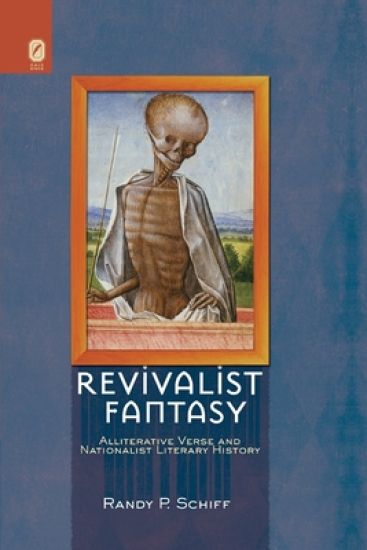
Revivalist Fantasy

Revivalist Fantasy

Randy P Schiff

Ohio State University Press
2020
pokkari
Revivalist Fantasy: Alliterative Verse and Nationalist Literary History by Randy P. Schiff contributes to recent conversations about disciplinary history by analyzing the nationalist context for scholars and editors involved in disseminating the literary historical theory of an Alliterative Revival. Redirecting Alliterative Revivalism's backward gaze, Revivalist Fantasy re-engages with the local contexts of select alliterative works. Schiff revises readings of alliterative poetry as Francophobic, exploring the transnational imperialist elitism in the translation William of Palerne. He contributes to the discussion of gender in Sir Gawain and the Green Knight by linking the poem's powerful female players with anxieties about women's control of wealth and property in militarized regions of England. The book also explores the emphatically pre-national, borderlands sensibilities informing the Awntyrs off Arthure and Golagros and Gawane, and it examines the exploitation of collaborative composition in the material legacy of the Piers Plowman tradition. Revivalist Fantasy concludes that Revivalist nationalism obscures crucial continuities between late-medieval and post-national worlds and that critics' interests should be channeled into the forging of connections between past and present rather than suspended in the scholarly pursuit of origins. The book will be of interest to scholars of editorial history and translation studies and to those interested in manuscript studies.
In the Spirit of a New People

In the Spirit of a New People

Randy J. Ontiveros

New York University Press
2013
pokkari
Reexamining the Chicano civil rights movement of the 1960s and 1970s, In the Spirit of a New People brings to light new insights about social activism in the twentieth-century and new lessons for progressive politics in the twenty-first. Randy J. Ontiveros explores the ways in which Chicano/a artists and activists used fiction, poetry, visual arts, theater, and other expressive forms to forge a common purpose and to challenge inequality in America. Focusing on cultural politics, Ontiveros reveals neglected stories about the Chicano movement and its impact: how writers used the street press to push back against the network news; how visual artists such as Santa Barraza used painting, installations, and mixed media to challenge racism in mainstream environmentalism; how El Teatro Campesino's innovative "actos," or short skits,sought to embody new, more inclusive forms of citizenship; and how Sandra Cisneros and other Chicana novelists broadened the narrative of the Chicano movement. In the Spirit of a New People articulates a fresh understanding of how the Chicano movement contributed to the social and political currents of postwar America, and how the movement remains meaningful today.
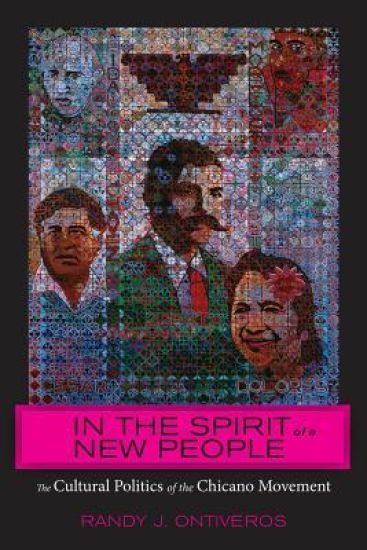
In the Spirit of a New People

In the Spirit of a New People

Randy J. Ontiveros

New York University Press
2013
sidottu
Reexamining the Chicano civil rights movement of the 1960s and 1970s, In the Spirit of a New People brings to light new insights about social activism in the twentieth-century and new lessons for progressive politics in the twenty-first. Randy J. Ontiveros explores the ways in which Chicano/a artists and activists used fiction, poetry, visual arts, theater, and other expressive forms to forge a common purpose and to challenge inequality in America. Focusing on cultural politics, Ontiveros reveals neglected stories about the Chicano movement and its impact: how writers used the street press to push back against the network news; how visual artists such as Santa Barraza used painting, installations, and mixed media to challenge racism in mainstream environmentalism; how El Teatro Campesino's innovative "actos," or short skits,sought to embody new, more inclusive forms of citizenship; and how Sandra Cisneros and other Chicana novelists broadened the narrative of the Chicano movement. In the Spirit of a New People articulates a fresh understanding of how the Chicano movement contributed to the social and political currents of postwar America, and how the movement remains meaningful today.
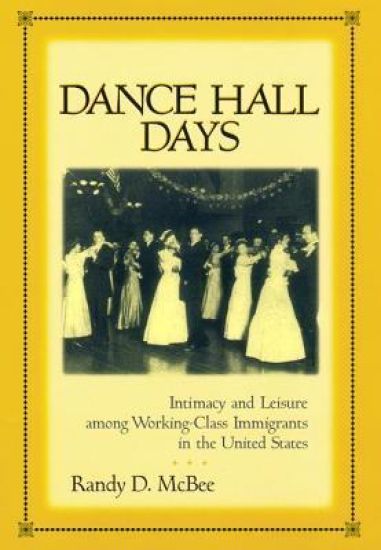
Dance Hall Days

Dance Hall Days

Randy McBee

New York University Press
2000
sidottu
The rise of commercialized leisure coincided with the arrival of millions of immigrants to America's cities. Conflict was inevitable as older generations attempted to preserve their traditions, values, and ethnic identities, while the young sought out the cheap amusements and sexual freedom which the urban landscape offered. At immigrant picnics, social clubs, and urban dance halls, Randy McBee discovers distinct and highly contested gender lines, proving that the battle between the ages was also one between the sexes. Free from their parents and their strict rules governing sexual conduct, working women took advantage of their time in dance halls to challenge conventional gender norms. They routinely passed certain men over for dances, refused escorts home, and embraced the sensual and physical side of dance to further accentuate their superior skills and ability on the dance floor. Most men felt threatened by women's displays of empowerment and took steps to thwart the changes taking place. Accustomed to street corners, poolrooms, saloons, and other all-male get-togethers, working men tried to transform the dance hall into something that resembled these familiar hangouts. McBee also finds that men frequently abandoned the commercial dance hall for their own clubs, set up in the basements of tenement flats. In these hangouts, working men established rules governing intimacy and leisure that allowed them to regulate the behavior of the women who attended club events. The collective manner in which they behaved not only affected the organization of commercial leisure but also men and women's struggles with and against one another to define the meaning of leisure, sexuality, intimacy, and even masculinity.
Superusers

Superusers

Randy Deutsch

CRC Press Inc
2019
sidottu
Design technology is changing both architectural practice and the role of the architect and related design professionals. With new technologies and work processes appearing every week, how can practitioners be expected to stay on top and thrive? In a word, Superusers.Superusers: Design Technology Specialists and the Future of Practice will help you identify who they are, the value they provide, and how you can attract and retain them, and become one; what career opportunities they have, what obstacles they face, and how to lead them. Written by Randy Deutsch, a well-known expert in the field, this is the first-ever guide to help current and future design professionals to succeed in the accelerating new world of work and technology. Providing proven, practical advice, the book features: Unique, actionable insights from design technology leaders in practice worldwide The impacts of emerging technology trends such as generative design, automation, AI, and machine learning on practice Profiles of those who provide 20% of the effort but achieve 80% of the results, and how they do it What will help firms get from where they are today to where they need to be, to survive and thrive in the new world of design and construction.Revealing the dramatic impact of technology on current and future practice, Superusers shows what it means to be an architect in the 21st century. Essential reading for students and professionals, the book helps you plan for and navigate a fast-moving, uncertain future with confidence.
Superusers

Superusers

Randy Deutsch

CRC Press Inc
2019
nidottu
Design technology is changing both architectural practice and the role of the architect and related design professionals. With new technologies and work processes appearing every week, how can practitioners be expected to stay on top and thrive? In a word, Superusers.Superusers: Design Technology Specialists and the Future of Practice will help you identify who they are, the value they provide, and how you can attract and retain them, and become one; what career opportunities they have, what obstacles they face, and how to lead them. Written by Randy Deutsch, a well-known expert in the field, this is the first-ever guide to help current and future design professionals to succeed in the accelerating new world of work and technology. Providing proven, practical advice, the book features: Unique, actionable insights from design technology leaders in practice worldwide The impacts of emerging technology trends such as generative design, automation, AI, and machine learning on practice Profiles of those who provide 20% of the effort but achieve 80% of the results, and how they do it What will help firms get from where they are today to where they need to be, to survive and thrive in the new world of design and construction.Revealing the dramatic impact of technology on current and future practice, Superusers shows what it means to be an architect in the 21st century. Essential reading for students and professionals, the book helps you plan for and navigate a fast-moving, uncertain future with confidence.