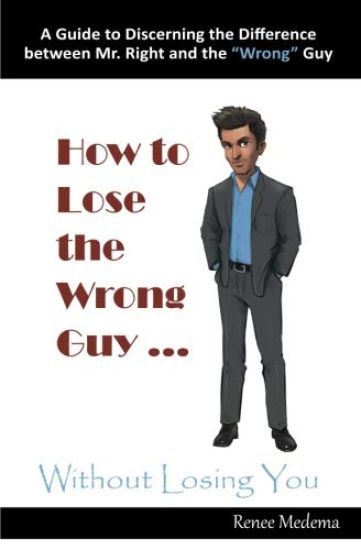
How to Lose the Wrong Guy ... Without Losing You: A Guide to Discerning the Difference Between Mr. Right and the Wrong Guy
Renee Medema
R.Y.M. Publishing
2018
nidottu
It's understandable that women sometimes settle for the "wrong" guys because waiting for Mr. Right takes time and patience. Although dating wrong guys may seem like an easier path at the beginning of a relationship, it never is at the end.Have you ever asked yourself these questions?- Why does my guy think he can treat me with such disrespect?- Why does my guy only call me when he needs me? What about the times I need him?- Does my guy really think that I believe all of those lies he tells me?- Why won't my guy propose? We are meant to be together and I'm getting tired of waiting.- What do I have to do to get my guy to make plans in advance? He's always asking me to do things last minute.- Why are all of my girlfriends married and I'm still single? Is something wrong with me?Jam-packed with real-life stories that include God-inspired insights, this book provides candid and brutally honest accounts that every woman who has dated the wrong guys will be able to relate to, told by a writer who has been there. In a caring, down-to-earth, and practical style, Renee Medema shares her advice and guidelines on how to lose the "wrong" guy and find your Mr. Right.Inside you will find valuable tools and resources to help you never settle for less than you deserve, define your own dating rules, ensure you have a solid support system, set boundaries, plan your future, and realize your dreams.