Kirjojen hintavertailu. Mukana 11 699 587 kirjaa ja 12 kauppaa.

Kirjahaku

Etsi kirjoja tekijän nimen, kirjan nimen tai ISBN:n perusteella.

1000 tulosta hakusanalla Richard Howe Earl Howe

Richard Bentley

Richard Bentley

Kristine Louise Haugen

Harvard University Press
2011
sidottu
What made the classical scholar Richard Bentley deserve to be so viciously skewered by two of the literary giants of his day—Jonathan Swift in the Battle of the Books and Alexander Pope in the Dunciad? The answer: he had the temerity to bring classical study out of the scholar's closet and into the drawing rooms of polite society. Kristine Haugen’s highly engaging biography of a man whom Rhodri Lewis characterized as “perhaps the most notable—and notorious—scholar ever to have English as a mother tongue” affords a fascinating portrait of Bentley and the intellectual turmoil he set in motion.Aiming at a convergence between scholarship and literary culture, the brilliant, caustic, and imperious Bentley revealed to polite readers the doings of professional scholars and induced them to pay attention to classical study. At the same time, Europe's most famous classical scholar adapted his own publications to the deficiencies of non-expert readers. Abandoning the church-oriented historical study of his peers, he worked on texts that interested a wider public, with spectacular and—in the case of his interventionist edition of Paradise Lost—sometimes lamentable results. If the union of worlds Bentley craved was not to be achieved in his lifetime, his provocations show that professional humanism left a deep imprint on the literary world of England's Enlightenment.
Richard Cobden

Richard Cobden

Nicholas C Edsall

Harvard University Press
1986
sidottu
On Richard Cobden's death, Charles Francis Adams noted in his diary that Cobden "had fought his way to fame and honor by the single force of his character. He had nothing to give. No wealth, no honors, no preferment. He first taught the multitude by precept and example that the right of government was not really to the few, but to the many." Disraeli was no less acute when he remarked that Cobden was "the greatest political character that the pure middle class of this country has yet produced." In this biography Nicholas Edsall demonstrates how Cobden dominated middle-class radicalism from its high-water mark in the turbulent 1840s to the quieter years immediately before the emergence of the Gladstonian Liberal party in the 1860s. Cobden headed the movement for the incorporation of his adopted city, Manchester; he was the leader of the most successful of Victorian mass agitations, the Anti-Corn Law League, and chief adviser to the movement for the repeal of newspaper taxes; he was a founder of the mid-nineteenth-century peace movement and a vocal opponent of the Crimean War; he was the chief English negotiator of the Anglo-French Commercial Treaty of 1860; and he was one of the earliest critics of the modern arms race. This is the first full-length biography since the publication of the official life more than a century ago. Not only has a good deal of new material become available, but the passage of time has served to underscore Cobden's significance both as a spokesman for the middle class in an era of acute class conflict and as a critic of the aims of great-power diplomacy at a time when his own country was the greatest of powers.
The Folger Library Edition of The Works of Richard Hooker

The Folger Library Edition of The Works of Richard Hooker

Richard Hooker

Harvard University Press
1977
sidottu
Richard Hooker is the first major voice of Anglican theology, and his defense of the Elizabethan Church against the attacks of the Puritans set the prevailing tone of Anglicanism for centuries to follow. Through his eloquent treatise on ecclesiastical law the medieval political thought of Thomas Aquinas became a part of the English political heritage, to be used by such writers as Locke, Burke, and Coleridge. The Laws of Ecclesiastical Polity is also a primary statement in English of a theory of natural law. Finally, we must turn to Hooker if we are to understand the intellectual background of the Renaissance, for he luminously sets forth the ethical, political, and religious assumptions of his age.The Folger Library has answered a long-felt need in sponsoring this critical, old-spelling edition of Hooker’s Works, prepared with all the expertise modern scholarship can bring to bear. Six scholars share the editorial responsibility, consulting their eighteen-member Board of Advisers as necessary. The texts for the edition are based on fresh transcriptions of the earliest and most authoritative documents, in many cases manuscripts written or corrected by Hooker himself or contemporary transcripts of these. The critical apparatus for each text records substantive variants among the authoritative documents as well as departures in accidentals from the copy text. The aim of the apparatus is to enable the interested reader to reconstruct the authority underlying the text.The Preface and Books I–V of the Laws of Ecclesiastical Polity, Volumes I and II of this edition, represent all of Hooker’s work published in his lifetime. These volumes were prepared by Georges Edelen, Professor of English at Indiana University, and W. Speed Hill, Associate Professor of English, Herbert H. Lehman College, City University of New York.
The Folger Library Edition of The Works of Richard Hooker

The Folger Library Edition of The Works of Richard Hooker

Richard Hooker

Harvard University Press
1981
sidottu
The writings of Richard Hooker are of central interest to those studying English Renaissance thought and literature. In this, the third volume of a much-needed critical edition of the Works of Richard Hooker, are the posthumous books of the Laws of Ecclesiastical Polity. Hooker planned the Laws in eight books, but he died shortly after publication of Book Five. Books Six, Seven, and Eight, which contain his analysis of jurisdiction, episcopacy, and the royal supremacy, are here transcribed from versions that have the most authority. The volume also includes Hooker’s autograph notes toward those texts (brought to light by P. G. Stanwood in the course of his research) and the contemporary notes by George Cranmer and Edwin Sandys on a lost draft of Book Six. Mr. Stanwood’s introduction lays to rest all doubts about the authenticity of the last three books as we have them, doubts current since publication of Walton’s Life of Hooker in 1662.This edition, sponsored by the Folger Library, is providing authoritative texts to serve as a basis for the scholarly reappraisal of Richard Hooker’s writings that is presently underway.
The Folger Library Edition of The Works of Richard Hooker
We turn to Richard Hooker to understand the intellectual background of the Renaissance. He sets forth in his writing the ethical, political, and religious assumptions of his age. This magnificent old-spelling edition of Hooker’s works has long been needed, and is being greeted with universal admiration.Volume Four presents the text of the first and only major attack on the Laws of Ecclesiastical Polity—namely, A Christian Letter, 1599—with Hooker’s marginal notes made on his own copy of the Letter; and the more extensive essays which he left in manuscript, written in preparation for a published reply. The importance of these notes and essays lies in their expansion of some of the more controversial points made in the Laws, and in the light they shed on Hooker, his personality, method, and sources.John Booty’s Introduction and substantial commentary place Hooker’s arguments firmly in their historical and theological contexts.
The Folger Library Edition of The Works of Richard Hooker

The Folger Library Edition of The Works of Richard Hooker

Richard Hooker

Harvard University Press
1990
sidottu
Although Richard Hooker (1554–1600) is now known principally as the author of the Laws of Ecclesiastical Polity, in his lifetime the Tractates and Sermons brought him greater notoriety. Hooker’s views on justification, the perseverance of faith, and the relationship of the Church of Rome to the reformed Church of England were widely reported, and texts of the tracts were extensively circulated in manuscript.Thanks to the meticulous editing of Laetitia Yeandle, Curator of Manuscripts at the Folger Shakespeare Library, the contemporary impact of these debates can now be appreciated for the first time. These tracts provide a unique perspective on the turbulent world of late Elizabethan theology. In addition, they lay the doctrinal foundations of the Laws of Ecclesiastical Polity itself and—with the excellent commentary of Egil Grislis, Professor of Theology at the University of Manitoba in Winnipeg, enable us to trace the intellectual formation of sixteenth-century England’s most innovative and provocative theologian.The volume includes a newly discovered letter; three newly attributed sermon fragments; and analysis by P. F. Forte of Hooker’s distinctive preaching style.
Richard Strauss and His World

Richard Strauss and His World

Princeton University Press
1992
pokkari
Strongly influencing European musical life from the 1880s through the First World War and remaining highly productive into the 1940s, Richard Strauss enjoyed a remarkable career in a constantly changing artistic and political climate. This volume presents six original essays on Strauss's musical works--including tone poems, lieder, and operas--and brings together letters, memoirs, and criticism from various periods of the composer's life. Many of these materials appear in English for the first time. In the essays Leon Botstein contradicts the notion of the composer's stylistic "about face" after Elektra; Derrick Puffett reinforces the argument for Strauss's artistic consistency by tracing in the tone poems and operas the phenomenon of pitch specificity; James Hepokoski establishes Strauss as an early modernist in an examination of Macbeth; Michael Steinberg probes the composer's political sensibility as expressed in the 1930s through his music and use of such texts as Friedenstag and Daphne; Bryan Gilliam discusses the genesis of both the text and the music in the final scene of Daphne; Timothy Jackson in his thorough source study argues for a new addition to the so-called Four Last Songs. Among the correspondence are previously untranslated letters between Strauss and his post-Hofmannsthal librettist, Joseph Gregor. The memoirs range from early biographical sketches to Rudolf Hartmann's moving account of his last visit with Strauss shortly before the composer's death. Critical reviews include recently translated essays by Theodor Adorno, Guido Adler, Paul Bekker, and Julius Korngold.
Richard Wagner, Fritz Lang, and the Nibelungen

Richard Wagner, Fritz Lang, and the Nibelungen

David J. Levin

Princeton University Press
1999
pokkari
This highly original book draws on narrative and film theory, psychoanalysis, and musicology to explore the relationship between aesthetics and anti-Semitism in two controversial landmarks in German culture. David Levin argues that Richard Wagner's opera cycle Der Ring des Nibelungen and Fritz Lang's 1920s film Die Nibelungen creatively exploit contrasts between good and bad aesthetics to address the question of what is German and what is not. He shows that each work associates a villainous character, portrayed as non-Germanic and Jewish, with the sometimes dramatically awkward act of narration. For both Wagner and Lang, narration--or, in cinematic terms, visual presentation--possesses a typically Jewish potential for manipulation and control. Consistent with this view, Levin shows, the Germanic hero Siegfried is killed in each work by virtue of his unwitting adoption of a narrative role. Levin begins with an explanation of the book's theoretical foundations and then applies these theories to close readings of, in turn, Wagner's cycle and Lang's film. He concludes by tracing how Germans have dealt with the Nibelungen myths in the wake of the Second World War, paying special attention to Michael Verhoeven's 1989 film The Nasty Girl. His fresh and interdisciplinary approach sheds new light not only on Wagner's Ring and Lang's Die Nibelungen, but also on the ways in which aesthetics can be put to the service of aggression and hatred. The book is an important contribution to scholarship in film and music and also to the broader study of German culture and national identity.
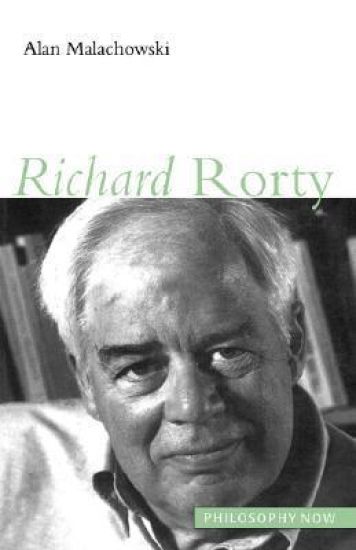
Richard Rorty

Richard Rorty

Alan Malachowski

Princeton University Press
2002
pokkari
Richard Rorty is one of the world's most influential living thinkers. He is notorious for contending that the traditional, foundation-building and truth-seeking ambitions of systematic philosophy should be set aside in favor of a more pragmatic, conversational, hermeneutically guided project. This challenge has not only struck at the heart of philosophy but has ricocheted across other disciplines, both contesting their received self-images and opening up new avenues of inquiry in the process. Alan Malachowski provides an authoritative overview of Rorty's considerable body of work and a general assessment of his impact both within philosophy and in the humanities more broadly. He begins by explaining the genesis of Rorty's central ideas, tracking their development from suggestions in his early papers through their crystallization in his groundbreaking book, Philosophy and the Mirror of Nature. Malachowski evaluates in detail some of the common criticisms of Rorty's position and his ensuing pragmatism. The book goes on to examine the subsequent evolution of his ideas, focusing particularly on the main themes of his second major work, Contingency, Irony, and Solidarity.The political and cultural impact of Rorty's writings on such diverse fields as feminism, cultural and literary theory, and international relations are also considered, and the author explores why Rorty's work has generally found its warmest reception in these areas rather than among mainstream philosophers. As the best available introduction to Rorty's thought, this is the ideal entry point for anyone seeking to learn what he has said and why it has been and continues to be so influential.
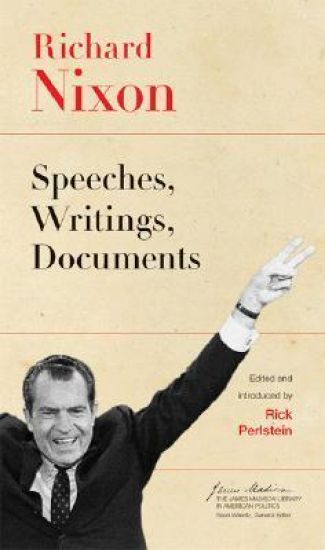
Richard Nixon

Richard Nixon

Richard Nixon

Princeton University Press
2008
pokkari
The first book to present America's most controversial president in his own words across his entire career, this unique collection of Richard Nixon's most important writings dramatically demonstrates why he has had such a profound impact on American life. This volume gathers everything from schoolboy letters to geostrategic manifestos and Oval Office transcripts to create a fascinating portrait of Nixon, one that is enriched by an extensive introduction in which Rick Perlstein puts forward a major reinterpretation of the thirty-seventh president's rise and fall. This anthology includes some of the most famous addresses in American history, from Nixon's "Checkers" speech (1952) and "Last Press Conference" (1962), to the "Silent Majority" speech (1969) and White House farewell. These texts are joined by campaign documents--including the infamous "Pink Sheet" from the 1950 Senate race--that give stark evidence of Nixon's slashing political style. Made easily available here for the first time, these writings give new depth to our understanding of Nixon.
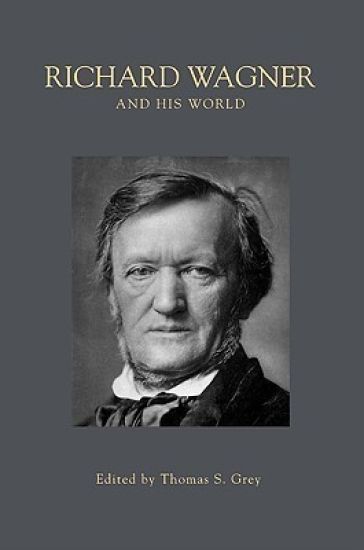
Richard Wagner and His World

Richard Wagner and His World

Princeton University Press
2009
pokkari
Richard Wagner (1813-1883) aimed to be more than just a composer. He set out to redefine opera as a "total work of art" combining the highest aspirations of drama, poetry, the symphony, the visual arts, even religion and philosophy. Equally celebrated and vilified in his own time, Wagner continues to provoke debate today regarding his political legacy as well as his music and aesthetic theories. Wagner and His World examines his works in their intellectual and cultural contexts. Seven original essays investigate such topics as music drama in light of rituals of naming in the composer's works and the politics of genre; the role of leitmotif in Wagner's reception; the urge for extinction in Tristan und Isolde as psychology and symbol; Wagner as his own stage director; his conflicted relationship with pianist-composer Franz Liszt; the anti-French satire Eine Kapitulation in the context of the Franco-Prussian War; and responses of Jewish writers and musicians to Wagner's anti-Semitism. In addition to the editor, the contributors are Karol Berger, Leon Botstein, Lydia Goehr, Kenneth Hamilton, Katherine Syer, and Christian Thorau. This book also includes translations of essays, reviews, and memoirs by champions and detractors of Wagner; glimpses into his domestic sphere in Tribschen and Bayreuth; and all of Wagner's program notes to his own works. Introductions and annotations are provided by the editor and David Breckbill, Mary A. Cicora, James Deaville, Annegret Fauser, Steven Huebner, David Trippett, and Nicholas Vazsonyi.