
Kirjahaku
Etsi kirjoja tekijän nimen, kirjan nimen tai ISBN:n perusteella.
1000 tulosta hakusanalla Robert D. Lesslie


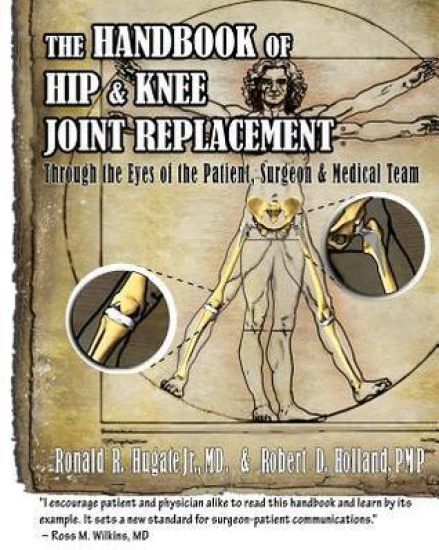
Handbook of Hip & Knee Joint Replacement: Through the Eyes of the Patient, Surgeon & Medical Team
Robert D. Holland Pmp; Ronald R. Hugate
Createspace Independent Publishing Platform
2012
nidottu
Explicitly written to not become dated, meaning that the surgeries as described are only a small part of the knowledge you need to go through this life-changing operation. As always, you should consult with your physician for the most up-to-date information. As of 2022, we've sold more than 40,000 copies. We ask you to buy the handbook directly from us versus the buy-back venues, because we need your support to keep our website operational. With your help, we can keep the Hip and Knee Handbook on the market for all those who need this vital knowledge. Dr. Ronald R. Hugate Jr. MD, FACC, brings his wisdom and advice to this great book and asked two of his favorite, professional, medical colleagues from his team of medical experts to contribute as well a preeminent. The chapter on pain management is written by specialist and anesthesiologist, Dr. Gianni Checa. the chapter on Physical Therapy is written Master of Science in Physical Therapy, Ms. Inger Brueckner, MSPT. The chapter by Professor Francine Campone, EdD, whose had both hips replaced and shares her insights and advice. Robert Holland both produced the handbook and added his own chapter on total-knee-joint replacement after having had both knees done. Robert also added the chapter about preparing your home before surgery. You will learn about: -Deciding on a hip replacement...-Deciding on a knee replacement...-What's going on in your arthritic joints...-Choosing your surgeon...-Preparing your home...-Your options for anesthesia and pain management...-How long you'll be in the hospital...-How long it'ill take to recover...-Physical therapy and why you need it...-What your life will be like afterward... Written expressly for you as the patient, this remains a superlative resource if you're contemplating hip or knee joint replacement surgery Whether you've already had total joint replacement of the hip or knee-or you are just now thinking about having a bad hip joint, or bad knee joint replaced, the "Handbook of Hip & Knee Joint Replacement: Through the Eyes of the Patient, Surgeon & Medical Team" is unsurpassed in it's breadth and scope This definitive, patient's educational resource brings the subject to life for you using clear, understandable language written in large print to guide you in learning everything you need to know about the journey to a new you. Why? Dr. Ronald R. Hugate Jr. - a renowned orthopedic surgeon who also specializes in bone oncology and limb preservation, is a veteran combat-surgeon in the U.S. Army Reserves and has taken care of our troops in both Afghanistan and Iraq. Dr. Gianni Checa is a renowned anesthesiologist and pain management specialist. Inger Brueckner, MSPT is a senior physical therapist, who also teaches and lectures on Physical Therapy. Topics covered include: when you 'need' a joint replacement, the anatomy of the knee and hip, the effects of aging on your joints, how to select a surgeon, introduction to the members of the medical team, how to prepare your home for a safe recovery, options available in anesthesia, the hospital stay, physical therapy after joint replacement, potential risks of surgery, and insurance issues... among many others. This handbook is unique in that you gain perspective from both patients and medical professionals. You are not 'lectured to' with technical medical jargon. Instead, you will become a part of the conversation. There are simply no other medical handbooks like it.

Living With Interest: Indian Summer
Robert D. Hammitt
Createspace Independent Publishing Platform
2011
nidottu


Explore Important Tools for High-Quality Work in Pharmaceutical SafetyStatistical Methods for Drug Safety presents a wide variety of statistical approaches for analyzing pharmacoepidemiologic data. It covers both commonly used techniques, such as proportional reporting ratios for the analysis of spontaneous adverse event reports, and newer approaches, such as the use of marginal structural models for controlling dynamic selection bias in the analysis of large-scale longitudinal observational data.Choose the Right Statistical Approach for Analyzing Your Drug Safety DataThe book describes linear and non-linear mixed-effects models, discrete-time survival models, and new approaches to the meta-analysis of rare binary adverse events. It explores research involving the re-analysis of complete longitudinal patient records from randomized clinical trials. The book discusses causal inference models, including propensity score matching, marginal structural models, and differential effects, as well as mixed-effects Poisson regression models for analyzing ecological data, such as county-level adverse event rates. The authors also cover numerous other methods useful for the analysis of within-subject and between-subject variation in adverse events abstracted from large-scale medical claims databases, electronic health records, and additional observational data streams. Advance Statistical Practice in PharmacoepidemiologyAuthored by two professors at the forefront of developing new statistical methodologies to address pharmacoepidemiologic problems, this book provides a cohesive compendium of statistical methods that pharmacoepidemiologists can readily use in their work. It also encourages statistical scientists to develop new methods that go beyond the foundation covered in the text.




Terrified: How I survived an abusive childhood
Robert D. Whipkey
Createspace Independent Publishing Platform
2011
nidottu
Terrified.How I survived and recovered from an abusive childhoodSome of the names have been removed to protect the guiltyPrefaceI want to say here that I personally know many people who as children have suffered unbelievable physical abuse by their abusers'. My story is more about complete control over a child's mind by using physical, psychological, emotional, mental, sexual, and religious abuse. I spent most of my childhood in terror. When the abuse stopped, I took over and continually self destructed. It would take years to unlearn that defeatist attitude and become a happy person.The original title was "Screaming Quietly", but there is so much more a child will do to endure an abusive childhood. Part One ChildhoodI was in bed. I had been tossing and turning for hours. I was having trouble going to sleep, as usual. They turned off the lights and the TV to go to bed upstairs. They usually did this around 11:00 pm. She would put us in bed at 8:00 and I would toss and turn in bed for hours before I could go to sleep. The house felt dark and spooky. Everything was quiet. I heard them go upstairs. Suddenly fear gripped me. Anxiety hit. I was near panic. I don't like dark, quiet rooms. I felt alone. Then, I began to cry. I was afraid and needed reassurance. Nobody could hear me. I cried a little louder. She heard me. I heard those heavy footsteps coming back down the stairs. I became conflicted. Is she going to comfort me? The footsteps got closer and sounded angry. Oh my God, I have made a terrible mistake. I felt the anger coming towards me. If only I could take it back. I'm sorry, I'll be good. I'll be frightened more quietly. Please God, no My bedroom door opened. The monster was in my room heading for me. She hit me. She hit me again, and again and again. She kept on hitting me. My fear was replaced by anger. I wanted comfort and had been given pain instead. Once again I had made trouble for myself. When she left the room, out of my mouth I whispered these words: "I hate her, I want to kill her". My teeth were clenched, my anger was intense. It consumed me. I had been through this so many times before. I was six.

Lyrics, Limericks and Poems
Robert D. Furrow
Createspace Independent Publishing Platform
2012
nidottu
About four or five years ago one began to hear about the enormous interest being taken in on-line consoles and displays. Nothing much was done with them, but computer men felt that this was the way computing ought to go: one might dispense with cards, and overcome many of the problems of man-machine communication. It quickly appeared that, as with computers, there had been a great under estimation of the amount of work involved, of the difficulties of programming, and of the cost. So it began to emerge that graphics was not the ultimate answer, in spite of superb demonstrations where one might watch a square being converted into a cube and then rotated. But my mind goes back to 1951 and the first computers. There, there were demonstrations of arithmetic speed and storage facility; but not much idea of actual use. However, we now understand how to use computers, and in the last year or two, significant developments in the field of graphics have led to genuine applications, and economic benefits. The equipment is still expensive, but it is becoming cheaper, more uses are being found, and f believe that we are just at the stage when the subject is gaining momentum, to become, like computers, a field of immense importance.




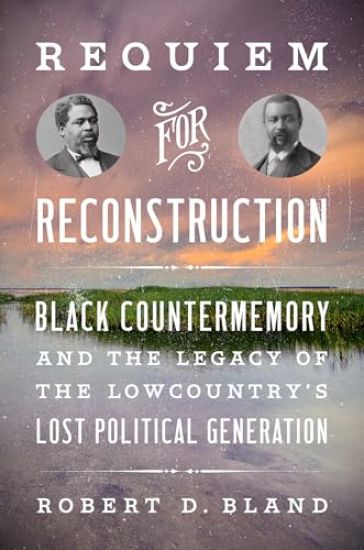
The promise of Reconstruction sparked a transformative era in American history as free and newly emancipated Black Americans sought to redefine their place in a nation still grappling with the legacy of slavery. Often remembered as a period of failed progressive change that gave way to Jim Crow and second-class citizenship, Reconstruction’s tragic narrative has long overshadowed the resilience and agency of African Americans during this time. Requiem for Reconstruction chronicles Reconstruction’s legacy by focusing on key Black figures such as South Carolina congressman Robert Smalls, Judge William Whipper, writer Frances Rollin, and others who shaped postbellum Black America. Robert D. Bland traces the impact of the Reconstruction generation—Black Americans born between 1840 and 1870 who saw Reconstruction as a defining political movement and worked to preserve its legacy by establishing a new set of historical practices such as formulating new archives, shaping local community counternarratives, using the Black press to inform national audiences about Southern Republican politics, and developing a framework to interpret the recent past’s connection to their present world. Set in South Carolina’s Lowcountry—a hub of Black freedom, landownership, and activism—this book shows how late nineteenth-century Black leaders, educators, and journalists built a powerful countermemory of Reconstruction, defying the dominant white narrative that sought to erase their contributions.